Does the Quran Say the Bible Is Changed?
| Key Takeaways |
| Yes, the Quran explicitly states that some Jews and Christians distorted their scriptures, using the Arabic term tahrif in four core verses: 2:75, 4:46, 5:13, and 5:41. |
| Muslims believe the original Torah (Tawrah) and Gospel (Injeel) were genuine revelations from Allah, distinct from the corrupted texts that circulate today. |
| Classical scholars distinguish between tahrif al-lafz (distortion of the actual wording) and tahrif al-ma’na (distortion of meaning through misinterpretation) — both are attested in Islamic scholarship. |
| The Quran is the only scripture Allah personally guarantees to preserve, a promise never made for the Torah or Gospel. |
| Islam does not reject the Bible outright — it affirms the truth of its original revelation while identifying where human hands altered the text over time. |
Yes, the Quran does say the Bible was changed — though the picture is more precise than a blanket accusation. The Quran names the alteration of earlier scripture directly, using the Arabic root harrafa (to distort) in at least four separate verses addressing the Torah brought by the Children of Israel. This isn’t a peripheral theme tucked into an obscure passage. It sits at the center of how the Quran positions itself in relation to what came before it.
The Quran doesn’t say every word of the Torah and Gospel is fabricated, nor that the distortion happened uniformly across every community and every copy. What it establishes is a pattern: scribes and religious leaders who possessed genuine revelation altered it — sometimes its wording, sometimes its meaning — for reasons the Quran states plainly were tied to worldly gain. Understanding this distinction matters for anyone asking whether Muslims view the Bible as holy, corrupted, or something in between.
Does the Quran Say the Bible Is Changed?
Yes, the Quran explicitly states that some Jews and Christians distorted their scriptures, using the Arabic term tahrif in four core verses: 2:75, 4:46, 5:13, and 5:41.
The Quran States Directly That Scripture Was Distorted
The clearest evidence sits in Surah Al-Baqarah, where Allah describes a group among the Children of Israel who heard His word and knowingly altered it. This is not a vague implication drawn from context — it is a direct statement about a specific act.
أَفَتَطْمَعُونَ أَن يُؤْمِنُوا لَكُمْ وَقَدْ كَانَ فَرِيقٌ مِّنْهُمْ يَسْمَعُونَ كَلَامَ اللَّهِ ثُمَّ يُحَرِّفُونَهُ مِن بَعْدِ مَا عَقَلُوهُ وَهُمْ يَعْلَمُونَ
“Do you covet [the hope, O believers], that they would believe for you while a party of them used to hear the words of Allah and then distort it [i.e., the Torah] after they had understood it while they were knowing?” (Quran 2:75)
The verb used here, yuharrifunahu, comes from the same root as tahrif — the term Islamic scholarship uses for scriptural distortion.
What makes this verse striking is the sequence it describes: hearing, understanding, and only then distorting. The Quran presents this as deliberate, not accidental.
Three additional verses reinforce the same accusation from different angles. In Surah An-Nisa, Allah says of a group among the Jews:
مِّنَ الَّذِينَ هَادُوا يُحَرِّفُونَ الْكَلِمَ عَن مَّوَاضِعِهِ وَيَقُولُونَ سَمِعْنَا وَعَصَيْنَا وَاسْمَعْ غَيْرَ مُسْمَعٍ وَرَاعِنَا لَيًّا بِأَلْسِنَتِهِمْ وَطَعْنًا فِي الدِّينِ
“Among the Jews are those who distort words from their [proper] usages and say, ‘We hear and disobey’ and ‘Hear but be not heard’ and ‘Ra’ina,’ twisting their tongues and defaming the religion.” (Quran 4:46)
In Surah Al-Ma’idah, the Quran links this behavior directly to a broken covenant:
فَبِمَا نَقْضِهِم مِّيثَاقَهُمْ لَعَنَّاهُمْ وَجَعَلْنَا قُلُوبَهُمْ قَاسِيَةً ۖ يُحَرِّفُونَ الْكَلِمَ عَن مَّوَاضِعِهِ ۙ وَنَسُوا حَظًّا مِّمَّا ذُكِّرُوا بِهِ ۚ
“So for their breaking of the covenant We cursed them and made their hearts hard. They distort words from their [proper] usages and have forgotten a portion of that of which they were reminded.” (Quran 5:13)
And later in the same surah, describing those who sought rulings from the Prophet Muhammad (PBUH) while already having distorted their own text:
يُحَرِّفُونَ الْكَلِمَ مِن بَعْدِ مَوَاضِعِهِ ۖ يَقُولُونَ إِنْ أُوتِيتُمْ هَٰذَا فَخُذُوهُ وَإِن لَّمْ تُؤْتَوْهُ فَاحْذَرُوا
“They distort words beyond their [proper] usages, saying ‘If you are given this, take it; but if you are not given it, then beware.'” (Quran 5:41)
These four verses form the textual foundation for the doctrine of tahrif in Islamic scholarship.
As part of the broader Islam principles that shape how Muslims relate to earlier revelation, the Quran doesn’t treat this as an isolated grievance — it’s woven into how the final message positions itself relative to what preceded it.
Learn More About Islam
Discover the beauty, teachings, and wisdom of Islam in a clear and welcoming way. Start exploring and deepen your understanding today.
Learn MoreScholars Distinguish Between Distorting Words and Distorting Meaning
Classical Islamic scholarship has never treated tahrif as a single, uniform claim — the tradition draws a careful line between altering the actual text and altering how that text is understood. This distinction shapes almost everything else in the discussion.
Scholars developed two categories to describe what the Quran’s tahrif verses actually indict:
Tahrif al-lafz refers to changing the literal wording — removing words, inserting new ones, or rewriting passages outright.
Tahrif al-ma’na refers to distorting the meaning of a text that remains textually intact, through deliberate misinterpretation.
Ibn Kathir, one of the most widely relied-upon commentators in Sunni scholarship, addressed 2:75 directly in his tafsir.
Commenting on the phrase “then they used to change it,” he wrote that this meant they would distort its meaning — emphasizing that the deception described in this particular verse operated at the level of interpretation, carried out by people who understood the text well enough to twist it knowingly.
Ibn Kathir cross-referenced this with 5:13, treating both verses as describing the same underlying pattern of willful misreading.
A Hadith in Sahih Bukhari Confirms Textual Corruption Directly
Beyond the Quranic verses on tahrif, an authenticated hadith in Sahih al-Bukhari describes the corruption in explicitly physical terms — scripture written by human hands and falsely attributed to Allah. This narration moves the discussion from interpretation to production.
Ibn Abbas, one of the most respected companions of the Prophet Muhammad (PBUH) and known as the foremost scholar of Quranic interpretation among the Sahaba, is recorded saying:
“Why do you ask the people of the scripture about anything while your Book (Qur’an) which has been revealed to Allah’s Messenger is newer and the latest? You read it pure, undistorted and unchanged, and Allah has told you that the people of the scripture (Jews and Christians) changed their scripture and distorted it, and wrote the scripture with their own hands and said, ‘It is from Allah,’ to sell it for a little gain.” (Sahih al-Bukhari 7363)
This hadith is significant for two reasons.
First, it comes from Ibn Abbas — a companion whose interpretive authority on the Quran carries substantial weight in Sunni scholarship.
Second, it explicitly names the act as writing scripture “with their own hands,” which places it firmly in the category of textual production, not merely interpretive spin.
The phrase directly echoes 2:79, where the Quran condemns those who
“write the ‘scripture’ with their own hands, then say, ‘This is from Allah,’ in order to exchange it for a small price.”
Together, the Quranic verses and this hadith present a layered picture: some distortion happened at the level of meaning through selective interpretation, and some happened at the level of the physical text through fabrication and rewriting.
This is part of the broader Islamic beliefs that shape how Muslims relate to the earlier prophets and their genuine, original messages — the objection is never to the revelation itself, only to what was later done to it.
The Original Torah and Gospel Are Affirmed in the Quran as Genuine Revelation
Before any discussion of corruption, the Quran establishes something easily overlooked: it affirms without qualification that Allah sent down real, divine scripture to Moses and Jesus. This affirmation is not a concession made reluctantly — it’s foundational.
The Quran states plainly regarding the Torah:
إِنَّا أَنزَلْنَا التَّوْرَاةَ فِيهَا هُدًى وَنُورٌ
“Indeed, We sent down the Torah, in which was guidance and light.” (Quran 5:44)
And regarding the Gospel given to Jesus (peace be upon him):
وَآتَيْنَاهُ الْإِنجِيلَ فِيهِ هُدًى وَنُورٌ
“And We gave him the Gospel, in which was guidance and light.” (Quran 5:46)
Belief in these earlier revelations is not optional for a Muslim. It’s one of the six pillars of Iman, meaning a Muslim who denies that Allah sent scripture to Moses and Jesus has stepped outside the boundaries of Islamic faith itself.
This is a crucial point for anyone trying to understand what do Muslims believe about the Quran — the Quran’s relationship to earlier scripture is one of continuity and confirmation, not dismissal.
The tension the Quran addresses is not “did Allah reveal a Torah and Gospel?” The answer to that is an unqualified yes. The tension is “does what people call the Torah and Gospel today match what Allah originally sent down?”
That is a separate question entirely, and it’s the one the tahrif verses were revealed to answer.
Read Also: Does the Quran Say Christians Go to Heaven?
Allah Guarantees The Quran’s Preservation Where Earlier Books Had No Such Promise
A detail often missed in this conversation is that the Quran doesn’t just claim earlier scripture was altered — it explains why the Quran itself is different, by pointing to a specific divine guarantee that no previous book received. This is where the discussion moves from critique to contrast.
Allah states:
إِنَّا نَحْنُ نَزَّلْنَا الذِّكْرَ وَإِنَّا لَهُ لَحَافِظُونَ
“Indeed, it is We who sent down the Qur’an and indeed, We will be its guardian.” (Quran 15:9)
No equivalent promise appears anywhere in the Quran regarding the Torah or the Gospel. The scriptures given to Moses and Jesus were entrusted to their respective communities for transmission, without a stated divine guarantee against alteration.
This absence is treated in Islamic scholarship as directly relevant to understanding why do Muslims believe in the Quran as categorically different from earlier revealed texts — not because it’s the only book claimed to be from Allah, but because it’s the only one Allah specifically committed to protecting from human interference.
This distinction also connects to how the Quran frames itself in relation to previous books more broadly, which shapes how Islam views the nature of God as consistent across all true revelation — the message doesn’t change; what changes is human faithfulness in preserving it.
Read Also: What Does the Quran Say About Not Believing in Allah?
Christian Textual Scholarship Has Independently Documented Manuscript Variation
The claim that the biblical text underwent significant alteration during transmission is not exclusively an Islamic position — it has been extensively documented by biblical scholars working entirely within Western academic institutions. This external evidence doesn’t rest on Quranic testimony at all.
Bart Ehrman, a New Testament scholar and chair of religious studies at the University of North Carolina at Chapel Hill, documented in his research that the surviving Greek manuscripts of the New Testament contain hundreds of thousands of textual variants relative to each other — far more differences between manuscript copies than there are words in the New Testament itself.
His work in textual criticism traces how certain passages were added, removed, or altered by scribes across centuries of hand-copying, sometimes for theological reasons tied to doctrinal disputes of later eras.
This is also relevant to what does the Quran say about other religions — the Islamic position has never depended on treating Judaism and Christianity as inventions. It engages with them as communities that received genuine revelation, while maintaining that the transmission of that revelation was not divinely protected the way the Quran’s was.
Read Also: What Does the Quran Say About Jews?
Learn More About Islam
Discover the beauty, teachings, and wisdom of Islam in a clear and welcoming way. Start exploring and deepen your understanding today.
Learn MoreLearn More Authentic Knowledge About Islam & Quran with Salam
Salam Center exists to walk alongside anyone asking honest questions about faith — whether you’re encountering these ideas for the first time or trying to understand them more deeply.
If the evidence here has raised more questions, that’s a good sign. Genuine inquiry deserves genuine answers.
- Explore more articles on the Salam Platform
- Read reflections and deeper discussions on the Salam blog
- Reach out directly with specific questions about Islam, the Quran, or the process of entering the faith

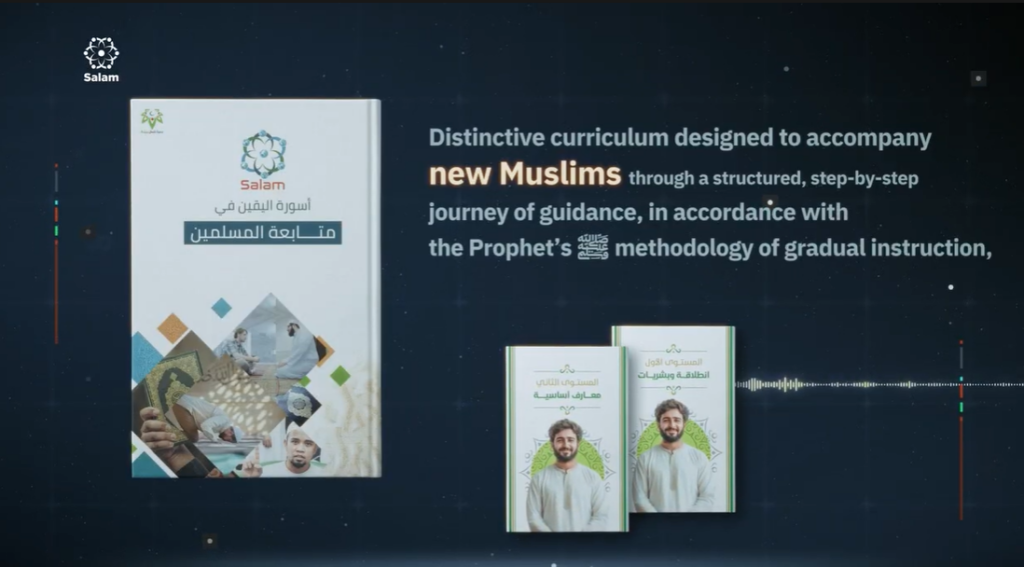
If you’ve recently taken your Shahada or are considering it, ask about joining Asawirat Al-Yaqeen (Bracelets of Certainty) — the Salam Center’s structured post-conversion curriculum built to establish new Muslims on firm knowledge. The program includes:
- Four progressive stages, moving from foundational pillars of Islam through advanced theological and practical knowledge
- Seven structured levels, covering everything from wudu and salah to Islamic ethics, family rulings, and contemporary issues like the one discussed in this article
- A therapeutic pedagogical approach — grounded, compassionate, and reasoned, never rushed or overwhelming
- A global community of new Muslims across 140 countries who have walked this same path
- Certification upon completion, supporting your continued growth in faith and practice
Reach out directly to the Salam Center team to start the Asawirat Al-Yaqeen (Bracelets of Certainty) program for FREE.
Summary
The Quran identifies scriptural distortion by name across four core verses, while still affirming that Allah genuinely revealed the Torah and Gospel to Moses and Jesus. Classical scholarship distinguishes textual corruption from interpretive distortion, and an authenticated hadith in Sahih Bukhari confirms both occurred.
This isn’t a rejection of earlier faiths but a call toward the one revelation Allah promised to protect. The Quran’s guarantee of preservation stands as its defining difference from every book that came before it.
Frequently Asked Questions
Does the Quran say the Bible and Torah are corrupted?
Yes. The Quran uses the term tahrif (distortion) in four verses — 2:75, 4:46, 5:13, and 5:41 — describing how some among the Jews altered their scripture’s wording or meaning. Sahih al-Bukhari further confirms that portions were written “with their own hands” and falsely attributed to Allah.
Do Muslims believe the Bible was originally the word of Allah?
What is the difference between tahrif al-lafz and tahrif al-ma’na?
Tahrif al-lafz means distorting the actual written words of scripture, while tahrif al-ma’na means distorting the meaning of intact text through deliberate misinterpretation. Ibn Kathir’s tafsir on Quran 2:75 treats the verse primarily as addressing distortion of meaning, though other scholars point to evidence of textual alteration as well.
Curious about Islam?
Journey towards clarity and purpose. Our team is here to support you in your search for truth and spiritual guidance.
Embrace the Truth