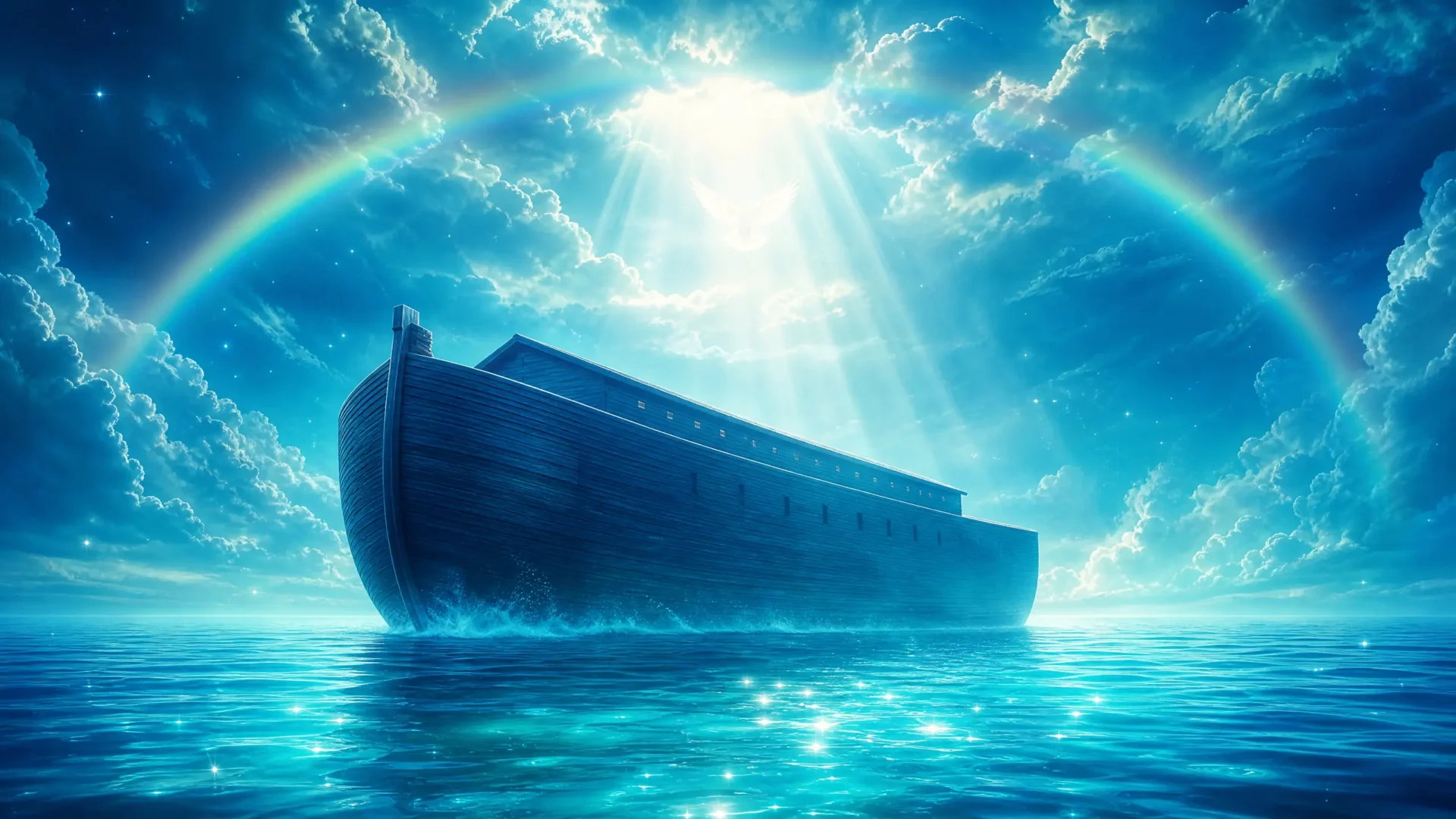
Noah’s Ark in Islam vs Christianity
| Key Takeaways |
| The Quran and the Bible both record Noah’s Ark, but they differ on the flood’s scope, Noah’s family, and the theological purpose of the story. |
| Islam presents Nuh (peace be upon him) as a Prophet and Messenger warning his people toward Tawhid, while the Bible frames Noah primarily as a righteous man preserved from judgment. |
| The Quran never states that the flood covered the entire earth, while Genesis 7:19-20 describes waters covering every mountain under the heavens. |
| One of Noah’s own sons drowned as a disbeliever according to Surah Hud 11:42-43, a detail absent from the Genesis narrative. |
Both Islam and Christianity affirm that a great flood occurred and that Allah saved Noah and his followers aboard an ark. The two traditions diverge sharply, though, on what the flood meant, who was saved, and what the story ultimately proves about Allah.
The Quran tells this account across several surahs, most extensively in Surah Hud, and roots it firmly in the same message every prophet carried: worship Allah alone, without partners.
The Bible tells a related but distinct account in Genesis 6 through 9, framed around divine judgment and a covenant sealed by a rainbow. Comparing these two versions side by side reveals where the traditions agree, where they diverge, and why those divergences matter theologically.
Who was Prophet Nuh (Noah) between Islam and Christianity?
Islam identifies Nuh (peace be upon him) as one of the five greatest Messengers of Allah, part of the Ulul Azm — the Messengers of firm resolve — alongside Ibrahim, Musa, ‘Isa, and Muhammad (peace be upon them all). Nuh was not merely a righteous man who happened to survive a catastrophe. He was a Prophet sent specifically to call his people away from idol worship and back to the pure Tawhid that Adam had first taught humanity.
Sahih al-Bukhari records a hadith that places Nuh at the very beginning of the prophetic chain. On the Day of Judgment, when humanity seeks an intercessor, they will approach Adam first, then Nuh, since he
“is the first amongst the messengers of Allah to the people of the earth” (Sahih al-Bukhari 3340).
This narration anchors Nuh’s position in Islamic theology: he is not simply a flood survivor. He is the first link in an unbroken chain of prophethood that culminates in Muhammad (PBUH).
Christianity’s account, drawn from Genesis, presents Noah differently. He is introduced as
“a righteous man, blameless in his generation” who “walked with God” (Genesis 6:9), and the New Testament book of Hebrews later calls him “a preacher of righteousness” (2 Peter 2:5).
The emphasis in the Christian tradition sits more on Noah’s personal righteousness and obedience than on a formal prophetic office comparable to the Islamic understanding of Nubuwwah (prophethood).
For a fuller picture of how prophethood functions across Islamic belief, the Salam platform’s article on faith in Islam traces this doctrine from its foundations.
Noah’s Role Compared Islam vs Christianity
| Aspect | Islam | Christianity |
| Title | Prophet and Messenger (Rasul), one of the Ulul Azm | Righteous man, preacher of righteousness |
| Core mission | Call people to Tawhid and warn against idolatry | Obey God’s command to build the ark |
| Position in prophetic chain | First Messenger sent to the people of the earth | Patriarch figure; not formally titled a prophet in most translations |
| Primary virtue emphasized | Patience across 950 years of rejection | Personal blamelessness and faith |
Learn More About Islam
Discover the beauty, teachings, and wisdom of Islam in a clear and welcoming way. Start exploring and deepen your understanding today.
Learn MoreHow is the story of Noah’s Ark described Between the Quran and the Bible?
The Quran tells Nuh’s story primarily in Surah Hud, Surah Nuh, and scattered verses across Al-A’raf, Al-Mu’minun, and Al-Qamar, consistently framing the flood as a direct consequence of his people’s rejection of Tawhid.
How does the Quran describe the story of Noah’s Ark?
Nuh warned his nation for centuries, and only a small number believed. Allah commanded him directly:
وَاصْنَعِ الْفُلْكَ بِأَعْيُنِنَا وَوَحْيِنَا وَلَا تُخَاطِبْنِي فِي الَّذِينَ ظَلَمُوا ۚ إِنَّهُم مُّغْرَقُونَ
“And construct the ship under Our observation and Our inspiration and do not address Me concerning those who have wronged; indeed, they are [to be] drowned.” (Quran 11:37)
His own people mocked him as he built it on dry land, unable to imagine that a ship would ever need to float there. When the flood finally came, Allah instructed him:
احْمِلْ فِيهَا مِن كُلٍّ زَوْجَيْنِ اثْنَيْنِ وَأَهْلَكَ إِلَّا مَن سَبَقَ عَلَيْهِ الْقَوْلُ وَمَنْ آمَنَ
“Load upon the ship of each [creature] two mates and your family, except those about whom the word has preceded, and [include] whoever has believed.” (Quran 11:40)
That final phrase — “whoever has believed” — is essential. Salvation in the Quranic account was never tied to bloodline. It was tied to faith.
The ship sailed “through waves like mountains” (Quran 11:42), and when the ordeal ended, the earth itself was commanded to absorb the water:
وَقِيلَ يَا أَرْضُ ابْلَعِي مَاءَكِ وَيَا سَمَاءُ أَقْلِعِي وَغِيضَ الْمَاءُ وَقُضِيَ الْأَمْرُ وَاسْتَوَتْ عَلَى الْجُودِيِّ
“And it was said, ‘O earth, swallow your water, and O sky, withhold [your rain].’ And the water subsided, and the matter was accomplished, and the ship came to rest on the [mountain of] Judiyy.” (Quran 11:44)
How does the Quran describe the story of Noah’s Ark?
The Genesis narrative follows a parallel structure but with different details. God instructs Noah to build the ark, warns of the coming flood, and commands him to bring
“two of all living creatures” into the vessel along with his wife, his three sons, and his sons’ wives (Genesis 6:19).
The flood in Genesis is described with dramatic scope:
“the waters prevailed on the earth 150 days” (Genesis 7:24), and every high mountain under the entire heavens was covered.
The Quran’s article on the history of the Quran explains how such prophetic narratives were preserved through revelation to Muhammad (PBUH) centuries after Nuh’s time, without dependence on earlier scriptural texts that had already undergone alteration.
Was the flood global or local between Islam and Christianity?
The Quran never states, in any verse, that the flood engulfed the entire globe. It describes the destruction of Nuh’s people and the salvation of the believers, but it leaves the flood’s geographic extent unspecified. Islamic scholarship has historically understood this as consistent with the flood being catastrophic and complete for the population it addressed, without requiring a claim about oceans and continents the Quran never mentions.
Genesis, by contrast, is explicit and expansive:
“The waters rose and covered the mountains to a depth of more than fifteen cubits. Every living thing that moved on land perished—birds, livestock, wild animals, all the creatures that swarm over the earth, and all mankind.” (Genesis 7:19-21)
This is a textual difference with real theological weight. The Quran’s silence on global scope leaves room for the flood to be understood as a total judgment upon a specific region and people, consistent with how Allah addresses other destroyed nations in the Quran, such as the people of ‘Aad and Thamud. Genesis commits to planetary destruction as a stated fact.
Flood Scope Comparison
| Detail | Quran | Genesis |
| Explicit claim of global coverage | Not stated | Explicitly stated (Genesis 7:19-20) |
| Duration described | Not numbered in days | 150 days of prevailing waters (7:24) |
| Resting place named | Mount Judiyy (11:44) | Mountains of Ararat (8:4) |
| Cause given | Rejection of Tawhid by Nuh’s people | Wickedness and corruption of “all flesh” |
Who was saved on the Ark between Islam and Christianity?
Here Islam and Christianity accounts diverge in a way that carries deep theological significance for how each religion defines salvation itself. The Quran describes one of Nuh’s own sons refusing to board the ark and drowning as a disbeliever, a scene rendered with unusual emotional weight:
وَنَادَىٰ نُوحٌ ابْنَهُ وَكَانَ فِي مَعْزِلٍ يَا بُنَيَّ ارْكَب مَّعَنَا وَلَا تَكُن مَّعَ الْكَافِرِينَ
“And Noah called to his son who was apart [from them], ‘O my son, come aboard with us and be not with the disbelievers.'” (Quran 11:42)
The son refused, insisting he would climb a mountain instead, and was drowned along with the disbelievers. When Nuh later pleaded to Allah on his son’s behalf, Allah’s reply was direct:
قَالَ يَا نُوحُ إِنَّهُ لَيْسَ مِنْ أَهْلِكَ إِنَّهُ عَمَلٌ غَيْرُ صَالِحٍ
“He said, ‘O Noah, indeed he is not of your family; indeed, he is [one whose] work was other than righteous.'” (Quran 11:46)
This passage delivers one of the Quran’s clearest statements on salvation: lineage does not save anyone. Being the son of a Prophet carries no automatic protection. Faith and righteous action are what determine a person’s fate before Allah — a principle the Salam platform explores further in its article on Islam’s principles.
Genesis presents a cleaner, family-based rescue. All three of Noah’s sons — Shem, Ham, and Japheth — board the ark along with their wives, and the entire family survives together (Genesis 7:13). There is no account of a family member rejecting the mission or drowning as a disbeliever. Salvation in the Genesis narrative follows household lines rather than individual conviction.
Who Boarded the Ark
| Group | Quran | Genesis |
| Noah’s wife | Among the disbelievers destroyed (implied by 66:10) | Boards and is saved |
| Noah’s sons | One son drowns as a disbeliever (11:42-46) | All three sons saved |
| Basis for inclusion | Sincere belief (11:40) | Family membership |
| Total human survivors | Not numbered precisely | Eight souls (1 Peter 3:20) |
Read Also: Mary in Islam vs Christianity
How long did Noah live and preach between Islam and Christianity?
Both scriptures assign Noah an extraordinarily long life, and on this specific point, the two traditions land remarkably close together. The Quran states plainly:
وَلَقَدْ أَرْسَلْنَا نُوحًا إِلَىٰ قَوْمِهِ فَلَبِثَ فِيهِمْ أَلْفَ سَنَةٍ إِلَّا خَمْسِينَ عَامًا فَأَخَذَهُمُ الطُّوفَانُ وَهُمْ ظَالِمُونَ
“And We certainly sent Noah to his people, and he remained among them a thousand years minus fifty years, and the flood seized them while they were wrongdoers.” (Quran 29:14)
That is 950 years of preaching, patience, and rejection before the flood arrived. Genesis, remarkably, arrives at a nearly identical total figure through a different route. Noah was 600 years old when the flood came (Genesis 7:6), and afterward:
“After the flood Noah lived 350 years. Noah lived a total of 950 years, and then he died.” (Genesis 9:28-29)
The number 950 appears in both texts, though the Quran applies it to years of active preaching before the flood, while Genesis applies it to Noah’s total lifespan, of which only 600 years preceded the flood.
This is a genuinely interesting point of convergence between two independently transmitted scriptural traditions, even as the framing around that number differs.
Read Also: Joseph in Islam vs. Christianity
What does the Ark symbolize between Islam and Christianity?
In Islamic theology, the Ark functions primarily as a sign (ayah) — physical proof of Allah’s power to save the believers and destroy the wrongdoers, reinforcing the same pattern repeated throughout the Quran with every rejected prophet. The Quran states directly regarding Nuh and those with him:
فَأَنجَيْنَاهُ وَأَصْحَابَ السَّفِينَةِ وَجَعَلْنَاهَا آيَةً لِّلْعَالَمِينَ
“But We saved him and the companions of the ship, and We made it a sign for the worlds.” (Quran 29:15)
The Ark is not primarily a symbol of cleansing or rebirth in Islamic theology. It is evidence — a demonstration that Allah’s warnings through His Messengers are real, and that rejecting them carries consequences.
Christianity develops the symbolism differently, particularly in New Testament theology. The book of 1 Peter draws an explicit typological link between the floodwaters and baptism:
“In the ark a few people, only eight souls, were saved through water.” (1 Peter 3:20)
This connects the flood narrative to a much larger theological structure in Christianity — one that frames water as an instrument of spiritual cleansing and rebirth, tied to salvation through Christ.
This is a distinctly Christian theological layer built onto the base narrative, and it has no equivalent in the Quranic account, which frames the story around Tawhid and prophetic accountability rather than a typology fulfilled centuries later.
Muslims believe the earlier scriptures, including the account Moses and Jesus (peace be upon them) originally received, contained true revelation from Allah before later human hands introduced changes.
The Salam platform’s article on what Muslims believe about the Bible explains this position in detail, and the broader question of how Islam views other religions provides additional context for how Muslims engage respectfully with earlier scriptural traditions while maintaining that the Quran stands as the final, unaltered word of Allah.
Read Also: Abraham in Islam vs Christianity
What can the Noah’s Ark story teach us today between Islam and Christianity?
Read through the Islamic lens, Nuh’s story teaches patient perseverance in delivering truth even across nine and a half centuries of rejection, and it teaches that no relationship — not even to a Prophet — substitutes for personal faith. These two lessons sit at the center of how the Salam Center’s own Asawirat Al-Yaqeen (Bracelets of Certainty) curriculum approaches the biography of the prophets: not as ancient folklore, but as a living demonstration of how Allah has always distinguished sincere belief from mere proximity to guidance.
Read through the Christian lens, the story emphasizes divine grace extended to a righteous family amid a corrupt world, and a covenant — sealed by the rainbow — that God would never again destroy the earth by flood (Genesis 9:11).
Both traditions agree that Allah preserved a remnant of humanity through catastrophic judgment. Where they part ways is on what that judgment was fundamentally about, and who exactly earned a place on the ark.
Read Also: Musa (Moses) in Islam vs Christianity
Learn More About Islam
Discover the beauty, teachings, and wisdom of Islam in a clear and welcoming way. Start exploring and deepen your understanding today.
Learn MoreRead Also: Judgment Day in Islam vs Christianity
Explore More Authentic Knowledge About Religions and Prophets with Salam
The Salam Center team is ready to answer your questions clearly and respectfully, without judgment and without pressure.
Explore deeper articles on the Salam Platform.
Read more reflections and comparative studies on the Salam blog.
Reach out directly if you have a specific question about Islam, the prophets, or the process of entering the faith.

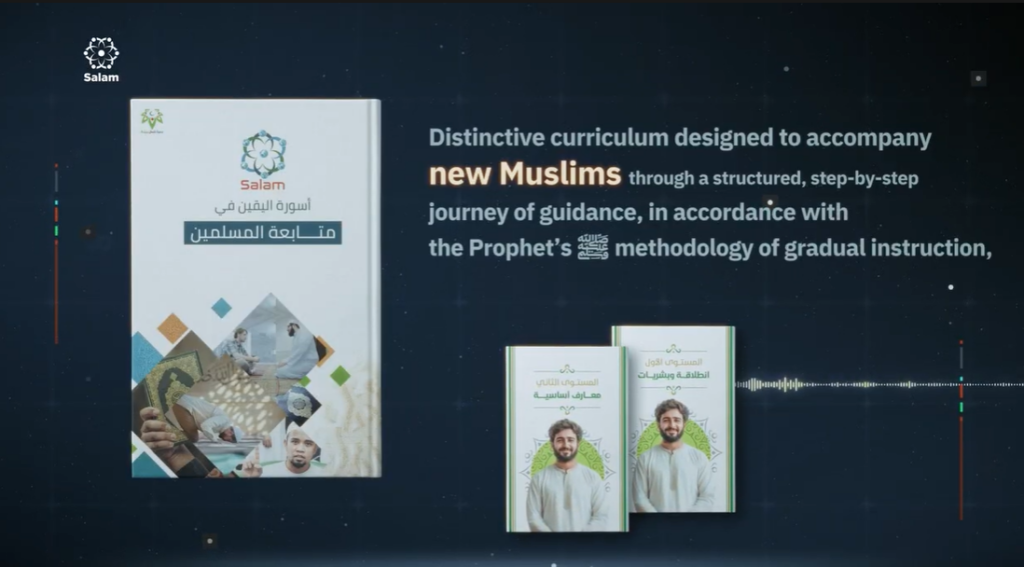
If you are a new Muslim looking for structured, gradual knowledge after taking your Shahada, the Salam Center team also offers the Asawirat Al-Yaqeen (Bracelets of Certainty) program, a four-stage curriculum built specifically for this journey:
- Stage One lays the foundation: the Shahada, wudu, salah, and the core pillars of faith
- Stage Two builds essential knowledge: zakat, fasting, Hajj, and the pillars of Iman
- Stage Three strengthens character: sincere repentance and the biography of Prophet Muhammad (PBUH)
- Stage Four brings consolidation and empowerment: etiquette, practical life rulings, and a life roadmap rooted in Surah Al-Asr
Contact the Salam Center team for general inquiries, guidance on entering Islam, or to join this program.
Reach out directly to the Salam Center team to start the Asawirat Al-Yaqeen (Bracelets of Certainty) program for FREE.
Summary
The Quran and the Bible both preserve the account of a great flood and a righteous man saved aboard an ark, yet the Islamic and Christian versions diverge on the flood’s scope, the fate of Noah’s family, and the story’s central theological purpose.
Islam frames Nuh as the first Messenger in an unbroken prophetic chain calling humanity to Tawhid, while salvation on the ark depended strictly on sincere faith rather than bloodline or proximity to a prophet.
Frequently Asked Questions
Does the Quran mention Noah’s Ark?
Yes. The Quran describes Noah’s Ark extensively, most notably in Surah Hud (11:37-48) and Surah Al-Ankabut (29:14-15), detailing Nuh’s construction of the ship, the flood, and its resting on Mount Judiyy (Quran 11:44).
Did Noah’s whole family survive the flood in Islam?
No. According to Surah Hud, one of Nuh’s sons refused to board and drowned as a disbeliever, since Allah stated he “is not of your family” in righteousness (Quran 11:46), unlike the Genesis account where all three sons survive.
Was Noah’s flood global according to the Quran?
The Quran does not explicitly state the flood was global; it describes the destruction of Nuh’s people without specifying worldwide geographic coverage, unlike Genesis 7:19-20, which describes waters covering all mountains under the heavens.
How long did Prophet Nuh preach before the flood?
The Quran states Nuh preached to his people for 950 years before the flood arrived (Quran 29:14), a figure that closely echoes Genesis 9:28-29’s total lifespan of 950 years for Noah.
Curious about Islam?
Journey towards clarity and purpose. Our team is here to support you in your search for truth and spiritual guidance.
Embrace the Truth