
What Does the Quran Say About Greed?
| Key Takeaways |
| The Quran names greed a spiritual disease that blinds the heart to Allah’s remembrance and the reality of death. |
| Surah Al-Humazah (104:2-3) condemns the person who hoards wealth and imagines it will make him immortal. |
| Surah At-Takathur (102:1-2) describes competitive wealth-accumulation as a distraction that continues until the grave. |
| Surah Ali ‘Imran (3:180) warns that wealth withheld from Allah’s due will become a collar around the withholder’s neck on Judgment Day. |
Greed appears in the Quran not as a minor character flaw but as a disease of the heart, one that reshapes how a person sees Allah, other people, and their own mortality.
The Quran addresses greed directly in verses describing those who hoard gold and silver, those who compete in accumulating wealth until death interrupts them, and those who withhold what Allah has given them out of His bounty.
What Does the Quran Say About Greed?
The Quran’s clearest statement on greed appears in Surah At-Tawbah, where hoarding wealth without spending it in Allah’s cause draws a direct warning of punishment.
وَٱلَّذِينَ يَكْنِزُونَ ٱلذَّهَبَ وَٱلْفِضَّةَ وَلَا يُنفِقُونَهَا فِى سَبِيلِ ٱللَّهِ فَبَشِّرْهُم بِعَذَابٍ أَلِيمٍ
“And those who hoard gold and silver and spend it not in the way of Allah – give them tidings of a painful punishment.” (Quran 9:34)
The verse continues into 9:35, describing that hoarded wealth being heated in the Fire and pressed against the foreheads, sides, and backs of those who hoarded it.
Classical commentary on this passage, drawing on the tafsir tradition, explains that the condemnation targets wealth on which the obligatory due (zakat) goes unpaid — not wealth itself, but wealth treated as an end rather than a trust.
This single ayah anchors the Quran’s entire treatment of greed: the sin is not possession, but possession that closes the hand against Allah’s right and the needs of others.
Greed Distracts a Person From Preparing For the Hereafter
Surah At-Takathur opens with one of the sharpest lines in the Quran on the psychology of greed.
أَلْهَىٰكُمُ ٱلتَّكَاثُرُ حَتَّىٰ زُرْتُمُ ٱلْمَقَابِرَ
“Competition in [worldly] increase diverts you. Until you visit the graveyards.” (Quran 102:1-2)
This surah frames greed as a distraction (ilha) rather than a simple desire — a preoccupation so consuming that it lasts until the moment of death itself. The word takathur describes mutual rivalry in accumulation: wealth, children, status, all measured against what others have.
According to the tafsir attributed to Ibn Kathir, this surah was revealed regarding two rival clans of Medina who boasted about the size of their tribes and possessions, a rivalry the Quran generalizes into a permanent human tendency.
Prophet Muhammad (PBUH) connected this verse to one of his most quoted teachings on greed, recorded in Sahih al-Bukhari:
“If the son of Adam had a valley full of gold, he would want to have two valleys. Nothing fills his mouth but the dust of the grave, and Allah accepts the repentance of whoever repents to Him.” (Sahih al-Bukhari 6439)
This hadith describes greed’s structural problem: it has no natural stopping point. Satisfaction never arrives at the destination the greedy heart imagines it will reach, because the appetite scales with the acquisition. Only death interrupts it.
The Hoarder Who Believes His Wealth Will Make Him Immortal
Surah Al-Humazah takes the psychology of takathur one step further, describing not just the accumulation but the delusion that accompanies it.
ٱلَّذِى جَمَعَ مَالًا وَعَدَّدَهُۥ يَحْسَبُ أَنَّ مَالَهُۥٓ أَخْلَدَهُۥ
“Who collects wealth and [continuously] counts it. He thinks that his wealth will make him immortal.” (Quran 104:2-3)
The surah describes a person who counts and recounts his possessions, drawing a private security from the sheer volume of what he owns.
Tafsir literature on this passage explains that jama’a mala — the gathering of wealth — paired with “counting it over and over” depicts obsessive attachment: money as a private god that seems to promise permanence in a world where nothing worldly is permanent.
The surah’s answer to this delusion is unambiguous, describing the fate of such a person in the Crusher (Al-Hutamah) in the verses that follow.
Greed, in this framing, is not just miserliness. It is a form of forgetting — forgetting that everything a person owns will outlive them or perish before them, and forgetting the One who actually sustains them.
Learn More About Islam
Discover the beauty, teachings, and wisdom of Islam in a clear and welcoming way. Start exploring and deepen your understanding today.
Learn MoreWithholding What Allah Has Given Becomes A Burden On Judgment Day
The Quran also addresses greed as it manifests specifically in withholding rather than merely accumulating.
وَلَا يَحْسَبَنَّ ٱلَّذِينَ يَبْخَلُونَ بِمَآ ءَاتَىٰهُمُ ٱللَّهُ مِن فَضْلِهِۦ هُوَ خَيْرًا لَّهُم ۖ بَلْ هُوَ شَرٌّ لَّهُمْ ۖ سَيُطَوَّقُونَ مَا بَخِلُوا۟ بِهِۦ يَوْمَ ٱلْقِيَٰمَةِ
“And let not those who [greedily] withhold what Allah has given them of His bounty ever think that it is better for them. Rather, it is worse for them. Their necks will be encircled by what they withheld on the Day of Resurrection.” (Quran 3:180)
Tafsir Ibn Kathir on this verse cites a hadith in which the Prophet (PBUH) described unpaid zakat taking the form of a venomous, bald serpent that pursues its owner in the grave, declaring “I am your treasure.”
The imagery is deliberately visceral: what a person clutched too tightly in life becomes, in death, the very thing that binds and torments them.
This principle connects directly to Islam’s broader vision of wealth articulated across the nine core Islam principles — wealth is a trust (amanah) from Allah, not an autonomous possession, and faith in Islam requires believing that provision ultimately comes from Him, not from what a person hoards for themselves.
Greed and the Reality of the Human Soul in the Quran
The Quran does not treat greed as an occasional lapse but as a built-in inclination of the human soul that requires active discipline.
وَأُحْضِرَتِ ٱلْأَنفُسُ ٱلشُّحَّ
“And present in [human] souls is stinginess.” (Quran 4:128)
This phrase acknowledges something important: the Quran does not act surprised that people are drawn toward self-interest and accumulation. It states plainly that shuhh — an intense, gripping stinginess — is woven into human nature. The remedy the Quran offers is not the suppression of desire altogether but its redirection. Surah At-Taghabun makes the stakes explicit:
وَمَن يُوقَ شُحَّ نَفْسِهِۦ فَأُو۟لَٰٓئِكَ هُمُ ٱلْمُفْلِحُونَ
“And whoever is protected from the stinginess of his soul – it is those who will be the successful.” (Quran 64:16)
Success here (falah) is defined specifically against the backdrop of overcoming greed — not simply performing acts of charity, but achieving an internal victory over the soul’s default pull toward hoarding.
Is Wealth Itself Condemned in Islam?
No. The Quran distinguishes clearly between wealth as a lawful blessing and greed as a spiritual disease attached to the love of wealth. Prophets, including Sulayman (Solomon), possessed enormous wealth without it being framed as sinful.
What the Quran condemns is wealth that displaces remembrance of Allah, wealth on which zakat is unpaid, and wealth pursued through injustice.
وَٱبْتَغِ فِيمَآ ءَاتَىٰكَ ٱللَّهُ ٱلدَّارَ ٱلْءَاخِرَةَ ۖ وَلَا تَنسَ نَصِيبَكَ مِنَ ٱلدُّنْيَا
“But seek, through that which Allah has given you, the home of the Hereafter; and [yet], do not forget your share of the world.” (Quran 28:77)
This verse, addressed to Qarun before his downfall through arrogance and greed, captures Islam’s balanced position precisely.
Wealth is not rejected — it is reoriented. A believer is instructed to use worldly provision as a bridge toward the Hereafter, not as a wall built against it.
This is consistent with how Islam views the nature of Allah as Al-Razzaq, the Provider, whose bounty is not diminished by generosity and not increased by hoarding.
Read Also: What Does the Quran Say About Killing in Self-Defense?
How Greed Differs From Legitimate Ambition
| Legitimate Ambition (Praiseworthy) | Greed (Blameworthy) |
| Seeking lawful provision to support family and community | Accumulating wealth obsessively, beyond need, for its own sake |
| Paying zakat and spending in Allah’s cause | Withholding due charity out of fear of loss |
| Remembering Allah while engaged in trade | Letting wealth distract from prayer and remembrance |
| Contentment (qana’ah) with what Allah has apportioned | Constant comparison and rivalry with others’ possessions |
| Desiring more good deeds and closeness to Allah (“Hirs-e-Mahmud”) | Desiring more wealth regardless of its effect on the heart |
Read Also: How Does the Quran Say Muhammad Died?
The Prophetic Cure For a Greedy Heart
Islam does not leave greed undiagnosed without offering a remedy. The Prophet (PBUH) repeatedly tied contentment to true wealth, redefining richness itself.
عَنْ عَبْدِ اللَّهِ بْنِ عَمْرٍو أَنَّ رَسُولَ اللَّهِ صَلَّى اللَّهُ عَلَيْهِ وَسَلَّمَ قَالَ قَدْ أَفْلَحَ مَنْ أَسْلَمَ وَرُزِقَ كَفَافًا وَقَنَّعَهُ اللَّهُ بِمَا آتَاهُ
The Prophet (PBUH) is reported in Sahih Muslim to have described true success as belonging to the one who submits to Allah, receives sufficiency, and is made content by Allah with what he has been given.
This hadith reframes the entire question of greed: the antidote is not merely restraint from hoarding, but the cultivation of qana’ah, an inward contentment that removes the anxious grasping the Quran describes.
Combined with regular charity, honest trade, and consistent remembrance of Allah, this contentment forms the practical path Islam prescribes against a vice it takes as seriously as any major sin.
Read Also: Does the Quran Say How to Pray?
Learn More About Islam
Discover the beauty, teachings, and wisdom of Islam in a clear and welcoming way. Start exploring and deepen your understanding today.
Learn MoreRead Also: What Does the Quran Say About Jihad?
Discover More About Faith, Certainty, and the Journey to Islam
Questions about greed, wealth, and the purpose behind material life often lead to bigger questions about the Quran itself and why it speaks with this kind of moral clarity.
Explore more on the Salam Platform
Read more reflections on the Salam blog
Reach out directly — our team is ready to listen, guide, and welcome you.

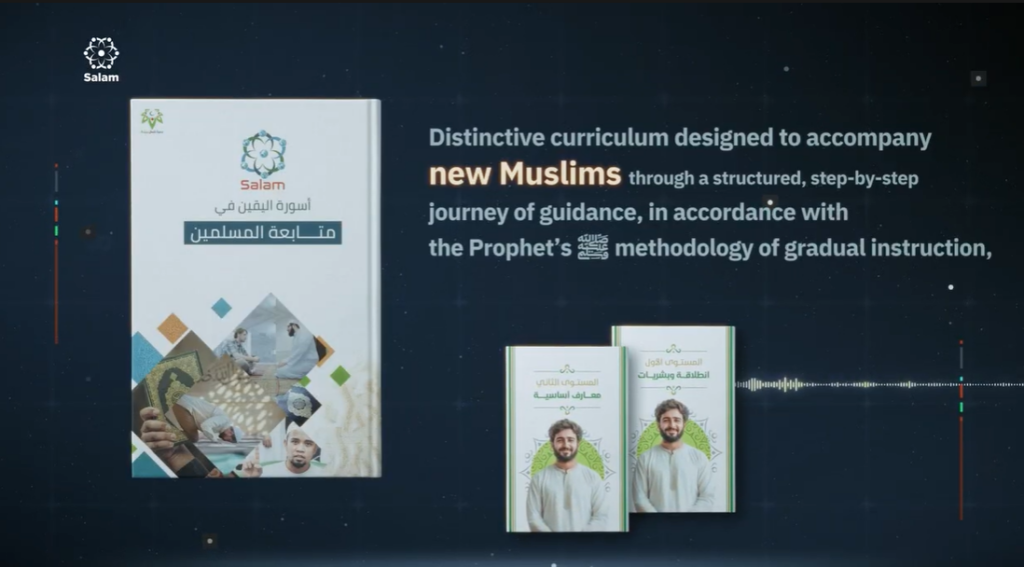
If you’re a new Muslim looking for structured guidance after Shahada, the Salam Center‘s Asawirat Al-Yaqeen (Bracelets of Certainty) program offers a step-by-step path built around:
- Foundational knowledge of prayer, purification, and the pillars of faith
- Guidance on repentance, the Seerah of the Prophet (PBUH), and strengthening Iman
- Practical rulings for daily life, family, and worship
- A supportive community walking the same path toward firm Yaqeen
Reach out anytime — whether you have a specific question about Islam, want guidance on entering the faith, or wish to join the program.
Reach out directly to the Salam Center team to start the Asawirat Al-Yaqeen (Bracelets of Certainty) program for FREE.
Summary
Greed appears throughout the Quran as a spiritual disease that distracts from remembrance of Allah and distorts a person’s relationship with wealth, culminating in vivid warnings about hoarded gold and withheld charity awaiting consequence on Judgment Day.
Islam does not reject wealth but insists it remain a trust rather than an obsession, offering contentment, charity, and remembrance of Allah as the lasting cure for a heart pulled toward endless accumulation.
Frequently Asked Questions
What is the Quranic word for greed?
The Quran uses several terms: bukhl (stinginess), shuhh (intense greed or possessiveness), and hirs (covetous craving). Surah Al-Humazah and Surah At-Takathur both describe the behavioral pattern of greed without needing a single fixed term.
Does Islam forbid being wealthy?
No. Islam permits and even encourages lawful wealth, provided zakat is paid and the wealth does not distract from remembrance of Allah, as clarified in Quran 28:77.
How does Islam recommend overcoming greed?
Islam prescribes contentment (qana’ah), regular charity (zakat and sadaqah), and remembrance of Allah as the primary remedies, alongside recognizing wealth as a trust rather than permanent personal property.
Curious about Islam?
Journey towards clarity and purpose. Our team is here to support you in your search for truth and spiritual guidance.
Embrace the Truth