
Prophets in the Quran
| Key Takeaways |
| The Quran names exactly 25 prophets, from Adam to Prophet Muhammad (PBUH). |
| Eighteen of the 25 prophets appear together in one passage, Surah Al-An’am 6:83-86. |
| Allah sent far more prophets than the 25 named, though the exact figure rests on traditions of varying strength. |
| Five prophets carry the title Ulul Azm, or Possessors of Firm Resolve: Nuh, Ibrahim, Musa, Isa, and Muhammad (PBUH). |
| Prophet Muhammad (PBUH) is described in the Quran as the final prophet, sealing the line that began with Adam. |
| Believing in every prophet without distinction is a core article of faith in Islam. |
Twenty-five prophets are mentioned by name in the Quran, beginning with Adam and ending with Prophet Muhammad (PBUH). This number reflects a close reading of the entire text, since the names appear scattered across different surahs rather than gathered in a single list.
Every prophet named in the text, from Adam to Muhammad (PBUH), came with a version of the same message. Their stories are not separate religions competing for attention.
They are chapters of one continuous invitation to worship Allah alone, a thread that runs through monotheism as Islam understands it.
How many prophets are mentioned in the Quran?
The Quran mentions exactly 25 prophets by name. This figure is not a matter of guesswork; it comes from carefully tracing every verse in which a prophet’s name appears, whether in a narrative passage, a list, or a passing reference.
The bulk of these names, eighteen in total, are gathered in one compact passage: Surah Al-An’am, verses 83 through 86. The remaining seven, Adam, Idris, Hud, Salih, Shu’ayb, Dhul-Kifl, and Muhammad (PBUH), appear individually in other surahs.
Together they form a chain stretching from the first human being to the final messenger, a chain the Quran presents as one unbroken mission rather than twenty-five unrelated stories.
It helps to distinguish between two related but different terms here.
A Nabi (prophet) receives revelation but is not necessarily commanded to deliver a new law to a new people.
A Rasul (messenger) is sent with a scripture or a fresh legal code for his community. Every messenger is a prophet, but not every prophet is a messenger, a distinction that explains why some of the 25 receive far more Quranic attention than others.
1. Adam is the first human and the first prophet
Adam opens the human story in the Quran, created directly by Allah and taught knowledge that the angels themselves did not possess. His account appears at the very beginning of Surah Al-Baqarah, where Allah instructs the angels to prostrate to him and then tests him with the forbidden tree.
What matters for the theme of prophethood is that Adam’s error was followed immediately by guidance and forgiveness, setting the pattern every later prophet would repeat: humanity strays, and Allah sends correction.
وَعَلَّمَ آدَمَ الْأَسْمَاءَ كُلَّهَا ثُمَّ عَرَضَهُمْ عَلَى الْمَلَائِكَةِ فَقَالَ أَنبِئُونِي بِأَسْمَاءِ هَٰؤُلَاءِ إِن كُنتُمْ صَادِقِينَ
“And He taught Adam the names – all of them. Then He showed them to the angels and said, ‘Inform Me of the names of these, if you are truthful.'” (Quran 2:31)
2. Idris was raised to a high station for his truthfulness
Idris receives only brief mention in the Quran, yet what is said of him carries real weight. He is described as a man of complete honesty and a genuine prophet, someone whose patience and devotion earned him a distinguished status.
وَاذْكُرْ فِي الْكِتَابِ إِدْرِيسَ ۚ إِنَّهُ كَانَ صِدِّيقًا نَّبِيًّا
“And mention in the Book, Idrees. Indeed, he was a man of truth and a prophet.” (Quran 19:56)
Islamic tradition places him among the earliest prophets, generations before Nuh, and the hadith literature adds a vivid detail: Prophet Muhammad (PBUH) encountered him during the Night Journey, standing in the fourth heaven.
Learn More About Islam
Discover the beauty, teachings, and wisdom of Islam in a clear and welcoming way. Start exploring and deepen your understanding today.
Learn More3. Nuh preached patience for centuries before the flood
Nuh’s mission stretched across nine and a half centuries, calling his people to abandon idols and worship Allah alone. Almost none of them listened. His story is one of the longest and most repeated in the Quran, precisely because it demonstrates unwavering commitment to a message that met near-total rejection.
وَنُوحًا هَدَيْنَا مِن قَبْلُ
“And Noah, We guided before.” (Quran 6:84)
The flood that followed was not an act of random destruction; it came only after every possible avenue of gentle correction had been exhausted.
4. Hud confronted the arrogance of the people of Aad
Hud was sent to the tribe of Aad, a people renowned for their physical strength and monumental architecture, qualities that fed a dangerous pride. He called them, as every prophet did, to worship Allah exclusively, and he framed their idol-worship plainly as invention rather than truth.
وَإِلَىٰ عَادٍ أَخَاهُمْ هُودًا ۚ قَالَ يَا قَوْمِ اعْبُدُوا اللَّهَ مَا لَكُم مِّنْ إِلَٰهٍ غَيْرُهُ ۖ إِنْ أَنتُمْ إِلَّا مُفْتَرُونَ
“And to ‘Aad [We sent] their brother Hud. He said, ‘O my people, worship Allah; you have no deity other than Him. You are not but inventors [of falsehood].'” (Quran 11:50)
Their refusal, and the mockery that followed, led to their destruction by a violent, sustained windstorm, a fate the Quran references as a lasting warning.
5. Salih called the people of Thamud to worship Allah alone
Salih addressed the tribe of Thamud, a community that had carved impressive dwellings out of solid rock. His sign to them was the she-camel, an unmistakable proof they were commanded to protect and never harm.
وَإِلَىٰ ثَمُودَ أَخَاهُمْ صَالِحًا ۚ قَالَ يَا قَوْمِ اعْبُدُوا اللَّهَ مَا لَكُم مِّنْ إِلَٰهٍ غَيْرُهُ
“And to Thamud [We sent] their brother Salih. He said, ‘O my people, worship Allah; you have no deity other than Him…'” (Quran 11:61)
Their choice to hamstring the animal despite the warning brought swift consequence, and the Quran preserves this account as a study in how privilege without gratitude curdles into arrogance.
6. Ibrahim became the leader whose legacy every later prophet inherited
Ibrahim occupies a singular place in the Quran, tested repeatedly and passing each trial with unshaken conviction.
He is the one Allah names a leader for humanity, the builder of the Kaaba alongside his son Ismail, and the patriarch from whom the later prophetic line descends.
وَإِذِ ابْتَلَىٰ إِبْرَاهِيمَ رَبُّهُ بِكَلِمَاتٍ فَأَتَمَّهُنَّ ۖ قَالَ إِنِّي جَاعِلُكَ لِلنَّاسِ إِمَامًا
“And [mention, O Muhammad], when Abraham was tried by his Lord with commands and he fulfilled them. [Allah] said, ‘Indeed, I will make you a leader for the people.'” (Quran 2:124)
His willingness to question, to reason with his own father about idolatry, and ultimately to submit completely to Allah’s command is why he is remembered as the model of pure monotheistic faith, a legacy the Quran connects directly to the nature of God in Islam.
7. Lut warned his people against open moral corruption
Lut, a nephew of Ibrahim, was sent to a community that had normalized behavior no earlier people had practiced. He confronted them directly, calling for restraint and warning of consequence, but his own household largely rejected the message alongside the wider town.
وَلُوطًا إِذْ قَالَ لِقَوْمِهِ أَتَأْتُونَ الْفَاحِشَةَ مَا سَبَقَكُم بِهَا مِنْ أَحَدٍ مِّنَ الْعَالَمِينَ
“And [mention] Lot, when he said to his people, ‘Do you commit such immorality as no one has preceded you with from among the worlds?'” (Quran 7:80)
His account in the Quran functions as a clear line: societies that institutionalize corruption, and refuse every call to change, do not escape response indefinitely.
8. Ismail carried forward the covenant made with his father
Ismail, Ibrahim’s elder son, stood beside his father as they raised the foundations of the Kaaba, a moment the Quran records with the simple prayer that Allah accept their labor.
وَإِذْ يَرْفَعُ إِبْرَاهِيمُ الْقَوَاعِدَ مِنَ الْبَيْتِ وَإِسْمَاعِيلُ رَبَّنَا تَقَبَّلْ مِنَّا
“And [mention] when Abraham was raising the foundations of the House and [with him] Ishmael, [saying], ‘Our Lord, accept [this] from us…'” (Quran 2:127)
His willingness to submit to Allah’s command, famously tested through the episode of sacrifice, mirrors his father’s own trials and cements his place as a link in the prophetic chain that eventually reaches Muhammad (PBUH), who descended from his line.
9. Ishaq received the same guidance granted to his father
Ishaq, Ibrahim’s second son through Sarah, is described alongside Yaqub as someone Allah guided directly, continuing the prophetic line without interruption.
وَوَهَبْنَا لَهُ إِسْحَاقَ وَيَعْقُوبَ ۚ كُلًّا هَدَيْنَا
“And We gave to Abraham, Isaac and Jacob – all [of them] We guided.” (Quran 6:84)
His mention is brief but decisive: the Quran groups him with his father and grandson as recipients of the same unbroken guidance, part of the same family entrusted with carrying monotheism forward across generations.
10. Yaqub passed the Islam to his own twelve sons
Yaqub, son of Ishaq, is remembered for the deathbed scene where he asks his sons directly what they will worship after he is gone. Their answer, that they will worship the God of their fathers, Ibrahim, Ismail, and Ishaq, alone, shows how deliberately the family transmitted its faith.
أَمْ كُنتُمْ شُهَدَاءَ إِذْ حَضَرَ يَعْقُوبَ الْمَوْتُ إِذْ قَالَ لِبَنِيهِ مَا تَعْبُدُونَ مِن بَعْدِي قَالُوا نَعْبُدُ إِلَٰهَكَ وَإِلَٰهَ آبَائِكَ إِبْرَاهِيمَ وَإِسْمَاعِيلَ وَإِسْحَاقَ إِلَٰهًا وَاحِدًا وَنَحْنُ لَهُ مُسْلِمُونَ
“Or were you witnesses when death approached Jacob, when he said to his sons, “What will you worship after me?” They said, “We will worship your God and the God of your fathers, Abraham and Ishmael and Isaac – one God. And we are Muslims [in submission] to Him.”‘” (Quran 2:133)
Yaqub is also identified in the Quran as Israel, the name from which the Children of Israel take their designation.
11. Yusuf turned betrayal into a position of trust and mercy
Yusuf’s account is the only one told as a single continuous narrative across an entire surah, complete with sibling betrayal, false accusation, imprisonment, and eventual rise to authority in Egypt.
لَقَدْ كَانَ فِي يُوسُفَ وَإِخْوَتِهِ آيَاتٌ لِّلسَّائِلِينَ
“Certainly were there in Joseph and his brothers signs for those who ask.” (Quran 12:7)
What sets his story apart is the moment he forgives the brothers who sold him into slavery, choosing mercy at the precise point where retaliation would have been understandable.
His account remains one of the Quran’s most detailed studies in patience under injustice.
12. Shu’ayb demanded honesty in trade before anything else
Shu’ayb was sent to the people of Madyan, a community whose corruption showed up most visibly in commerce: rigged scales and shortchanged customers.
His call combined worship of Allah alone with a direct, practical demand for fair dealing in daily transactions, a reminder that sincere faith and honest business conduct were never treated as separate concerns in his message.
وَإِلَىٰ مَدْيَنَ أَخَاهُمْ شُعَيْبًا ۗ قَالَ يَا قَوْمِ اعْبُدُوا اللَّهَ مَا لَكُم مِّنْ إِلَٰهٍ غَيْرُهُ ۖ قَدْ جَاءَتْكُم بَيِّنَةٌ مِّن رَّبِّكُمْ ۖ فَأَوْفُوا الْكَيْلَ وَالْمِيزَانَ
“And to [the people of] Madyan [We sent] their brother Shu’ayb. He said, ‘O my people, worship Allah; you have no deity other than Him. There has come to you clear evidence from your Lord. So fulfill the measure and weight…'” (Quran 7:85)
13. Ayyub endured prolonged hardship without losing faith
Ayyub is remembered above all for patience under extended suffering, tested through illness and loss that stretched over years.
وَأَيُّوبَ إِذْ نَادَىٰ رَبَّهُ أَنِّي مَسَّنِيَ الضُّرُّ وَأَنتَ أَرْحَمُ الرَّاحِمِينَ
“And [mention] Job, when he called to his Lord, ‘Indeed, adversity has touched me, and You are the Most Merciful of the merciful.'” (Quran 21:83)
What the Quran emphasizes is not the suffering itself but his response to it: he never turned bitter or abandoned his reliance on Allah, and his eventual restoration is framed as mercy following steadfastness rather than reward for complaint.
14. Dhul-Kifl is named among those who bore hardship with patience
Dhul-Kifl appears in the Quran grouped alongside Ismail and Idris, each identified by the same quality: steadfast patience.
The Quran gives fewer biographical details about him than about most of the 25, and classical commentators have offered different views on his precise identity, though his placement among named prophets in Surah Al-Anbiya is what secures his position on this list.
وَإِسْمَاعِيلَ وَإِدْرِيسَ وَذَا الْكِفْلِ ۖ كُلٌّ مِّنَ الصَّابِرِينَ
“And [mention] Ishmael and Idrees and Dhul-Kifl; all were of the patient.” (Quran 21:85)
15. Musa led his people through direct confrontation with tyranny
Musa is mentioned more often in the Quran than any other prophet, and his account carries some of the text’s most dramatic moments: the confrontation with Pharaoh, the parting of the sea, and the long, difficult relationship with a nation he was trying to guide out of both physical slavery and spiritual confusion.
وَلَقَدْ آتَيْنَا مُوسَى الْكِتَابَ
“And We did certainly give Moses the Torah.” (Quran 2:87)
Musa is one of the five Ulul Azm prophets, those recognized for extraordinary firmness of resolve, and his story returns again and again across the Quran as a case study in perseverance against entrenched power.
Learn More About Islam
Discover the beauty, teachings, and wisdom of Islam in a clear and welcoming way. Start exploring and deepen your understanding today.
Learn More16. Harun supported his brother’s mission with eloquence
Harun, Musa’s older brother, was granted prophethood specifically to assist Musa in confronting Pharaoh, valued for his clarity of speech at a moment when the mission needed a persuasive voice.
Their partnership in the Quran illustrates that prophetic work was not always carried by a single individual standing alone; sometimes it depended on cooperation between people whose strengths complemented each other.
وَمِن ذُرِّيَّتِهِ دَاوُودَ وَسُلَيْمَانَ وَأَيُّوبَ وَيُوسُفَ وَمُوسَىٰ وَهَارُونَ ۚ وَكَذَٰلِكَ نَجْزِي الْمُحْسِنِينَ
“…and among his descendants, David and Solomon and Job and Joseph and Moses and Aaron. Thus do We reward the doers of good.” (Quran 6:84)
17. Dawud combined kingship with deep personal devotion
Dawud held both prophethood and political rule, a rare combination in the Quranic account, and he is remembered particularly for the beauty of his voice in praising Allah and for the wisdom granted to him in judgment.
فَهَزَمُوهُم بِإِذْنِ اللَّهِ وَقَتَلَ دَاوُودُ جَالُوتَ وَآتَاهُ اللَّهُ الْمُلْكَ وَالْحِكْمَةَ وَعَلَّمَهُ مِمَّا يَشَاءُ ۗ وَلَوْلَا دَفْعُ اللَّهِ النَّاسَ بَعْضَهُم بِبَعْضٍ لَّفَسَدَتِ الْأَرْضُ وَلَٰكِنَّ اللَّهَ ذُو فَضْلٍ عَلَى الْعَالَمِينَ
“So they defeated them by permission of Allah, and David killed Goliath, and Allah gave him the kingship and prophethood and taught him from that which He willed. And if it were not for Allah checking [some] people by means of others, the earth would have been corrupted, but Allah is full of bounty to the worlds.” (Quran 2:251)
His story of facing and defeating Goliath appears early in Surah Al-Baqarah, establishing him even before his prophetic mission is described at length elsewhere in the text.
18. Sulaiman governed with authority extended beyond ordinary rule
Sulaiman, Dawud’s son, inherited not only his father’s kingdom but an extraordinary scope of authority, understanding the speech of birds and commanding forces beyond the human world.
وَوَهَبْنَا لِدَاوُودَ سُلَيْمَانَ ۚ نِعْمَ الْعَبْدُ ۖ إِنَّهُ أَوَّابٌ
“And to David We gave Solomon. An excellent servant, indeed he was one repeatedly turning back [to Allah].” (Quran 38:30)
What the Quran stresses throughout his account is that this vast power never became a source of arrogance; he consistently attributed every capability to Allah’s favor rather than his own merit.
19. Ilyas confronted the worship of a false deity head-on
Ilyas was sent to a community that had turned to worshipping Ba’l, and his message was direct and unambiguous: abandon this invented deity and return to the One who actually created them.
وَإِنَّ إِلْيَاسَ لَمِنَ الْمُرْسَلِينَ
“And indeed, Elias was from among the messengers.” (Quran 37:123)
The Quran singles him out as a model of righteousness, standing firmly against a form of idolatry that had become deeply embedded in his people’s culture.
20. Al-Yasa carried the mission forward after his teacher
Al-Yasa is mentioned briefly, grouped in the Quran’s shorter lists alongside other prophets known chiefly for excellence and steadfastness.
وَإِسْمَاعِيلَ وَالْيَسَعَ وَيُونُسَ وَلُوطًا ۚ وَكُلًّا فَضَّلْنَا عَلَى الْعَالَمِينَ
“And Ishmael and Elisha and Jonah and Lot – and all [of them] We preferred over the worlds.” (Quran 6:86)
Islamic tradition holds that he continued the work Ilyas had begun, a quieter but no less committed continuation of the same call to worship Allah without partners.
21. Yunus learned humility inside the belly of a whale
Yunus left his people before receiving permission to do so, frustrated by their persistent rejection, and found himself swallowed by a great fish as a consequence.
His prayer from that darkness, a direct acknowledgment of Allah’s transcendence and his own wrongdoing, is preserved in the Quran as a model supplication still recited by Muslims facing hardship today.
فَنَادَىٰ فِي الظُّلُمَاتِ أَن لَّا إِلَٰهَ إِلَّا أَنتَ سُبْحَانَكَ إِنِّي كُنتُ مِنَ الظَّالِمِينَ
“And he called out within the darknesses, ‘There is no deity except You; exalted are You. Indeed, I have been of the wrongdoers.'” (Quran 21:87)
Learn More About Islam
Discover the beauty, teachings, and wisdom of Islam in a clear and welcoming way. Start exploring and deepen your understanding today.
Learn More22. Zakariya prayed for a child in old age and was answered
Zakariya, a righteous elder serving in the temple, prayed persistently for a child despite his advanced age and his wife’s condition, worried about who would carry forward righteous work after him.
His account is closely tied to Maryam, whom he guarded and provided for, and Allah’s response to his prayer became the miraculous birth of Yahya.
هُنَالِكَ دَعَا زَكَرِيَّا رَبَّهُ ۖ قَالَ رَبِّ هَبْ لِي مِن لَّدُنكَ ذُرِّيَّةً طَيِّبَةً
“At that, Zechariah called upon his Lord, saying, ‘My Lord, grant me from Yourself a good offspring.'” (Quran 3:38)
23. Yahya was granted wisdom while still a child
Yahya, born to Zakariya as a direct answer to prayer, received wisdom and understanding from Allah at a remarkably young age.
يَا يَحْيَىٰ خُذِ الْكِتَابَ بِقُوَّةٍ ۖ وَآتَيْنَاهُ الْحُكْمَ صَبِيًّا
“‘O John, take the Scripture with determination.’ And We gave him judgement [while yet] a boy.” (Quran 19:12)
The Quran describes him with a rare cluster of qualities: gentleness, purity, devotion to his parents, and freedom from arrogance and rebellion, a portrait of righteousness achieved without ever needing to grow into it slowly.
24. Isa was born miraculously and given clear signs from Allah
Isa, born to Maryam without a father through Allah’s direct command, spoke while still an infant to defend his mother’s honor and later performed miracles by Allah’s permission: healing the sick, giving sight to the blind, and bringing life to what appeared lifeless.
إِذْ قَالَتِ الْمَلَائِكَةُ يَا مَرْيَمُ إِنَّ اللَّهَ يُبَشِّرُكِ بِكَلِمَةٍ مِّنْهُ اسْمُهُ الْمَسِيحُ عِيسَى ابْنُ مَرْيَمَ وَجِيهًا فِي الدُّنْيَا وَالْآخِرَةِ وَمِنَ الْمُقَرَّبِينَ
“[And mention] when the angels said, “O Mary, indeed Allah gives you good tidings of a word from Him, whose name will be the Messiah, Jesus, the son of Mary – distinguished in this world and the Hereafter and among those brought near [to Allah]..'” (Quran 3:49)
The Quran is emphatic that despite these extraordinary signs, Isa was a servant and messenger of Allah, never divine himself, a point of clarification central to how Islam approaches what Muslims believe about the Quran and its account of Jesus.
Read Also: The Story of Prophet Joseph in Islam According to the Quran
25. Muhammad (PBUH) sealed the line of prophets sent to humanity
Prophet Muhammad (PBUH) is the final name on this list and the final prophet sent to humanity, a status the Quran states without ambiguity.
His mission did not introduce a new religion competing with what came before; it confirmed and completed the same call to monotheism carried by every prophet from Adam onward.
His night journey through the heavens, recorded in Sahih Muslim, describes him meeting several of these very prophets, Adam, Isa, Yahya, Yusuf, Idris, Harun, Musa, and Ibrahim, a moment that visibly ties the entire prophetic chain together in a single encounter.
مَّا كَانَ مُحَمَّدٌ أَبَا أَحَدٍ مِّن رِّجَالِكُمْ وَلَٰكِن رَّسُولَ اللَّهِ وَخَاتَمَ النَّبِيِّينَ
“Muhammad is not the father of [any] one of your men, but [he is] the Messenger of Allah and last of the prophets.” (Quran 33:40)
This connection to earlier prophets is reinforced directly in the authenticated Sunnah. Sahih Muslim preserves the detailed account of that night, narrated on the authority of Malik ibn Sa’sa’a, describing each meeting in the ascending heavens.
Sahih Muslim records: the Prophet observed that he met Jesus in the second heaven, Yahya in the third heaven, Yusuf, Idris in the fourth, Harun in the fifth, continuing upward until reaching Ibrahim in the seventh.
Read Also: Jinn in Quran
Do these 25 represent the total number of prophets Allah sent?
No. The Quran itself states plainly that these 25 are only the prophets whose accounts Allah chose to relate; others were sent whose stories were never disclosed in the text.
مِنْهُم مَّن قَصَصْنَا عَلَيْكَ وَمِنْهُم مَّن لَّمْ نَقْصُصْ عَلَيْكَ
“Among them are those [whose stories] We have related to you, and among them are those [whose stories] We have not related to you.” (Quran 40:78)
What remains firmly established, resting on the Quran’s own clear statement rather than a debated number, is that Allah’s guidance to humanity long predates and extends beyond these 25 named figures.
Read Also: Dajjal in the Quran
Every named prophet called their people to the same core message
Despite covering different eras, different regions, and vastly different circumstances, all 25 prophets in the Quran delivered a message with the same foundation: worship Allah alone, without partners, without intermediaries, without exception.
This consistency is itself presented as evidence of the message’s divine origin; twenty-five independent figures across thousands of years, with no way to coordinate with one another, arriving at the identical central claim.
This is the theological backbone of how Islam views other religions, not as entirely separate paths but as branches of one continuous revelation, later altered or obscured in various ways, that the Quran arrived to restore and finalize.
Read Also: The Story of Abraham Sacrificing His Son in the Quran
Learn More About Islam
Discover the beauty, teachings, and wisdom of Islam in a clear and welcoming way. Start exploring and deepen your understanding today.
Learn MoreDiscover More About Faith, Certainty, and the Journey to Islam
If these accounts of prophethood raised questions you’d like explored further, there’s more waiting on the Salam Platform.
Curious about how Islam addresses questions across scripture, history, and belief? Visit the Salam blog for structured, evidence-based articles written specifically for sincere seekers.
Considering Islam personally and want to talk it through with someone directly? Reach out directly — the Salam Center team welcomes honest questions without pressure or judgment.

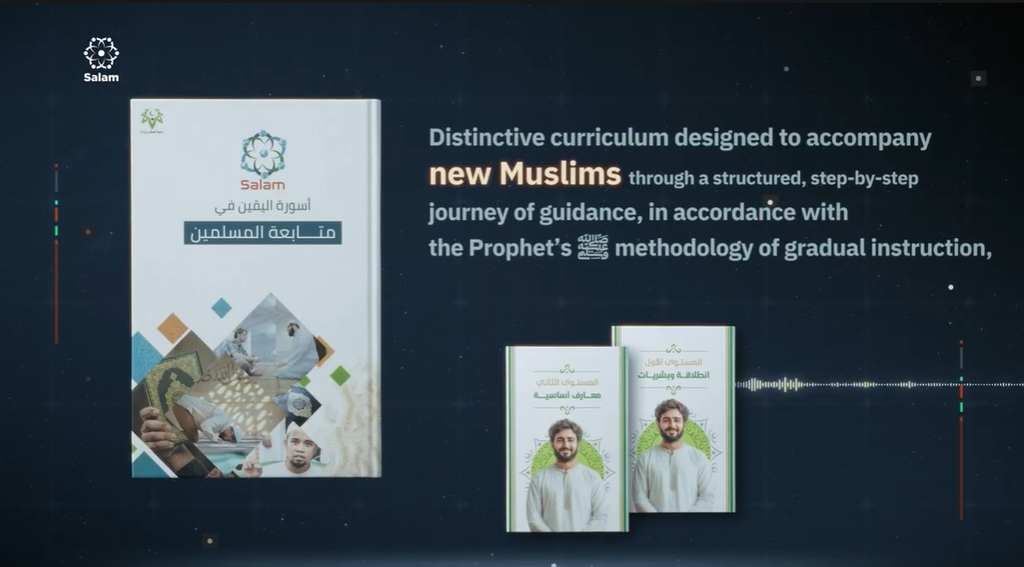
Already Muslim and looking for structured post-conversion learning? The Asawirat Al-Yaqeen (Bracelets of Certainty) program offers a guided path built specifically for new Muslims, including:
- A four-stage curriculum moving from foundational practice through advanced theological grounding
- Structured lessons on Seerah, creed, fiqh, and daily conduct, paced for steady progress
- Interactive assessments to track understanding at every level
- A supportive, judgment-free community walking the same path
Whether you’re asking your first question about Islam or your hundredth, the door stays open.
Reach out directly to the Salam Center team to start the Asawirat Al-Yaqeen (Bracelets of Certainty) program for FREE.
Summary
Twenty-five prophets are named across the Quran, spanning from Adam’s creation to Muhammad’s (PBUH) sealing of prophethood, with eighteen of them gathered together in a single passage in Surah Al-An’am. Each one, regardless of era or circumstance, carried the identical invitation to worship Allah without partners.
This shared thread across twenty-five separate lifetimes forms one of Islam’s clearest arguments for its own coherence, a chain of guidance that acknowledges gaps in what was recorded while affirming that Allah’s mercy toward humanity never actually paused. The story, as the Quran presents it, remains open for anyone still willing to listen.
Frequently Asked Questions
How many prophets are mentioned by name in the Quran?
Twenty-five prophets are named in the Quran, from Adam to Muhammad (PBUH). Eighteen appear together in Surah Al-An’am 6:83-86, while the remaining seven are named individually across other surahs.
Who are the five Ulul Azm prophets in Islam?
The five Ulul Azm, or “Possessors of Firm Resolve,” are Nuh, Ibrahim, Musa, Isa, and Muhammad (PBUH). The Quran singles them out in Surah Al-Ahqaf 46:35 for their extraordinary patience under exceptionally difficult missions.
What is the difference between a Nabi and a Rasul in Islam?
A Nabi (prophet) receives revelation but is not required to deliver a new scripture or law. A Rasul (messenger) is sent specifically with a new book or legal code for his people. Every Rasul is also a Nabi, but not every Nabi is a Rasul.
Is Prophet Muhammad (PBUH) considered the final prophet in Islam?
Yes. The Quran states directly in Surah Al-Ahzab 33:40 that Muhammad (PBUH) is the Messenger of Allah and the last of the prophets, sealing the prophetic line that began with Adam.
Does the Quran claim these 25 are the only prophets Allah ever sent?
No. Surah Ghafir 40:78 explicitly states that Allah related some prophets’ stories in the Quran while leaving others untold, indicating the 25 named figures do not represent the complete historical total.
Curious about Islam?
Journey towards clarity and purpose. Our team is here to support you in your search for truth and spiritual guidance.
Embrace the Truth