
What Is the Longest Surah in the Quran?
| Key Takeaways |
| Surah Al-Baqarah is the longest surah in the Quran, containing 286 verses. |
| Al-Baqarah is the second chapter of the Quran and was revealed in Madinah. |
| The surah’s longest single verse, Ayat al-Dayn (2:282), addresses the Islamic ruling on writing down debts. |
| Prophet Muhammad (PBUH) described Al-Baqarah as a source of blessing whose recitation protects a household. |
Surah Al-Baqarah is the longest surah in the Quran, spanning 286 verses across roughly 48 pages of the Mushaf. Named “The Cow” after the account of the Israelites and the cow mentioned within it, this Madinan surah covers an extraordinary range of subject matter — theology, law, history, and guidance for daily life.
What is the longest surah in the Quran?
The longest surah in the Quran is Surah Al-Baqarah, containing 286 verses. Surah Al-Baqarah is the second chapter of the Quran, positioned immediately after the opening chapter, Al-Fatihah. Revealed in Madinah over an extended period following the Prophet’s migration, Al-Baqarah addresses matters ranging from the pillars of belief to detailed legal rulings on marriage, trade, and warfare. Surah Al-Baqarah’s sheer scope — nearly one-twelfth of the entire Quran — sets it apart from every other chapter.
Al-Baqarah also contains the single longest verse in the Quran, verse 282, known as Ayat al-Dayn (the Verse of the Loan), which lays out detailed guidance on documenting debts.
Within the same surah sits Ayat al-Kursi (2:255), widely regarded as the most profound verse in the Quran for its description of Allah’s sovereignty and knowledge.
Scholars of tafsir have long noted that Al-Baqarah functions almost as a summary of Islamic law and belief in miniature, which is part of why classical commentators like Ibn Kathir treated it as foundational to understanding the rest of the Quran.
Al-Baqarah is the second chapter after Al-Fatihah in the Mushaf
The Quran contains 114 surahs arranged not by chronology of revelation but largely by length, with longer chapters generally placed earlier and shorter ones toward the end. Al-Fatihah, the opening chapter, is a brief seven-verse prayer that precedes everything else. Al-Baqarah immediately follows Al-Fatihah, beginning the long stretch of legislative and doctrinal content that characterizes much of the Quran’s early portion.
The chapter opens with a description of three categories of people — the believers, the disbelievers, and the hypocrites — before moving into the story of Adam, the covenant with the Children of Israel, and eventually detailed rulings that would shape Islamic jurisprudence for centuries.
This structure reflects a broader principle in how Muslims understand Islam principles: belief and practice are woven together rather than separated into distinct categories.
Surah Al-Baqarah takes its name from the account of the cow
Al-Baqarah, meaning “The Cow,” draws its name from an episode described in verses 67 through 73, where Allah commands the Israelites through Prophet Musa (Moses) to sacrifice a cow.
The Israelites respond with a series of questions about the cow’s exact qualities rather than simply obeying, and classical commentators have long read this episode as an illustration of excessive questioning delaying obedience.
The story serves as a moral lesson rather than a central theme of the chapter as a whole.
Learn More About Islam
Discover the beauty, teachings, and wisdom of Islam in a clear and welcoming way. Start exploring and deepen your understanding today.
Learn MoreAyat al-Dayn in Surah Al-Baqarah is the longest single verse in the Quran
Verse 282 of Al-Baqarah is not only part of the longest chapter — it is also the longest individual verse in the entire Quran. This verse, known as Ayat al-Dayn, provides detailed instructions for documenting loans and financial obligations between parties. It calls for written records, reliable witnesses, and honest scribes, reflecting the Quran’s attention to practical justice alongside spiritual guidance.
“يَا أَيُّهَا الَّذِينَ آمَنُوا إِذَا تَدَايَنتُم بِدَيْنٍ إِلَىٰ أَجَلٍ مُّسَمًّى فَاكْتُبُوهُ….”
“O you who have believed, when you contract a debt for a specified term, write it down…” (Quran 2:282)
This verse alone illustrates why Al-Baqarah earns its reputation for comprehensiveness. It moves from questions of theology to practical commercial ethics within a single chapter, reinforcing the Islamic view that faith governs every dimension of life — a principle explored further in discussions of how Islam views the nature of God and His guidance over human affairs.
Ayat al-Kursi within Al-Baqarah is the greatest verse in the Quran
Verse 255 of Al-Baqarah, known as Ayat al-Kursi or the Throne Verse, holds a distinct status among Muslims. Prophet Muhammad (PBUH) identified it as the greatest verse in the Quran, and it is recited widely for protection and remembrance of Allah’s greatness.
Allah says:
اللَّهُ لَا إِلَٰهَ إِلَّا هُوَ الْحَيُّ الْقَيُّومُ ۚ لَا تَأْخُذُهُ سِنَةٌ وَلَا نَوْمٌ ۚ لَّهُ مَا فِي السَّمَاوَاتِ وَمَا فِي الْأَرْضِ ۗ مَن ذَا الَّذِي يَشْفَعُ عِندَهُ إِلَّا بِإِذْنِهِ ۚ يَعْلَمُ مَا بَيْنَ أَيْدِيهِمْ وَمَا خَلْفَهُمْ ۖ وَلَا يُحِيطُونَ بِشَيْءٍ مِّنْ عِلْمِهِ إِلَّا بِمَا شَاءَ ۚ وَسِعَ كُرْسِيُّهُ السَّمَاوَاتِ وَالْأَرْضَ ۖ وَلَا يَئُودُهُ حِفْظُهُمَا ۚ وَهُوَ الْعَلِيُّ الْعَظِيمُ
“Allah – there is no deity except Him, the Ever-Living, the Sustainer of [all] existence. Neither drowsiness overtakes Him nor sleep. To Him belongs whatever is in the heavens and whatever is on the earth. Who is it that can intercede with Him except by His permission? He knows what is [presently] before them and what will be after them, and they encompass not a thing of His knowledge except for what He wills. His Kursi extends over the heavens and the earth, and their preservation tires Him not. And He is the Most High, the Most Great.” (Quran 2:255)
This verse encapsulates core elements of Islamic monotheism — Allah’s eternal life, His complete self-sufficiency, and His unceasing awareness of creation.
It stands as one of the clearest Quranic articulations of Monotheism in Islam, directly opposing any notion of Polytheism or division of divine authority.
The Prophet described specific virtues tied to reciting Al-Baqarah
Beyond its length and legal content, Al-Baqarah carries spiritual significance documented in authentic hadith. Prophet Muhammad (PBUH) taught that reciting this surah in one’s home brings protection and blessing.
The Prophet (PBUH) said:
“Recite Surah al-Baqarah, for to take recourse to it is a blessing and to give it up is a cause of grief, and the magicians cannot confront it.” — Sahih Muslim 804
A related narration reinforces this protective quality. Abu Hurairah reported that the Prophet (PBUH) said:
“Do not turn your houses into graves. Indeed, the devils flee from a household that has Surah al-Baqarah recited in it.” — Sahih Muslim 780
These narrations, found in Sahih Muslim, reflect a consistent theme across authentic hadith literature: regular engagement with the Quran, and with Al-Baqarah specifically, is presented as a source of spiritual strength.
This mirrors the broader emphasis Islam places on the Quran as outlined in resources discussing why Muslims believe in the Quran.
Read Also: What Is the Last Surah of the Quran?
Other surahs vary dramatically in length across the Quran
Al-Baqarah’s 286 verses stand in sharp contrast to the shortest chapters of the Quran. Surah Al-Kawthar, the 108th chapter, contains only three verses, making it the shortest surah in the entire Quran.
Between these two extremes, the Quran’s 114 chapters range widely — some spanning dozens of pages, others just a few lines.
This variation is not arbitrary. Longer surahs, revealed primarily in Madinah, tend to focus on law, community organization, and social ethics, since the Muslim community in Madinah required structured guidance for governance.
Shorter surahs, largely Meccan, often emphasize core theological messages — Allah’s oneness, the reality of the afterlife, and moral accountability — delivered in concentrated, memorable form.
This structural logic reflects broader questions addressed in discussions of the history of the Quran and its gradual revelation over 23 years.
Read Also: What Is the Longest Ayah in the Quran?
Chapter length reflects the surah’s place and purpose
Scholars of Quranic sciences have observed that Madinan surahs, including Al-Baqarah, tend to be longer because they address a functioning community rather than individuals still forming their basic beliefs.
Legal rulings on marriage, inheritance, fasting, and commerce required the kind of detail that shorter, more poetic Meccan chapters did not need to provide.
This distinction helps explain not just why Al-Baqarah is long, but why length itself carries meaning within the Quran’s structure.
Read Also: The Shortest Surah in the Quran
Learn More About Islam
Discover the beauty, teachings, and wisdom of Islam in a clear and welcoming way. Start exploring and deepen your understanding today.
Learn MoreLearn More Authentic Knowledge About Islam & Quran with Salam
If Surah Al-Baqarah has sparked deeper questions about the Quran, faith, or the path toward Islam, the Salam Center team is here to walk alongside you.
Explore more on the Salam Platform
Read reflections and guidance on the Salam blog
Have a specific question?
Reach out directly — our team is ready to listen, guide, and welcome you.

Curious about entering Islam? We can guide you through every step, gently and without pressure.
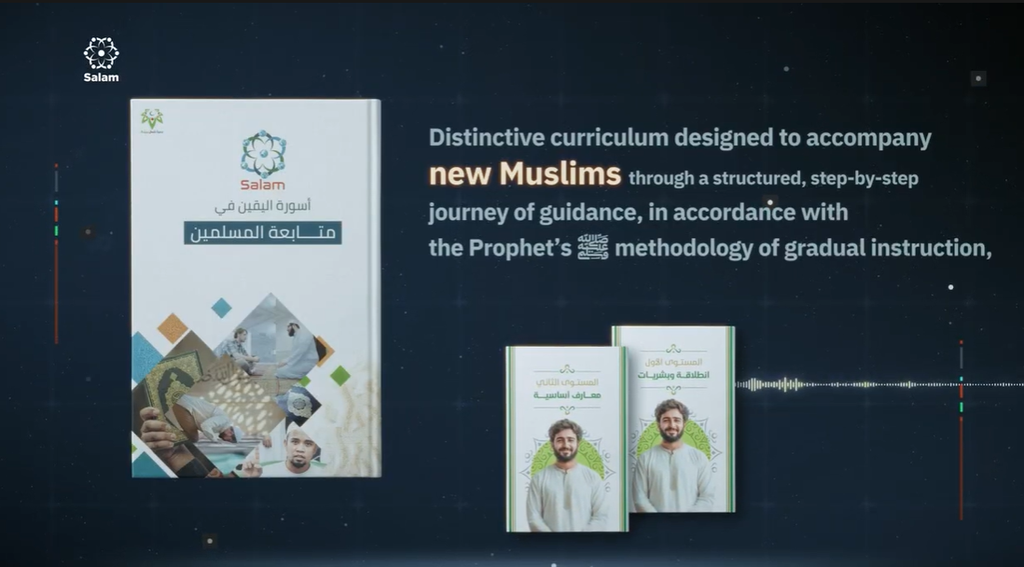
New to Islam and looking for structure? Join Asawirat Al-Yaqeen (Bracelets of Certainty), our four-stage program built for new Muslims:
- Stage One lays the foundation — the Shahada, prayer, and purification
- Stage Two builds deeper knowledge — repentance and the life of the Prophet (PBUH)
- Stage Three consolidates character — etiquette, family, and daily conduct
- Stage Four empowers you with answers to contemporary questions and a clear life roadmap
Have a general question about Islam? We’re glad to listen and respond with clarity and care.
Reach out directly to the Salam Center team to start the Asawirat Al-Yaqeen (Bracelets of Certainty) program for FREE.
Summary
Surah Al-Baqarah stands as the Quran’s longest chapter at 286 verses, encompassing theology, law, and moral guidance within a single Madinan revelation. Its verses include both the longest single ayah, Ayat al-Dayn, and the revered Ayat al-Kursi.
Authentic hadith describe distinct spiritual virtues tied to reciting this surah regularly, reinforcing its central place in Muslim life. Exploring Al-Baqarah offers a meaningful starting point for anyone seeking to understand the Quran’s depth and structure.
Frequently Asked Questions
What is the longest surah in the Quran?
Surah Al-Baqarah is the longest surah in the Quran, containing 286 verses. It is the second chapter, revealed in Madinah, and covers theology, law, and moral guidance across roughly 48 pages of the Mushaf.
How many verses does Surah Al-Baqarah have?
Surah Al-Baqarah contains exactly 286 verses, making it the longest chapter among the Quran’s 114 surahs. It also includes the Quran’s single longest verse, Ayat al-Dayn (2:282).
What is the shortest surah in the Quran?
Surah Al-Kawthar is the shortest surah in the Quran, containing only three verses. It is the 108th chapter and focuses on gratitude to Allah for abundant blessing.
Why is Surah Al-Baqarah considered so important?
Surah Al-Baqarah is considered important because it contains foundational Islamic legislation, Ayat al-Kursi, and Prophetic teachings on its protective virtue. Sahih Muslim 804 records the Prophet (PBUH) describing its recitation as a source of blessing.
Curious about Islam?
Journey towards clarity and purpose. Our team is here to support you in your search for truth and spiritual guidance.
Embrace the Truth