Do Muslims Believe in Christmas?
| Key Takeaways |
| Muslims do not celebrate Christmas because it is a religious holiday rooted in the Christian belief that Jesus is the Son of God — a doctrine Islam explicitly rejects. |
| Islam honors Jesus (‘Isa, peace be upon him) as one of the greatest prophets, but affirms with certainty that he was a human messenger, not divine. |
| Muslims believe the original message of Jesus was pure monotheism — the same message brought by all prophets — and that this message was later altered. |
| Wishing someone “Merry Christmas” or exchanging gifts as part of the religious celebration is considered impermissible by the majority of Islamic scholars. |
| Muslims can and do respect Christians as People of the Book while declining to participate in Christmas as a matter of religious integrity, not hostility. |
The distance between Islam and Christmas has nothing to do with rejecting Jesus. It has everything to do with what Christmas actually asserts about him.
For curious non-Muslims wondering where Muslims stand, or for Muslims navigating December in Western countries, this article lays out the Islamic position with clarity, honesty, and its full evidential basis.
Do Muslims Believe in Christmas?
Muslims do not believe in Christmas — and the reason runs much deeper than cultural preference. Christmas, in its theological core, is a celebration of the belief that Allah became incarnate in human form.
For a Muslim, that belief is not a minor doctrinal disagreement. It touches the most fundamental principle in the Islamic worldview: the absolute oneness of Allah, what the Quran calls Tawhid.
That said, the question itself deserves a real answer — one that doesn’t flatten the nuance. Muslims love and revere Jesus. They believe in his miraculous birth, his profound prophethood, and his eventual return before the Day of Judgment.
Why Muslims Revere Jesus but Don’t Celebrate His Birthday?
Islam’s position on Jesus (‘Isa ibn Maryam, peace be upon him) is one of the most misunderstood aspects of the faith. Jesus is mentioned by name 25 times in the Quran — more than the name of Prophet Muhammad (PBUH). His mother Maryam (Mary) has an entire chapter named after her: Surah Maryam, the 19th chapter of the Quran.
Allah describes Jesus in the Quran with titles of immense honor:
وَيُكَلِّمُ النَّاسَ فِي الْمَهْدِ وَكَهْلًا وَمِنَ الصَّالِحِينَ
“And he will speak to the people in the cradle and in maturity and will be of the righteous.” (Quran 3:46)
Muslims believe in his virgin birth, his ability to perform miracles by Allah’s permission, and his status as the Messiah. These are not peripheral beliefs — they are articles of Islamic faith. A Muslim who denies the prophethood of Jesus has left the fold of Islam.
Where do Islam and Christianity Diverge on Jesus?
The difference lies in one specific claim: divinity. Christmas, at its theological root, is a celebration of the Incarnation — the belief that God took on human flesh in the person of Jesus. For Islam, that belief contradicts something that cannot be compromised.
لَقَدْ كَفَرَ الَّذِينَ قَالُوا إِنَّ اللَّهَ هُوَ الْمَسِيحُ ابْنُ مَرْيَمَ
“They have certainly disbelieved who say, ‘Allah is the Messiah, the son of Mary‘.” (Quran 5:72)
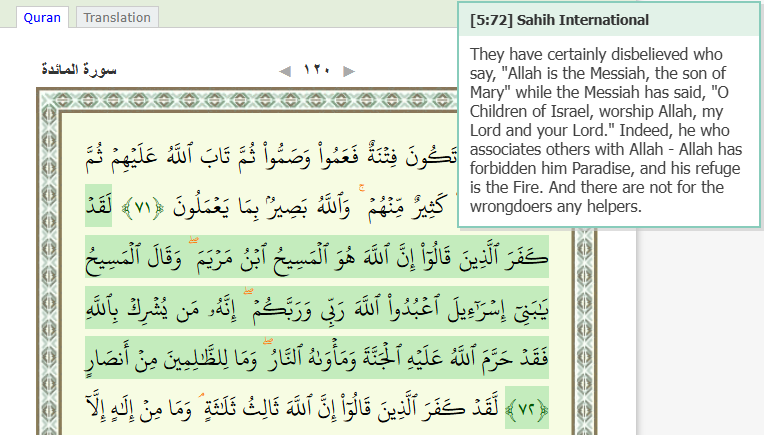
This verse is direct. The Quran doesn’t soften it, and authentic Islamic scholarship doesn’t soften it either.
The Islamic understanding of the nature of God — as absolutely one, unbegotten, and without partners — makes the Incarnation theologically impossible within the Islamic framework. Understanding this explains why Christmas, as a religious occasion, sits entirely outside what a Muslim can affirm.
What is the Islamic Concept of Tawhid and Why Does Christmas Contradict it?
The foundation of faith in Islam is Tawhid — the absolute, unqualified oneness of Allah. Allah has no son, no partner, no equal, and no form that can be contained by creation. This is stated plainly in one of the shortest and most recited chapters of the Quran:
قُلْ هُوَ اللَّهُ أَحَدٌ اللَّهُ الصَّمَدُ لَمْ يَلِدْ وَلَمْ يُولَدْ وَلَمْ يَكُن لَّهُ كُفُوًا أَحَدٌ
“Say, ‘He is Allah, [who is] One, Allah, the Eternal Refuge. He neither begets nor is born, nor is there to Him any equivalent.'” (Quran 112:1–4)
Every word of Surah Al-Ikhlas is a direct refutation of the theological premises Christmas celebrates. The statement “He neither begets” is a direct response to the claim of divine sonship.
Monotheism in Islam is not merely a theological position — it is the axis around which all of Islamic life revolves. Participating in a celebration that affirms divine sonship, even casually, creates a contradiction at the center of a Muslim’s identity.
The Islamic beliefs and principles that govern a Muslim’s life make clear that loyalty to Tawhid extends beyond personal creed into the realm of action and participation.
What Islamic Scholars Say About Celebrating Christmas?
The ruling on Muslims celebrating Christmas has been addressed comprehensively by recognized Islamic scholarly authorities, and the majority position is consistent: it is not permissible for Muslims to participate in Christmas as a religious celebration.
Ibn Taymiyyah, the 13th-century Hanbali jurist whose works remain foundational references across the Islamic world, addressed the question of imitating non-Muslim religious festivals directly in his treatise Iqtida’ al-Sirat al-Mustaqim. He argued that outward participation in the religious occasions of other faiths constitutes a form of tashabbuh (imitation) that is prohibited by the Prophet’s guidance. His reasoning has been adopted and extended by contemporary scholars across multiple legal schools.
The Prophet Muhammad (PBUH) himself established the principle that anchors this ruling:
“Every nation has its festival, and this is our festival.” (Sahih Bukhari, 952)
This was said when the Prophet (PBUH) arrived in Madinah and found people celebrating two particular days.
He replaced those days with Eid al-Fitr and Eid al-Adha — establishing that Muslims have their own celebrations, with their own meanings, and those meanings are what matter.
Have Questions About Islam?
Our team is ready to answer your questions clearly and respectfully. Ask freely and receive honest guidance.
Ask Us NowRead also: Belief in Holy Books in Islam
Does Islam Believe in Christmas as a Historical Event?
Muslims do accept that Jesus was born — his birth is affirmed in the Quran with remarkable detail. Surah Maryam (Chapter 19) narrates the story of his birth, the miraculous nature of his conception, and Maryam’s experience during that time. It is one of the most moving narratives in the Quran.
What Muslims do not affirm is the theological interpretation placed on that birth by Christmas tradition. The date of December 25th has no established historical basis in either Christian or Islamic tradition — most Christian historians and theologians acknowledge this openly. And the framework of Incarnation that the date commemorates is precisely what the Quran addresses and rejects.
What Muslims believe about the Quran is relevant here: Muslims regard it as the preserved, uncorrupted word of Allah — and the Quran’s account of Jesus is the authoritative account. Earlier scriptures, Muslims believe, underwent alteration over time.
The question of why Muslims believe in the Quran is inseparable from understanding why they trust its account of Jesus over later doctrinal developments.
Read also: Belief In The Day Of Judgement In Islam
Can Muslims Wish Others “Merry Christmas”?
The majority of classical and contemporary scholars hold that congratulating someone on a religious occasion that rests on a belief Islam considers false is not permissible. Ibn al-Qayyim, the 14th-century scholar and student of Ibn Taymiyyah, wrote in Ahkam Ahl al-Dhimma that congratulating non-Muslims on their religious occasions is like congratulating someone for prostrating to an idol — the act of congratulation, in his framing, implies approval of what is being celebrated.
How Do Muslims Relate to Christians Despite Not Sharing Christmas?
Islam’s non-participation in Christmas does not mean contempt for Christians. The Quran describes Christians and Jews as Ahl al-Kitab — People of the Book — people who received divine revelation, even if those revelations were later altered. Muslims are instructed to engage them with respect and fairness.
وَلَا تُجَادِلُوا أَهْلَ الْكِتَابِ إِلَّا بِالَّتِي هِيَ أَحْسَنُ
“And do not argue with the People of the Scripture except in a way that is best.” (Quran 29:46)
How Islam views other religions is a subject of genuine depth — the Islamic position acknowledges a shared Abrahamic heritage while maintaining clear theological boundaries. Those boundaries are held with conviction, not with hostility.
A Muslim can be a good neighbor, a good colleague, and a thoughtful friend to Christians throughout December — declining Christmas participation while remaining genuinely warm and respectful. The distinction between religious non-participation and personal disrespect is one Islam draws clearly.
Read also: Do Muslims Believe in the Big Bang?
What is The Deeper Islamic Invitation Within This Question?
Every time a Muslim explains why they don’t celebrate Christmas, an opening appears. The Islamic view of Jesus — prophet, messiah, miracle-worker, and a sign of the Last Hour — is a profound one that many non-Muslims have never encountered.
The Quran’s account of Jesus presents a figure of extraordinary spiritual stature, one whose original message of pure monotheism Islam sees itself as preserving and continuing.
The question of whether Allah exists and how Islam understands Him is at the heart of the Christmas question. Islam’s answer to “who is God?” shapes everything — including why the divine cannot become a child in a manger.
Islam’s rejection of polytheism in all its forms — including the Trinitarian formulation from an Islamic perspective — flows from the same source: the absolute, indivisible oneness of the Creator. That oneness, Muslims believe, is the original and universal truth that every prophet came to affirm.
Have Questions About Islam?
Our team is ready to answer your questions clearly and respectfully. Ask freely and receive honest guidance.
Ask Us NowExplore More About Islam on Salam Platform
If this question opened further ones — about who Jesus is in Islam, how Muslims understand Allah, or how Islam views the Bible and earlier scriptures — those answers are waiting for you.
Browse the Salam blog for carefully researched articles on Islamic beliefs, the life of the Prophet (PBUH), and the most common questions people have about Islam.
The Salam Platform is here for anyone who wants to learn — whether you’re a curious non-Muslim, someone considering Islam, or a Muslim looking for clear and grounded answers to share with others.
Have a specific question not covered here? Want to learn more about entering Islam or understanding Islamic teachings on a particular subject? Reach out — every sincere question deserves a sincere answer.

Frequently Asked Questions
Do Muslims celebrate Christmas in any way?
Muslims do not celebrate Christmas as a religious occasion. Because Christmas commemorates the Christian belief in the Incarnation — the idea that Allah took human form in Jesus — it rests on a theological claim that directly contradicts Islamic monotheism. Some Muslims in Western countries may participate in general winter social gatherings or family events that coincide with the season, but Islamic scholars distinguish clearly between secular cultural socializing and participating in Christmas as a religious celebration. The latter is not permissible.
Do Muslims believe in Jesus and his birth?
Muslims fully believe in Jesus (‘Isa ibn Maryam, peace be upon him) as one of the greatest prophets in Islam. His virgin birth is affirmed in the Quran in Surah Maryam (Chapter 19), which narrates the event in detail. Muslims believe he performed miracles by Allah’s permission, that he was the Messiah, and that he will return before the Day of Judgment. What Muslims do not accept is the claim that Jesus is divine or the Son of God — a belief the Quran explicitly addresses and rejects in multiple verses.
Is it haram for Muslims to say "Merry Christmas"?
The majority of Islamic scholars hold that congratulating people on the religious dimension of Christmas — affirming its theological premise of divine sonship — is not permissible. Ibn al-Qayyim addressed this question in Ahkam Ahl al-Dhimma, reasoning that congratulations on a religious occasion imply endorsement of its theological basis.
Does Islam reject Jesus or look down on Christians?
Islam has profound respect for Jesus and for Christians as People of the Book. The Quran instructs Muslims to engage Christians in the best possible manner (Quran 29:46) and acknowledges the shared Abrahamic heritage between the faiths. The Islamic position on Christmas comes from theological conviction about the oneness of Allah — not from any hostility toward Christians or dismissal of Jesus. Muslims see themselves as upholding the original message that Jesus himself brought: pure monotheism, the worship of Allah alone.
Why do Muslims not believe that God became human at Christmas?
The Islamic understanding of Allah makes the concept of divine incarnation impossible within the Islamic framework. Surah Al-Ikhlas (Quran 112) states with absolute clarity that Allah "neither begets nor is born" and has no equal. Allah is unlimited, eternal, and entirely beyond the categories of creation — He cannot be contained in human form without undermining His very nature as described in the Quran. This is why, for Muslims, the Incarnation doctrine is not simply a different theological opinion but a fundamental departure from what every prophet — including Jesus himself — came to teach.
Curious about Islam?
Journey towards clarity and purpose. Our team is here to support you in your search for truth and spiritual guidance.
Embrace the Truth