
What Do Animists Believe?
| Key Takeaways |
| Animists believe that spirits or life-force inhabit not only humans and animals but also plants, rivers, mountains, and objects. |
| The term “animism” was coined by anthropologist Edward Burnett Tylor in 1871, though the practices themselves are far older. |
| Shamans function as spiritual intermediaries in most animist traditions, communicating with spirits through trance, ritual, or dream. |
| Ancestor veneration is a near-universal animist practice, based on the belief that deceased relatives remain spiritually present and influential. |
| Islam affirms an unseen spiritual realm — angels and jinn — but strictly forbids worshipping, petitioning, or fearing any created spirit besides Allah. |
| The Quran describes idol worship as originating from the excessive veneration of righteous, deceased people — a pattern animist ancestor worship closely mirrors. |
Animists believe that spirit or sentience exists throughout the natural world — in animals, plants, rivers, mountains, and even crafted objects — not confined to human beings alone.
This idea generates an entire way of relating to the world: nature is not a passive backdrop for human life but a community of persons, some human and some not, all deserving some form of respect or negotiation.
Animism is often called humanity’s oldest spiritual orientation, and elements of it surface across cultures on every continent, from Siberian shamanism to Yoruba veneration of the Orishas to the kami of Japanese Shinto.
What Do Animists Believe?
Animists believe that a spiritual essence, soul, or life-force animates not just humans but the entire natural and even manufactured world — meaning rocks, rivers, animals, trees, weather, and ceremonial objects can all possess agency, personhood, or sentience.
There is no single animist scripture or central authority; animism describes a sensibility shared across many unrelated indigenous and traditional cultures rather than one organized religion with fixed doctrines.
Animism is the belief in numerous spiritual beings who are concerned with human affairs and can help or harm human interests, and it is considered by many anthropologists to be humanity’s oldest philosophy, in which everything is alive and possesses mental faculties like humans.
Because animism is so widely distributed, its expressions differ by region — but four features recur constantly and form the backbone of any accurate answer to what animists believe.
1. Spirits Inhabit Nature and Everyday Objects
Animism involves attributing sentience to other beings that may include persons, animals, plants, spirits, the environment, or even items of technology.
A mountain, a specific tree, or a river bend can be understood as a living entity with its own will, moods, and capacity to help or harm.
In Hawaiian belief systems, for example, Mauna Kea is viewed as an elder ancestor or embodiment of Hawaiian deities, and the Bwa people of Mali and Burkina Faso believe that spirits inhabit ceremonial masks.
This belief that inanimate matter houses a personal spirit is the defining feature separating animism from monotheistic traditions, which hold that creation is inert matter governed by, but not identical with, a single transcendent Creator.
2. Shamans Mediate Between Humans and the Spirit World
Most animist societies recognize specialized figures who can cross between the human and spiritual realms.
A shaman acts as a spiritual leader and healer who communicates with the spirit world, leading rituals, diagnosing illnesses, and helping maintain balance between humans and the spiritual forces of nature.
Through trance states, rituals, or dreams, shamans connect with spirits to seek guidance, healing, or knowledge on behalf of their communities.
This role appears independently across radically separated cultures — a pattern researchers find striking precisely because it recurs without any historical contact between the societies practicing it.
3. Ancestor Spirits Remain Present and Influential
Perhaps the most universal animist doctrine concerns the dead. Animism holds that the spirits of deceased family members continue to exist in a parallel spiritual realm and influence the lives of the living, and ancestor worship involves regular offerings, prayers, and rituals to honor these spirits and seek their guidance or favor.
Most ancestral spirits are generally regarded as good and kind, though negative actions taken by ancestral spirits are believed possible when they are neglected or dishonored.
In many African traditional religions, this takes elaborate institutional form. Traditional African religions generally include belief in higher and lower gods, sometimes including a supreme creator, alongside belief in spirits, veneration of the dead, and the use of traditional magic and medicine — with the role of humanity seen as harmonizing nature with the supernatural.
4. Nature Worship Sustains Cosmic Balance
Because natural features are considered alive, honoring them is treated as both a spiritual and practical obligation.
Common animist practices include nature worship, animal totems, ancestor veneration, ritual dances, and offerings at sacred natural sites — practices that honor spirits believed to reside in rivers, mountains, forests, or animals, promoting a worldview of respect and harmony with nature.
Japan’s Shinto tradition offers one of the clearest surviving examples of this at civilizational scale.
Shinto centers on the worship of kami, spirits or deities that inhabit natural objects and places — mountains, rivers, trees, rocks, and even ancestors can be considered kami, and Shinto shrines are often located in places of natural beauty reflecting the belief that these locations are particularly sacred.
In West Africa, the Yoruba people believe in Orishas — deities representing natural forces such as rivers, thunder, and wind — who are petitioned for help, protection, and guidance.
Learn More About Islam
Discover the beauty, teachings, and wisdom of Islam in a clear and welcoming way. Start exploring and deepen your understanding today.
Learn MoreIslam’s True Right Position That Rejects Animism
Islam does not dismiss the existence of an unseen spiritual dimension — it affirms one, in detail, through revelation.
But the Islamic position diverges sharply from animism at the exact point that matters most: who or what may be worshipped, petitioned, feared, or relied upon.
1. Islam Confirms an Unseen Realm Governed Entirely by Allah
Muslims believe in angels and jinn — real, unseen created beings — as part of the six pillars of faith. This is not a rejection of the unseen; it is a precise account of it.
Where animism attributes independent agency and spiritual power to mountains, rivers, and ancestral ghosts, Islam teaches that every created thing — visible or invisible — is entirely subordinate to Allah, possessing no independent power to help or harm.
This is the essence of how Islam views the nature of God: Allah alone creates, sustains, and controls; nothing shares in that authority, however impressive or ancient the natural feature or spirit in question may seem.
2. The Quran Rejects Attributing Independent Spirit-Power to Creation
Where animism holds that a river or mountain has its own will and can be negotiated with, Islam insists that created things possess no independent power whatsoever — they act only by Allah’s permission and can neither benefit nor harm on their own.
قُلْ أَتَعْبُدُونَ مِن دُونِ اللَّهِ مَا لَا يَمْلِكُ لَكُمْ ضَرًّا وَلَا نَفْعًا
“Say, ‘Do you worship besides Allah that which holds for you no [power of] harm or benefit?'” (Quran 5:76)
This verse directly confronts the animist premise that a natural feature or a crafted object can act as an independent spiritual agent worth honoring or fearing. The Quranic answer is that nothing in creation, however awe-inspiring, controls harm or benefit — that power belongs to Allah alone.
Read Also: Scientific Miracles in the Quran
3. The Origin of Idol Worship in the Quran Parallels Animist Ancestor Veneration
One of the most striking points of overlap between animism and pre-Islamic history is how the Quran explains idolatry’s actual origin — and it is not abstract philosophy.
It begins with grief and excessive love for the righteous dead, the same emotional soil that produces ancestor veneration in animist cultures worldwide.
وَقَالُوا لَا تَذَرُنَّ آلِهَتَكُمْ وَلَا تَذَرُنَّ وَدًّا وَلَا سُوَاعًا وَلَا يَغُوثَ وَيَعُوقَ وَنَسْرًا
“And they said, ‘Never leave your gods and never leave Wadd nor Suwa’ nor Yaghuth and Ya’uq and Nasr.'” (Quran 71:23)
Classical commentary on this verse explains that Wadd, Suwa’, Yaghuth, Ya’uq, and Nasr were righteous men from the era before Prophet Nuh (peace be upon him).
When they died, their communities built statues to preserve their memory — not initially to worship them.
Only across later generations did veneration curdle into outright worship of their images. This is precisely the mechanism animist ancestor cults describe: honored dead becoming intermediaries, then objects of devotion in their own right.
Islam identifies this exact drift as the historical root of idolatry itself, and forecloses it decisively — no human being, however righteous, may receive worship, petition, or fear reserved for Allah.
Read Also: What Do Unitarians Believe?
4. Fitrah Explains Why Humanity Gravitates Toward the Spiritual — and Where It Goes Wrong
Animism’s global spread and deep antiquity is not, from an Islamic perspective, evidence that spirit-veneration is humanity’s “natural” religion.
Islam teaches the opposite: every human is born with fitrah, an innate disposition oriented toward recognizing one Creator. Diffuse spirit-worship represents a departure from that original orientation, not its purest expression.
فَأَقِمْ وَجْهَكَ لِلدِّينِ حَنِيفًا فِطْرَتَ اللَّهِ الَّتِي فَطَرَ النَّاسَ عَلَيْهَا لَا تَبْدِيلَ لِخَلْقِ اللَّهِ ذَٰلِكَ الدِّينُ الْقَيِّمُ
“So set your face toward the religion with pure devotion. [Adhere to] the fitrah of Allah upon which He has created [all] people. No change should there be in the creation of Allah. That is the correct religion.” (Quran 30:30)
This is where the intellectual case against animism becomes practical rather than merely doctrinal. Even those who habitually attribute power to multiple spirits reveal, under real pressure, that they instinctively call on a single ultimate power:
وَإِذَا مَسَّكُمُ الضُّرُّ فِي الْبَحْرِ ضَلَّ مَن تَدْعُونَ إِلَّا إِيَّاهُ
“And when adversity touches you at sea, lost are [all] those you invoke except for Him.” (Quran 17:67)
The sailor caught in a genuine storm does not distribute his cries among a pantheon of nature spirits. He calls on the one power he instinctively recognizes as truly supreme — a pattern the Quran presents as fitrah surfacing even through layers of cultural conditioning toward multiple spirits.
Read Also: What Did the Hellenists Believe?
5. Tawhid Provides the Coherent Alternative to a Fragmented Spirit World
Where animism disperses spiritual significance across countless independent agents — this ancestor, that river, this mask — Islam concentrates all ultimate power, worship, and reliance in one place.
This is Tawhid, and it resolves a tension animist cosmologies must otherwise constantly manage: what happens when the river spirit and the ancestor spirit disagree, or when one demands what another forbids?
Islam’s nine core principles rest on this single organizing truth: one Creator, one source of guidance, one direction for worship.
For a seeker examining animism’s genuine spiritual seriousness — its reverence for the created order, its respect for ancestors, its instinct that unseen realities matter — Islam offers not a rejection of that seriousness but its fulfillment: the same reverence, directed correctly, toward the One who actually holds power over rain, harvest, health, and every unseen thing animist traditions have always sensed lies beyond ordinary sight.
This connects to the broader question of how Islam views other religions and the traditions that preceded it.
Read Also: Islam Teachings on Respecting Other Religions
Learn More About Islam
Discover the beauty, teachings, and wisdom of Islam in a clear and welcoming way. Start exploring and deepen your understanding today.
Learn MoreReach Out and Continue Learning With Salam
Questions about animism, Islamic monotheism, or where your own search for truth is leading you deserve real answers — not vague reassurance.
Explore more on the Salam platform and the Salam blog for further reading on Tawhid, the unseen realm, and how Islam engages with world religions.
Reach out directly — our team is ready to listen, guide, and welcome you.

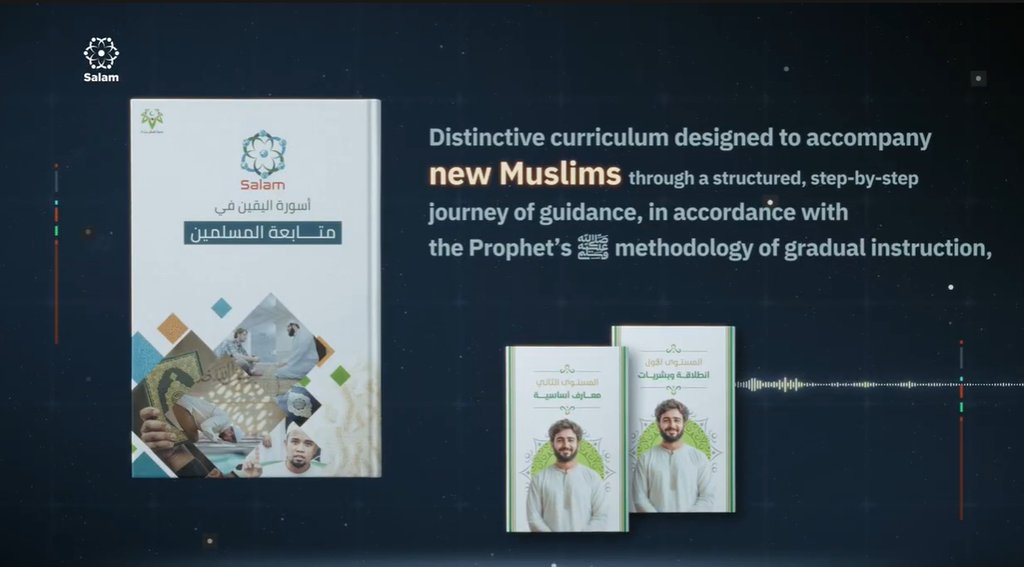
If you’re a new Muslim seeking structured next steps, the Salam Center team has built a dedicated pathway for exactly this stage of the journey — the Asawirat Al-Yaqeen (Bracelets of Certainty) program:
- A four-stage curriculum moving from foundational belief through practical daily rulings
- Covers Shahada, salah, the six pillars of Iman, tawbah, the Seerah of the Prophet ﷺ, and contemporary Islamic issues
- Built around gradual, compassionate instruction grounded in the creed of Ahlus Sunnah wal Jama’ah
- Delivered with interactive lessons designed to keep new Muslims engaged rather than overwhelmed
For anything specific — a question about animism, a concern from your own background, or interest in entering Islam — reach out directly. No question is too basic, and no question is dismissed.
Reach out directly to the Salam Center team to start the Asawirat Al-Yaqeen (Bracelets of Certainty) program for FREE.
Summary
Animist traditions attribute spirit, agency, or sentience to nature, ancestors, and even objects, relying on shamans as spiritual intermediaries across diverse, unconnected cultures worldwide. Islam recognizes an unseen realm too, but restricts worship, fear, and reliance to Allah alone, rejecting shared spiritual power entirely.
The Quran traces idolatry’s origin to excessive veneration of righteous ancestors — a pattern strikingly close to animist ancestor worship — while fitrah explains humanity’s innate pull toward recognizing one ultimate Creator behind every unseen force.
Frequently Asked Questions
What do animists believe about the soul?
Animists believe that humans, animals, plants, and often natural features or objects each possess a distinct spiritual essence or soul, and that these souls can interact, communicate, and influence one another across the visible and unseen worlds.
Is animism a religion or a set of practices?
Animism is generally not considered a religion in its own right but rather a feature found within various practices and belief systems, appearing as an underlying element within traditions like Shinto, African traditional religions, and numerous indigenous spiritual practices globally.
Does Islam believe in spirits like animists do?
Islam affirms angels and jinn as real unseen creations, but unlike animism, it teaches these beings hold no independent power to help or harm and must never be worshipped, petitioned, or feared — worship belongs to Allah alone.
Curious about Islam?
Journey towards clarity and purpose. Our team is here to support you in your search for truth and spiritual guidance.
Embrace the Truth