
What Do Pentecostals Believe?
| Key Takeaways |
| Pentecostals are Trinitarian Christians who believe salvation requires a post-conversion experience called baptism in the Holy Spirit, evidenced by speaking in tongues. |
| The Assemblies of God, the largest Pentecostal body, formalized this teaching in its 16 Fundamental Truths, adopted in 1916. |
| Pentecostals hold to continuationism, the belief that miraculous gifts such as prophecy, healing, and tongues remain active in the Church today. |
| Islam affirms one undivided God, Allah, and rejects any doctrine that divides divinity into three persons, however that division is explained. |
| The Quran and authenticated Hadith teach that every human being is born upon Fitra, the natural disposition toward pure monotheism, before upbringing shapes belief. |
| Islam honors the Holy Spirit as the angel Jibreel, a created being who delivered revelation to the prophets, not as a divine person. |
Pentecostals believe salvation begins with faith in Jesus Christ but is not complete without a second, distinct experience: baptism in the Holy Spirit, proven by speaking in tongues.
This single conviction separates Pentecostalism from most other Christian traditions and shapes everything from its worship style to its view of ongoing miracles.
What Do Pentecostals Believe?
Pentecostals believe a Christian’s spiritual life has two distinct stages: conversion through faith in Jesus, followed by a separate “baptism in the Holy Spirit” evidenced by speaking in tongues. This is the doctrine that gives the movement its name, tracing back to the biblical account of Pentecost in the Book of Acts.
The Assemblies of God, the world’s largest Pentecostal denomination, states plainly that speaking in tongues functions as the initial physical evidence that a believer has received this baptism.
Beyond tongues, Pentecostals affirm the historic Christian doctrine of the Trinity, the divinity and full humanity of Jesus Christ, and the inerrancy of the Bible in its original manuscripts.
They also hold to continuationism, the conviction that the miraculous gifts described in the New Testament, including prophecy, physical healing, and tongues, remain active in the Church rather than having ceased with the apostles.
Divine healing carries particular weight in Pentecostal theology; many adherents teach that physical healing was purchased through Christ’s atonement, making it a promise for believers today rather than a rare exception.
The Doctrine of Baptism in the Holy Spirit and Speaking in Tongues
Pentecostal theology teaches that speaking in tongues is not optional; it is the expected sign that a believer has been baptized in the Holy Spirit. This teaching rests on the Book of Acts, chapter two, where the earliest disciples reportedly spoke in unknown languages following a dramatic descent of wind and fire.
Early twentieth-century Pentecostal leaders, beginning with a 1900 Bible study at Bethel College in Topeka, Kansas, concluded that this event established a repeatable pattern for every subsequent believer, not a single unrepeated historical moment.
This teaching has practical consequences within Pentecostal communities. Believers who have not spoken in tongues are frequently understood as lacking a fullness of the Spirit still available to them, prompting extended prayer, altar calls, and repeated seeking of the experience.
Learn More About Islam
Discover the beauty, teachings, and wisdom of Islam in a clear and welcoming way. Start exploring and deepen your understanding today.
Learn MoreIslam’s View of the Holy Spirit Differs Fundamentally From the Pentecostal View
Islam identifies the Holy Spirit not as a divine person but as the angel Jibreel (Gabriel), a created being sent by Allah to deliver revelation to the prophets. This point of clarity resolves what Pentecostal theology leaves open to experiential interpretation. The Quran itself names this identification directly:
قُلْ نَزَّلَهُ رُوحُ الْقُدُسِ مِنْ رَبِّكَ بِالْحَقِّ
“Say, [O Muhammad], ‘The Pure Spirit has brought it down from your Lord in truth.'” (Quran 16:102)
The “Pure Spirit,” Ruh al-Qudus, brought down the Quran itself, mirroring the role of the same angel in delivering revelation to Isa (Jesus) and the prophets before him.
Nowhere does the Quran describe this spirit as an object of worship, as sharing in the divine essence, or as a “baptism” believers must chase after through altar calls and physical evidence.
Revelation in Islam has always followed one channel: Allah speaks, Jibreel conveys, and the prophet receives. There is no ambiguity requiring a subjective personal experience to confirm one’s standing with Allah, because faith in Islam is confirmed through sincere testimony, righteous action, and adherence to what has been clearly revealed, not through an unrepeatable physical sign that some believers report and others spend years unable to produce.
The Trinity Cannot Be Reconciled With the Oneness of Allah
Islam rejects the Trinity in every form it takes, whether the classical three-persons formulation held by most Pentecostals or the modalist “Oneness” position held by a minority within the same movement. Both versions attempt to describe God as something more complex than absolute unity, and both run directly against the Quran’s central claim about the nature of the Divine.
“قُلْ هُوَ اللَّهُ أَحَدٌ ﴿١﴾ اللَّهُ الصَّمَدُ ﴿٢﴾ لَمْ يَلِدْ وَلَمْ يُولَدْ ﴿٣﴾ وَلَمْ يَكُن لَّهُ كُفُوًا أَحَدٌ ﴿٤﴾”
“Say, “He is Allah, [who is] One, (1) Allah, the Eternal Refuge. (2) He neither begets nor is born, (3) Nor is there to Him any equivalent.” (4)” (Quran 112:1-4)
This chapter, Surah Al-Ikhlas, is recognized across the Islamic scholarly tradition as the clearest single statement of Tawhid in the Quran.
It does not merely reject the idea that Allah has a literal biological son; it rejects any framework, however philosophically refined, that divides the divine essence into persons, modes, or emanations.
The Prophet Muhammad (PBUH) reinforced this same principle throughout his life, teaching that the testimony “there is no god but Allah” carries the full weight of a person’s submission and salvation.
Pentecostal theologians distinguish their Trinity from polytheism by insisting the three persons share one essence rather than three separate beings. Islam’s response does not depend on accepting or rejecting the philosophical mechanics of that distinction. It depends on the Quran’s own repeated insistence that Allah’s oneness is not a matter requiring philosophical reconciliation at all.
Complexity introduced into the divine essence, by any label, moves away from the absolute unity the Quran describes, not toward a more sophisticated version of it.
Read Also: What Do Rastafarians Believe?
Continuationism and Modern Prophecy Conflict With the Finality of Revelation
Pentecostal continuationism teaches that prophecy, tongues, and direct spiritual revelation remain active gifts today, while Islam holds that revelation from Allah closed permanently with the death of Prophet Muhammad (PBUH). This is not a minor procedural disagreement. It touches the very question of how a believer can know religious truth with certainty.
Pentecostal churches regularly incorporate contemporary prophecy, words of knowledge, and personal revelations into congregational life, treating these as ongoing divine communication comparable in kind, if not always in scope, to what the apostles received. Islam closes this door entirely.
The Quran describes Muhammad (PBUH) as the final messenger, after whom no new prophet or new scripture will be sent. This finality is not a limitation on Allah’s power; it is a mercy that protects believers from the confusion of competing claims to ongoing revelation, each potentially contradicting the last.
A seeker exploring what do Muslims believe about the Quran will find this same principle at the center of Islamic epistemology: the Quran is preserved precisely as revealed, closing the door to the kind of open-ended, individually verified revelation that continuationism requires.
The practical difference is significant. A Pentecostal congregation must continually evaluate whether a given prophecy or tongues-utterance is genuinely from the Holy Spirit, a task even Pentecostal leaders like Donald Gee cautioned required great discernment given the risk of counterfeit or emotionally manufactured experiences.
Islam requires no equivalent ongoing verification process for its core creed, because the source text and the finality of prophethood were sealed at the source.
Read Also: What Do Pagans Believe?
Islam Presents the Complete and Final Truth
Islam is not one denomination among many competing Christian interpretations; Islam is the restoration of the same pure monotheism taught by every prophet Allah ever sent, including Jesus himself. The fragmentation visible within Pentecostalism, Trinitarian Pentecostals disagreeing with Oneness Pentecostals over the very nature of God, cessationist Christians disputing continuationist Christians over whether tongues remain valid, illustrates a pattern the Quran addresses directly.
الْيَوْمَ أَكْمَلْتُ لَكُمْ دِينَكُمْ وَأَتْمَمْتُ عَلَيْكُمْ نِعْمَتِي وَرَضِيتُ لَكُمُ الْإِسْلَامَ دِينًا
“This day I have perfected for you your religion and completed My favor upon you.” (Quran 5:3)
The Prophet Muhammad (PBUH) taught that every child is born upon Al-Fitra, the natural, uncorrupted disposition toward recognizing one God, and that it is upbringing and environment, not innate belief, that later shapes a person toward other paths.
Sahih al-Bukhari preserves this teaching precisely: the Prophet (PBUH) said no child is born except upon this natural disposition, and it is the parents who make him a Jew, a Christian, or a Magian, just as an animal produces its young whole and complete.
This hadith explains, from an Islamic perspective, why sincere monotheistic instinct exists even within traditions that have layered additional doctrine, such as the Trinity or Spirit baptism, onto that original clarity.
Read Also: What Do Jehovah’s Witnesses Believe?
Learn More About Islam
Discover the beauty, teachings, and wisdom of Islam in a clear and welcoming way. Start exploring and deepen your understanding today.
Learn MoreYour Path to Deeper Knowledge Starts Here with Salam
Questions about faith deserve honest, unhurried answers.
Explore more on the Salam Platform for a full library of Islamic beliefs, evidences, and comparative faith resources.
Read further on the Salam blog for ongoing articles addressing the questions curious minds actually ask.
If you are considering Islam or simply want to talk something through, reach out directly and a member of the team will respond personally.
Reach out directly — our team is ready to listen, guide, and welcome you.
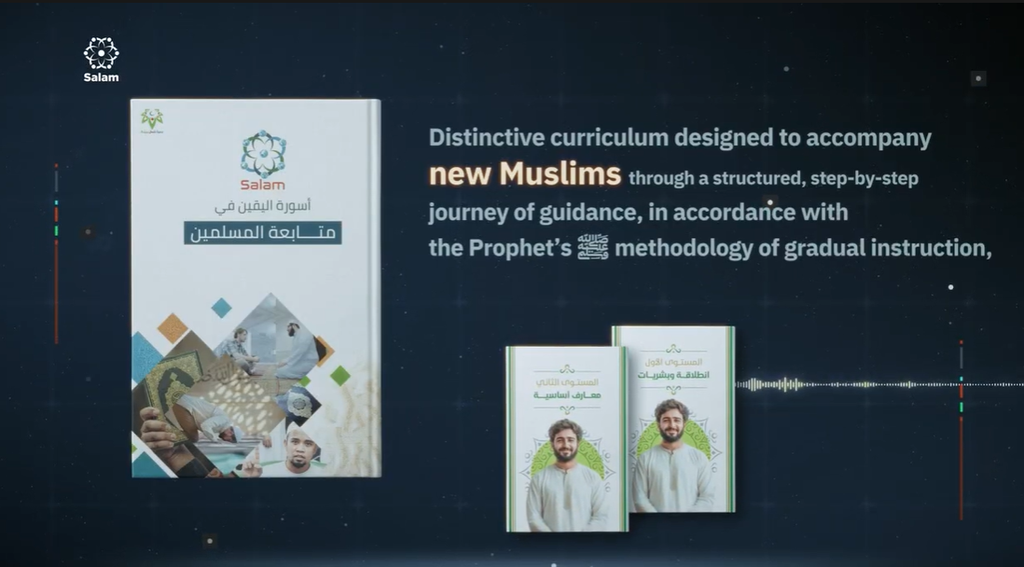
For those who have already taken their Shahada, the Salam Center offers structured, compassionate support through every stage that follows conversion:
- Asawirat Al-Yaqeen (Bracelets of Certainty) guides new Muslims through four progressive stages, from foundational prayer and purification to advanced theological grounding.
- Each level combines short lessons, real scholarly evidence, and interactive assessment so learning never feels rushed or overwhelming.
- The program has walked alongside more than 114,000 new Muslims across 140 countries, with dedicated guidance available in multiple languages.
- Whether you completed your Shahada last week or several years ago, there is a level designed to meet you exactly where you are.
Reach out directly to the Salam Center team to start the Asawirat Al-Yaqeen (Bracelets of Certainty) program for FREE.
Summary
Pentecostal Christianity centers on a distinctive claim: that believers require a second, post-conversion baptism in the Holy Spirit, proven through speaking in tongues, alongside continuationist belief in ongoing prophecy and healing. Islam offers a different foundation entirely, rooted in the Quran’s uncompromising Tawhid and the finality of revelation sealed with Prophet Muhammad (PBUH).
Every human being carries the Fitra, an inborn recognition of one God, undivided and without partners, which Islam does not ask anyone to manufacture but simply to return to. That return begins with sincere testimony and continues through the structured, compassionate guidance the Salam Center team has built for exactly this purpose.
Frequently Asked Questions
Do Pentecostals believe in the Trinity?
Most Pentecostal denominations, including the Assemblies of God, affirm the traditional Trinity of Father, Son, and Holy Spirit as one essence in three persons.
What makes Pentecostal Christians different from other Christians?
Pentecostals are distinguished by their belief that baptism in the Holy Spirit is a distinct experience after conversion, evidenced by speaking in tongues, along with continuationism, the belief that miraculous gifts like prophecy and healing remain active today rather than having ended with the apostles.
Does Islam believe in the Holy Spirit?
Islam identifies the Holy Spirit as the angel Jibreel (Gabriel), a created being who delivered revelation to the prophets, as stated in Quran 16:102. Islam does not regard the Holy Spirit as divine or as a person within a Trinity, since Allah’s oneness admits no partners.
Why does Islam reject speaking in tongues as proof of faith?
Islam holds that sincere testimony, righteous deeds, and adherence to revealed guidance confirm a believer’s standing with Allah, not a physical or emotional sign some believers report and others do not. The Quran and authenticated Hadith describe no equivalent requirement for salvation.
Curious about Islam?
Journey towards clarity and purpose. Our team is here to support you in your search for truth and spiritual guidance.
Embrace the Truth