What Do Pagans Believe?
| Key Takeaways |
| Modern paganism is an umbrella term for revived pre-Christian religious paths, not a single organized faith with one shared doctrine. |
| Most pagan traditions center on polytheism, pantheism, or animism, treating divinity as present within nature rather than separate from it. |
| Historic paganism differs from today’s Neo-Pagan movement, which formed largely in the 20th century. |
| Islam responds to paganism’s core claim — that divinity is distributed or immanent — with Tawhid, the doctrine that Allah alone is Creator, Sustainer, and rightful object of worship. |
| The Quran identifies shirk, associating partners with Allah, as the one sin He does not forgive without repentance. |
| Islamic theology holds that humanity’s original and natural state (fitrah) is monotheistic, meaning polytheism is a later deviation rather than religion’s starting point. |
Pagans believe in a wide range of things, and there is no single answer that covers every path grouped under that word.
Modern paganism is not one religion but a family of independent spiritual movements, most of them built around polytheism, animism, or pantheism, and united mainly by their shared roots in the pre-Christian traditions of Europe, North Africa, and West Asia.
Some pagans worship many named deities. Others sense one divine force expressed through nature’s many faces. A smaller number reject any deity altogether while still calling themselves pagan.
What Do Pagans Believe?
Pagans generally believe that the divine is present within the natural world rather than removed from it, and most pagan paths hold either that many gods and goddesses exist as distinct beings, or that a single divine force expresses itself through countless natural forms.
Reverence for the earth, its seasonal cycles, and ritual practice typically matter more in pagan traditions than fixed doctrine or shared scripture.
1. Paganism Has No Central Authority Or Unified Creed
Paganism carries no equivalent of a church council, a single scripture, or an agreed statement of faith. The term is used as an umbrella covering a wide range of spiritual paths, making it virtually impossible to list principles that apply to every pagan religion, though a few very basic principles recur across most forms.
This structural looseness is a defining feature, not a gap in scholarship. A person can build a private, personally assembled belief system and still call it pagan, since the tradition rewards individual interpretation over institutional agreement.
2. Polytheism Is The Belief In And Worship Of Multiple Distinct Deities
Polytheism sits at the historical core of paganism. It holds that many gods and goddesses exist, each often governing a different domain of life — a god of war, a goddess of the harvest, a god of the sea.
Paganism encompasses a wide variety of modern religions drawing inspiration from pre-Christian traditions of Europe, North Africa, and West Asia, with modern Pagan beliefs ranging from pantheism and monotheism to polytheism and atheism.
Hellenic polytheism, the modern revival of ancient Greek worship, illustrates this well: it involves devotion to the Olympian gods, and has seen renewed structured practice since the early 1990s, with groups offering monthly moon celebrations, seasonal festivals, and hymns grounded in ancient texts where possible.
3. Pantheism And Animism Locate Divinity Inside Nature Itself
Not every pagan worships separate named gods. Pantheism treats the universe itself as divine, meaning the sky, the sea, and the forest are not creations of God but expressions of God.
The Irish Pagan School describes this as one of paganism’s three fundamental principles, alongside polytheism, defining pantheism specifically as viewing the divine as immanent in all things.
Animism runs alongside this, attributing spirit or consciousness to natural objects, ancestors, and local landscapes.
A pagan grimoire summarizing the tradition notes that core beliefs often include animism, connection with ancestors, and honoring local spirits or deities.
4. Reverence for Nature and the Earth’s Cycles Anchors Pagan Practice
If a single practical thread runs through nearly every pagan path, it is devotion to the natural world. One overview observes plainly that most pagans share a reverence and deep love for Mother Nature, and many will describe their religion as nature itself, worshipping what they call Mother Earth and Father Sky.
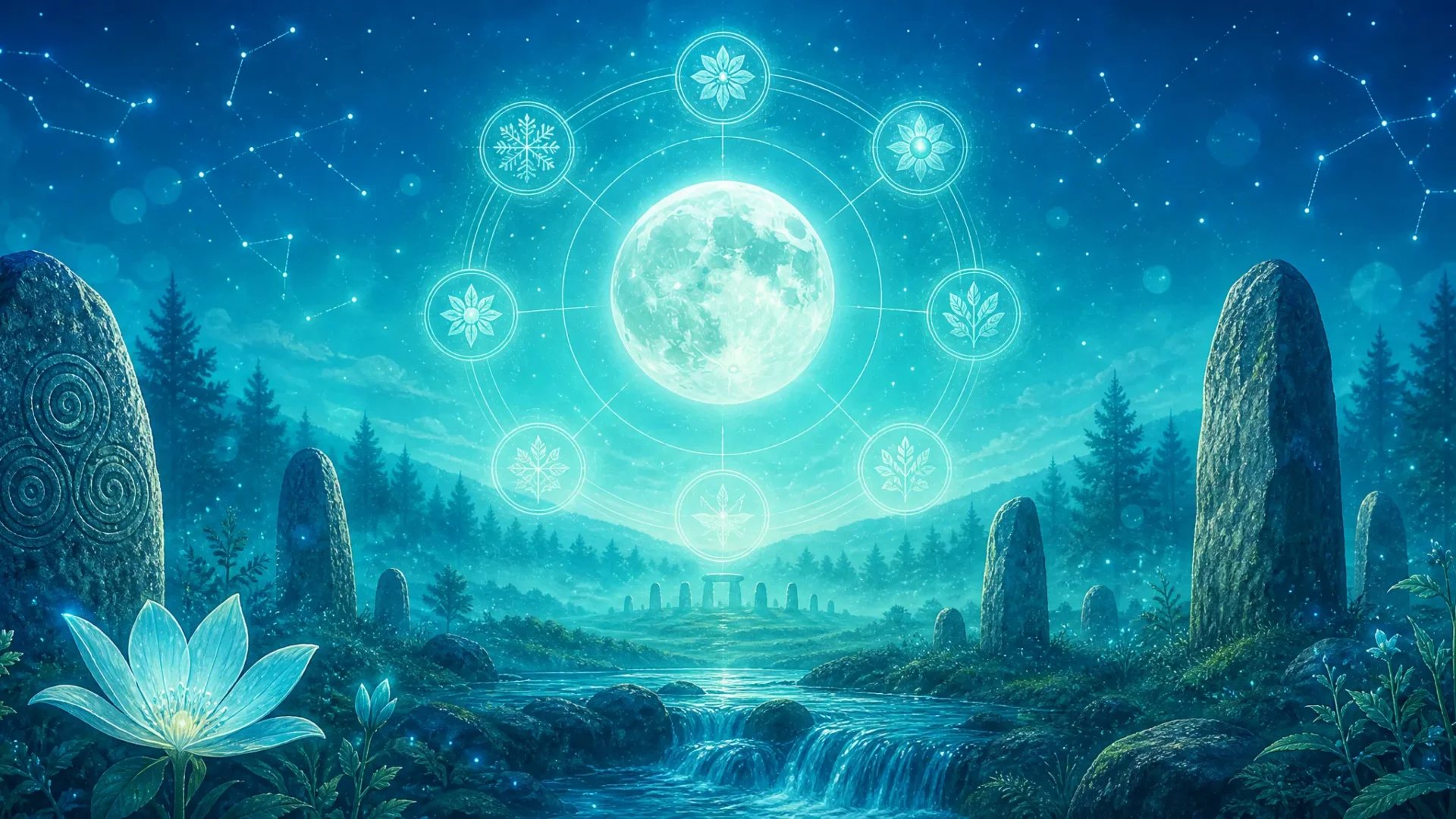
This shows up ritually through the Wheel of the Year, a cycle of eight seasonal festivals marking solstices, equinoxes, and the midpoints between them.
Druidic paths in particular structure their calendar this way, with their Wheel of the Year including festivals such as Alban Eilir at the spring equinox and Alban Arthan at the winter solstice.
5. Ritual Practice For Pagans Often Matters More Than Fixed Doctrine
Modern Paganism, as Britannica’s overview explains, tends to prioritize action over belief statement: many adherents focus more on ritual practices than specific beliefs, often conducting ceremonies outdoors or in their homes, with rituals commonly involving offerings to deities, spirits, or ancestors, timed to seasonal changes or astronomical events. This is a genuinely different orientation from religions built around a revealed text.
A pagan practitioner might disagree with a fellow practitioner on whether the gods are literal or symbolic, yet still join the same seasonal ritual, because the shared act carries more weight than a shared metaphysical claim.
6. Modern Paganism Differs From Historic Paganism In Origin And Structure
The word “pagan” itself began as a label applied by others, not a self-designation. It derives from the Latin for a rural dweller, later used by early Christians for those outside the faith.
Throughout most of Christian history, few if any of those labeled pagan adopted the label for themselves, but since the first half of the 20th century the term has been reappropriated as a self-designation by a family of related new religions, often called modern Pagan or Neo-Pagan groups, inspired by religions rendered extinct by the spread of Christianity and other Abrahamic traditions.
Today’s organized Wiccan, Druidic, and Heathen movements are therefore reconstructions and revivals, built from historical fragments and modern interpretation, rather than unbroken continuations of the ancient religions of Rome, Greece, or pre-Christian Northern Europe.
Learn More About Islam
Discover the beauty, teachings, and wisdom of Islam in a clear and welcoming way. Start exploring and deepen your understanding today.
Learn MoreThe Diversity Within Paganism
Because paganism has no doctrinal center, its internal variety deserves its own attention. Three broad currents dominate the modern landscape.
Wicca, likely the best-known pagan path in the English-speaking world, combines witchcraft, seasonal ritual, and a duotheistic reverence for a God and Goddess. Its central ethical principle, often summarized as “if it harm none, do what you will,” functions as something close to a creed, even without a fixed theology behind it.
Reconstructionist paths — Hellenism, Norse Heathenry, Celtic Druidry — aim to revive historical religious practice as faithfully as available evidence allows, using surviving texts, archaeology, and comparative mythology.
These paths tend to be more structured and scholarly than eclectic Wicca, prioritizing historical accuracy over personal improvisation.
Eclectic paganism draws freely from multiple traditions at once, assembling a personal spiritual path from whatever resonates.
The Islamic Position on Paganism and Polytheism
Islam’s entire theological structure rests on the rejection of the central claim shared by nearly every pagan tradition — that divinity can be multiple, distributed, or immanent within creation. Where paganism sees many gods, or one divine force diffused through nature, Islam insists on a single, transcendent Creator who stands entirely apart from what He made.
1. Tawhid Establishes Allah as the Sole Creator and Object of Worship
The Islamic doctrine of Tawhid, the oneness of Allah, is not one belief among many in Islamic theology; it is the foundation everything else is built on.
Muslims believe that Allah alone created the heavens and the earth, that He alone sustains every living thing, and that worship — prayer, sacrifice, and every act of devotion — belongs to Him exclusively.
This is stated with total clarity in the Quran’s shortest and most concentrated chapter on divine unity:
قُلْ هُوَ اللَّهُ أَحَدٌ اللَّهُ الصَّمَدُ لَمْ يَلِدْ وَلَمْ يُولَدْ وَلَمْ يَكُن لَّهُ كُفُوًا أَحَدٌ
“Say, ‘He is Allah, [who is] One, Allah, the Eternal Refuge. He neither begets nor is born, nor is there to Him any equivalent.'” (Quran 112:1-4)
This chapter, Surah Al-Ikhlas, is deliberately structured to close off every avenue paganism opens.
It rejects plurality of gods, denies that Allah shares His nature with any created thing, and refuses any comparison between Him and the natural world He made. For a fuller treatment of how this doctrine organizes Muslim belief, see God in Islam.
2. Human Beings Were Created Specifically to Worship Allah Alone
Where paganism often frames worship as a negotiation with specialized deities — a god approached for rain, another for protection, another for fortune — the Quran states the purpose of human existence in a single unambiguous line:
وَمَا خَلَقْتُ الْجِنَّ وَالْإِنسَ إِلَّا لِيَعْبُدُونِ
“And I did not create the jinn and mankind except to worship Me.” (Quran 51:56)
This verse leaves no room for divided devotion. Worship, in Islamic understanding, cannot be distributed across multiple objects of reverence without collapsing the very meaning of worship itself.
A being that requires no partner and shares its nature with nothing cannot logically share the devotion owed to it either.
This is one reason the Islamic case against polytheism is not merely a preference for a tidier theology; it is presented as the necessary conclusion once Allah’s uniqueness is properly understood, a point explored further in Faith in Islam.
3. Shirk Is Identified As The One Sin Allah Does Not Forgive Without Repentance
Islamic theology treats the association of partners with Allah, known as shirk, with a seriousness paganism’s own frameworks do not anticipate.
This is not a minor doctrinal disagreement; the Quran singles it out by name as uniquely grave, and the Prophet Muhammad (PBUH) confirmed this directly when asked which sin ranked worst in Allah’s sight:
Allah’s Messenger (ﷺ) said thrice, “Shall I not inform you of the biggest of the great sins?” We said, “Yes, O Allah’s Messenger.” He said, “To join partners in worship with Allah; to be undutiful to one’s parents.” Sahih al-Bukhari
The severity here follows a clear internal logic rather than arbitrary condemnation.
If one Creator alone brought everything into existence, then directing worship toward any created being — a nature spirit, an ancestor, a natural force personified as divine — misdirects something owed exclusively to the source of all existence.
Islam does not treat this as one theological error among several equally weighted mistakes; it treats it as the single deepest possible inversion of truth, since it assigns the rights of the Creator to what He created.
Read Also: What Do Rastafarians Believe?
4. Islam Teaches That Monotheism, Not Polytheism, Is Humanity’s Original And Natural State
Perhaps the most direct point of contrast between Islamic theology and the pagan worldview concerns which belief system came first, historically and spiritually.
Paganism generally treats polytheism and nature-reverence as ancient, foundational, and continuous with humanity’s earliest religious instincts, later challenged by newer monotheistic faiths.
Islamic doctrine reverses this account entirely, teaching that monotheism is the fitrah — the innate, original disposition every human is born with — and that polytheism represents a later corruption of that natural state, not its starting point. The Prophet Muhammad (PBUH) explained this directly:
No babe is born but upon Fitra. It is his parents who make him a Jew or a Christian or a Polytheist. Sahih Muslim
This hadith reframes the entire historical narrative paganism typically assumes. Rather than monotheism arriving late as a reform movement, Islam holds that every human being enters the world already oriented toward recognizing one Creator, and that polytheism — along with every other departure from pure monotheism — is something imposed afterward through upbringing, culture, and inherited custom, not something innate to the human condition.
This connects closely to how Islam views other religions more broadly, treating every faith tradition as a variation on an original monotheistic message that was, in various ways and to various degrees, altered over time.
Read Also: What Do Jehovah’s Witnesses Believe?
5. Reason, Not Only Revelation, Is Used To Argue Against Multiple Gods
Islamic theology does not rest its case against polytheism on scripture alone; it also appeals directly to logical coherence. If two or more independent, all-powerful wills existed simultaneously, their inevitable disagreements would produce not order but collapse. The Quran states this argument explicitly:
لَوْ كَانَ فِيهِمَا آلِهَةٌ إِلَّا اللَّهُ لَفَسَدَتَا
“Had there been within the heavens and earth gods besides Allah, they both would have been ruined.” (Quran 21:22)
The consistency observable throughout the natural world — planetary motion following stable laws, seasons arriving in predictable sequence, physical constants holding steady everywhere they are measured — is presented in Islamic reasoning as evidence pointing toward single, unified governance rather than the competing wills polytheism would imply.
This is not an argument paganism’s frameworks are built to answer, since most pagan systems do not claim their many deities hold total, unchecked power in the first place; the Islamic argument is directed specifically at any claim of divided ultimate authority.
Readers interested in how this fits within Islam’s broader account of existence can explore what Muslims believe about the Quran as the source text for these claims.
Read Also: What Do Pentecostals Believe?
Learn More About Islam
Discover the beauty, teachings, and wisdom of Islam in a clear and welcoming way. Start exploring and deepen your understanding today.
Learn MoreYour Path to Deeper Knowledge Starts Here with Salam
Questions about belief, divinity, and truth deserve honest, unhurried answers.
The Salam Center team welcomes sincere inquiry from anyone exploring these questions, whatever brought you here.
Browse more comparative and foundational articles on the Salam blog.
Reach out directly — our team is ready to listen, guide, and welcome you.

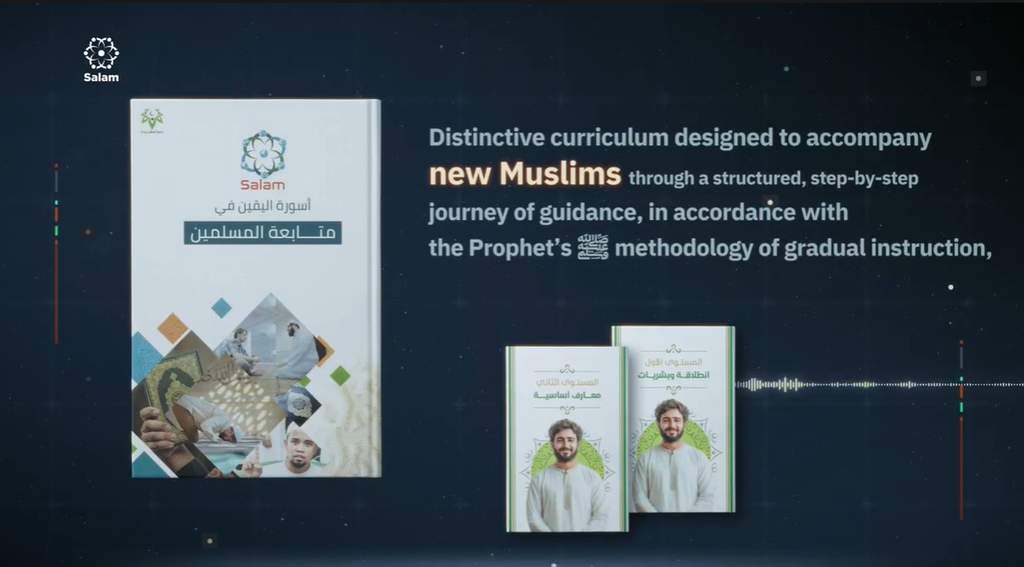
Curious about the structured path new Muslims follow after taking Shahada? The Asawirat Al-Yaqeen (Bracelets of Certainty) program offers:
- A four-stage guided curriculum moving from foundational belief through practical daily rulings
- Lessons on Seerah, tawbah, etiquette, and contemporary theological questions
- Support available in multiple languages as the program continues to grow
Reach out directly to the Salam Center team to start the Asawirat Al-Yaqeen (Bracelets of Certainty) program for FREE.
Summary
Paganism spans polytheism, pantheism, and animism, but nearly every branch locates divinity within or among created things rather than beyond them entirely. Islam’s doctrine of Tawhid stands opposed to that premise directly, teaching one transcendent Creator who alone deserves worship, with human nature itself, according to Islamic theology, originally oriented toward recognizing Him.
Understanding these differences honestly benefits anyone weighing belief systems against each other, not only those already committed to one side. Sincere questions about divinity, worship, and truth deserve careful, evidence-based answers rather than dismissal, which remains the animating purpose behind resources like this one.
Frequently Asked Questions
What is the main difference between paganism and Islam?
Paganism generally holds that divinity is multiple or immanent within nature, while Islam teaches Tawhid — that one transcendent Creator, Allah, alone deserves worship and shares His nature with nothing created. This distinction shapes every other theological difference between the two worldviews.
Do all pagans worship multiple gods?
No. Modern Pagan beliefs range from pantheism and monotheism to polytheism and atheism, so belief in many gods, while common, is not universal across pagan paths.
Is modern paganism the same as ancient paganism?
Not exactly. Since the first half of the 20th century, the term has been reappropriated as a self-designation by a family of related new religions inspired by, but not identical to, the extinct pre-Christian religions they draw from.
Why does Islam consider polytheism a serious sin?
Because Tawhid holds Allah as the sole Creator, directing worship toward any created being misassigns what belongs to Him alone. The Prophet Muhammad (PBUH) named associating partners with Allah as the greatest of the major sins.
Does Islam believe humans are naturally monotheistic?
Yes. Islamic theology teaches the fitrah, humanity’s innate original disposition, is monotheistic, and that polytheism develops later through upbringing and culture, not as religion’s starting point.
Curious about Islam?
Journey towards clarity and purpose. Our team is here to support you in your search for truth and spiritual guidance.
Embrace the Truth