What Do Rastafarians Believe?
| Key Takeaways |
| Rastafarians believe the late Ethiopian Emperor Haile Selassie I was a divine incarnation of God, whom they call Jah. |
| The movement began in Jamaica in the 1930s after Marcus Garvey’s prophecy was seen as fulfilled by Selassie’s coronation. |
| Central Rastafari concepts include Babylon (Western oppression), Zion (Africa as spiritual homeland), and livity (a natural way of life). |
| Rastafarians treat cannabis, called ganja, as a sacrament for meditation and spiritual connection to Jah. |
| Islam categorically rejects the divinity of any human being, teaching that Allah alone is God and Muhammad (PBUH) was His final prophet, not a deity. |
| The Quran affirms one God with no partners, a doctrine known as Monotheism, which stands in direct contrast to the deification of any created man. |
Rastafarians believe that Haile Selassie I, the former Emperor of Ethiopia, was and remains a living manifestation of God — a being they call Jah.
This single conviction anchors nearly everything else in the movement: its rituals, its symbols, its hope for return to Africa, and its rejection of what it calls “Babylon.”
Rastafari emerged in Jamaica in the 1930s, drawing on the Bible, the political vision of Marcus Garvey, and the lived experience of a people carrying the weight of slavery and colonial rule.
What Do Rastafarians Believe?
Rastafarians believe that Haile Selassie I, Emperor of Ethiopia from 1930 to 1974, is the earthly incarnation of God, whom they call Jah, and the promised black messiah of biblical prophecy. This belief rests on a reading of the Book of Revelation, particularly the reference to the “Lion of the Tribe of Judah” in Revelation 5:5, combined with Selassie’s imperial titles — King of Kings, Lord of Lords — which Rastafarians took as confirmation of his divine identity.
Rastafari’s perception of Haile Selassie’s divinity is deeply rooted in biblical prophecy, particularly references in the Book of Revelation and the Old Testament.
Beyond the person of Selassie, Rastafarians hold a cluster of related convictions: that Africa, especially Ethiopia, is the spiritual homeland called Zion; that Western society represents a corrupt system called Babylon; and that a natural, chemical-free way of living called livity brings the believer closer to Jah.
They believe that Haile Selassie I was divine and the black messiah, and conceptually, Rastafarians believe in “oneness” with humanity and equality. These are not loosely held cultural attitudes.
They function as the doctrinal core of a movement that its adherents describe in explicitly religious terms.
1. The Origin of Rastafari in 1930s Jamaica
Rastafari did not appear from nowhere. It grew directly out of the preaching of Marcus Garvey, a Jamaican-born Pan-Africanist who spent the early twentieth century calling for black pride, African unity, and a “Back-to-Africa” movement among the diaspora.
Many sources cite a prophecy made in the 1920s by Garvey as the origin of Haile Selassie’s divine worship: “Look to Africa, when a black king shall be crowned, for the day of deliverance is at hand”.
When Ras Tafari Makonnen was crowned Emperor of Ethiopia in November 1930 and took the name Haile Selassie I, many of Garvey’s Jamaican followers concluded that the prophecy had come true before their eyes.
Leonard Howell, a Jamaican preacher considered the founder of the Rastafari movement, established the Pinnacle community in the 1930s and emphasized the divinity of Haile Selassie I as the messiah and rightful ruler in line with Garvey’s prophecy.
It is worth noting, for the sake of intellectual honesty, that Garvey himself rejected Rastafari as religious fanaticism and never named Selassie as the redeemer he foresaw — a detail that complicates the neat prophecy narrative but does not change what Rastafarians themselves came to believe.
2. Jah, Zion, and Babylon in Rastafari Cosmology
Three terms carry the weight of Rastafari theology: Jah, Zion, and Babylon. Jah is the Rastafari name for God, drawn from the shortened form of “Jehovah” in the Old Testament, and understood as present both in spirit and, specifically, in the historical person of Haile Selassie.
Zion represents Africa, liberation, and righteousness, while Babylon is the corrupt Western system of oppression, colonialism, and materialism.
Many Rastas historically held that physical repatriation to Africa was the ultimate goal, though by the movement’s fourth decade this desire had declined, partly due to observing the 1983–1985 famine in Ethiopia, and many came to understand return to Africa in a metaphorical sense — restoring pride and self-confidence as people of African descent.
The phrase “liberation before repatriation” captures this shift from a literal migration plan to a psychological and spiritual reorientation away from Western systems and toward African identity.
3. Livity, the Ital Diet, and the Sacramental Use of Cannabis
Rastafari life is organized around a concept called livity — the practice of aligning daily conduct with what is considered natural and God-given.
In Rastafari philosophy, livity can be enhanced by intense prayer and meditation, adherence to an Ital diet, and loving behavior toward others, with a strong focus on living a natural lifestyle that includes the consumption of natural foods and growth of natural hair.
The Ital diet generally means natural and unprocessed foods, with many Rastas following a vegetarian or vegan lifestyle, and pork and shellfish typically avoided due to biblical dietary laws.
Dreadlocks, the movement’s most recognizable visual marker, are rooted in biblical injunctions such as those found in Numbers 6:5, symbolizing a commitment to natural living and a rejection of Babylonian norms.
Cannabis, called ganja, occupies a central ritual role: Rastas regard cannabis as a sacrament that facilitates meditation and spiritual enlightenment, used especially during communal gatherings called groundations or reasoning sessions, where groups of Rastas smoke and discuss matters ranging from philosophy to history and current events.
Learn More About Islam
Discover the beauty, teachings, and wisdom of Islam in a clear and welcoming way. Start exploring and deepen your understanding today.
Learn MoreThe Islamic Position on the Rastafari Claim of Human Divinity
Islam teaches that Allah alone is God, that He has no partner, no equal, and no human incarnation, and that no person — however righteous, however powerful, however historically significant — can be divine.
This is where the comparison must be direct, because the central claim of Rastafari theology — that a specific human being was and is God incarnate — is precisely the claim that Islam was revealed to refute in the most absolute terms available in any language.
This is not a peripheral detail of Islamic belief. It is the first pillar, the opening testimony, the foundation beneath every other teaching in the religion.
1. Tawhid Leaves No Room for a Human God
The Quran states the matter with a directness that admits no ambiguity:
قُلْ هُوَ اللَّهُ أَحَدٌ اللَّهُ الصَّمَدُ لَمْ يَلِدْ وَلَمْ يُولَدْ وَلَمْ يَكُن لَّهُ كُفُوًا أَحَدٌ
“Say, ‘He is Allah, [who is] One, Allah, the Eternal Refuge. He neither begets nor is born, nor is there to Him any equivalent.'” (Quran 112:1-4)
This surah, known as Surah al-Ikhlas, was revealed specifically to answer questions about the nature of God, and its four verses close every door that religions built on human divinity leave open.
Allah is not born, does not give birth, and has no equivalent — not an emperor, not a prophet, not an angel. This doctrine is called Monotheism in Islamic theology, and it is treated as the single non-negotiable center of the entire faith.
Understanding God In Islam requires grasping that divinity is a category reserved for the Creator alone, never extended to anyone within creation, however elevated their earthly rank.
The opposite of this doctrine — attributing divinity or partnership to created beings — is called shirk, and the Quran identifies it as the one sin Allah does not forgive without repentance:
إِنَّ اللَّهَ لَا يَغْفِرُ أَن يُشْرَكَ بِهِ وَيَغْفِرُ مَا دُونَ ذَٰلِكَ لِمَن يَشَاءُ
“Indeed, Allah does not forgive association with Him, but He forgives what is less than that for whom He wills.” (Quran 4:48)
Polytheism — the elevation of any created being to divine status — is treated in the Quran as the fundamental error underlying nearly every deviation from truth across human history, whether that elevation is applied to idols carved from stone, to celestial bodies, or to a human ruler however respected his politics or however moving his rhetoric of liberation.
2. Muhammad (PBUH) Was a Man and a Messenger, Never a Deity
Islam’s rejection of human divinity is not abstract. It is embedded in how Muslims are commanded to regard their own Prophet. Prophet Muhammad (PBUH) himself repeatedly and explicitly forbade his followers from exalting him beyond his station as a human messenger.
This stands in sharp contrast to how Rastafarians elevated Haile Selassie — a contrast made sharper by the historical record that Selassie was an Ethiopian Orthodox Christian who adamantly denied his own divinity, stating he was merely a mortal man.
Islam’s prophet gave the same denial with even greater force and specificity, recorded in Sahih al-Bukhari: he warned his companions,
“Do not exalt me as the Christians exalted the son of Mary, for I am only a slave. So call me the slave of Allah and His Messenger.”
Sahih Muslim likewise preserves the Prophet’s teaching that he possessed no power over the unseen, no ability to benefit or harm beyond what Allah permitted, and no claim to worship of any kind.
This is why Islamic creed insists on a sharp, permanent boundary between the Creator and the created — a boundary Rastafari theology dissolves when it declares a twentieth-century monarch to be God in human form.
Read Also: What Do Pagans Believe?
3. Finality of Prophethood Closes the Door Rastafari Opens
A further distinction matters here. Rastafari theology treats Selassie’s coronation as the fulfillment of prophecy and, for many adherents, as an ongoing or renewable channel of divine revelation through his teachings and reign. Islam closes this door entirely. The Quran states:
مَّا كَانَ مُحَمَّدٌ أَبَا أَحَدٍ مِّن رِّجَالِكُمْ وَلَٰكِن رَّسُولَ اللَّهِ وَخَاتَمَ النَّبِيِّينَ
“Muhammad is not the father of [any] one of your men, but [he is] the Messenger of Allah and last of the prophets.” (Quran 33:40)
Muhammad (PBUH) is described here as the seal — the final prophet — meaning that no further prophetic or divine figure will arise after him.
This teaching about faith in Islam anchors one of the six pillars of Iman: belief in the prophets, understood as a sealed and completed chain rather than an open one to which new messianic figures — whether an Ethiopian emperor or anyone else — can be added.
The Islamic position, in short, does not merely disagree with the Rastafari claim about Selassie. It rules out, on principle, the entire category of claim: no human coronation, however dramatic, inaugurates a new divine incarnation, because revelation through prophets ended with Muhammad (PBUH), and divinity was never available to a human being to begin with.
Read Also: What Do Jehovah’s Witnesses Believe?
4. Reading Scripture Honestly Rather Than Symbolically
Rastafari’s theological method depends heavily on symbolic and Afrocentric reinterpretation of biblical texts — reading Revelation 5:5’s “Lion of the Tribe of Judah” as a specific reference to a twentieth-century Ethiopian monarch, for instance.
Islam takes a different approach to how believers should engage revealed text. The why do muslims believe in the quran teaches that the Quran was preserved in its original Arabic without the kind of translation, redaction, and centuries-long reinterpretation that biblical texts underwent — a preservation Muslims hold as directly relevant to why symbolic reworking of the kind Rastafari applies to Revelation is not needed or invited with the Quran itself.
Readers curious about what do muslims believe about the quran will find that the text’s own claim to preservation is central to Islamic epistemology, and the question of how does islam view other religions addresses directly how Islam engages movements, like Rastafari, that build theology on reinterpreted scripture from earlier traditions.
Read Also: What Do Pentecostals Believe?
Learn More About Islam
Discover the beauty, teachings, and wisdom of Islam in a clear and welcoming way. Start exploring and deepen your understanding today.
Learn MoreYour Path to Deeper Authentic Knowledge Starts Here with Salam
Questions about faith deserve honest, evidence-based answers. If reading about Rastafari’s claims of human divinity left you thinking more about what Islam actually teaches on God, prophethood, and revelation, there’s more to explore.
Visit the Salam Platform for a growing library of articles on Islamic belief, written for sincere seekers and skeptics alike.
Read more on the Salam blog for deep dives into comparative religion, the Quran, and the life of Prophet Muhammad (PBUH).
Have a specific question, or curious about entering Islam?
Reach out directly — our team is ready to listen, guide, and welcome you.

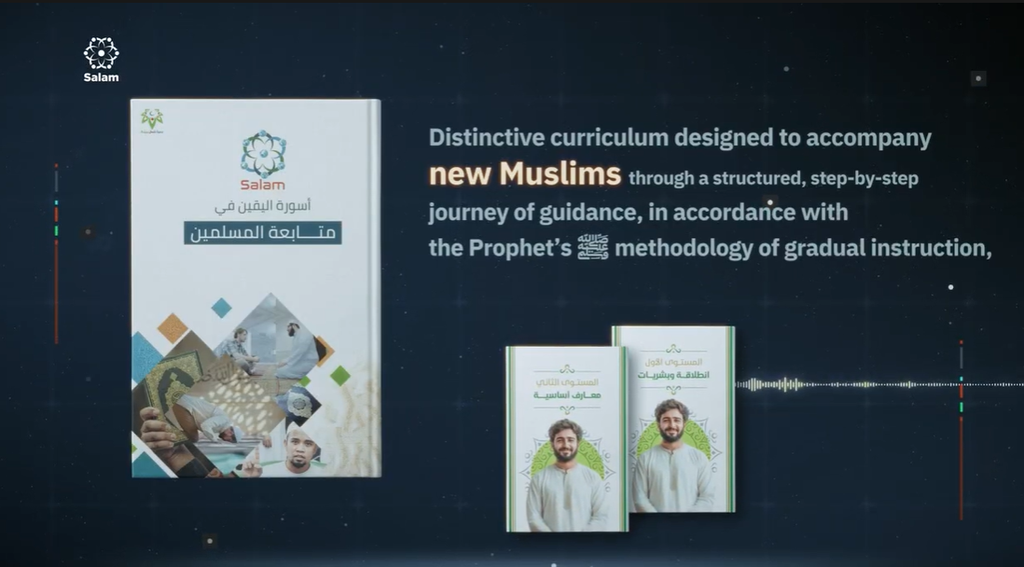
If you’re a new Muslim looking for structured guidance, the Salam Center offers Asawirat Al-Yaqeen (Bracelets of Certainty), a four-stage program built for the post-conversion journey:
- Stage One lays the foundation: the Shahada, wudu, ghusl, and salah
- Stage Two builds through repentance and the seerah of the Prophet (PBUH)
- Stage Three consolidates etiquette, family rulings, and daily life guidance
- Stage Four empowers with theological depth on contemporary questions and comparative religion
The Salam Center team is available for general inquiries at any stage of your journey, whether you’re still asking questions or ready to take the next step.
Reach out directly to the Salam Center team to start the Asawirat Al-Yaqeen (Bracelets of Certainty) program for FREE.
Summary
Rastafarians hold that Haile Selassie I was God incarnate, a belief traced to Marcus Garvey’s 1920s prophecy and the emperor’s 1930 coronation, reinforced through practices like livity and sacramental cannabis use. This theology rests entirely on a claim of human divinity that scripture nowhere permits without symbolic reinterpretation.
Islam answers this question with categorical clarity: Allah alone is God, Muhammad (PBUH) was His final human messenger, and no created being, however powerful or historically significant, can ever share in divinity. This distinction defines the boundary between Islamic monotheism and every religion built on a deified man.
Frequently Asked Questions
Do Rastafarians worship Haile Selassie as God?
Yes. Rastafarians believe Haile Selassie I, Emperor of Ethiopia from 1930 to 1974, was a divine incarnation of God, whom they call Jah, based on his imperial titles and a reading of Revelation 5:5. Islam categorically rejects human divinity, teaching that Monotheism admits no partner or incarnation whatsoever.
What is the difference between Rastafari and Islam?
Rastafari centers on the belief that a specific human being, Haile Selassie, was and is God; Islam forbids attributing divinity to any created being, without exception. Islam instead teaches strict monotheism and regards Muhammad (PBUH) as the final prophet, a man and messenger, never a deity.
What does Jah mean in Rastafari belief?
Jah is the Rastafari name for God, drawn from a shortened biblical form of “Jehovah,” and understood by Rastafarians as present both spiritually and specifically in the historical person of Haile Selassie I, whom they hold to be his physical manifestation on earth.
Did Haile Selassie claim to be God?
No. Haile Selassie was an Ethiopian Orthodox Christian who explicitly denied his own divinity, describing himself as an ordinary mortal man, even as Rastafarians outside Ethiopia continued to venerate him as Jah incarnate.
Why does Islam reject the idea of a human being as God?
Islam teaches that Allah alone possesses the attribute of divinity, with no partner, no equal, and no human incarnation, as stated plainly in Surah al-Ikhlas (Quran 112:1-4). Attributing divinity to any created being is called shirk, the one sin the Quran describes as unforgivable without sincere repentance (Quran 4:48).
Curious about Islam?
Journey towards clarity and purpose. Our team is here to support you in your search for truth and spiritual guidance.
Embrace the Truth