
How to Read the Quran?
Learning how to read the Quran is not a single skill but a gradual unfolding — one that moves from sound, to meaning, to reflection, to lived practice.
The Quran itself was revealed gradually over twenty-three years, and the Prophet Muhammad (PBUH) taught his companions in the same measured way, a few verses at a time, until the words settled into their hearts before moving to the next portion.
Step 1: Begin With a Sincere Intention Before Opening the Quran
Every act of worship in Islam starts with the heart, and reading the Quran is no exception. The Prophet Muhammad (PBUH) said, as recorded in Sahih al-Bukhari, that deeds are judged by the intentions behind them.
Before a single page is turned, a reader benefits from pausing to renew the purpose: seeking Allah’s pleasure, nearness to Him, and guidance for daily life — not merely completing a task or checking a box.
This intention shapes everything that follows. A person reading only to finish quickly will treat the Quran differently than someone reading to understand and apply it.
Renewing this intention daily, even in a single sentence of silent reflection, keeps the heart oriented correctly throughout the entire learning journey outlined in the steps below.
Step 2: Perform Wudu Before Touching the Physical Mushaf
Ritual purity through wudu (ablution) is recommended before physically holding and reading from a printed copy of the Quran, known as the Mushaf. This reflects the reverence due to the literal speech of Allah. The majority of scholars across the Sunni schools base this on the verse:
لَّا يَمَسُّهُ إِلَّا الْمُطَهَّرُونَ
“None touch it except the purified.” (Quran 56:79)
It is worth clarifying for beginners that this condition applies specifically to physically touching the Arabic Mushaf.
Listening to Quran recitation, reading a translation, reciting verses from memory, or reading Quranic text on a phone screen without direct contact with Arabic script does not require wudu according to the more established scholarly view, since these acts fall outside the direct touching described in the verse.
Someone without wudu can still benefit from and engage with the Quran through these means while working toward regular practice.
Step 3: Learn the Arabic Alphabet and Basic Pronunciation
Reading the Quran in its original Arabic is the foundation of correct recitation, even for those who rely heavily on translation to understand meaning.
The Arabic alphabet contains twenty-eight letters, several of which have no direct equivalent in English and require guided practice to pronounce correctly — sounds produced from the throat, the sides of the tongue, or the nasal cavity in ways unfamiliar to most non-Arabic speakers.
Beginners typically start with a Noorani Qaida or a similar foundational primer that isolates individual letters before combining them into words.
This slow, letter-by-letter approach mirrors how the Quran itself was revealed gradually, and it prevents the common frustration of attempting full verses before the mouth and ear are trained.
A local mosque, an online Quran teacher, or a structured beginner’s course — often available through the early levels of the Salam Center’s new Muslim curriculum — can provide this foundational instruction with proper correction.
Learn More About Islam
Discover the beauty, teachings, and wisdom of Islam in a clear and welcoming way. Start exploring and deepen your understanding today.
Learn MoreStep 4: Understand Basic Tajweed Rules for Correct Recitation
Tajweed refers to the set of rules governing correct pronunciation, letter articulation points (makharij), and the elongation or shortening of specific sounds in Quranic recitation. Allah commands this measured, careful style of reading directly:
أَوْ زِدْ عَلَيْهِ وَرَتِّلِ الْقُرْآنَ تَرْتِيلًا
“Or add to it, and recite the Qur’an with measured recitation.” (Quran 73:4)
Classical scholars, including the companion Ali ibn Abi Talib, explained that this “measured recitation” (tarteel) means applying correct tajweed and pausing at the appropriate places.
A reader does not need years of study to begin applying basic tajweed — starting with rules for elongation (madd), the nasal sound (ghunnah), and distinguishing similar-sounding letters provides immediate improvement. Progress here compounds: each rule learned makes the next verse clearer.
Step 5: Read With a Trusted English Translation for Meaning
For readers still building Arabic fluency, pairing recitation with a reliable English translation bridges the gap between sound and understanding.
The Sahih International translation is widely regarded among English-speaking Muslims for its clarity and its effort to remain close to the Arabic text’s intended meaning, and it is the translation used throughout this article’s Quranic citations, available in full on Tanzil.net.
A translation should never be treated as a replacement for the Arabic text itself, since no translation fully captures the linguistic depth, rhythm, and multiple layers of meaning present in the original revelation.
Rather, translation serves as a companion tool — a reader recites the Arabic, then checks the English rendering to confirm and deepen understanding of what was just recited.
This is precisely why Muslims believe the Quran must be preserved and transmitted in its original Arabic form.
Step 6: Consult a Reliable Tafsir to Understand Context
Verses of the Quran often address specific historical circumstances, legal rulings, or theological points that a bare translation cannot fully convey, which is why classical scholarship developed the science of tafsir, or Quranic exegesis.
Respected tafsir works — such as those of Ibn Kathir, al-Tabari, and al-Sa’di — draw on the explanations of the Prophet Muhammad (PBUH), his companions, and early scholars to clarify the circumstances of revelation (asbab al-nuzul) and the intended meaning of ambiguous passages.
A beginner does not need to read an entire multi-volume tafsir before finishing a single page.
Many mosques and online platforms offer abridged, accessible versions of these classical works specifically for new readers, which pairs naturally with learning what Muslims believe about the Quran as a complete and preserved revelation.
Step 7: Establish a Consistent Daily Quran Reading Habit, Even in Small Portions
Regularity in reading the Quran matters more than the length of any single session. The Prophet Muhammad (PBUH) explicitly discouraged excessive, unsustainable worship. He said, as recorded in Sahih al-Bukhari, that the most beloved deeds to Allah are those done consistently, even if small.
Applied to Quran reading, this means a beginner reading five verses daily with understanding and reflection accomplishes more spiritually than someone who reads for hours once a month and then stops.
A realistic starting goal — even a single page or a few verses after Fajr or before sleeping — establishes the habit. This pace can then increase naturally as fluency and comfort grow, rather than being forced from the outset.
Read Also: How Do You Prepare to Read the Quran?
Step 8: Recite the Quran Aloud When Possible to Reinforce Memory and Understanding
Reciting the Quran aloud, even quietly, engages memory retention and pronunciation correction in ways that silent reading cannot fully replicate. Hearing one’s own voice makes errors in tajweed immediately noticeable, and it allows a teacher or study partner to correct mistakes in real time.
Aisha, the wife of the Prophet Muhammad (PBUH), reported his teaching on this subject directly:
The Prophet (PBUH) said: “The one who is proficient in the recitation of the Qur’an will be with the honorable and obedient scribes (angels), and he who recites the Qur’an and finds it difficult, struggling through it, will have two rewards.” (Sahih Muslim 798a)
This hadith offers genuine reassurance to beginners specifically: struggling through recitation is not a source of shame but a source of additional reward, since the effort itself is counted. No one is expected to recite flawlessly from the first attempt.
Read Also: What to Say in Sajdah in the Quran?
Step 9: Reflect on the Meaning Through Tadabbur to Apply Its Guidance
The ultimate purpose of reading the Quran extends beyond correct pronunciation into genuine reflection, known in Arabic as tadabbur. Allah poses this directly as a rhetorical challenge to those who recite without contemplation:
أَفَلَا يَتَدَبَّرُونَ الْقُرْآنَ أَمْ عَلَىٰ قُلُوبٍ أَقْفَالُهَا
“Then do they not reflect upon the Qur’an, or are there locks upon [their] hearts?” (Quran 47:24)
This verse establishes that recitation without reflection falls short of the Quran’s intended purpose.
A practical method for beginners involves pausing after each verse to ask three questions: What does this verse teach about Allah? What does it teach about how to live? And how does it connect to my own circumstances today?
Read Also: How to Learn the Quran for Beginners?
Learn More About Islam
Discover the beauty, teachings, and wisdom of Islam in a clear and welcoming way. Start exploring and deepen your understanding today.
Learn MoreYour Path to Deeper Authentic Knowledge Starts Here with Salam
Reading the Quran is one part of a much wider path toward firm faith. If any of these questions stirred something in you, there is more waiting.
Explore more articles on the Salam platform covering Islamic beliefs, the life of Prophet Muhammad (PBUH), and the science within the Quran.
Read the Salam blog for ongoing reflections written specifically for seekers and new Muslims.
Reach out directly — our team is ready to listen, guide, and welcome you.

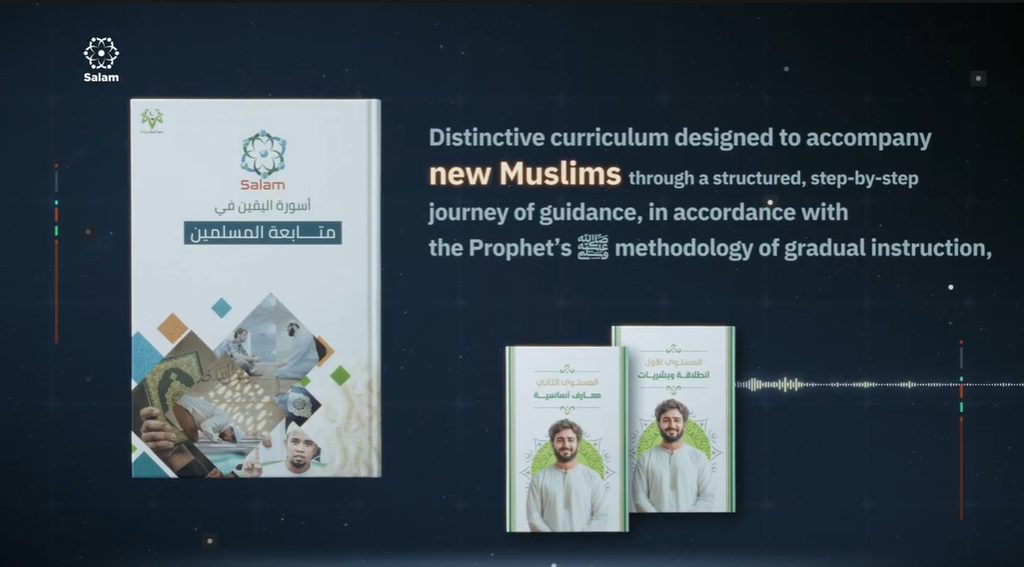
Reach out directly if you have personal questions, want guidance on entering Islam, or wish to join the Asawirat Al-Yaqeen (Bracelets of Certainty) program — a structured four-stage journey built specifically for new Muslims, covering:
- The foundations of faith, prayer, and purification in Stage One
- Repentance and the life of the Prophet Muhammad (PBUH) in Stage Two
- Character, etiquette, and daily Islamic rulings in Stage Three
- Contemporary questions and a complete life roadmap in Stage Four
The Salam Center team welcomes general inquiries as well, with no obligation and no pressure — only a sincere invitation to learn.
Reach out directly to the Salam Center team to start the Asawirat Al-Yaqeen (Bracelets of Certainty) program for FREE.
Summary
Learning how to read the Quran unfolds through intention, purification, correct pronunciation, and translation working together before reflection deepens the experience. Tajweed rules, consistent daily habits, and reciting aloud all reinforce each other, turning scattered effort into lasting familiarity with the text.
Genuine progress comes from steady practice rather than perfection, since even a struggling reciter earns a double reward for the effort involved. Approaching the Quran with patience and sincere reflection transforms it from a text to be finished into a lifelong companion for guidance.
Frequently Asked Questions
Do I need to know Arabic to start reading the Quran?
No — beginners can start immediately using a trusted translation like Sahih International while learning Arabic pronunciation in parallel. Full understanding deepens with Arabic fluency, but meaningful engagement with the Quran’s message begins on day one.
Is wudu required to read a Quran translation on my phone?
No — wudu is specifically required for physically touching the Arabic Mushaf, according to the dominant scholarly view. Reading translations, listening to recitation, or viewing Quranic text digitally does not carry this same condition.
How many verses should a beginner read each day?
Consistency matters more than quantity — even five verses read daily with reflection surpasses infrequent long sessions. The Prophet Muhammad (PBUH) taught in Sahih al-Bukhari that Allah loves deeds done regularly, however small.
Why does the Quran need to be read in Arabic at all?
The Quran’s precise Arabic wording is inseparable from its meaning, preserved unchanged since its revelation. Learning why Muslims believe in the Quran as the literal, unaltered word of Allah clarifies why translation alone cannot substitute for the original text.
Curious about Islam?
Journey towards clarity and purpose. Our team is here to support you in your search for truth and spiritual guidance.
Embrace the Truth