
Do You Need Wudu to Read Quran?
| Key Takeaways |
| Wudu is not required to recite Quran from memory, as long as you are not in a state of major impurity (janabah). |
| Touching a physical Mushaf requires wudu according to the majority of scholars from all four schools of Sunni jurisprudence. |
| Reading Quran from a phone or app is permitted without wudu in the dominant scholarly view, since the ruling on touching applies to the physical Mushaf, not a screen. |
| A person in a state of janabah (major impurity) may not recite Quran in any form until ghusl is performed. |
| Performing wudu before reading Quran remains highly recommended even when not obligatory, as an act of honoring Allah’s words. |
As a new Muslim, one of the first questions that comes to mind is often the simplest one: can I open the Quran right now, or do I need wudu first? The answer is that it depends on how you are engaging with the Quran — reciting from memory, touching a printed Mushaf, or reading on your phone are treated differently in Islamic law. None of these distinctions should feel like a burden.
They exist because the Quran is the literal speech of Allah, and the scholars of this Ummah have taken care, across centuries, to protect its honor while still making it accessible to every sincere heart that wants to read it. Take a breath — this is easier than it may seem at first.
Do You Need Wudu to Read Quran?
No, you do not need wudu to read or recite the Quran from memory, and the dominant scholarly view also permits reading from a phone or screen without wudu. Wudu becomes necessary specifically when you intend to touch a physical Mushaf — a printed copy of the Quran.
This distinction comes directly from how the scholars of Ahlus Sunnah wal Jama’ah have understood the relevant verse and hadith on this topic.
The core evidence is a verse from Surah Al-Waqi’ah, where Allah describes the Quran’s protected status:
إِنَّهُ لَقُرْآنٌ كَرِيمٌ فِي كِتَابٍ مَّكْنُونٍ لَّا يَمَسُّهُ إِلَّا الْمُطَهَّرُونَ
“Indeed, it is a noble Quran, in a well-protected Record, touched by none except the purified.” (Quran 56:77-79)
The majority of scholars across the Hanafi, Maliki, Shafi’i, and Hanbali schools understood “the purified” here as those who have completed wudu.
This is supported by a hadith the Prophet Muhammad (peace be upon him) wrote to the people of Yemen, carried in the letter of Amr ibn Hazm and recorded by Imam Malik in Al-Muwatta: “No one should touch the Quran except one who is pure.”
Based on this, touching the physical Mushaf without wudu is not permitted according to the majority of scholars, while reciting by heart carries no such condition.

Can I Read Quran Without Wudu From Memory?
Yes, reciting Quran from memory without wudu is permitted, and this is a point of near-unanimous agreement among scholars. The restriction tied to the verse in Surah Al-Waqi’ah concerns physical touching, not verbal recitation.
A well-known hadith illustrates this directly: Aisha (may Allah be pleased with her) narrated that the Prophet (peace be upon him) used to remember Allah at all times, and separately, it is recorded in Sahih al-Bukhari and Sahih Muslim that he recited the final verses of Surah Aal-Imran after waking from sleep, before performing wudu for the night prayer.
The one condition that does apply here is janabah — the state of major ritual impurity following intimacy or a wet dream, before ghusl is performed. A person in janabah may not recite Quran in any form — not from memory, a Mushaf, or a screen — until ghusl is completed.
This is understood from a hadith in Sunan Abi Dawud, graded sahih by Al-Albani, describing that nothing prevented the Prophet (peace be upon him) from reciting Quran except janabah. Minor impurity — simply not having wudu — does not carry this same restriction on recitation itself.
Read Also: What Is the First Surah in the Quran?
Can I Read the Quran Without Wudu on the Phone?
Reading Quran on your phone without wudu is permitted in the view held by most contemporary scholars, because the ruling on touching a Mushaf applies to an actual physical copy of the Quran, not to a digital screen. A phone screen displays pixels of light rather than fixed ink on paper, and it sits behind a layer of glass — for these reasons, many scholars across different schools have concluded that the same rule for a Mushaf does not transfer directly to a device.
This means that as a new Muslim keeping the Quran app open throughout your day — while commuting, during a break at work, before sleep — you are not required to have wudu to read it, scroll through it, or even hold your phone while it is open.
Some scholars take a more cautious position and prefer avoiding direct contact with the exact area of the screen where the verse text appears, out of extra reverence, even while agreeing the general prohibition on touching a Mushaf does not strictly apply to a device.
Either way, no scholar considers reading Quran on a phone without wudu to be sinful.
Learn More About Islam
Discover the beauty, teachings, and wisdom of Islam in a clear and welcoming way. Start exploring and deepen your understanding today.
Learn MoreRead Also: Can You Read the Quran on Your Period?
What Does Require Wudu When Engaging With the Quran?
Only physical contact with an actual printed Mushaf requires wudu, according to the majority position across the four schools of Sunni jurisprudence. This includes turning its pages, holding it directly, or placing your hand on the text.
If someone else is holding the Mushaf open for you, or the pages are turned with a pen or a gloved hand, you may read from it without wudu, since you have not touched it yourself.
It is worth knowing that this specific fiqh detail sits within a much larger picture of what Muslims believe about the Quran and why its nature and origin matter so deeply in the first place.
Understanding why Muslims hold the Quran to be the literal, unaltered word of Allah gives context to why scholars have been this careful about even the physical act of touching it.
Read Also: Quran vs Bible: Comparing Their Origin, Preservation, and Message
Why Does Wudu Still Matter Even When It Is Not Obligatory?
Performing wudu before reading Quran, even in situations where it is not strictly required, remains something scholars universally encourage. Allah describes His love for those who purify themselves in Surah Al-Baqarah:
إِنَّ اللَّهَ يُحِبُّ التَّوَّابِينَ وَيُحِبُّ الْمُتَطَهِّرِينَ
“Indeed, Allah loves those who repent and He loves those who purify themselves.” (Quran 2:222)
For a new Muslim, this is a beautiful habit to build early. Making wudu before opening the Quran, whether in print or on a screen, is a small act that carries real weight — it is a way of preparing your heart, not only your body, to meet the words of Allah.
This same spirit of intentional purification and closeness to Allah runs through the broader framework of Islamic belief, including the core principles that shape a Muslim’s daily life and the way faith itself is defined and lived out in Islam.
Learn More About Islam
Discover the beauty, teachings, and wisdom of Islam in a clear and welcoming way. Start exploring and deepen your understanding today.
Learn MoreLearn More About Faith, Certainty, and the Journey to Islam
If these details feel like a lot to hold onto right now, that is completely normal. Every new Muslim goes through this same season of learning — sorting out wudu, prayer times, and the small rulings that come with daily worship. You do not have to figure it out by memorizing articles alone.
The Salam Center built the Asawirat Al-Yaqeen (Bracelets of Certainty) program specifically for this stage of your journey. It walks you through:
- The foundations of prayer, purification, and the meaning of your Shahada
- Practical, step-by-step guidance so you are never guessing about what to do
- A structured path that grows with you, rather than overwhelming you all at once
- Connection to people and a community who have walked this same road
Reach out directly to the Salam Center team to start the Asawirat Al-Yaqeen (Bracelets of Certainty) program for FREE.
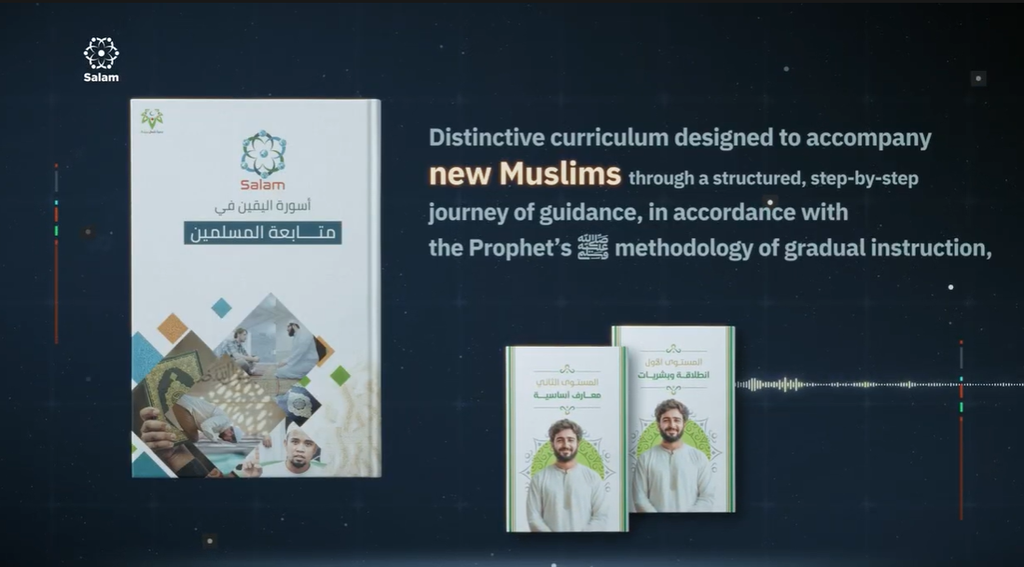
If you have a question right now — about wudu, prayer, or anything else sitting on your heart — reach out directly and talk to someone. You do not need to wait until you have it all figured out.
You can also explore more topics like this one on the Salam blog, or browse the wider Salam Platform whenever a new question comes up.
Rejoice — Allah has already brought you this far, and He does not leave those who seek Him without support.
Reach out directly — our team is ready to listen, guide, and welcome you.

Summary
Reciting Quran from memory or reading it on a phone does not require wudu, while touching a printed Mushaf does, according to the majority of scholars. Wudu remains recommended in every case as an act of honoring Allah’s speech.
Janabah is the one condition that halts all Quran recitation until ghusl is performed, regardless of format. Building the habit of wudu before reading, even when optional, deepens a new Muslim’s daily connection to the Quran.
Frequently Asked Questions
Do I need wudu to read Quran on my phone?
No, reading Quran on a phone without wudu is permitted in the dominant scholarly view, since the ruling requiring purity applies specifically to touching a physical Mushaf, not a digital screen (Quran 56:79).
Can I touch a printed Quran without wudu?
No, touching a physical Mushaf without wudu is not permitted according to the majority of scholars from all four Sunni schools, based on the hadith: “No one should touch the Quran except one who is pure” (Muwatta Malik).
Can I recite Quran from memory without wudu?
Yes, reciting Quran from memory without wudu is agreed upon as permissible, as long as you are not in a state of janabah (major impurity), which requires ghusl before any recitation resumes.
What if I am in janabah — can I read Quran at all?
No, a person in a state of janabah may not recite Quran in any form until ghusl is performed, based on a hadith in Sunan Abi Dawud stating nothing stopped the Prophet (peace be upon him) from reciting except janabah.
Is it sinful to read Quran without wudu as a new Muslim still learning?
No, it is not sinful to recite Quran or read it on a screen without wudu. Wudu is recommended for extra reward and reverence, but Allah’s mercy accommodates every stage of learning as a new Muslim grows in practice.
Curious about Islam?
Journey towards clarity and purpose. Our team is here to support you in your search for truth and spiritual guidance.
Embrace the Truth