
What Does the Quran Say About Female Education?
| Key Takeaways |
| The Quran commands all Muslims — male and female — to seek knowledge, with the Arabic word Muslim in key Hadith narrations covering both genders grammatically. |
| Surah Al-‘Alaq (96:1–5), the first revelation ever given to Prophet Muhammad (PBUH), opens with the command “Recite – Read” — a universal imperative addressed to all of humanity, not exclusively to men. |
| The Quran elevated women’s status centuries before modern educational rights movements, granting Muslim women legal standing as witnesses, inheritors, and independent moral agents. |
| Aisha bint Abi Bakr (RA), wife of the Prophet (PBUH), became one of the greatest scholars of Islam — narrating over 2,200 Hadiths and teaching men and women alike, embodying the Quranic mandate for female scholarship. |
The Quran contains no verse restricting women from learning, limiting their access to religious or worldly knowledge, or designating knowledge as a male preserve.
When the very first verses revealed to Prophet Muhammad (PBUH) open with “Recite – Read” (اقْرَأْ), they speak to a truth Islam has always held: the pursuit of knowledge is a religious duty binding on every soul.
The First Revelation of the Quran Was a Command to Learn
The opening verses of Surah Al-‘Alaq are the starting point for any honest discussion of Islam and education:
اقْرَأْ بِاسْمِ رَبِّكَ الَّذِي خَلَقَ خَلَقَ الْإِنسَانَ مِنْ عَلَقٍ اقْرَأْ وَرَبُّكَ الْأَكْرَمُ الَّذِي عَلَّمَ بِالْقَلَمِ عَلَّمَ الْإِنسَانَ مَا لَمْ يَعْلَمْ
“Recite in the name of your Lord who created – (1) Created man from a clinging substance. (2) Recite, and your Lord is the most Generous – (3) Who taught by the pen – (4) Taught man that which he knew not.” (Quran 96:1–5)
The word Al-Insan — the human being — appears here without gender distinction. Allah addresses the entirety of humanity as the recipients of divine knowledge. The command to read, to learn, and to engage the intellect was the very first instruction Allah sent down — before the commands of prayer, fasting, or any ritual obligation.
This sequence carries enormous weight in Islamic epistemology: knowledge precedes action.
Surah Al-Mujadila and the Woman Who Petitioned Allah Directly
One of the most striking proof-texts for women’s engagement with knowledge and divine discourse appears in the opening of Surah Al-Mujadila:
قَدْ سَمِعَ اللَّهُ قَوْلَ الَّتِي تُجَادِلُكَ فِي زَوْجِهَا وَتَشْتَكِي إِلَى اللَّهِ
“Certainly has Allah heard the speech of the one who argues with you, [O Muhammad], concerning her husband and directs her complaint to Allah.” (Quran 58:1)
An entire Surah of the Quran opens with the words, actions, and legal grievance of a woman. Khawlah bint Tha’labah (RA) came to the Prophet (PBUH) to dispute a ruling she found unjust — and Allah responded with revelation vindicating her.
This establishes, in the clearest possible terms, that Muslim women are not passive recipients of rulings handed down from above. They engage, they reason, they petition, and they are heard — by the Prophet (PBUH) and by Allah Himself.
Learn More About Islam
Discover the beauty, teachings, and wisdom of Islam in a clear and welcoming way. Start exploring and deepen your understanding today.
Learn MoreThe Quranic Elevation of Knowledge Applies to Women Equally
The Quran repeatedly elevates those who possess knowledge above those who do not, with no gendered qualification:
يَرْفَعِ اللَّهُ الَّذِينَ آمَنُوا مِنكُمْ وَالَّذِينَ أُوتُوا الْعِلْمَ دَرَجَاتٍ
“Allah will raise those who have believed among you and those who were given knowledge, by degrees.” (Quran 58:11)
The Arabic الَّذِينَ أُوتُوا الْعِلْمَ (those given knowledge) is grammatically inclusive of both men and women in the scholars of Tafsir’s reading of this verse. This elevation is a reward for combining faith with pursued knowledge — an elevation open to every believer.
Further, the Quran demands that its own believers reflect, question, and reason:
أَفَلَا يَتَدَبَّرُونَ الْقُرْآنَ
“Do they not reflect upon the Quran?” (Quran 4:82)
Reflection (tadabbur) requires literacy, engagement, and the cognitive tools that education develops. The Quran issues this challenge to the entire community of believers — not half of it.
Aisha (RA) Is the Living Proof of the Quran’s Vision for Female Scholarship
Theory becomes reality in the life of Aisha bint Abi Bakr (RA), the wife of the Prophet (PBUH) and one of the greatest scholars Islam has ever produced.
She narrated approximately 2,210 Hadiths, issued legal rulings (fatwas) on complex matters of jurisprudence, and corrected senior male Companions when their narrations contained errors.
Aisha (RA) taught in her chamber in the mosque of the Prophet, and scholars traveled from across Arabia to learn from her.
The history of the Quran itself was preserved through women like Hafsah bint Umar (RA), in whose possession the first compiled written copy of the Quran was entrusted during the caliphate of Abu Bakr (RA).
The Quran Grants Women Independent Moral and Legal Agency
A person who bears full moral responsibility before Allah requires the knowledge to fulfill that responsibility. The Quran is unambiguous:
مَنْ عَمِلَ صَالِحًا مِّن ذَكَرٍ أَوْ أُنثَىٰ وَهُوَ مُؤْمِنٌ فَلَنُحْيِيَنَّهُ حَيَاةً طَيِّبَةً
“Whoever does righteousness, whether male or female, while he is a believer — We will surely cause him to live a good life.” (Quran 16:97)
Both the man and the woman stand individually before Allah for their deeds. This moral individualism — rooted in the Quran — is inseparable from the requirement to know one’s obligations.
You cannot fulfill what you do not understand. The Quran’s framework of individual accountability for every soul is itself a theological argument for female education.
Read Also: What Does the Quran Say About Hijab
Learn More About Islam
Discover the beauty, teachings, and wisdom of Islam in a clear and welcoming way. Start exploring and deepen your understanding today.
Learn MoreLearn More Authentic Knowledge About Islam & Quran with Salam
If this article has opened a door, you are welcome to walk through it.
The Salam Center exists to accompany seekers and new Muslims on their journey — not just with information, but with genuine guidance and community.
Explore more articles and reflections at the Salam Platform.
Read further on the topics covered here at the Salam blog.
Have a question about Islam, or ready to take a next step? Reach out directly — the team is here for you.
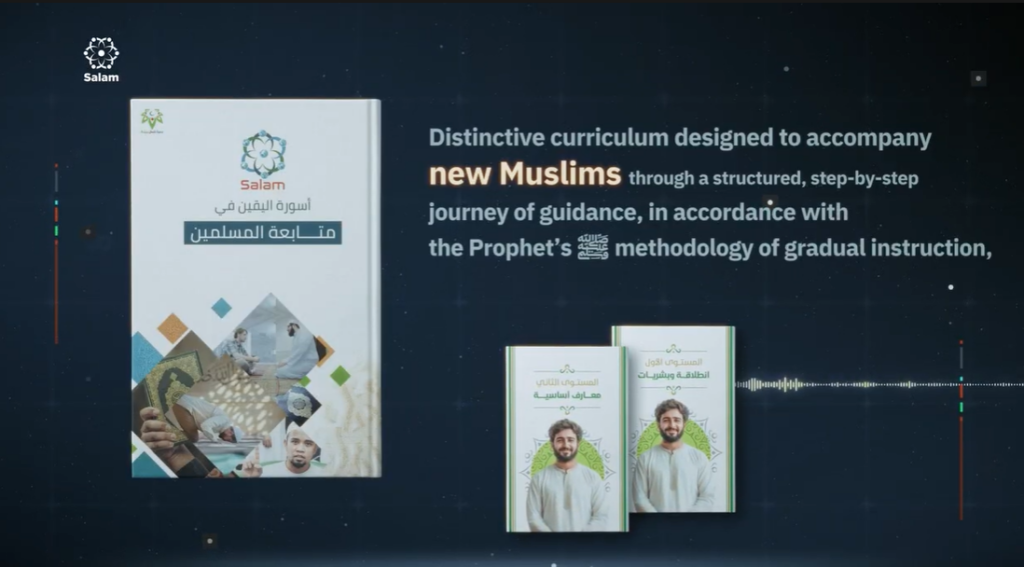
For new Muslims beginning their structured journey in faith, the Salam Center offers the Asawirat Al-Yaqeen (Bracelets of Certainty) program — a complete, four-stage curriculum designed by Islamic scholars to walk you through Islam from foundation to full confidence:
- Stage One — The Foundation: The Shahada, prayer, purity, and the pillars of faith
- Stage Two — The Construction Phase: The six pillars of Iman, fasting, zakat, and the Seerah of the Prophet (PBUH)
- Stage Three — The Consolidation Phase: Spiritual character, moral nurturing, and practical life rulings
- Stage Four — The Empowerment Phase: Contemporary issues, theological foundations, and your life roadmap through Surah Al-Asr
Over 114,588 new Muslims across 140 countries have completed this journey. You are not alone in yours.
Reach out directly to the Salam Center team to start the Asawirat Al-Yaqeen (Bracelets of Certainty) program for FREE.
Summary
The Quran mandates the pursuit of knowledge as a universal religious duty, grounded in its first revealed verses commanding all of humanity to read, reflect, and engage with divine wisdom. Female moral agency — explicitly affirmed in verses addressing righteous deeds by both men and women — makes female education an inseparable Quranic requirement.
Frequently Asked Questions
Does the Quran explicitly say women should be educated?
No, the Quran does not explicitly say women should be educated. However, the Quran commands all believers — male and female — to read, reflect, and pursue knowledge, beginning with the first revealed verses of Surah Al-‘Alaq (96:1–5).
Were women scholars accepted in early Islamic history?
Yes — women scholars were central to Islamic scholarship from the earliest generation. Aisha bint Abi Bakr (RA) narrated over 2,200 Hadiths and issued legal rulings consulted by senior male Companions.
What Quranic verse best shows that women have equal standing in seeking knowledge?
Quran 58:11 states that Allah elevates “those who have believed and those who were given knowledge” — without gender qualification. Additionally, Quran 16:97 guarantees the full reward of righteous deeds equally to “male or female,” establishing that the Quran treats men and women as equal moral and spiritual agents before Allah.
Curious about Islam?
Journey towards clarity and purpose. Our team is here to support you in your search for truth and spiritual guidance.
Embrace the Truth