What Did Muslims Believe Before the Quran?
| Key Takeaways |
| Islam teaches that pure monotheism (Tawhid) is the original human religion, taught by every prophet from Adam onward, not a doctrine invented in the 7th century. |
| The Quran identifies Prophet Ibrahim (Abraham) and his son Ismail as the ones who raised the foundations of the Ka’bah in Makkah, centuries before the Quran’s revelation. |
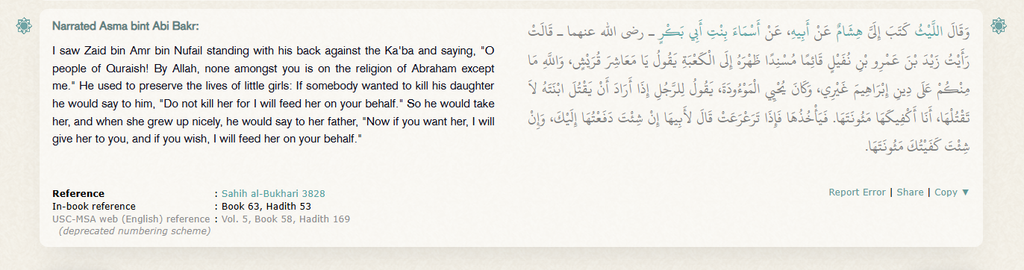
| Zayd ibn Amr ibn Nufayl, a Hanif who lived in Makkah before Prophet Muhammad’s (PBUH) mission began, is recorded in Sahih al-Bukhari declaring he alone still held to the religion of Ibrahim. |
Pre-Quranic Arabia preserved scattered fragments of this original monotheism through individuals called Hunafa (singular: Hanif), who rejected idol worship while awaiting a final messenger.
The Quran describes Ibrahim as neither Jew nor Christian but a Hanif Muslim, meaning the core message of Islam predates and underlies the faith the Quran later formalized.
By the time the Quran was revealed, Arabia’s religious landscape included Jewish tribes, Christian communities, and widespread polytheism, against which the surviving Hanif tradition stood as a remnant witness.
What did Muslims believe before the Quran?
Before the Quran’s revelation, there were no “Muslims” in the organized sense, but Islam teaches that the belief system the Quran later codified — pure monotheism, submission to one God, and the legacy of Ibrahim — already existed in fragments across pre-Islamic Arabia. This belief is called Tawhid, and Islamic theology holds it as the primordial religion of every prophet Allah ever sent, starting with Adam.
The Quran itself frames this continuity directly, describing Ibrahim as someone who lived a monotheistic, submitted life long before the Quran existed:
مَا كَانَ إِبْرَاهِيمُ يَهُودِيًّا وَلَا نَصْرَانِيًّا وَلَٰكِن كَانَ حَنِيفًا مُّسْلِمًا وَمَا كَانَ مِنَ الْمُشْرِكِينَ
“Abraham was neither a Jew nor a Christian, but he was one inclining toward truth, a Muslim [submitting to Allah]. And he was not of the polytheists.” (Quran 3:67)
This verse anchors the entire Islamic answer to the question. Submission to Allah — what the Quran calls Islam — is not presented as a new invention arriving with Prophet Muhammad (PBUH) in the 7th century CE.
It is presented as a restoration of something older, obscured by centuries of accumulated idolatry.
Before the Quran arrived, remnants of that original faith survived in isolated pockets and individual seekers scattered across the Arabian Peninsula, even as the majority around them had drifted into polytheism.
Learn More About Islam
Discover the beauty, teachings, and wisdom of Islam in a clear and welcoming way. Start exploring and deepen your understanding today.
Learn MoreThe religion of Ibrahim came before the Quran and shaped what followed
Islamic theology traces monotheistic belief in Arabia back to a specific historical episode: Ibrahim and his son Ismail constructing the Ka’bah. This is not a symbolic or later-invented origin story — the Quran states it as a historical event with a recorded supplication:
وَإِذْ يَرْفَعُ إِبْرَاهِيمُ الْقَوَاعِدَ مِنَ الْبَيْتِ وَإِسْمَاعِيلُ رَبَّنَا تَقَبَّلْ مِنَّا إِنَّكَ أَنتَ السَّمِيعُ الْعَلِيمُ
“And [mention] when Abraham was raising the foundations of the House and [with him] Ishmael, [saying], ‘Our Lord, accept [this] from us. Indeed, You are the Hearing, the Knowing.'” (Quran 2:127)
According to this account, Ismail settled in the barren valley that became Makkah, and generations later, the sanctuary he and his father built became the geographic and spiritual center around which the entire Hijaz region organized its religious life — even after most of that life had drifted far from what Ibrahim actually taught.
For readers wanting deeper background on this account, our full article on how Islam views the nature of God covers the underlying theology of Tawhid that Ibrahim upheld.
Over the centuries between Ibrahim and Muhammad (PBUH), the Ka’bah’s original purpose was corrupted. Idols were introduced into the sanctuary itself, and the tribes surrounding Makkah gradually filled it with hundreds of statues representing different deities.
Yet the building’s foundation, and the memory of who built it and why, never entirely disappeared. That memory is precisely what kept the Hanif tradition alive.
The Hunafa preserved fragments of pure monotheism
The Quran and authenticated hadith literature identify a specific category of pre-Quranic believer: the Hanif (plural: Hunafa).
A Hanif was someone who had independently rejected the idol worship of their tribe and sought the original, uncorrupted religion of Ibrahim — often without any organized community, scripture, or guidance beyond their own conviction that the surrounding polytheism was false.
Sahih al-Bukhari preserves the account of one such man in detail: Zayd ibn Amr ibn Nufayl, an uncle of the future caliph Umar ibn al-Khattab, who lived in Makkah shortly before Prophet Muhammad’s (PBUH) prophethood began.
Zayd publicly refused to eat meat sacrificed to idols, rejected the burial of infant daughters that was common among some tribes, and traveled toward Syria seeking guidance from Jewish and Christian scholars — only to reject both faiths as departures from what Ibrahim had actually taught.
The hadith records his declaration:
“O people of Quraish! By Allah, none amongst you is on the religion of Abraham except me.” (Sahih al-Bukhari, Hadith 3828)
The same chapter of Sahih al-Bukhari also records that when Zayd asked a Jewish scholar in Syria to describe an alternative to Judaism, he was told to seek “the Haneef,” which the scholar defined as “the religion of the Prophet Ibrahim, who was neither a Jew nor a Christian, and he used to worship none but Allah.” Zayd immediately affirmed this as his own path, raising his hands and declaring himself a follower of the religion of Ibrahim.
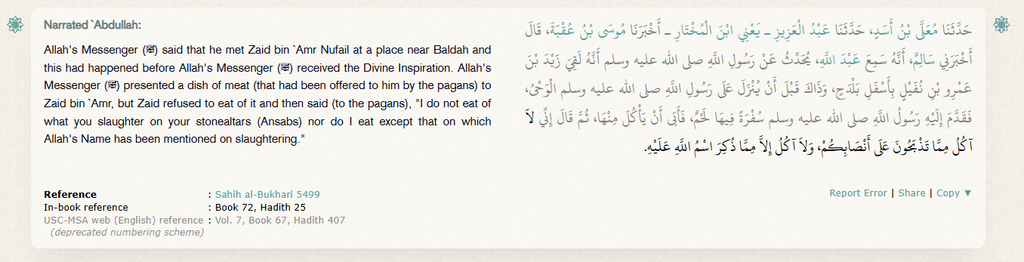
A separate authenticated narration in Sahih al-Bukhari records an earlier encounter between Zayd and a young Muhammad (PBUH), before revelation began.
When offered meat that had been slaughtered upon stone altars dedicated to idols, Zayd refused it, saying:
“I do not eat of what you slaughter on your stone altars, nor do I eat except that on which Allah’s Name has been mentioned on slaughtering.” (Sahih al-Bukhari, Hadith 5499)
Figures like Zayd demonstrate something important for understanding the Quran’s own claims about itself: the core content of Tawhid was recognizable and reachable by sincere seekers even without direct revelation, because the fitrah — humanity’s innate disposition toward recognizing one God — had never been fully erased. Our article on faith in Islam explores how this innate recognition of Allah functions as a foundation of Islamic belief today.
Other Hunafa are recorded in the broader sīrah tradition, including Waraqah ibn Nawfal, a cousin of Khadijah bint Khuwaylid who had studied earlier scripture and was among the first to recognize the nature of the revelation Muhammad (PBUH) began receiving.
These individuals were not organized into any movement. They shared no scripture. What connected them was a shared conviction that the polytheism around them contradicted what Ibrahim had actually established at the Ka’bah generations earlier.
Read Also: What Was the Significance of Gabriel’s Messages to Muhammad in Islam?
The wider religious landscape of pre-Quranic Arabia
Polytheism dominated Arabian religious life in the decades immediately before the Quran’s revelation, but it existed alongside other established faiths, not in total isolation.
Understanding this landscape helps explain why the Quran, once revealed, spoke directly and specifically to Jews, Christians, and polytheists — each of whom occupied a real presence in the region.
Jewish tribes had settled in Yathrib (later Madinah) generations before Islam, some tracing their presence to earlier migrations following periods of upheaval in the Levant.
Christian communities were similarly established, most notably in Najran in the south of the Arabian Peninsula, where a significant Christian population maintained churches and clergy.
Byzantine and Ethiopian Christian influence also reached parts of the peninsula through trade and political contact.
Polytheism, however, remained the dominant practice in and around Makkah itself. The Ka’bah that Ibrahim and Ismail had built for the worship of one God had, by the time of Prophet Muhammad’s (PBUH) birth, become a repository for hundreds of tribal idols, each representing a different deity or ancestor spirit.
This corruption of the original sanctuary is precisely what the Quran later addressed when describing the Hunafa’s rejection of it, and it is the backdrop against which figures like Zayd ibn Amr stood out so sharply.
Readers curious about how the Quran positions itself relative to these earlier traditions can explore what Muslims believe about the Quran for a fuller picture of the revelation’s own claims about continuity and correction.
Read Also: What Was The First Religion That Believed In One God?
Why does this pre-Quranic belief matter for understanding Islam today?
The existence of Hunafa before the Quran matters theologically because it supports one of Islam’s central claims: that the Quran did not introduce a brand-new religion but restored and completed a message that had existed since Adam, delivered repeatedly through a chain of prophets, and preserved — however imperfectly — even in the darkest periods of Arabian idolatry.
This is why the Quran does not describe Ibrahim as a proto-Muslim in some loose, symbolic sense. It describes him with the same term — Muslim, one who submits to Allah — used for the followers of Muhammad (PBUH) centuries later.
The theological claim is continuity, not innovation. This framing also explains why the Quran engages so directly and specifically with Jewish and Christian scripture and history: it positions itself as confirming and correcting an existing prophetic tradition, not competing against something unrelated.
Our comparison articles on Islam and Christianity and Islam and Judaism go further into how the Quran positions itself relative to these two traditions specifically.
For a seeker approaching Islam for the first time, this history answers a natural and honest question: if Islam is true, why did it take until the 7th century CE to arrive in complete form?
The Islamic answer is that it did not arrive for the first time in the 7th century. It arrived, again, in complete and final form — after having been sent, corrupted, and partially preserved many times before, through many prophets, in many places, including through individuals like Zayd ibn Amr who never lived to see the Quran revealed but held, without it, to the same essential truth it would later confirm.
Read Also: What Islam Teaches About Other Religions and Prophets
Learn More About Islam
Discover the beauty, teachings, and wisdom of Islam in a clear and welcoming way. Start exploring and deepen your understanding today.
Learn MoreDiscover More About Faith, Certainty, and the Journey to Islam
If this history of pre-Quranic belief raised more questions than it answered, that is a natural response — and exactly what the Salam Center team exists to help with.
Browse more articles on the Salam Platform covering Islamic beliefs, the Quran, and the life of Prophet Muhammad (PBUH)
Read further reflections on the Salam blog for ongoing discussions of faith and history
Reach out directly — our team is ready to listen, guide, and welcome you.

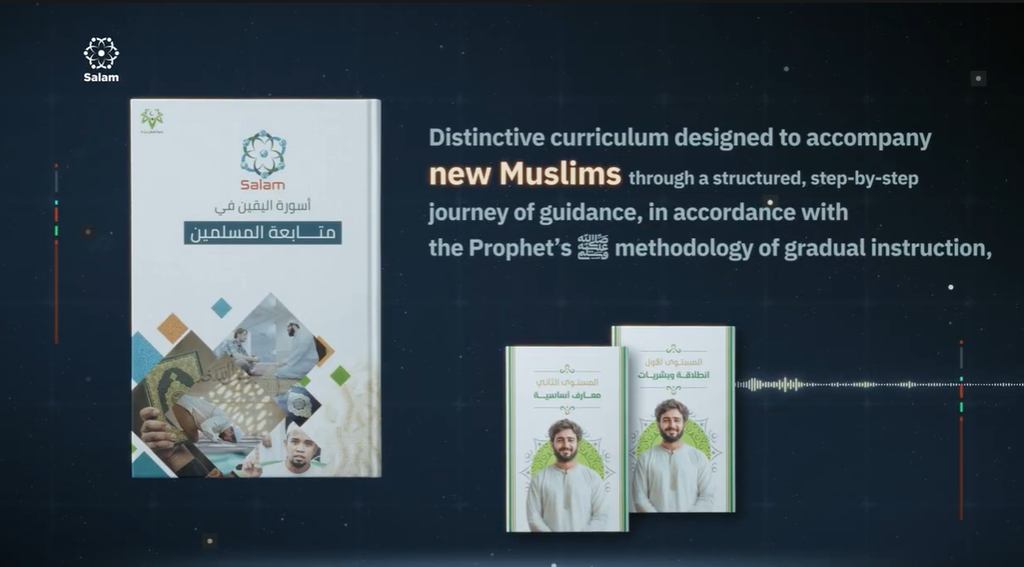
For those who have already taken their shahada, the Salam Center offers structured support through Asawirat Al-Yaqeen (Bracelets of Certainty) — a four-stage program built specifically for new Muslims:
- Foundational knowledge of the pillars of faith, prayer, and purification
- Guidance on repentance and the biography of Prophet Muhammad (PBUH)
- Etiquette, moral development, and practical life rulings
- Advanced study of contemporary issues and theological evidences
Whether you are still exploring or have already begun your journey, the door is open.
Reach out directly to the Salam Center team to start the Asawirat Al-Yaqeen (Bracelets of Certainty) program for FREE.
Summary
Islamic teaching holds that Tawhid, not polytheism, is humanity’s original religion, restored repeatedly through prophets since Adam and reaffirmed through Ibrahim’s construction of the Ka’bah with his son Ismail.
Before the Quran’s revelation, individuals called Hunafa — most notably Zayd ibn Amr ibn Nufayl — preserved fragments of this monotheism, standing apart from the polytheism, Judaism, and Christianity that otherwise defined Arabia’s religious landscape.
Frequently Asked Questions
Did any pre-Islamic Arabs believe in one God before the Quran?
Yes. Individuals called Hunafa, including Zayd ibn Amr ibn Nufayl, rejected idol worship and held to the monotheism of Ibrahim before the Quran was revealed. Sahih al-Bukhari records Zayd’s declaration that he alone still followed “the religion of Abraham” (Bukhari 3828).
Who built the Ka’bah before the Quran existed?
The Quran states that Ibrahim (Abraham) and his son Ismail raised the foundations of the Ka’bah, praying, “Our Lord, accept this from us” (Quran 2:127). This occurred many centuries before the Quran’s 7th-century revelation.
Was Ibrahim considered a Muslim before Islam existed as a religion?
Yes. The Quran explicitly states Ibrahim “was neither a Jew nor a Christian, but… a Muslim” (Quran 3:67), meaning Islam presents submission to Allah as Ibrahim’s actual religion, not a later relabeling.
Curious about Islam?
Journey towards clarity and purpose. Our team is here to support you in your search for truth and spiritual guidance.
Embrace the Truth