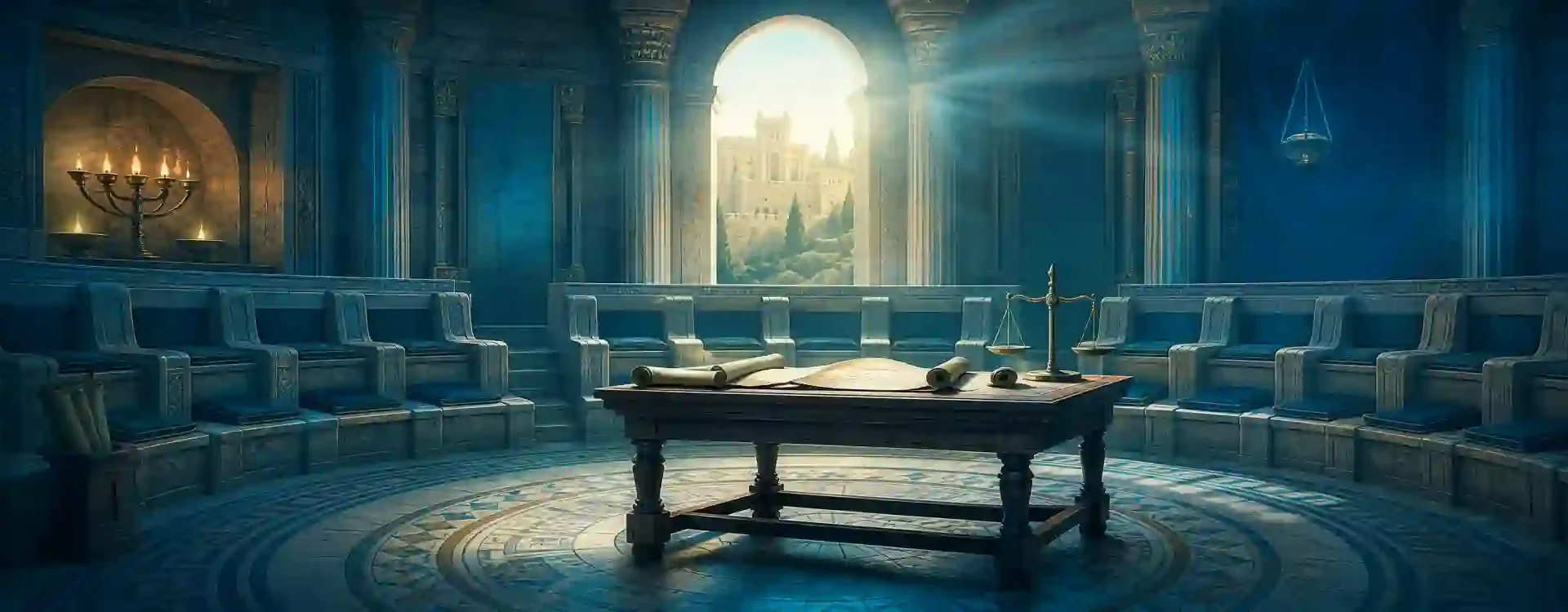
What Did the Sanhedrin Believe?
| Key Takeaways |
| The Sanhedrin was the supreme Jewish legislative and judicial council of Second Temple Jerusalem, and its membership mixed two rival schools with opposite theology. |
| The council’s dominant faction, the Sadducees, denied the resurrection of the dead, the existence of angels, and any form of afterlife, accepting only the literal Written Torah. |
| The Pharisaic minority within the Sanhedrin held the opposite view, affirming resurrection, angels, and an Oral Torah passed down alongside the written text. |
| Because the Sanhedrin never spoke with one theological voice, “what the Sanhedrin believed” really means comparing two competing creeds functioning under one roof. |
| Islam resolves precisely the questions that split the Sanhedrin, affirming angels, resurrection, and the Last Day as non-negotiable articles of faith rooted in the Quran and authentic Sunnah. |
| The Quran directly addresses the religious scholars of the Children of Israel, praising sincere ones as trustworthy custodians of revelation while warning against those who altered or concealed it. |
This ancient Jewish council split sharply on the question of the resurrection, along with several other core matters of faith, because it seated two rival factions with opposite theology.
The Sadducees, who held the greater share of institutional power, denied the resurrection of the dead, rejected the existence of angels and spirits, and accepted only the literal Written Torah.
The Pharisees, who sat alongside them, affirmed all three and added an Oral Torah they believed traced back to Moses himself.
What did the Sanhedrin believe?
The Sanhedrin held no single, unified belief system because it was composed of two theologically opposed Jewish factions sitting on the same council.
Its majority bloc, the Sadducees, rejected the resurrection of the dead, denied the existence of angels and spirits, and recognized only the Written Torah as binding scripture.
Its minority bloc, the Pharisees, affirmed all three: resurrection, angels, and an Oral Torah they believed was revealed to Moses alongside the written text.
Acts 23:8 records this split directly, stating that “the Sadducees say that there is no resurrection, neither angel, nor spirit: but the Pharisees confess both.”
This verse captures the entire theological fracture running through the council that presided over first-century Jerusalem.
The historical composition of the Sanhedrin explains its divided theology
The Sanhedrin functioned as the supreme religious and judicial authority of Judea under both Hasmonean and Roman rule. Talmudic sources describe the Great Sanhedrin as a court of seventy-one sages who convened in the Jerusalem Temple, requiring members to be ordained, mature, of sound mind, and drawn from established priestly or scholarly lineage.
The members of the Sanhedrin had to be ordained, pious, mature, of sound mind and body, of wide knowledge, and of pure Jewish descent, and that people who were too old or childless were considered ineligible because it was thought that they might not be merciful.
The precise balance of power between the two dominant Jewish sects, however, remains genuinely disputed among historians.
The composition of the Sanhedrin is in dispute, particularly regarding the participation of the Sadducees and Pharisees, with some scholars saying it was made up of Sadducees, some of Pharisees, and others describing an alternation or mixture of the two groups.
What is not disputed is that the priestly aristocracy — largely Sadducean — held the seats of greatest institutional power, even where Pharisaic scholars sat among them and shaped popular religious life outside the council chamber.
This dual composition matters enormously for anyone asking what the Sanhedrin actually taught. A single council issuing rulings on Jewish law contained members who disagreed on whether the human soul survives death at all.
1. The Sadducees denied resurrection, angels, and the afterlife entirely
The Sadducees drew their name and much of their institutional identity from the priestly line of Zadok, and their power centered on the Jerusalem Temple itself. Their theology was defined less by what they affirmed than by what they refused to affirm. According to Josephus, the first-century Jewish historian, the Sadducees believed that the soul perishes together with the body, leaving no place for reward or punishment after death.
A summary of this position notes that from Josephus we learn that the Sadducees believed that the soul perishes with the body and therefore can receive neither penalties nor rewards in an afterlife.
This denial extended beyond the soul to the entire unseen order. The Sadducees rejected angels and spirits as categories of existence altogether, a position the New Testament confirms directly through the Book of Acts.
Along with denying resurrection, the Sadducees appear to have rejected the belief in angels and demons, and the Messianic hope played no role in the Sadducean perspective.
Their scriptural method reinforced this worldview. The Sadducees accepted only the Written Torah and refused the Oral Law that the Pharisees claimed also originated with Moses at Sinai.
This textual literalism, combined with their attachment to Temple ritual and political accommodation with Rome, produced a religious outlook oriented almost entirely toward the present world.
2. The Pharisees affirmed resurrection, angels, and an Oral Torah
The Pharisaic bloc within the Sanhedrin held the mirror-opposite position on every major doctrinal point. The Pharisees affirmed bodily resurrection, the reality of angels and spirits, and reward or punishment after death, positioning them as the theological ancestors of virtually all later Rabbinic Judaism. They believed in the resurrection of the dead, reward and punishment in the afterlife, and the existence of angels, which set them apart from the Sadducees.
Central to Pharisaic identity was their claim to possess an Oral Torah — a body of interpretive tradition they held to have been given to Moses at Sinai alongside the Written Torah, later compiled into the Mishnah.
The Pharisees’ insistence on the binding force of oral tradition remains a basic tenet of Jewish theological thought, and when the Mishna was compiled about 200 CE, it incorporated the teachings of the Pharisees on Jewish law.
The Pharisees also staked out a middle position on human free will and divine providence, distinguishing themselves from both the Sadducees, who emphasized free will almost exclusively, and the Essenes, a smaller ascetic sect who held that all events were predetermined.
3. The Sanhedrin’s mixed membership meant no single official creed
Because the council combined these two irreconcilable factions, no attempt to describe “the Sanhedrin’s belief” as a monolith can be historically accurate. The New Testament’s own account of Jesus’s trial reflects this ambiguity in its language. The Gospels describe the assembly using terms like “chief priests, elders, and scribes” rather than naming a single sect, and scholars still debate exactly which faction held functional control at any given moment.
In the trials of Jesus, the Gospels of Mark and Luke speak of the assembly of the chief priests, elders, and scribes under the high priest, referring to the whole council or their council, while the Gospel of John speaks of the chief priests and Pharisees convening the council, and none of the theories proposed for this discrepancy has won scholarly consensus.
What can be stated with confidence is this: the Sadducean priestly establishment held disproportionate institutional power within the Sanhedrin due to their control of the Temple and its offices, even as the Pharisees held greater sway over ordinary religious life and popular opinion.
The council was, in effect, a working coalition between two groups who agreed on almost nothing regarding the unseen world, the afterlife, or the proper source of religious authority — united mainly by shared responsibility for governing Jewish civil and religious law under Roman oversight.
Learn More About Islam
Discover the beauty, teachings, and wisdom of Islam in a clear and welcoming way. Start exploring and deepen your understanding today.
Learn MoreThe Islamic position on resurrection, angels, and the unseen world
Where the Sadducees denied resurrection, angels, and the afterlife outright, and the Pharisees affirmed these doctrines as matters of tradition and interpretation, Islam settles every one of these questions as a matter of direct, explicit divine revelation — not inference, not oral transmission subject to debate, but clear textual command from the Quran itself.
1. Belief in angels, resurrection, and the Last Day are foundational, not optional
Islamic theology does not leave the reality of angels or the resurrection open to sectarian dispute.
These beliefs form part of the core architecture of iman, or faith, as defined in one of the most authoritative hadiths in the Islamic tradition — the Hadith of Jibril, recorded in Sahih Muslim. When the Prophet Muhammad ﷺ was asked to define faith, he answered:
“That you believe in Allah, His angels, His Books, His Messengers, the Last Day, and that you believe in the Divine Decree, its good and its evil.”
This foundational hadith is authentically recorded in Sahih Muslim, establishing belief in angels and the resurrection as two of the six central pillars of Islamic creed — never disputed matters left to a particular school or faction, as they were among the Sanhedrin’s rival parties.
The Quran reinforces this same structure of belief with equal clarity, stating:
يَا أَيُّهَا الَّذِينَ آمَنُوا آمِنُوا بِاللَّهِ وَرَسُولِهِ وَالْكِتَابِ الَّذِي نَزَّلَ عَلَىٰ رَسُولِهِ وَالْكِتَابِ الَّذِي أَنزَلَ مِن قَبْلُ ۚ وَمَن يَكْفُرْ بِاللَّهِ وَمَلَائِكَتِهِ وَكُتُبِهِ وَرُسُلِهِ وَالْيَوْمِ الْآخِرِ فَقَدْ ضَلَّ ضَلَالًا بَعِيدًا
“O you who have believed, believe in Allah and His Messenger and the Book that He sent down upon His Messenger and the Scripture which He sent down before. And whoever disbelieves in Allah, His angels, His books, His messengers, and the Last Day has certainly gone far astray.” (Quran 4:136)
This verse leaves no room for the Sadducean position that denied angels and resurrection, nor does it treat these matters as contingent on oral tradition the way Pharisaic theology structured them. Denial of angels or the Last Day is described here in the strongest possible terms — as straying far from guidance.
This settles, from an Islamic standpoint, the very controversy that split the Sanhedrin down the middle: angels exist, the resurrection is real, and both are essential components of correct belief rather than theological options.
Muslims understand these truths as part of a broader, complete framework of Islamic principles that gives coherent, unified answers to precisely the questions over which the Sadducees and Pharisees remained permanently divided.
Where the Sanhedrin housed two competing creeds under one roof, faith in Islam rests on a single, internally consistent foundation revealed to one final Messenger.
2. The Quran addresses the religious scholars of the Children of Israel directly
The Quran does not discuss the Sanhedrin by name, since it speaks broadly of the religious scholars and rabbis of the Children of Israel across many centuries rather than a single first-century institution. Yet its teaching on how such religious authorities are meant to function — and how they can fail in that function — speaks directly to the kind of leadership the Sanhedrin represented.
Allah describes the proper role of Jewish religious scholars in Surah Al-Ma’idah:
إِنَّا أَنزَلْنَا التَّوْرَاةَ فِيهَا هُدًى وَنُورٌ ۚ يَحْكُمُ بِهَا النَّبِيُّونَ الَّذِينَ أَسْلَمُوا لِلَّذِينَ هَادُوا وَالرَّبَّانِيُّونَ وَالْأَحْبَارُ بِمَا اسْتُحْفِظُوا مِن كِتَابِ اللَّهِ وَكَانُوا عَلَيْهِ شُهَدَاءَ
“Indeed, We sent down the Torah, in which was guidance and light. The prophets who submitted [to Allah] judged by it for the Jews, as did the rabbis and scholars by that with which they were entrusted of the Scripture of Allah, and they were witnesses thereto.” (Quran 5:44)
This verse establishes the rabbaniyyun and ahbar — the devout scholars and religious authorities of the Children of Israel — as entrusted custodians of revealed scripture, responsible for judging according to what Allah had actually revealed. The verse frames faithful religious scholarship as a position of sacred trust, precisely the kind of trust that should have governed a body like the Sanhedrin.
Yet the Quran also warns explicitly against a failure mode connected to religious leadership, stating in Surah At-Tawbah that some among the People of the Book wrongly elevated their scholars to a position of near-divine authority.
Classical commentary situates this warning in its proper interpretive context. Ibn Kathir and al-Tabari’s tafsir on this verse explains it as the act of obeying religious edicts even when they contradicted divine law — a form of legislative shirk, where obedience to a scholar’s ruling effectively replaced obedience to Allah’s own revealed command.
This is a warning about misplaced religious authority generally, not a specific historical claim about the Sanhedrin as an institution — but it illuminates exactly the danger inherent in any council, ancient or modern, whose members might substitute their own rulings for divine guidance.
Read Also: What Do Druids Believe?
3. The Quran addresses the alteration of earlier scripture
A separate but related Quranic theme concerns the alteration of revealed texts, known in Islamic scholarship as tahrif. The Quran states in Surah Al-Baqarah:
أَفَتَطْمَعُونَ أَن يُؤْمِنُوا لَكُمْ وَقَدْ كَانَ فَرِيقٌ مِّنْهُمْ يَسْمَعُونَ كَلَامَ اللَّهِ ثُمَّ يُحَرِّفُونَهُ مِن بَعْدِ مَا عَقَلُوهُ وَهُمْ يَعْلَمُونَ
“Do you covet [the hope, O believers], that they would believe for you while a party of them used to hear the words of Allah and then distort the Torah after they had understood it while they were knowing?” (Quran 2:75)
Classical Sunni tafsir identifies this verse as referring specifically to Jewish rabbis of that era, distinguishing between distortion of wording and distortion of meaning.
This distinction is essential for intellectual honesty on the topic: Sunni scholarship draws a careful line between tahrif al-lafz, an actual textual alteration, and tahrif al-mana, a distorted interpretation of a text that remains basically intact.
This matters directly to the topic at hand, because the Sadducees’ rejection of the entire Oral Law and the Pharisees’ claim to possess an equally authoritative unwritten tradition represent exactly the kind of interpretive divergence the Quran describes: a single revealed text producing two mutually exclusive theological systems, depending entirely on how its custodians chose to read and transmit it.
This is why Islam’s account of prophetic guidance carries such distinct force. Where the Sanhedrin’s two factions could not agree even on whether angels exist, Muslims trust that the Quran itself has been preserved intact, a topic explored further in what Muslims believe about the Quran and in the deeper evidential case for why Muslims believe in the Quran as unaltered revelation.
Read Also: What Does a Deist Believe?
4. Islam presents a unified account of the unseen world
Perhaps the sharpest contrast between the Sanhedrin’s internal theology and the Islamic position concerns the unseen world as a whole — angels, spirits, the soul’s fate after death, and divine providence. The Sadducees denied all of it.
The Pharisees affirmed all of it, but grounded that affirmation in oral tradition rather than a single unaltered text. Islam grounds every element of this unseen order in explicit Quranic statement and authenticated prophetic teaching, leaving no equivalent internal contradiction for sincere seekers to untangle.
This coherence extends to how Islam frames the nature of Allah Himself, a subject explored in depth in how Islam views the nature of God, and to Islam’s broader engagement with other scriptural traditions, addressed in how Islam views other religions.
Central to all of this is the principle of monotheism — the absolute oneness of Allah — which stands as the organizing axis around which every other Islamic doctrine, including belief in angels and resurrection, is structured.
This stands in direct contrast to polytheism and to any theology, ancient or modern, that fragments religious authority the way the Sanhedrin’s rival factions once did.
Read Also: What Do New Agers Believe?
Learn More About Islam
Discover the beauty, teachings, and wisdom of Islam in a clear and welcoming way. Start exploring and deepen your understanding today.
Learn MoreYour Path to Deeper Authentic Knowledge Starts Here with Salam
Questions like this one often lead somewhere deeper than a single historical fact. If the theological gaps within the Sanhedrin have left you wondering how Islam addresses these same questions of the unseen, resurrection, and prophetic authority with such clarity, the Salam Platform was built for exactly this kind of inquiry.
Explore more comparative and evidence-based articles on the Salam blog.
Have a specific question about Islamic belief, history, or scripture?
Reach out directly — our team is ready to listen, guide, and welcome you.

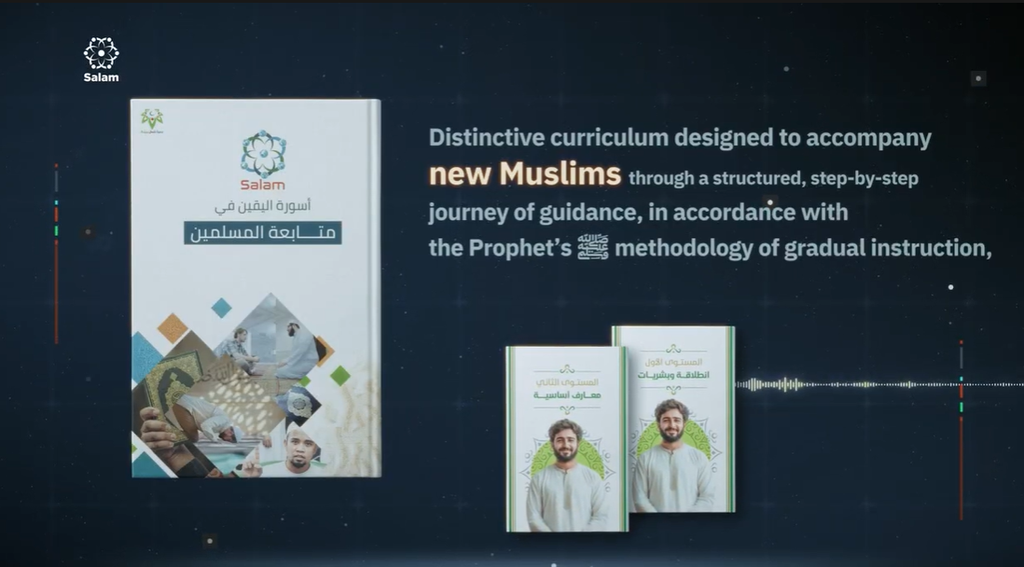
For those who have already entered Islam or are considering it, the Salam Center for Da’wah and Dialogue offers structured post-conversion support through the Asawirat Al-Yaqeen (Bracelets of Certainty) program, a four-stage guided curriculum covering:
- Foundational pillars, purification, and prayer (Stage One)
- Repentance and the biography of the Prophet ﷺ (Stage Two)
- Etiquette, family life, and practical daily rulings (Stage Three)
- Contemporary issues, comparative theology, and a life roadmap rooted in the Quran (Stage Four)
For general inquiries about Islam, conversion, or joining this program, reach out directly — a member of the Salam Center team is ready to help.
Reach out directly to the Salam Center team to start the Asawirat Al-Yaqeen (Bracelets of Certainty) program for FREE.
Summary
The Sanhedrin governed first-century Jerusalem while housing two theologically opposed factions under a single roof, leaving resurrection, angels, and the afterlife permanently contested within its own walls. Islam settles these same questions decisively, grounding angels and the Last Day in explicit Quranic verses and the authenticated Hadith of Jibril.
Sincere seekers exploring these ancient disputes often find that Islamic theology offers the coherence that first-century Judaism’s ruling council could never fully achieve internally. The Quran’s treatment of prophets, scripture, and religious scholarship extends an invitation to examine these questions further, grounded firmly in revelation rather than unresolved sectarian debate.
Frequently Asked Questions
Did the Sanhedrin believe in resurrection?
The Sanhedrin was divided on this question. Its Sadducean majority denied resurrection entirely, while its Pharisaic minority affirmed it. Acts 23:8 confirms this split directly, and the Mishnah’s tractate Sanhedrin 10:1 records the ultimate victory of the Pharisaic view within later Judaism.
Were the Sadducees or Pharisees in control of the Sanhedrin?
Historians remain genuinely divided on this question. The priestly Sadducees held disproportionate institutional power through Temple control, while Pharisees held broader popular influence. Britannica notes no scholarly consensus exists on which faction dominated the council at any given time.
Did the Sadducees believe in angels?
No, the Sadducees explicitly denied the existence of angels and spirits. This is confirmed in Acts 23:8 and corroborated by Josephus, who described their rejection of any unseen or immortal spiritual realm beyond the material body.
What does Islam say about the Jewish scholars mentioned in the Quran?
The Quran describes faithful Jewish scholars, the rabbaniyyun and ahbar, as entrusted custodians of the Torah in Quran 5:44, while warning in 9:31 against those wrongly given authority equal to Allah’s revealed law. This establishes both the honor and the responsibility carried by religious scholarship.
Does Islam resolve the disagreement between the Sadducees and Pharisees?
Yes — Islam affirms angels, resurrection, and the Last Day as core, undisputed pillars of faith, recorded in the Hadith of Jibril in Sahih Muslim and in Quran 4:136. This settles definitively the exact doctrinal question that divided the Sanhedrin’s two rival factions.
Curious about Islam?
Journey towards clarity and purpose. Our team is here to support you in your search for truth and spiritual guidance.
Embrace the Truth