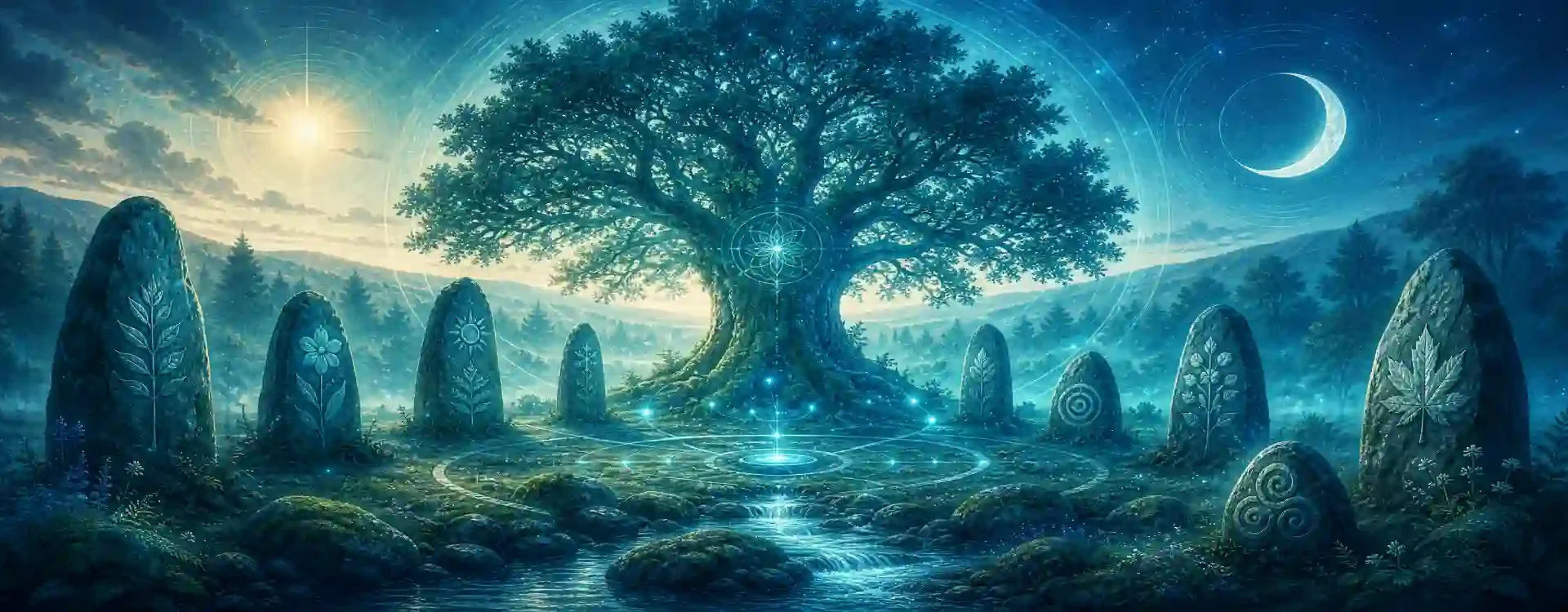
What Do Druids Believe?
| Key Takeaways |
| Modern Druidry is a nature-venerating spiritual movement with no fixed doctrine, allowing members to hold polytheistic, pantheistic, animist, or even non-theistic beliefs simultaneously. |
| The Order of Bards, Ovates and Druids (OBOD), the largest global Druid order, teaches that the divine is fundamentally unknowable and leaves the nature of Deity to individual interpretation. |
| Most Druids affirm some form of reincarnation, believing the soul passes through the Otherworld between successive lives in human, animal, or even plant form. |
| Islam teaches a single, defined, unchanging God (Allah) known through revelation, in direct contrast to Druidry’s undefined and self-selected conception of divinity. |
| Salam Center for Da’wah and Dialogue offers structured guidance for anyone comparing these worldviews, including the Asawirat Al-Yaqeen (Bracelets of Certainty) program for new Muslims. |
Druids believe nature itself carries the sacred, and from that single shared conviction, an entire spectrum of theology branches outward — polytheism for some, pantheism for others, sheer agnosticism for many more.
There is no Druidic scripture, no single founder, and no creed that binds every practitioner to the same statement about God. This fluidity is precisely what draws some seekers to Druidry and what troubles others, because a spiritual path that refuses to define the object of its worship leaves the most important question — who or what is God? — permanently open.
What Do Druids Believe?
Druids believe that nature is sacred and that the physical world is infused with divine or spiritual presence, though they hold no single fixed belief about the identity or number of gods behind that presence. Druids can be monotheists, animists, polytheists, or agnostics, and may align themselves with any of the world’s religious traditions while still practicing druidry.
Some Druids avoid choosing any one conception of Deity, believing that its nature is fundamentally unknowable by the mind, while monotheistic Druids believe in one Deity, duotheists believe in a paired God and Goddess, and polytheistic Druids believe many gods and goddesses exist.
This deliberate theological openness is not a modern accident; it is built into how Druid orders describe themselves.
Most Druids identify as poly- or pantheistic, though even that varies: “hard” polytheists hold that multiple deities exist as distinct individual beings, while “soft” polytheists believe multiple deities are the many faces of a single divinity, and pantheists hold that everything in existence is itself an aspect of the divine.
What unites nearly every strand of the movement is not a shared god but a shared reverence: all modern Druids venerate the divine essence of nature, even as their formal theological beliefs diverge widely.
Do Druids Worship Multiple Gods?
Many Druids do worship multiple gods, though this is a matter of individual and group interpretation rather than a fixed rule of the tradition. Druidism is commonly described as a polytheistic practice in which druids worship multiple gods and figures, often embodying natural elements and aspects of life, seeing nature itself as a manifestation of the divine.
Modern Druids most commonly identify as polytheistic, and the movement’s major currents include shamanism, love of the Earth and nature, animism — the belief that natural objects possess spirit — and pantheism, the view that the natural world is itself divine.
At the same time, some Druid orders explicitly reject any single required belief. The Order of Bards, Ovates and Druids is not a hard polytheistic group; it remains open to people of any faith or none, regardless of gender, age, or ethnicity.
This structural openness is worth pausing on, because it means the very question “what god does a Druid worship?” has no single correct answer inside the tradition itself — a sharp contrast with monotheism as understood in Islam, where the identity of God is not a matter left to the individual practitioner to decide.
1. The Otherworld, Death, and Reincarnation
Most Druids hold that death is not an ending but a passage into another dimension of existence, often followed by rebirth.
Druids generally believe that a reality exists beyond the physical world, that Celtic mythology — which inspires much of Druidism — is filled with descriptions of this “Otherworld,” and that the ancient Druids’ greatest belief, as recorded by classical writers, involved a process resembling reincarnation or metempsychosis, in which a soul lives through a succession of human and animal forms, resting in the Otherworld between each life.
This belief is not uniform even among committed Druids. While a Christian Druid may hold that the soul is born only once on Earth, most Druids follow their ancient forebears in believing the soul undergoes successive reincarnations — either always returning in human form, or cycling through varied forms that might include trees and even rocks.
2. The Three Goals and the Symbol of Awen
Druidic practice is often organized around three stated aims: wisdom, creativity, and love. These three goals for the Druid receive deep attention within Druidic teaching, connected to the symbol known as Awen — a Welsh term describing the flowing spirit of inspiration, understood as an inner light that lets the mind reach beyond itself.
Awen refers to flowing or divine inspiration; Druids connect with the creative spirit of the divine found in nature and channel that creativity into expressive works of all kinds, including poetry, storytelling, painting, sculpture, woodworking, dance, and music.
Rather than stressing that physical life is temporary and that focus should rest on an afterlife, Druidism conveys the idea that people are meant to fully participate in life on earth and to express and share their creativity as much as possible. This “goal” of love extends outward as well: Druidry’s reverence for Nature encourages loving the land, the Earth, the stars, and the wild, broadening a person’s understanding and experience of love itself.
3. Neo-Druidry Idealized the Perceived Spiritual Wisdom and Natural Harmony of Ancient Celtic Societies
Neo-Druidry has no unbroken chain back to the Druids of pre-Roman Britain and Gaul; it is a modern reconstruction. Neo-Druidry emerged in eighteenth-century Britain as part of the Romantic movement, which idealized the perceived spiritual wisdom and natural harmony of ancient Celtic societies.
A significant portion of the source material Druids draw upon is not ancient at all: much of the Druidic and Celtic lore modern practitioners rely on traces back to influential forgeries produced in the 1780s and 1790s by Edward Williams, known by his bardic name Iolo Morganwg, along with other later contributors, and modern reconstructed Druidism is considered part of the neo-pagan family of religions with no genuine historical continuity to ancient Druidry.
Practically, Druids today organize into small communities for worship and learning. Modern Druids often gather in groups called groves or orders, providing community for worship, learning, and celebration, with well-known Druidic orders including the Order of Bards, Ovates, and Druids, The Druid Network, and Ár nDraíocht Féin.
The largest of these has grown substantially since its founding: OBOD was formed roughly fifty years ago by the poet and historian Ross Nichols and has since grown to encompass over 20,000 members worldwide, offering distance-learning programs for solitary practitioners as well as physical groves.
4. Ritual, Offerings, and the Wheel of the Year
Druidic ritual life centers on the seasons and on maintaining a relationship with unseen forces through structured offerings.
Druids celebrate holy days including the solstices and equinoxes, and frequently follow the neopagan wheel of the year, which adds the cross-quarter days of Samhain, Beltane, Lughnasadh, and Imbolc; meditation in nature is central to the practice, often involving a daily return to an outdoor place to observe seasonal change.
After a Druid makes offerings to deities, ancestors, and nature spirits, a divination may follow to discern whether the offerings were accepted and what the spirits offer in return; these gifts are then symbolically infused into a drink, usually water, which ritual participants share.
Environmental commitment functions as a form of devotion in its own right: many Druids emphasize sustainable, gathered offerings over store-bought items, believing the intention behind growing or collecting something carries real weight in the spirit realm, and some consider environmental stewardship itself a form of non-physical offering.
Learn More About Islam
Discover the beauty, teachings, and wisdom of Islam in a clear and welcoming way. Start exploring and deepen your understanding today.
Learn MoreThe Islamic Perspective on Druidic Beliefs
Islam approaches every question Druidry leaves open — the identity of God, the nature of the soul, the meaning of ritual — with direct, textual answers rather than personal interpretation. This section presents the Islamic position with the confidence the Quran itself commands, not as a polite counterpoint but as the truth Muslims hold to be binding on every human being, seeker and skeptic alike.
1. Allah Is One, Defined, and Named — Not Left to Choice
Where Druidry permits monotheism, duotheism, polytheism, pantheism, or outright agnosticism to coexist under one roof, Islam allows none of this latitude. The very first principle of Islamic faith is that Allah is a single, specific, self-disclosed reality — not a placeholder each believer fills in according to preference.
قُلْ هُوَ اللَّهُ أَحَدٌ اللَّهُ الصَّمَدُ لَمْ يَلِدْ وَلَمْ يُولَدْ وَلَمْ يَكُن لَّهُ كُفُوًا أَحَدٌ
“Say, ‘He is Allah, [who is] One, Allah, the Eternal Refuge. He neither begets nor is born, nor is there to Him any equivalent.'” (Quran 112:1-4)
This surah, Al-Ikhlas, was revealed specifically to close the door that Druidry deliberately leaves open — the door of “which god, or how many, or none at all.”
Islam does not present God as unknowable by nature, requiring each person to guess or feel their way toward Him. Allah has described Himself, named Himself, and revealed His attributes through the Quran, so faith in Islam begins from certainty rather than speculation.
This stands as the sharpest possible contrast with Druidic theology, where — as shown above — even the largest global order declines to require belief in any particular conception of Deity at all.
2. One Life, One Judgment — Not an Endless Cycle of Otherworld and Rebirth
Druidry’s Otherworld and its widespread embrace of reincarnation stand in direct opposition to what Islam teaches about death, the soul, and accountability.
The Quran describes a single earthly life, a single death, and a single Day of Judgment — never a wheel of successive rebirths through human, animal, or vegetal forms.
كُلُّ نَفْسٍ ذَائِقَةُ الْمَوْتِ ۖ ثُمَّ إِلَيْنَا تُرْجَعُونَ
“Every soul will taste death. Then to Us will you be returned.” (Quran 29:57)
Notice the structure of this verse: death, then return — not death, then rebirth into another body, then death again in an unending sequence. The soul returns to its Creator for judgment based on the deeds of this one life, a doctrine with direct moral consequences.
If reincarnation were true, urgency in this life would dissolve; mistakes could always be corrected in a future body. Islam’s single-life framework instead makes every choice, every act of worship, and every act of harm final and consequential — a seriousness the Otherworld-and-rebirth model of Druidry cannot sustain by its own internal logic.
The Prophet Muhammad (PBUH) reinforced this same finality regarding the soul and the grave:
“When the son of Adam dies, his deeds come to an end except for three things: ongoing charity, beneficial knowledge, or a righteous child who prays for him.” (Sahih Muslim)
Deeds “come to an end” at death — there is no soul cycling onward to accrue new deeds in a new body. This is a settled, textually grounded position within the creed of Ahlus Sunnah wal Jama’ah, not a matter left open to personal preference the way it is in Druid orders.
Read Also: What Did the Sanhedrin Believe?
3. Nature Is a Sign of Allah, Not a Manifestation of the Divine Itself
Druidry treats nature as something to be venerated — sacred in itself, sometimes indistinguishable from the divine, as pantheistic Druids explicitly hold.
Islam takes nature seriously in a different and, Muslims hold, more coherent way: as a sign (ayah) pointing beyond itself to its Creator, never as an object of worship or a repository of divine essence.
إِنَّ فِي خَلْقِ السَّمَاوَاتِ وَالْأَرْضِ وَاخْتِلَافِ اللَّيْلِ وَالنَّهَارِ لَآيَاتٍ لِّأُولِي الْأَلْبَابِ
“Indeed, in the creation of the heavens and the earth, and the alternation of the night and the day, are signs for those of understanding.” (Quran 3:190)
The distinction matters enormously. When a Druid meditates in a forest and senses the sacred, Islam agrees that something real and significant is being perceived — but identifies it correctly as evidence of Allah’s design, not as Allah’s own substance dispersed through matter.
Pantheism collapses the difference between Creator and creation; Islam insists on it absolutely.
This is precisely why the Quranic worldview never slides into worshipping trees, rivers, or animal spirits, even while commanding profound respect and stewardship for them. For a fuller treatment of this distinction, see how Islam views the nature of God.
Read Also: What Does a Deist Believe?
4. Revelation, Not Personal Divination, Is the Path to Truth
Druidic ritual frequently involves divination — reading signs from offerings, seeking guidance through extra-sensory methods, and trusting intuitive impressions from spirits or deities. Islam locates truth somewhere entirely different: in fixed, preserved, textual revelation delivered through a chain of prophets, culminating in the Quran.
إِنَّا نَحْنُ نَزَّلْنَا الذِّكْرَ وَإِنَّا لَهُ لَحَافِظُونَ
“Indeed, it is We who sent down the message, and indeed, We will be its guardian.” (Quran 15:9)
This is not a small methodological difference. A tradition that relies on individual divination and intuitive guidance, as Druidry openly does, produces exactly the theological diversity documented throughout this article — because there is no fixed external standard to check personal impressions against.
Islam’s insistence that Allah Himself preserves the text of revelation removes this instability.
The Quran a Muslim reads today is the same text companions of the Prophet (PBUH) memorized and recited fourteen centuries ago, verifiable and unchanged — a claim examined in depth in why do Muslims believe in the Quran and what do Muslims believe about the Quran.
Read Also: What Do New Agers Believe?
Learn More About Islam
Discover the beauty, teachings, and wisdom of Islam in a clear and welcoming way. Start exploring and deepen your understanding today.
Learn MoreDiscover More About Faith, Certainty, and the Journey to Islam
Comparing worldviews is a serious undertaking, and no single article closes every question. If this comparison raised more questions than it answered, that is exactly the right response — and there is more waiting for you.
Browse the Salam Platform for further reading on Islamic belief, prophethood, and the Quran.
Visit the Salam blog for ongoing articles addressing sincere questions from seekers of every background.
Have a specific question about Islam, or wondering what entering Islam actually involves?
Reach out directly — our team is ready to listen, guide, and welcome you.
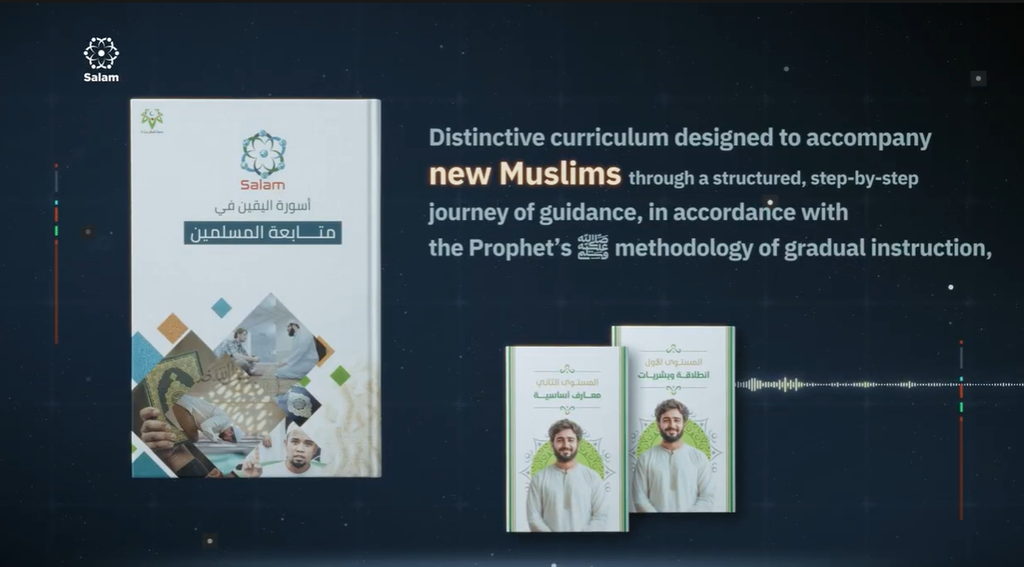
If you have already taken your shahada and are looking for structured, compassionate next steps, the Salam Center‘s Asawirat Al-Yaqeen (Bracelets of Certainty) program was built for exactly this stage. It offers:
- A four-stage curriculum moving from foundational pillars through practical daily rulings
- Lessons on wudu, salah, zakat, sawm, and the six pillars of Iman explained clearly and gradually
- Guided study of the Seerah of Prophet Muhammad (PBUH) and lessons drawn from his life
- Support with tawbah (repentance) and the etiquette expected of a practicing Muslim
- A track record spanning 114,588 new Muslims across 140 countries, with 41.3% of graduates completing the program with an excellent grade
Reach out directly to the Salam Center team to start the Asawirat Al-Yaqeen (Bracelets of Certainty) program for FREE.
Summary
Druidry ties its followers together through reverence for nature while leaving the identity of God, the fate of the soul, and the meaning of ritual entirely open to personal interpretation. Islam answers each of these same questions directly, naming Allah as one, defined, and self-revealed through preserved scripture.
Where Druidic theology permits monotheism, polytheism, pantheism, and agnosticism to sit side by side without contradiction, Islam offers a single coherent account of God, judgment, and purpose — inviting honest reflection rather than assumption.
Frequently Asked Questions
Do all Druids believe in the same god?
No. Druid theology varies by individual and order — some Druids are monotheists, others duotheists, polytheists, pantheists, or agnostics, with no single required belief about Deity across the tradition.
Do Druids believe in reincarnation?
Most Druids affirm some form of reincarnation, holding that the soul rests in the Otherworld between successive lives, which may take human, animal, or even plant form, depending on the individual or order.
Is Druidry a monotheistic religion?
Druidry is not monotheistic; most practitioners lean polytheistic or pantheistic, though monotheistic Druids exist within the tradition. This contrasts with Islamic monotheism, where belief in one Allah is a fixed, non-negotiable article of faith.
What is the Islamic view of nature worship?
Islam teaches that nature is a sign (ayah) pointing to Allah’s creation, never an object of worship or a manifestation of divinity itself, as some pantheistic Druidic beliefs hold — a distinction detailed in how Islam views the nature of God.
How does Islam differ from Druidry on the afterlife?
Islam teaches one earthly life followed by a single Day of Judgment, based on the Quranic teaching that “every soul will taste death, then to Us will you be returned” — rejecting the cyclical rebirth most Druids affirm.
Curious about Islam?
Journey towards clarity and purpose. Our team is here to support you in your search for truth and spiritual guidance.
Embrace the Truth