
How Do You Prepare to Read the Quran?
| Key Takeaways |
| Preparing to read the Quran begins with a sincere intention (niyyah) that the recitation is for the sake of Allah alone. |
| Performing wudu before touching the physical Mushaf reflects the Quranic instruction that “none touch it except the purified” (Quran 56:79). |
| Seeking refuge in Allah from Satan before reciting is a direct command found in Surah An-Nahl (Quran 16:98). |
| Choosing a clean, quiet space free of distraction allows the reader to engage with the Quran’s meaning rather than merely its sound. |
| Reflection (tadabbur) on the verses, not speed of recitation, is the stated purpose of revelation according to Surah Sad (Quran 38:29). |
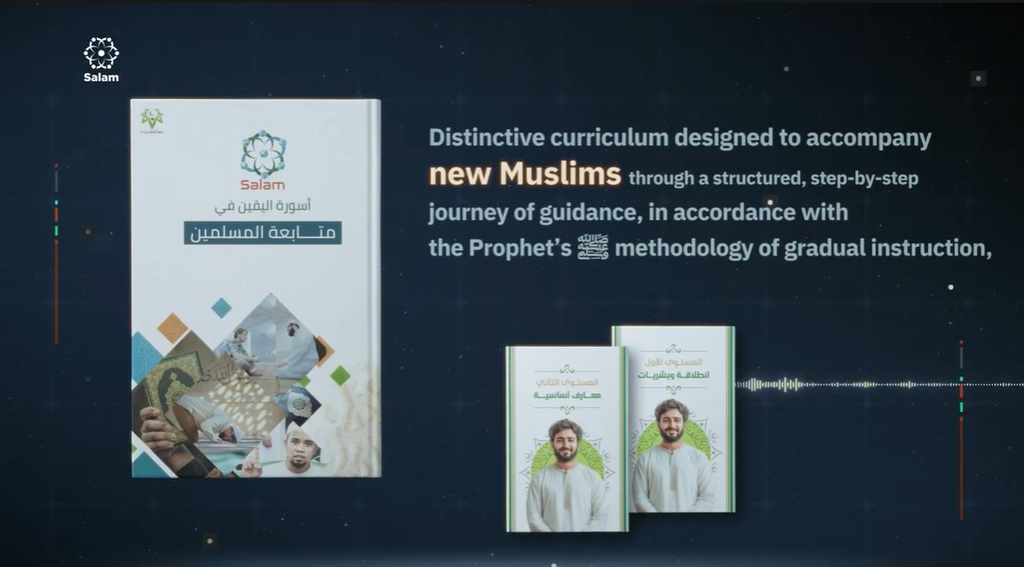
| New Muslims can build this habit gradually through structured guidance, such as the Salam Center’s Asawirat Al-Yaqeen (Bracelets of Certainty) program. |
Preparing to read the Quran is not a single action but a sequence of small, deliberate steps that shape the heart before the tongue ever moves. The right preparation turns recitation from a routine habit into an act of worship that carries real weight before Allah.
Every stage in this sequence has a basis in the Quran itself or in the authenticated Sunnah of Prophet Muhammad (PBUH), and together they form a gradual path that any sincere reader — Muslim, new convert, or curious seeker — can follow from the very first verse.
Step 1: Renew Your Intention Before You Open The Quran
The single most important step in preparing to read the Quran happens before you touch the book at all — it happens in the heart. Prophet Muhammad (PBUH) established this principle as the foundation of every act of worship in Islam.
“The reward of deeds depends upon the intentions and every person will get the reward according to what he has intended.” (Sahih al-Bukhari 1)
This means that reading the Quran to draw closer to Allah, to seek guidance, or to understand His speech carries a different weight than reading it out of habit or obligation alone.
A reader preparing to open the Mushaf should pause for a moment and ask what they intend from this act. Is it closeness to Allah? Is it knowledge? Is it comfort in a difficult season of life? Naming that intention, even silently, is what elevates the reading from mechanical repetition to conscious worship.
This same principle of sincerity runs through the broader framework of faith in Islam, where inward conviction is treated as inseparable from outward action.
Step 2: Perform Wudu Before Handling The Physical Mushaf
Ritual purification through wudu is the practical, physical preparation that precedes contact with the written Quran. Allah addresses this directly in Surah Al-Waqi’ah, describing the Quran’s protected and honored status.
إِنَّهُ لَقُرْآنٌ كَرِيمٌ فِي كِتَابٍ مَّكْنُونٍ لَّا يَمَسُّهُ إِلَّا الْمُطَهَّرُونَ
“Indeed, it is a noble Qur’an. In a Register well-protected. None touch it except the purified.” (Quran 56:77-79)
The majority of scholars across the four schools of Islamic jurisprudence understand this verse as establishing that a person should be in a state of wudu before physically touching the Mushaf. This is distinct from reciting from memory or reading a translation, which carries more flexibility.
The wisdom behind this requirement is not bureaucratic; it is a physical reminder that the reader is approaching the literal speech of Allah, not an ordinary text.
The state of purity mirrors the internal purity the reader is meant to bring to the encounter.
For those exploring how Islam frames the nature of Allah and His transcendence, this physical etiquette reflects that same reverence in embodied form.
Learn More About Islam
Discover the beauty, teachings, and wisdom of Islam in a clear and welcoming way. Start exploring and deepen your understanding today.
Learn MoreStep 3: Seek Refuge In Allah From Satan Before You Begin Reciting
Before the first word of any Quranic reading, the reader is commanded to verbally seek Allah’s protection from Satan’s whispers. This instruction comes directly from the Quran itself, addressed to the Prophet (PBUH) and, by extension, to every believer who recites after him.
فَإِذَا قَرَأْتَ الْقُرْآنَ فَاسْتَعِذْ بِاللَّهِ مِنَ الشَّيْطَانِ الرَّجِيمِ
“So when you recite the Qur’an, [first] seek refuge in Allah from Satan, the expelled [from His mercy].” (Quran 16:98)
This is fulfilled by saying “A’udhu billahi min ash-shaytanir-rajim” (I seek refuge in Allah from Satan, the accursed) before beginning recitation.
Classical commentators explain that this preparation guards the reader’s understanding, since distraction and confusion during Quranic reading are described as tactics Satan uses to prevent reflection.
The phrase is short, but its function is significant: it consciously reorients the mind away from worldly noise and toward the words about to be recited.
This mirrors the broader Islamic understanding of spiritual protection discussed in the 9 principles of Islam, where reliance on Allah underpins every act of worship.
Step 4: Choose A Clean, Quiet Space Free Of Distraction
Where a person sits to read the Quran shapes how much benefit they draw from the reading. While no single verse or hadith legislates a specific location, the broader Islamic tradition of honoring the Quran — reflected in the purity requirements already discussed — extends naturally to the environment surrounding recitation.
A cluttered, noisy, or distracting space works against the very purpose of reading: reflection.
The Sahaba (companions of the Prophet) are described in the authentic tradition as being deeply moved during recitation, sometimes to tears, which required a setting that allowed for that depth of attention.
A practical preparation, then, is to select a space free of phone notifications, background conversation, or competing tasks — even if that space is as simple as a quiet corner of a room.
This deliberate stillness allows the reader to move past the surface of the words and toward genuine contemplation, a theme explored further in what Muslims believe about the Quran.
Step 5: Recite the Quran With a Clear, Measured Voice
How the Quran is voiced matters as much as the act of opening it. Prophet Muhammad (PBUH) specifically instructed believers to recite with care and beauty rather than rushing through the verses.
“Beautify the Qur’an with your voices.” (Sunan Abi Dawud 1468)
This does not require musical training or a naturally melodic voice. It calls for measured, unhurried recitation — what is technically known as tarteel — rather than racing through verses to finish quickly.
For a new reader, especially one still learning the Arabic script or the rules of Tajweed (correct pronunciation), this step is a preparation of pace as much as voice.
Slowing down allows each word to be pronounced with intention, which directly supports the reflection that the next step addresses.
New Muslims working through structured Quran study, such as within the Asawirat Al-Yaqeen (Bracelets of Certainty) curriculum, are guided through this skill progressively rather than expected to master it instantly.
Read Also: How to Read the Quran?
Step 6: Prepare To Reflect the Quranic Meaning, Not Merely To Finish A Portion
The Quran itself states its own purpose is contemplation, not simply the completion of pages. This is perhaps the most overlooked preparation: approaching the text with the expectation that it will be reflected upon, not just read.
كِتَابٌ أَنزَلْنَاهُ إِلَيْكَ مُبَارَكٌ لِّيَدَّبَّرُوا آيَاتِهِ وَلِيَتَذَكَّرَ أُولُو الْأَلْبَابِ
“[This is] a blessed Book which We have revealed to you, [O Muhammad], that they might reflect upon its verses and that those of understanding would be reminded.” (Quran 38:29)
Preparing mentally for this means having a translation or brief explanation (tafsir) available if the reader does not fully understand classical Arabic, and being willing to pause on a verse rather than rushing to the next one.
A reader who prepares only to recite sound, without preparing to receive meaning, misses the stated purpose of revelation.
This is one reason the history of the Quran and its preserved textual integrity matter — understanding how the text has been transmitted intact strengthens confidence in the meanings being reflected upon.
Read Also: How to Learn the Quran for Beginners?
Step 7: Close the Quran Reading With Gratitude and Continued Intention
The final preparation is not before the reading but immediately after it — carrying the same sincerity forward. Ending a session of Quran reading with a brief acknowledgment of gratitude, and an intention to return to it again, sustains the relationship with the text over time rather than treating it as an isolated act.
Prophet Muhammad (PBUH) described the ongoing reward tied to consistent engagement with the Quran, framing it as a companion that will testify on behalf of the reader.
“Recite the Qur’an, for on the Day of Resurrection it will come as an intercessor for those who recite it.” (Sahih Muslim 804a)
This closing step reframes each individual reading session as part of a larger, ongoing relationship rather than a completed task.
For someone newly practicing this rhythm, the preparation cycle — intention, purity, refuge-seeking, quiet space, measured voice, reflection, and gratitude — becomes easier with repetition, which is precisely the gradual method the Salam Center’s post-conversion curriculum is built to support.
Read Also: What to Say in Sajdah in the Quran?
Learn More About Islam
Discover the beauty, teachings, and wisdom of Islam in a clear and welcoming way. Start exploring and deepen your understanding today.
Learn MoreGet Guidance And Support From Salam Platform
Learn about the Salam blog for deeper articles on Islamic belief and practice
Reach out directly if you have specific questions about starting to read the Quran
Reach out directly — our team is ready to listen, guide, and welcome you.

If you are new to Islam or considering it, the Salam Center team offers structured, compassionate support through every stage:
- Guidance on entering Islam and taking the Shahada with clarity and confidence
- Enrollment in Asawirat Al-Yaqeen (Bracelets of Certainty), a four-stage curriculum covering foundational worship, repentance, the Seerah of the Prophet (PBUH), etiquette, and practical life rulings
- One-on-one support for questions about Quran recitation, Tajweed, and daily practice
- General inquiries about Islamic belief, worship, or the post-conversion journey
Reach out directly to the Salam Center team to start the Asawirat Al-Yaqeen (Bracelets of Certainty) program for FREE.
Summary
Preparing to read the Quran moves through sincere intention, physical purification through wudu, and seeking refuge from distraction before a single verse is spoken aloud. Measured recitation and genuine reflection, rather than speed, fulfill the Quran’s own stated purpose for revelation.
Each step draws directly from the Quran and authenticated Hadith, offering a reliable framework for seekers and new Muslims alike. Consistent practice, supported by structured programs like Asawirat Al-Yaqeen, transforms this preparation into a lasting habit of worship.
Frequently Asked Questions
Do you need wudu to read the Quran?
Wudu is required by the majority of scholars to touch the physical Mushaf, based on Quran 56:79, though reciting from memory or a translation allows more flexibility. Following the Prophet’s (PBUH) practice of maintaining wudu remains strongly encouraged.
What do you say before reading the Quran?
Before reciting, say “A’udhu billahi min ash-shaytanir-rajim” (I seek refuge in Allah from Satan), as commanded in Quran 16:98. This precedes the Bismillah at the start of each surah except Surah At-Tawbah.
Why is intention important before reading the Quran?
Intention determines the reward of the act, per Sahih al-Bukhari 1: “The reward of deeds depends upon the intentions.” Reading for Allah’s sake, not habit alone, is what elevates recitation to worship.
Can a new Muslim read the Quran without knowing Arabic?
Yes. New Muslims can read Sahih International translations while gradually learning Arabic pronunciation and Tajweed, often through structured programs like Asawirat Al-Yaqeen (Bracelets of Certainty), which paces instruction across progressive levels.
What is the purpose of reflecting on the Quran while reading?
Reflection (tadabbur) is the Quran’s stated purpose for its own revelation, per Quran 38:29: a “blessed Book” revealed “that they might reflect upon its verses.”
Curious about Islam?
Journey towards clarity and purpose. Our team is here to support you in your search for truth and spiritual guidance.
Embrace the Truth