Does Islam Believe Jesus Is the Son of God?
| Key Takeaways |
| Islam rejects the belief that Jesus is the son of Allah, as divine parenthood contradicts the absolute oneness of Allah (Tawhid) at the core of Islamic theology. |
| Islam affirms Jesus (Isa ibn Maryam) as one of the greatest prophets and messengers of Allah — honored, loved, and followed by every Muslim. |
| The Quran states clearly that Jesus was born of a virgin, performed miracles by Allah’s permission, and was raised to Allah — never crucified. |
| Jesus called his people to worship Allah alone, and he foretold the coming of Prophet Muhammad (PBUH) by name. |
| Jesus will return near the end of time, ruling by the law of Prophet Muhammad (PBUH) and completing his mission on earth. |
Muslims believe in Jesus — deeply, seriously, and as a matter of faith. A Muslim who denies Jesus is not a Muslim. But the Islamic understanding of who Jesus is differs fundamentally from the Christian doctrine of divine sonship.
In Islam, Jesus (known as Isa ibn Maryam — Jesus, son of Mary) is a prophet, a messenger, a word from Allah, and one of the greatest human beings who ever lived. He is a figure of immense reverence.
What he is not, in the Islamic doctrine, is the son of Allah — because Allah, in the purest theological sense, does not beget and is not begotten.
Does Islam Believe Jesus Is the Son of God?
Islam does not believe Jesus is the son of Allah. This is one of the most explicit theological positions in the Quran, stated not with hostility toward Jesus, but out of reverence for the absolute oneness of Allah.
Attributing a son to Allah is considered in Islam a fundamental misunderstanding of divine nature — one that Allah Himself corrects directly in revelation.
The Quran addresses this with precision:
مَا كَانَ لِلَّهِ أَن يَتَّخِذَ مِن وَلَدٍ سُبْحَانَهُ إِذَا قَضَى أَمْرًا فَإِنَّمَا يَقُولُ لَهُ كُن فَيَكُون
“It is not befitting for Allah to take a son; exalted is He. When He decrees an affair, He only says to it, ‘Be,’ and it is.” (Quran 19:35)
The logic embedded in this verse is philosophically precise: Allah does not need a biological or spiritual mechanism to accomplish anything. He wills, and it is.
وَقَالُوا۟ ٱتَّخَذَ ٱلرَّحْمَٰنُ وَلَدًا ﴿٨٨﴾ لَّقَدْ جِئْتُمْ شَيْـًٔا إِدًّا ﴿٨٩﴾ تَكَادُ ٱلسَّمَٰوَٰتُ يَتَفَطَّرْنَ مِنْهُ وَتَنشَقُّ ٱلْأَرْضُ وَتَخِرُّ ٱلْجِبَالُ هَدًّا ﴿٩٠﴾ أَن دَعَوْا۟ لِلرَّحْمَٰنِ وَلَدًا ﴿٩١﴾ وَمَا يَنۢبَغِى لِلرَّحْمَٰنِ أَن يَتَّخِذَ وَلَدًا ﴿٩٢﴾ إِن كُلُّ مَن فِى ٱلسَّمَٰوَٰتِ وَٱلْأَرْضِ إِلَّآ ءَاتِى ٱلرَّحْمَٰنِ عَبْدًا
“And they say, “The Most Merciful has taken [for Himself] a son.” (88) You have done an atrocious thing. (89) The heavens almost rupture therefrom and the earth splits open and the mountains collapse in devastation (90) That they attribute to the Most Merciful a son. (91) And it is not appropriate for the Most Merciful that He should take a son. (92) There is no one in the heavens and earth but that he comes to the Most Merciful as a servant.” (Quran 19:88)
A son implies need, process, and partnership — none of which apply to Allah. This is the foundation of Islamic monotheism (Tawhid), and every Islamic belief about Jesus flows from it.
وَقَالَتِ ٱلْيَهُودُ عُزَيْرٌ ٱبْنُ ٱللَّهِ وَقَالَتِ ٱلنَّصَٰرَى ٱلْمَسِيحُ ٱبْنُ ٱللَّهِ ۖ ذَٰلِكَ قَوْلُهُم بِأَفْوَٰهِهِمْ ۖ يُضَٰهِـُٔونَ قَوْلَ ٱلَّذِينَ كَفَرُوا۟ مِن قَبْلُ ۚ قَٰتَلَهُمُ ٱللَّهُ ۚ أَنَّىٰ يُؤْفَكُونَ
“The Jews say, “Ezra is the son of Allah “; and the Christians say, “The Messiah is the son of Allah.” That is their statement from their mouths; they imitate the saying of those who disbelieved [before them]. May Allah destroy them; how are they deluded?” (Quran 9:30)
At the same time, the Quran explicitly warns against both extremes — those who elevate Jesus beyond his station, and those who dismiss or dishonor him:
يَا أَهْلَ الْكِتَابِ لاَ تَغْلُواْ فِي دِينِكُمْ وَلاَ تَقُولُواْ عَلَى اللّهِ إِلاَّ الْحَقِّ إِنَّمَا الْمَسِيحُ عِيسَى ابْنُ مَرْيَمَ رَسُولُ اللّهِ وَكَلِمَتُهُ أَلْقَاهَا إِلَى مَرْيَمَ وَرُوحٌ مِّنْهُ
“O People of the Scripture, do not commit excess in your religion or say about Allah except the truth. The Messiah, Jesus the son of Mary, was but a messenger of Allah and His word which He directed to Mary and a soul from Him.” (Quran 4:171)
The phrase “His word” and “a soul from Him” are not indicators of divine nature — they are marks of honor and of a miraculous origin. In Arabic grammatical and theological usage, when something is attributed to Allah that exists independently as a created entity, the attribution signals ownership or distinction — not essence. The “she-camel of Allah” mentioned in the Quran is still a camel. “The House of Allah” is still a building. Jesus, described as Allah’s word and a soul from Him, is still a human being — the most honored of human beings in his time, but a human being nonetheless. To understand how Islam views the nature of Allah is to understand why divine sonship is theologically impossible in this framework.
Now, here is what Muslims believe about Jesus — in full, with evidence.
1. Jesus Is the Servant of Allah and His Messenger
The Islamic position on Jesus begins with two affirmations that work together as a theological balance. Prophet Muhammad (PBUH) articulated this with remarkable precision:
“Whoever testifies that there is no god but Allah, that Muhammad is His servant and messenger, that Jesus is the servant of Allah and His messenger, His word which He cast to Mary, and a soul from Him, that Paradise is real and Hellfire is real — Allah will admit him into Paradise according to his deeds.” (Sahih Bukhari)
“Servant of Allah” is a refutation of those who elevate Jesus to divinity. “His messenger” is a refutation of those who diminish or deny him entirely. Islam holds both simultaneously, with no tension between them. In Islamic theology, being a servant of Allah is the highest possible station for any created being — it is the title Prophet Muhammad (PBUH) himself bears with the greatest pride. Calling Jesus a servant of Allah is an act of honor, not reduction.
The Quran confirms Jesus held this view of himself:
إِنَّ اللّهَ رَبِّي وَرَبُّكُمْ فَاعْبُدُوهُ هَذَا صِرَاطٌ مُّسْتَقِيمٌ
“Indeed, Allah is my Lord and your Lord, so worship Him. That is the straight path.” (Quran 3:51)
Jesus, in the Quran, speaks of Allah as his Lord and the Lord of his people — not as his Father, and not as himself.
Read also: Does Islam Believe In A Messiah?
2. Jesus Was Born of a Virgin, Without a Father, by Allah’s Direct Command
The virgin birth of Jesus is affirmed in Islam — fully and without hesitation. Mary (Maryam), honored in the Quran with an entire chapter bearing her name (Surah Maryam), conceived Jesus by divine command alone, with no human father involved.
إِنَّ مَثَلَ عِيسَى عِندَ اللّهِ كَمَثَلِ آدَمَ خَلَقَهُ مِن تُرَابٍ ثِمَّ قَالَ لَهُ كُن فَيَكُون
“Indeed, the example of Jesus to Allah is like that of Adam. He created him from dust; then He said to him, ‘Be,’ and he was.” (Quran 3:59)
This verse does the theological work with elegant clarity. If a fatherless birth necessitates divine sonship, then Adam — who had neither father nor mother — would have a stronger claim to that title.
The Quran uses this logical parallel to show that miraculous creation does not equal divine origin. Allah creates as He wills. The extraordinary nature of Jesus’s birth points to Allah’s power, not to Jesus’s divinity.
This is one of the central principles of Islam regarding prophets and miracles: signs point to Allah, never away from Him.
Have Questions About Islam?
Our team is ready to answer your questions clearly and respectfully. Ask freely and receive honest guidance.
Ask Us Now3. Jesus Is Among the Five Greatest Messengers — the Ulu al-Azm
In Islamic theology, the prophets of Allah number in the thousands, but five hold a station above the rest. They are known as Ulu al-Azm — the Possessors of Firm Resolve — those who carried the heaviest missions, endured the greatest trials, and brought the most comprehensive divine laws. Jesus is among them.
وَإِذْ أَخَذْنَا مِنَ النَّبِيِّينَ مِيثَاقَهُمْ وَمِنكَ وَمِن نُّوحٍ وَإِبْرَاهِيمَ وَمُوسَى وَعِيسَى ابْنِ مَرْيَمَ وَأَخَذْنَا مِنْهُم مِّيثَاقًا غَلِيظًا
“And remember when We took from the prophets their covenant — and from you, and from Noah, Abraham, Moses, and Jesus, son of Mary — and We took from them a solemn covenant.” (Quran 33:7)
The five are Muhammad, Noah, Abraham, Moses, and Jesus — peace be upon them all. This covenant represents the gravity and weight of prophetic responsibility.
Being counted among this group is the highest acknowledgment of a prophet’s stature within Islamic belief. Muslims hold Jesus in the same reverence they hold Abraham and Moses — complete, unconditional, and rooted in scripture.
4. Jesus Possessed No Attributes of Divinity or Lordship
The Quran is direct on this point: Jesus held none of the characteristics that belong exclusively to Allah. He did not create independently. He did not know the unseen except what Allah revealed to him.
He was not self-sufficient. He was sustained, he was dependent, and he was, in the full sense of the word, human.
إِنْ هُوَ إِلاَّ عَبْدٌ أَنْعَمْنَا عَلَيْهِ وَجَعَلْنَاهُ مَثَلاً لِّبَنِي إِسْرَائِيلَ
“He was not but a servant upon whom We bestowed favor, and We made him an example for the Children of Israel.” (Quran 43:59)
This is not a diminishment of Jesus. It is a clarification that the divine favor shown to him — including miracles, elevated speech, and a miraculous birth — were gifts from Allah, not expressions of inherent divinity.
The distinction between a recipient of divine favor and a sharer in divine nature is absolute in Islamic theology. Understanding faith in Islam means understanding that this clarity about prophets is itself an act of respect — it places Jesus exactly where Allah placed him, with honesty and without distortion.
Read also: Do Muslims Believe The Bible?
5. Allah Manifested Miracles Through Jesus as Signs, Not Proof of Divinity
Jesus performed miracles that left the people of his time in awe — raising the dead, healing those born blind, speaking as an infant in the cradle.
The Quran records all of these. In the Islamic understanding, every one of them was performed “bi idhnillah” — by the permission of Allah. This phrase appears in the Quran repeatedly in connection with Jesus’s miracles, and it is not incidental. It is theological.
أَنِّي قَدْ جِئْتُكُم بِآيَةٍ مِّن رَّبِّكُمْ ۖ أَنِّي أَخْلُقُ لَكُم مِّنَ الطِّينِ كَهَيْئَةِ الطَّيْرِ فَأَنفُخُ فِيهِ فَيَكُونُ طَيْرًا بِإِذْنِ اللَّهِ ۖ وَأُبْرِئُ الْأَكْمَهَ وَالْأَبْرَصَ وَأُحْيِي الْمَوْتَىٰ بِإِذْنِ اللَّهِ
“Indeed I have come to you with a sign from your Lord: I will create for you from clay that which is like the form of a bird. Then I will breathe into it, and it will be a bird by permission of Allah. And I will cure the blind and the leper, and I will bring the dead to life — by permission of Allah.” (Quran 3:49)
The miracles of Jesus were signs pointing to Allah’s existence and power, and to the truth of Jesus’s message — exactly as the miracles of Moses, Ibrahim, and Muhammad (PBUH) pointed to the same. Signs come from Allah.
They flow through prophets. They do not make prophets divine. This principle governs how Islam understands all prophetic miracles, and it is consistent across the entire prophetic tradition.
Read also: Does Islam Believe in Original Sin?
6. Jesus Called His People to Worship Allah Alone
Every prophet in the Islamic tradition carried one foundational message, regardless of the specific laws and details of their particular dispensation: worship Allah alone, with no partners, no intermediaries elevated to divine status, and no equals.
Jesus was no different. The Quran records his message in his own words:
إِنَّ اللّهَ رَبِّي وَرَبُّكُمْ فَاعْبُدُوهُ هَذَا صِرَاطٌ مُّسْتَقِيمٌ
“Indeed, Allah is my Lord and your Lord, so worship Him. That is the straight path.” (Quran 3:51)
This is the thread that connects every prophet from Adam to Muhammad (PBUH). Jesus stood in that same line, delivering the same essential call.
His specific laws may have differed from Moses’s, and Muhammad’s law would later supersede his — but the theology at the core was identical.
One Allah. No partners. Pure worship directed only to Him. This is the meaning of Tawhid — the absolute oneness that Islam considers the most fundamental truth a human being can hold, and the message every prophet was sent to deliver.
7. Jesus Foretold the Coming of Prophet Muhammad (PBUH) by Name
One of the most remarkable aspects of Islamic belief about Jesus is that his mission included a direct announcement of the prophet who would come after him — Prophet Muhammad (PBUH), referred to by his name Ahmad, which carries the same root as Muhammad.
وَمُبَشِّرًا بِرَسُولٍ يَأْتِي مِن بَعْدِي اسْمُهُ أَحْمَدُ
“And giving good tidings of a messenger to come after me whose name is Ahmad.” (Quran 61:6)
This announcement is understood in Islamic theology as the divine plan connecting the two final major prophetic missions. Jesus did not merely precede Muhammad (PBUH) historically — he pointed to him prophetically.
This is why Muslims hold both prophets in the same reverence, and why the Islamic tradition frames the coming of Muhammad (PBUH) as the fulfillment of what Jesus foretold.
Between Jesus and Muhammad (PBUH), no prophet came — the Quran refers to this period as “fatrah,” a gap in prophetic guidance that ended with the final revelation.
8. No Prophet Came Between Jesus and Muhammad (PBUH)
The phrase “from after me” in the verse above carries a specific theological implication: Jesus was the last prophet before Muhammad (PBUH), with no prophetic mission intervening between them.
This is affirmed in the prophetic tradition as well — Prophet Muhammad (PBUH) referred to himself as the closest to Jesus among people, because there was no prophet between them.
This continuity is significant. It means the message Jesus carried was the direct predecessor to the final revelation of the Quran. The Quran itself came as the preserved and complete form of the same divine truth that Jesus — and every prophet before him — conveyed in their time and to their people.
9. Jesus Was Neither Crucified Nor Killed — Allah Raised Him
This is one of the most significant points of divergence between Islamic and Christian theology, and the Quran addresses it with unmistakable directness.
وَقَوْلِهِمْ إِنَّا قَتَلْنَا الْمَسِيحَ عِيسَى ابْنَ مَرْيَمَ رَسُولَ اللّهِ وَمَا قَتَلُوهُ وَمَا صَلَبُوهُ وَلَكِن شُبِّهَ لَهُمْ وَإِنَّ الَّذِينَ اخْتَلَفُواْ فِيهِ لَفِي شَكٍّ مِّنْهُ مَا لَهُم بِهِ مِنْ عِلْمٍ إِلاَّ اتِّبَاعَ الظَّنِّ وَمَا قَتَلُوهُ يَقِينًا بَل رَّفَعَهُ اللّهُ إِلَيْهِ
“And for their saying, ‘Indeed, we have killed the Messiah, Jesus, the son of Mary, the messenger of Allah.’ And they did not kill him, nor did they crucify him; but it was made to appear so to them. And indeed, those who differ over it are in doubt about it. They have no knowledge of it except the following of assumption. And they did not kill him, for certain. Rather, Allah raised him to Himself.” (Quran 4:157–158)
The Islamic position is unambiguous: Jesus was not killed on the cross. Allah protected His messenger and raised him.
This is not a peripheral detail in Islamic theology — it is central to the understanding of how Islam views other religions and their historical claims.
The crucifixion narrative, in Islamic belief, rests on a misidentification. Someone was crucified in the appearance of Jesus — but Jesus himself was taken by Allah before any of that occurred.
10. Jesus Will Return Near the End of Time and Rule by the Law of Muhammad (PBUH)
Islamic eschatology — the theology of the end of time — includes the return of Jesus as one of its major signs. This belief is established through multiple authenticated narrations in both Sahih Bukhari and Sahih Muslim.
Jesus will descend, the narrations state, rule by the Shari’ah of Prophet Muhammad (PBUH), eliminate the Dajjal (the false messiah), and live out the remainder of his human life on earth before dying and being buried — like every other human being — to be raised again on the Day of Resurrection.
The Quran grounds this in a universal principle:
مِنْهَا خَلَقْنَاكُمْ وَفِيهَا نُعِيدُكُمْ وَمِنْهَا نُخْرِجُكُمْ تَارَةً أُخْرَى
“From the earth We created you, and into it We will return you, and from it We will bring you forth another time.” (Quran 20:55)
Jesus is not exempt from this. He will return, complete his mission, live, die, and be resurrected on the Day of Judgment alongside all of humanity.
Have Questions About Islam?
Our team is ready to answer your questions clearly and respectfully. Ask freely and receive honest guidance.
Ask Us NowConnect with Salam — Your Questions Deserve Real Answers
If this article raised more questions than it answered — that is a good sign.
Sincere inquiry is where genuine understanding begins. The Salam Center exists precisely for this: to walk alongside people who are asking real questions about Islam, with honesty, scholarship, and genuine care.
Here is how you can take the next step:
- Explore the full Salam platform at Salam Platform — articles, learning resources, and answers grounded in authentic Islamic scholarship.
- Browse the Salam blog at Salam Blog for in-depth content on Islamic belief, practice, and contemporary questions.
- Reach out directly at Contact Salam — whether you have a specific question, want guidance on entering Islam, or simply want to speak with someone knowledgeable and trustworthy.

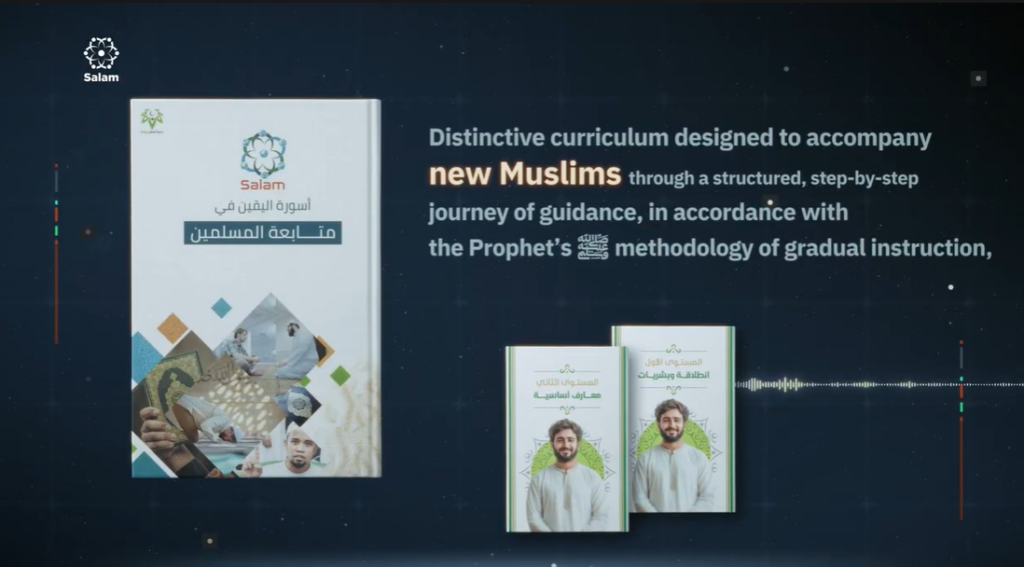
Join the Asawirat Al-Yaqeen (Bracelets of Certainty) program — the Salam Center’s structured post-conversion curriculum for new Muslims, designed to build firm faith through a four-stage progressive journey:
- Stage One: The foundational pillars, the Shahada, and essential acts of worship
- Stage Two: The six pillars of Iman, fasting, zakat, and Hajj
- Stage Three: Tawbah (repentance), major sins to avoid, and the biography of the Prophet (PBUH)
- Stage Four: Islamic ethics, family life, contemporary issues, and theological foundations
The Asawirat Al-Yaqeen (Bracelets of Certainty) program has guided over 114,000 new Muslims across 140 countries. If you have recently embraced Islam — or are considering it — this is a community and a structured path ready to receive you.
Reach out directly to the Salam Center team to start the Asawirat Al-Yaqeen (Bracelets of Certainty) program for FREE.
Conclusion
Muslims affirm Jesus as a prophet and messenger of Allah, born of a virgin by divine command, who performed miracles by Allah’s permission and called his people to pure monotheism. The Islamic tradition holds his status with complete reverence while rejecting the theological claim of divine sonship as incompatible with Allah’s absolute oneness.
The Quran’s account of Jesus addresses his birth, mission, miracles, and elevation directly — stating that he was neither crucified nor killed, but raised by Allah. This differs substantially from the Christian crucifixion narrative and reflects the Islamic understanding that prophets are protected by Allah and that their missions end by divine will alone.
Jesus’s story in Islam concludes with a future chapter: his promised return near the end of time as a sign of the Hour, ruling with justice and completing his earthly mission before dying as every human dies. Every Muslim awaits that return — as a confirmation of what the Quran has always declared to be true.
Frequently Asked Questions
Do Muslims believe Jesus is the son of God?
Muslims do not believe Jesus is the son of Allah. The Quran directly rejects this claim, stating that it is not befitting for Allah to take a son (Quran 19:35). In Islamic theology, divine parenthood would imply need, limitation, and a partner in existence — all of which contradict the absolute oneness of Allah. Muslims honor Jesus deeply as one of the greatest prophets, but his miraculous birth and extraordinary mission do not make him divine. The Quran explicitly says that Allah simply says "Be," and it is — no son is required for Allah to accomplish anything.
Do Muslims believe in Jesus?
Yes — belief in Jesus is a requirement of Islamic faith. A Muslim who denies Jesus cannot be a Muslim. The Quran affirms Jesus’s miraculous birth, his prophethood, his miracles, his pure message, and his elevation by Allah. Prophet Muhammad (PBUH) described himself as the closest of all people to Jesus because no prophet came between them. Muslims love Jesus as one of the Ulu al-Azm — the five greatest messengers in human history — alongside Muhammad, Noah, Abraham, and Moses, peace be upon them all.
What does Islam say about the crucifixion of Jesus?
Islam holds that Jesus was neither crucified nor killed. The Quran states this explicitly in Surah An-Nisa (4:157–158): those who claimed to have killed him were mistaken — the matter was made to appear to them in a way that led to confusion. Allah raised Jesus to Himself before any killing took place. This is among the established beliefs of Ahlus Sunnah wal Jama’ah and has been affirmed across fourteen centuries of Islamic scholarship.
Why do Muslims reject the Trinity?
The doctrine of the Trinity — that God is three persons in one — contradicts the foundational Islamic principle of Tawhid: the absolute, undivided oneness of Allah. Allah in Islam has no partners, no equals, no parts, and no children. The Quran addresses the Trinity directly: "Do not say ‘Three’; desist — it is better for you. Indeed, Allah is but one God" (Quran 4:171). Introducing multiplicity into the divine nature is considered in Islamic theology one of the gravest theological errors a human being can hold — not because of hostility toward Christians, but because the oneness of Allah is the most important truth in existence.
Will Jesus come back according to Islam?
Yes. The return of Jesus near the end of time is an established belief in Sunni Islam, supported by multiple authentic narrations in both Sahih Bukhari and Sahih Muslim. Jesus will descend, defeat the Dajjal (the false messiah of the end times), rule by the Shari’ah of Prophet Muhammad (PBUH), and live out the remainder of his human life on earth before dying and being buried — to be resurrected on the Day of Judgment alongside all of humanity. The Islamic Research Academy at Al-Azhar University classifies this belief as among the obligatory articles of faith for Ahlus Sunnah wal Jama’ah.
What is the Islamic view of Mary, the mother of Jesus?
Mary (Maryam) holds an extraordinarily elevated position in Islam. She is the only woman named directly in the Quran, and an entire chapter — Surah Maryam — bears her name. Prophet Muhammad (PBUH) named her one of the four greatest women in all of human history. The Quran affirms her purity, her devotion, the miraculous nature of her pregnancy, and her courage in facing her community. Islam honors her completely — her son’s miraculous birth is celebrated in Islamic theology as one of the greatest signs of Allah’s power, not as evidence of divine fatherhood.
Curious about Islam?
Journey towards clarity and purpose. Our team is here to support you in your search for truth and spiritual guidance.
Embrace the Truth