
Does Islam Believe In A Messiah?
| Key Takeaways |
| Islam affirms belief in a Messiah — Jesus son of Mary (Isa ibn Maryam), who was neither killed nor crucified but raised alive to Allah. |
| Muslims await two figures in the end times: the Mahdi, a righteous leader from the Prophet’s lineage, and Jesus (peace be upon him), who will descend from the heavens. |
| The Islamic Messiah is a prophet and servant of Allah — his return confirms pure monotheism, not divinity. |
| Authentic Hadiths in Sahih Bukhari and Sahih Muslim describe Jesus’s descent in precise detail. |
Yes, Islam believes in a Messiah — and his name is Jesus, son of Mary (peace be upon him).
For many seekers, this comes as a genuine surprise. The assumption that Islam and the Messiah belong to separate religious worlds is one of the most widespread misconceptions about the faith.
The reality is the opposite. Islam not only affirms Jesus as the Messiah; it preserves his story with a clarity and theological consistency that no distortion has touched. He was not killed. He was not crucified. He was raised alive to Allah — and he will return.
Does Islam Believe in a Messiah?
Yes, Islam believes in the Messiah with complete certainty. Jesus son of Mary — Isa ibn Maryam — is recognized in Islam as a prophet, a messenger, and the Messiah sent to the Children of Israel. Denying Jesus’s prophethood would remove a Muslim from Islam entirely.
Where Islam parts ways with mainstream Christianity is not on whether Jesus is the Messiah, but on what that title means.
The Messiah in Islam is a noble human prophet — not a divine being, not part of a trinity, and not the atoning sacrifice for humanity’s sins. He performed miracles by Allah’s permission, spoke truth in a corrupted age, and will return at the end of time to fulfill a mission the world has not yet witnessed.
The faith in Islam framework holds belief in all the prophets as inseparable — and Jesus stands among the greatest of them.
What Are The Core Islamic Beliefs About the Messiah?
Islam’s end-times framework differs fundamentally from both Christianity and Judaism: Muslims await the true Messiah, while rejecting the false messiah (the Dajjal) whom authentic narrations warn against.
Belief 1: Jesus the Messiah Was Neither Killed Nor Crucified — He Was Raised to Allah
This is the starting point, and it is non-negotiable in Islamic belief.
Allah says in the Quran:
وَمَا قَتَلُوهُ وَمَا صَلَبُوهُ وَلَٰكِن شُبِّهَ لَهُمْ
“And they did not kill him, nor did they crucify him; but [another] was made to resemble him to them.” (Quran 4:157)
وَمَا قَتَلُوهُ يَقِينًا ۚ بَل رَّفَعَهُ اللَّهُ إِلَيْهِ
“And they did not kill him, for certain. Rather, Allah raised him to Himself.” (Quran 4:157-158)
The Quran is unambiguous. The claim that the Jews killed Jesus is rejected outright. A likeness was cast upon another, and Jesus himself was lifted — alive — to Allah. This is doctrinal fact in Islam, affirmed by scholarly consensus across fourteen centuries.
Ibn Kathir, the renowned 14th-century exegete, explained in his landmark Tafsir al-Quran al-Azim that this verse directly refutes the Jewish boast of killing Jesus and the Christian acceptance of that claim.
The truth, as the Quran establishes it, is that Jesus was neither touched nor harmed — he was protected and elevated by his Lord.
Belief 2: Jesus the Messiah Will Descend to Earth Before the Day of Judgment
The return of Jesus is among the major signs of the Hour — and it is established by both the Quran and mutawatir (mass-transmitted) Hadiths.
Allah says:
وَإِنَّهُ لَعِلْمٌ لِّلسَّاعَةِ فَلَا تَمْتَرُنَّ بِهَا
“And indeed, he is a sign of the Hour, so be not in doubt of it.” (Quran 43:61)
The leading Quranic scholar Sheikh Muhammad al-Amin al-Shinqiti, in his monumental Adwa’ al-Bayan, confirmed that the pronoun in this verse refers to Jesus — not the Quran, not the Prophet (PBUH) — and that the verse speaks of his physical descent before the Day of Judgment as a sign of its approach.
The Prophet Muhammad (PBUH) described this descent with remarkable specificity. In Sahih Muslim, he said:
“By the One in Whose hand is my soul, the son of Mary is about to descend among you as a just judge. He will break the cross, kill the pig, and lift the jizyah — and wealth will pour forth until no one accepts it.”
He will descend near the white minaret east of Damascus, between two garments, with his hands resting on the wings of two angels — as described in Sahih Muslim (2937). Every disbeliever who catches the scent of his breath will die, and his breath will reach as far as his gaze extends.
The Quran also states:
وَإِن مِّنْ أَهْلِ الْكِتَابِ إِلَّا لَيُؤْمِنَنَّ بِهِ قَبْلَ مَوْتِهِ
“And there is none from the People of the Scripture but that he will surely believe in Jesus before his death.” (Quran 4:159)
Scholars confirmed that the strongest interpretation of “before his death” refers to before the death of Jesus himself — meaning that when he descends, every remaining person from the People of the Scripture will believe in him as he truly is.
Have Questions About Islam?
Our team is ready to answer your questions clearly and respectfully. Ask freely and receive honest guidance.
Ask Us NowBelief 3: Islam Awaits Two Figures in the End Times — the Mahdi and the Messiah Jesus
A question that often surfaces is whether Muslims are waiting for one figure or two. The answer is clear: two distinct figures, with distinct roles, in a specific sequence.
The Mahdi is a righteous man from the lineage of the Prophet Muhammad (PBUH) — not a prophet, not a divine figure, but a just leader who will emerge to unite the Muslim Ummah and fill the earth with equity after it has been filled with oppression.
The Messiah Jesus (peace be upon him) will descend after the Mahdi has already established his leadership. The two will meet.
The Prophet (PBUH) described this moment. A narration recorded by al-Harith ibn Abi Usamah in his Musnad — and evaluated by Ibn al-Qayyim in al-Manar al-Munif (1/147) as having a sound chain — states: “Jesus son of Mary will descend, and their leader — the Mahdi — will say: ‘Come, lead us in prayer.’ He will say: ‘No. Some of you are leaders over others — as an honor Allah has given this Ummah.'”
The foundation of this narration exists in Sahih Muslim (225) without naming the Mahdi explicitly, confirming that Jesus will pray behind the leader of the Muslims — a remarkable honor for the Ummah of Muhammad (PBUH).
Ibn al-Qayyim al-Jawziyyah summarized this beautifully in Ighathat al-Lahfan (2/338): the three Abrahamic communities each await a figure in the end times — and the Muslims await both a righteous imam (the Mahdi) and a prophet of supreme resolve (Jesus, peace be upon him).
Read also: Does Islam Believe Jesus Is the Son of God?
Belief 4: Jesus the Messiah Will Kill the Dajjal and Purify the Earth
The final major dimension of Islamic belief about the Messiah concerns his mission upon return. Jesus descends into a world being ravaged by the Dajjal — the false messiah, the greatest trial humanity will ever face.
The Prophet (PBUH) described in Sahih Muslim (2937) that Jesus will pursue the Dajjal until he catches him at the gate of Ludd (modern-day Lod, in present-day Israel) and kills him. With the Dajjal destroyed, the earth enters a phase of unprecedented blessing.
Then comes the trial of Gog and Magog. Allah reveals to Jesus that He has released a people no force can defeat, and commands him to lead the believers to safety at Mount Sinai.
Gog and Magog will sweep across the land — until Allah destroys them in a single night through a plague sent to their necks.
Birds like Bactrian camels will carry their bodies away. A rain will cleanse the earth until it shines like a mirror.
The earth will be commanded to yield its fruits and restore its blessings — until a single pomegranate suffices a group of people, and a single milking camel suffices a large community.
This is the world under the just rule of Jesus, the Messiah, after the forces of corruption have been extinguished.
At the end of this era, a gentle wind will take the soul of every believer, and only the worst of humanity will remain — upon whom the Hour will be established.
Read also: Do Muslims Believe The Bible?
How Does Islam’s View of the Messiah Differ from Christianity and Judaism?
All three Abrahamic faiths hold end-times expectations connected to a messianic figure. The differences are theological, not incidental.
Muslims await Jesus — the true Messiah — who was never killed, never buried, and whose return will confirm the truth of monotheism in its purest form. He will worship Allah alone, pray behind the Mahdi, and govern by Islamic law.
Christians await a returned Christ — but the Christ they describe was crucified, died, and was resurrected. Islam rejects this narrative entirely. The Christ who returns in Islamic belief is the same one who was raised before any cross touched him.
The expectation of some Christians for a returned divine son of God finds no support in the original message Jesus himself delivered — a message of submission to Allah alone, consistent with the nature of Allah in Islam.
Jews, as the authentic narrations explain, await their own messianic figure — whom Islamic texts identify as the Dajjal, the false messiah. He will be killed by the very Jesus the Jews rejected. The irony embedded in this eschatology is both sobering and precise.
Islam’s relationship with other religions does not require diminishing other faiths, but it does require honesty: the Islamic framework for the Messiah is internally consistent, evidentially grounded, and free from the theological contradictions that plague alternative accounts.
Allah — as understood in Islamic monotheism — is transcendent above having a son, a partner, or any form of division. The Messiah is His servant and messenger — exalted in that role, not diminished by it.
Read also: Does Islam Believe in Original Sin?
What Happens After the Messiah’s Mission Is Complete?
After Jesus (peace be upon him) fulfills his mission — killing the Dajjal, praying for the destruction of Gog and Magog, and ruling with justice — he will live out his remaining years and die a natural death as every human prophet before him. He will be buried in Madinah, beside the Prophet Muhammad (PBUH), as narrations indicate.
His death marks the closing of prophethood’s final chapter on earth. What follows is the gradual withdrawal of faith from the world, the passing of every true believer in the gentle wind Allah sends, and the establishment of the Hour upon those who remain.
Have Questions About Islam?
Our team is ready to answer your questions clearly and respectfully. Ask freely and receive honest guidance.
Ask Us NowLearn More Authentic Knowledge With Salam
If this article opened a question, deepened a conviction, or sparked something you want to explore further — you are in the right place.
The Salam Platform exists for exactly this moment. Visit the Salam blog for more articles grounded in authentic Islamic knowledge, addressing the questions that genuinely matter.
Have a specific question about Islam? Want to learn more about what Muslims believe — about Allah, the prophets, or the purpose of life?
Reach out directly — the Salam Center team is here to help, without pressure and without judgment.
If you have already taken your Shahada and are beginning your journey as a Muslim, the Salam Center offers a structured path designed specifically for you:

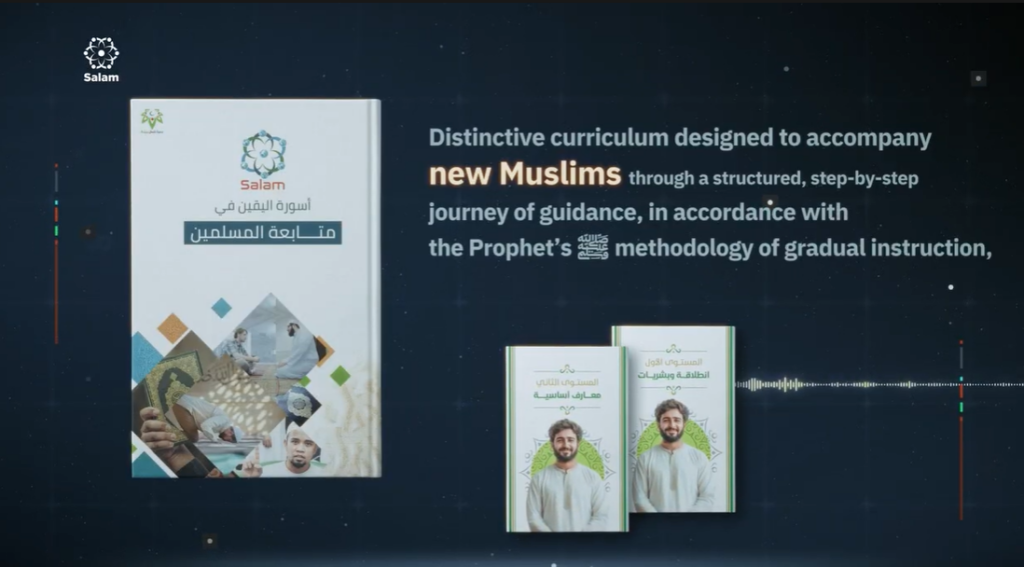
Asawirat Al-Yaqeen (Bracelets of Certainty) — a four-stage post-conversion curriculum built to carry you from your first day to confident, grounded faith. It includes:
- Stage One: The foundations of prayer, purification, and the pillars of Islam
- Stage Two: The six pillars of Iman, fasting, zakat, and Hajj
- Stage Three: Repentance, the Seerah of the Prophet, and moral development
- Stage Four: Contemporary issues, Islamic theology, and a life roadmap rooted in Surah Al-Asr
Over 114,000 new Muslims across 140 countries have walked this path. It is waiting for you.
Reach out directly to the Salam Center team to start the Asawirat Al-Yaqeen (Bracelets of Certainty) program for FREE.
Conclusion
Islam affirms belief in Jesus as the Messiah with full conviction — a prophet raised alive to Allah, never crucified, and destined to return before the Day of Judgment. His descent is confirmed by the Quran and mass-transmitted Hadiths, making it among the most evidentially established beliefs in the entire Islamic tradition.
Muslims await both the Mahdi and the Messiah Jesus in the end times — distinct figures with complementary roles. The Mahdi leads the Muslim community, while Jesus descends to kill the Dajjal, eliminate Gog and Magog through prayer, and govern the earth with justice rooted in pure monotheism.
Every seeker who asks whether Islam believes in a Messiah deserves a precise answer: yes — completely, confidently, and without theological contradiction. The Islamic account of Jesus is coherent, preserved, and available to anyone willing to engage it with an open mind.
Frequently Asked Questions
Who does Islam believe is the Messiah?
Islam identifies Jesus son of Mary — Isa ibn Maryam (peace be upon him) — as the Messiah. This is affirmed in the Quran and is a binding article of Islamic faith. The Quran refers to him directly as "al-Masih" (the Messiah) in multiple verses, including Surah Al-Imran 3:45. He is regarded as a prophet and messenger of the highest rank — one of the five prophets of supreme resolve — but his messianic identity does not imply divinity. Allah is utterly transcendent above having a son or partner, as Islamic monotheism makes clear.
Does Islam believe Jesus the Messiah will return?
Islam affirms the physical return of Jesus (peace be upon him) as one of the major signs of the Day of Judgment. The Prophet Muhammad (PBUH) described his descent near the white minaret east of Damascus in precise terms recorded in Sahih Muslim (2937). The Quran in Surah Al-Zukhruf (43:61) confirms that Jesus is a sign of the Hour. This belief is not metaphorical — it is a concrete future event that Muslim scholars across every era have affirmed as part of the authentic creed of Ahlus Sunnah wal Jama’ah.
What is the difference between how Islam and Christianity view the Messiah?
Both Islam and Christianity affirm Jesus as the Messiah, but the theological meaning differs entirely. Christianity holds that Jesus is the Son of God who died as an atonement for sin, was resurrected, and will return in divine glory.
Islam holds that Jesus is a human prophet — exalted, miraculous, and chosen — who was never crucified, never died on a cross, and was raised alive to Allah. When he returns, he will worship Allah alone and confirm the truth of the message he brought in his first mission. The Islamic understanding of God as absolutely One makes the attribution of divine sonship impossible.
What is the Islamic belief about the Mahdi and how does he relate to the Messiah?
The Mahdi is a righteous Muslim leader — not a prophet — who will emerge in the end times to unite the Muslim Ummah and restore justice. He appears before the descent of Jesus (peace be upon him).
When Jesus descends, the Mahdi will invite him to lead the prayer; Jesus will decline, honoring the Mahdi’s leadership as a distinction Allah has granted this Ummah. This sequence is established in Sahih Muslim and corroborated by narrations evaluated as sound by scholars including Ibn al-Qayyim al-Jawziyyah. The Mahdi and the Messiah operate in sequence — the Mahdi first, Jesus after — each fulfilling a distinct role.
Why does Islam reject the idea that Jesus the Messiah was crucified?
The Quran explicitly states that Jesus was neither killed nor crucified — a likeness was made to appear in his form, and those who claimed to have killed him were deceived. Allah then raised Jesus to Himself, alive.
This is stated in Surah An-Nisa (4:157-158) without ambiguity. Theologically, it would be deeply inconsistent with Allah’s protection of His chosen prophets for the Messiah to be humiliated and killed by his enemies. The Islamic view — that Jesus was saved and elevated — is consistent with the broader principle, affirmed throughout the Quran, that Allah does not abandon His messengers. Understanding what Muslims believe about prophethood makes this position not only coherent but necessary.
Does Islam believe the Messiah will kill the false messiah (Dajjal)?
Yes. Authentic Hadiths in Sahih Muslim describe Jesus (peace be upon him) pursuing the Dajjal — the false messiah who will emerge as the greatest trial in human history — and killing him at the gate of Ludd.
The Dajjal is described in Islamic sources as a one-eyed figure who will claim divinity and lead many astray. His death at the hands of Jesus marks the decisive end of the greatest force of falsehood on earth. Jewish tradition, as noted by Ibn al-Qayyim, anticipates a messianic figure — but Islamic texts identify that anticipated figure as the Dajjal himself, whom the true Messiah will destroy.
Curious about Islam?
Journey towards clarity and purpose. Our team is here to support you in your search for truth and spiritual guidance.
Embrace the Truth