
The Principal Ethical Teachings Of Islam
| Key Takeaways |
| Islamic ethics are rooted in divine revelation — every moral principle traces back to the Quran or authenticated Sunnah, not human convention or cultural preference. |
| Tawheed, the absolute Oneness of Allah, is the ethical foundation from which all Islamic values derive their authority and purpose. |
| Islam teaches that moral character (akhlaq) is inseparable from worship — righteous conduct toward people is an act of obedience to Allah. |
| Justice, truthfulness, compassion, and humility are not peripheral virtues in Islam but central obligations supported by explicit Quranic commands. |
| The Prophet Muhammad (PBUH) embodied the complete ethical system of Islam, making his Sunnah the living model every Muslim is called to follow. |
| Islamic ethics address every dimension of human life — spiritual, social, economic, and familial — forming a comprehensive moral civilization, not a collection of rules. |
The principal ethical teachings of Islam form a complete, divinely revealed moral system — one that governs the Muslim’s relationship with Allah, with other human beings, and with the world at large.
These teachings are not philosophical speculation or cultural custom. They are grounded in the Quran and the authenticated Sunnah of the Prophet Muhammad (PBUH), giving them an authority and permanence that transcends time, place, and circumstance.
The Quran describes the Prophet (PBUH) as embodying the highest moral character:
وَإِنَّكَ لَعَلَىٰ خُلُقٍ عَظِيمٍ
“And indeed, you are of a great moral character.” (Quran 68:4)
That character — patient, truthful, just, merciful, and humble — is the model every Muslim strives to emulate. What follows is a structured, evidence-grounded account of the principal ethical teachings of Islam.
1. Monotheism Is the Moral Foundation of All Islamic Ethics
Every ethical teaching in Islam flows from a single theological truth: Allah alone is worthy of worship, and He alone is the ultimate moral authority. This is Tawheed — the pure, absolute monotheism that distinguishes Islamic belief from every form of polytheism or partnership with Allah.
When a person recognizes that Allah is the Creator, the Sustainer, and the sole Legislator, moral life becomes coherent. Goodness is not relative — it is anchored in divine command.
What Allah has declared righteous is righteous. What He has prohibited carries harm, whether the human mind perceives that harm immediately or not.
قُلْ إِنَّ صَلَاتِي وَنُسُكِي وَمَحْيَايَ وَمَمَاتِي لِلَّهِ رَبِّ الْعَالَمِينَ
“Say, ‘Indeed, my prayer, my rites of sacrifice, my living and my dying are for Allah, Lord of the worlds.'” (Quran 6:162)
This orientation — life entirely directed toward Allah — is itself the highest moral act. Understanding how Islam views the nature of Allah is therefore not a separate theological exercise; it is the necessary starting point for understanding Islamic ethics.
2. Truthfulness and Honesty Are Obligations Tied Directly to Faith
Islam treats truthfulness (al-sidq) as a pillar of personal character and social trust. The Prophet Muhammad (PBUH) did not merely recommend honesty as a virtue — he linked it directly to righteousness, and righteousness to Paradise.
The Prophet (PBUH) said:
“Truthfulness leads to righteousness and righteousness leads to Paradise. A man keeps telling the truth until he is recorded with Allah as a truthful person. Lying leads to wickedness and wickedness leads to the Fire.” (Sahih al-Bukhari, 6094)
Honesty in Islam covers every domain: speech, contracts, testimony, and self-representation.
A Muslim is truthful with buyers and sellers, with family members, with judges, and with themselves.
Deception, misrepresentation, and false testimony are not character flaws in the Islamic framework — they are moral violations with real spiritual consequences.
Learn More About Islam
Discover the beauty, teachings, and wisdom of Islam in a clear and welcoming way. Start exploring and deepen your understanding today.
Learn More3. Justice Is a Divine Command That Admits No Exceptions for Kinship or Self-Interest
Justice (al-‘adl) in Islam is not a social ideal that yields to circumstance. It is a divine obligation imposed equally on judges, rulers, merchants, parents, and individuals.
The Quran commands the believer to stand for justice even when it works against their own interests or the interests of those they love:
يَـٰٓأَيُّهَا ٱلَّذِينَ ءَامَنُوا۟ كُونُوا۟ قَوَّٰمِينَ بِٱلْقِسْطِ شُهَدَآءَ لِلَّهِ وَلَوْ عَلَىٰٓ أَنفُسِكُمْ أَوِ ٱلْوَٰلِدَيْنِ وَٱلْأَقْرَبِينَ
“O you who have believed, be persistently standing firm in justice, witnesses for Allah, even if it be against yourselves or parents and relatives.” (Quran 4:135)
4. Compassion and Mercy Are Active Moral Duties in Islam
Ar-Rahmah — mercy and compassion — is a defining attribute of Allah, and the Muslim is called to reflect that attribute in their dealings with creation. The Prophet Muhammad (PBUH) said:
“Allah does not show mercy to those who do not show mercy to people.” (Sahih al-Bukhari, 7376)
This teaching has practical moral weight. Compassion in Islam is not a feeling that accompanies kindness — it is the motivation that generates obligatory action.
It shapes how a Muslim treats their parents, neighbors, employees, animals, and the poor. The Quran repeatedly pairs belief in Allah with acts of care for the vulnerable:
فَلَا اقْتَحَمَ الْعَقَبَةَ وَمَا أَدْرَاكَ مَا الْعَقَبَةَ فَكُّ رَقَبَةٍ أَوْ إِطْعَامٌ فِي يَوْمٍ ذِي مَسْغَبَةٍ
“But he has not broken through the difficult pass. And what can make you know what is the difficult pass? It is the freeing of a slave, or feeding on a day of severe hunger.” (Quran 90:11–14)
5. Respect for Parents Is One of the Highest Moral Obligations After Worshipping Allah
The Quran places kindness to parents immediately after the command to worship Allah alone — a sequencing that signals the immense moral weight of this duty:
وَقَضَىٰ رَبُّكَ أَلَّا تَعْبُدُوٓا۟ إِلَّآ إِيَّاهُ وَبِٱلْوَٰلِدَيْنِ إِحْسَـٰنًا
“And your Lord has decreed that you worship none but Him, and that you be dutiful to your parents.” (Quran 17:23)
The verse continues by specifying that even a word of impatience — a single “uff” — is forbidden when addressing aging parents.
This level of moral precision illustrates how Islam does not leave filial respect as a cultural norm. It is a clearly defined, non-negotiable ethical obligation with specific behavioral requirements.
6. Modesty and Chastity Protect Both the Individual and the Social Fabric
Al-Haya — modesty or moral restraint — is described in the Hadith as a branch of faith. The Prophet (PBUH) said:
“Haya (modesty) is part of faith.” (Sahih al-Bukhari, 24)
Modesty in Islam covers conduct, speech, dress, and gaze. It protects the dignity of the individual and preserves the integrity of family and community.
This principle extends into dress codes — including the hijab for women — not as external restriction but as an expression of dignity, self-respect, and obedience to Allah.
The Salam Center addresses this in depth through the Asawirat Al-Yaqeen (Bracelets of Certainty) curriculum, particularly in Stage Three, which covers the etiquette of dress and moral conduct for new Muslims navigating these principles for the first time.
Reach out directly to the Salam Center team to start the Asawirat Al-Yaqeen (Bracelets of Certainty) program for FREE.
7. Fulfilling Promises and Honoring Covenants Is a Mark of the Believer’s Character
Trustworthiness (al-amanah) and fulfilling agreements (al-wafa’ bil-‘ahd) are ethical duties Islam treats with great seriousness. The Quran lists the fulfillment of trusts and covenants among the defining qualities of the true believers:
وَالَّذِينَ هُمْ لِأَمَانَاتِهِمْ وَعَهْدِهِمْ رَاعُونَ
“And those who are to their trusts and their promises attentive.” (Quran 23:8)
The Prophet (PBUH) identified betrayal of trust as one of the signs of hypocrisy:
“The signs of a hypocrite are three: when he speaks, he lies; when he makes a promise, he breaks it; and when he is entrusted with something, he betrays it.” (Sahih al-Bukhari, 33)
This teaching applies to verbal commitments, financial agreements, professional responsibilities, and marital contracts — covering the full range of human social life.
Read also: Shi’a Islam Beliefs
8. Generosity and Care for the Poor Are Inseparable from Sincere Belief
Infaq — spending in the way of Allah — is among the most repeatedly emphasized ethical commands in the Quran.
It is paired constantly with Salah (prayer) to signal that the outward act of worship and the social act of giving are both essential dimensions of the same faith:
الَّذِينَ يُؤْمِنُونَ بِٱلْغَيْبِ وَيُقِيمُونَ ٱلصَّلَوٰةَ وَمِمَّا رَزَقْنَـٰهُمْ يُنفِقُونَ
“Who believe in the unseen, establish prayer, and spend out of what We have provided for them.” (Quran 2:3)
Zakat — the obligatory annual almsgiving — institutionalizes this ethical duty at the societal level. Beyond Zakat, voluntary charity (sadaqah) carries profound spiritual rewards.
9. Humility Before Allah and Toward People Is the Mark of Moral Soundness
Kibr — arrogance — is among the most severely condemned character traits in Islam. The Prophet (PBUH) said:
“No one who has the weight of a seed of arrogance in his heart will enter Paradise.” (Sahih Muslim, 91)
Humility in Islam begins with recognizing the absolute greatness of Allah and one’s complete dependence on Him.
From that acknowledgment flows a natural humility toward people — regardless of their wealth, status, race, or nationality. The Quran affirms that true dignity belongs to the most God-conscious, not the most powerful:
إِنَّ أَكْرَمَكُمْ عِندَ اللَّهِ أَتْقَاكُمْ
“Indeed, the most noble of you in the sight of Allah is the most righteous of you.” (Quran 49:13)
Read also: Can You Believe In Science And Religion?
10. Forbidding Injustice and Corruption Requires Active Moral Engagement
Islam does not permit passive acceptance of injustice. The ethical obligation of al-amr bil-ma’ruf wa al-nahy ‘an al-munkar — enjoining good and forbidding evil — is a Quranic duty that makes every Muslim a moral agent responsible for their environment:
كُنتُمْ خَيْرَ أُمَّةٍ أُخْرِجَتْ لِلنَّاسِ تَأْمُرُونَ بِالْمَعْرُوفِ وَتَنْهَوْنَ عَنِ الْمُنكَرِ
“You are the best nation produced for mankind. You enjoin what is right and forbid what is wrong.” (Quran 3:110)
The Prophet (PBUH) graduated this obligation by capacity:
“Whoever among you sees an evil, let him change it with his hand; if he cannot, then with his tongue; if he cannot, then with his heart — and that is the weakest of faith.” (Sahih Muslim, 49)
This teaching means that moral responsibility in Islam is communal. Silence in the face of injustice, when action is possible, is itself a moral failure.
11. Protecting the Rights of Neighbors Is an Explicit Prophetic Obligation
The Hadith literature gives remarkable weight to the rights of neighbors — to a degree that clarifies just how socially comprehensive Islamic ethics are. The Prophet (PBUH) said:
“Jibreel kept on recommending me about the neighbor until I thought that he would make him an heir.” (Sahih al-Bukhari, 6014)
A neighbor’s rights in Islam include safety from harm, support in need, respectful speech, and sincere concern for their welfare.
These rights apply regardless of the neighbor’s religion or background — a reflection of the universal human dignity Islam recognizes in all people.
Read also: Does Islam Believe in the Torah?
12. Environmental Stewardship and Care for Creation Are Expressions of Moral Responsibility
Islam establishes that human beings are khulafa’ — stewards or vicegerents — on Earth. This stewardship carries moral weight:
وَهُوَ الَّذِي جَعَلَكُمْ خَلَائِفَ الْأَرْضِ
“And it is He who has made you successors upon the earth.” (Quran 6:165)
The Prophet (PBUH) forbade wasteful use of water even in ritual purification — a detail that reveals how granular Islamic environmental ethics are. He also said in a narration:
“If the Hour is established upon one of you while he has in his hand a sapling, let him plant it.”
Preserving water, avoiding extravagance, treating animals with mercy, and not corrupting the land are all moral obligations that arise directly from this principle of stewardship.
Learn More About Islam
Discover the beauty, teachings, and wisdom of Islam in a clear and welcoming way. Start exploring and deepen your understanding today.
Learn MoreLearn More About Islam and Take the Next Step with Salam
If these teachings have sparked genuine curiosity or deepened your understanding, the Salam Platform exists to accompany you further — with honest, evidence-grounded content at every stage of your journey.
Browse the full range of articles on the Salam blog, where you’ll find detailed explorations of Islamic beliefs and principles, the nature of faith in Islam, and Islam’s relationship with other dimensions of human life.
Have questions about Islam — or are you considering taking the Shahada? Reach out directly to the Salam Center team. They are here to listen, guide, and support you with sincerity and care.
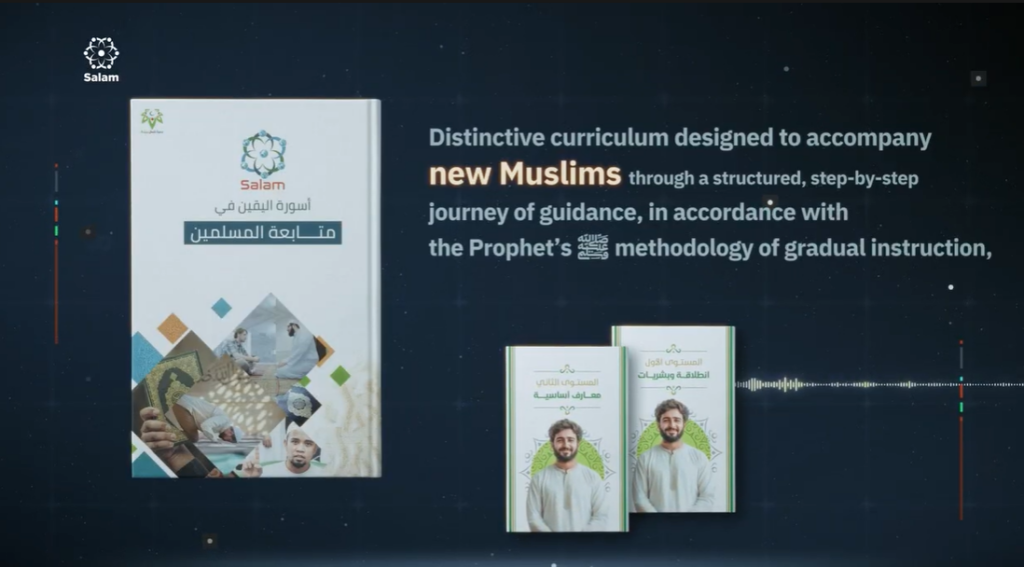
For those who have already entered Islam and are seeking structured learning, the Salam Center offers the Asawirat Al-Yaqeen (Bracelets of Certainty) program — a complete post-conversion curriculum designed to build your knowledge and strengthen your certainty step by step:
- Stage One — The Foundation: Core pillars of Islam, the meaning of Shahada, Wudu, Ghusl, and Salah
- Stage Two — The Construction Phase: The six pillars of Iman, Zakat, Sawm, Hajj, and Umrah
- Stage Three — The Consolidation Phase: Spiritual character, moral etiquette, and practical life rulings
- Stage Four — The Empowerment Phase: Contemporary issues, intellectual foundations, and a life roadmap based on Surah Al-Asr
Over 114,000 new Muslims across 140 countries have completed this journey. You are welcome to begin yours.
Reach out directly to the Salam Center team to start the Asawirat Al-Yaqeen (Bracelets of Certainty) program for FREE.
Conclusion
Islamic ethics are inseparable from Islamic theology. Every moral obligation — from truthfulness and justice to humility and generosity — derives its binding authority from divine command, making the Quran and authenticated Sunnah the primary and permanent reference for Muslim moral life.
The Prophet Muhammad (PBUH) translated these principles into lived reality, offering Muslims a complete behavioral model across every domain: family, commerce, social conduct, and personal character. His Sunnah remains the most detailed ethical commentary on Quranic values that exists.
These teachings invite sincere reflection from every honest seeker. Islam’s moral vision addresses the full human condition — spiritual, social, and environmental — with a clarity and comprehensiveness that continues to resonate across cultures and centuries.
Frequently Asked Questions
What are the principal ethical teachings of Islam in brief?
The principal ethical teachings of Islam include: absolute monotheism (Tawheed) as the moral foundation, truthfulness, justice, compassion, respect for parents, modesty, fulfilling promises, generosity toward the poor, humility, active resistance to injustice, care for neighbors, and environmental stewardship.
Each of these principles is grounded in explicit Quranic verses or authenticated Hadiths — they are not philosophical suggestions but divinely mandated obligations. Together, they form a complete moral system that governs every dimension of human life.
How does Islam define good character (akhlaq)?
In Islam, good character (akhlaq) means consistently embodying the values Allah has commanded and that the Prophet (PBUH) demonstrated. The Prophet said: "The best among you are those who have the best character." (Sahih al-Bukhari, 3559)
Islamic scholars define akhlaq as the stable, internalized disposition that generates virtuous action naturally — covering honesty, patience, generosity, mercy, and humility. Crucially, good character in Islam is inseparable from sincere worship; it flows from a heart that recognizes and loves Allah.
Is Islamic ethics based on reason or revelation?
Islamic ethics is grounded primarily in divine revelation — the Quran and authenticated Sunnah — while recognizing that sound human reason, when uncorrupted, generally affirms what revelation commands.
Islamic scholarly tradition holds that revelation guides reason, corrects it where it errs, and extends its reach into areas where reason alone cannot legislate. The Quran explicitly invites rational reflection — "Do they not reason?" appears repeatedly — but the final moral authority always rests with Allah’s command, not human preference.
What does Islam say about justice toward non-Muslims?
Islam commands full justice toward non-Muslims. The Quran explicitly states: "And do not let the hatred of a people prevent you from being just. Be just; that is nearer to righteousness." (Quran 5:8)
The Prophet (PBUH) warned against oppressing those under Muslim protection, stating that he would personally argue against the Muslim on behalf of the wronged non-Muslim on the Day of Judgment. Justice in Islam is a universal moral obligation — it applies regardless of the religion, race, or background of the person being treated.
Curious about Islam?
Journey towards clarity and purpose. Our team is here to support you in your search for truth and spiritual guidance.
Embrace the Truth