
Shi’a Islam Beliefs
| Key Takeaways |
| Shi’a Islam is not a single unified sect — it encompasses multiple distinct groups, ranging from moderate to extreme, each with different beliefs and practices. |
| The Zaydi branch of Shi’a Islam is the closest to Sunni Islam in creed and jurisprudence, accepting the legitimacy of the early caliphs. |
| Blanket condemnation of all Shi’a Muslims without distinction is regarded by Sunni scholars as unjust, unscholarly, and a source of dangerous sectarian division. |
Shi’a Islam beliefs are among the most searched, most misunderstood, and most politically charged topics in the study of Islam today.
Shi’a Muslims make up a portion of the global Muslim population. Their beliefs vary considerably depending on which branch they belong to.
Some of their doctrines overlap substantially with Sunni Islam. Others diverge in ways that classical Islamic scholarship has carefully examined, categorized, and addressed. And a small fringe has drifted into beliefs that contradict the very foundations of monotheism.
What follows is a faithful account of Shi’a Islam beliefs — drawn from recognized Islamic scholarship and the creed of Ahlus Sunnah wal Jama’ah — so that you can understand this topic with the clarity and fairness it deserves.
Read also: The Principal Ethical Teachings Of Islam
What Are the Main Branches of Shi’a Islam Beliefs?
Shi’a Islam is not monolithic. Scholars of Islamic theology — including Imam al-Shahrastani in his landmark al-Milal wa al-Nihal — identified three foundational currents within Shi’a thought: the Ghulat (extremists), the Zaydis, and the Imamis (Twelvers).
1. The Shi’a Extremists With Beliefs That Cross the Line of Islam
The Ghulat — meaning “those who exceed all bounds” — represent the extreme fringe of Shi’a Islam. Their beliefs are not a matter of internal Islamic disagreement. They contradict the very definition of Tawhid (Islamic monotheism), which is the unshakeable foundation that unifies all Muslims.
As explained in the Islamic concept of monotheism, belief in the absolute oneness of Allah admits no partners, equals, or incarnations.
Some among the Shi’a extremists claimed that Allah inhabited the persons of the Prophet Muhammad (PBUH), Ali, Hasan, Husayn, and Fatimah (may Allah be pleased with them), effectively deifying human beings.
Others taught the transmigration of souls, denied the resurrection, or held that the Imams possessed the authority to abrogate divine law. Still others justified the permissibility of forbidden acts through distorted readings of Quranic verses — including Surah Al-Ma’idah (5:93) — stripped entirely of their scholarly context.
These beliefs place the Ghulat outside the fold of Islam. This is the settled position of Sunni scholarship, and notably, it was also the position of the mainstream Shi’a Imams themselves, who condemned the Ghulat in the strongest terms.
2. Zaydi Shi’a Beliefs Are The Closest Branch to Sunni Islam
The Zaydis trace their tradition to Zayd ibn Ali ibn Zayn al-Abidin ibn al-Husayn ibn Ali ibn Abi Talib (may Allah be pleased with them). In terms of proximity to Ahlus Sunnah wal Jama’ah, the Zaydis stand in a category of their own among Shi’a groups.
Their theological positions draw heavily from Mu’tazilite creed — they affirm the created nature of the Quran, deny the vision of Allah in the afterlife, and reject intercession in certain formulations. In jurisprudence, however, they largely follow the methodology of Imam Abu Hanifah with some variations.
Crucially, the early Zaydis accepted the legitimacy of the caliphates of Abu Bakr and Umar (may Allah be pleased with them), even while holding that Ali was the most virtuous of the Companions. This position — known as tafdhil Ali — distinguished them from the Imami school.
Later Zaydis, however, drifted toward Rafidhi influence and began rejecting the two Sheikhs, as Shaykh Muhammad Abu Zahrah documented extensively in his Tarikh al-Madhahib al-Islamiyyah.
3. Twelver (Imami) Shi’a Beliefs: The Largest Shi’a Group
The Imami Shi’a — also called the Twelvers or Ja’faris — represent the vast majority of Shi’a Muslims worldwide.
Their name derives from their belief in twelve divinely appointed Imams beginning with Ali ibn Abi Talib and ending with Muhammad ibn al-Hasan al-Mahdi, whose occultation (ghayba) they await.
Their jurisprudence is attributed to Imam Ja’far ibn Muhammad al-Sadiq, hence the name Ja’fari school.
This branch merits the most careful and detailed examination, because it is at once the most widespread and the most frequently discussed in the context of Sunni-Shi’a relations.
Learn More About Islam
Discover the beauty, teachings, and wisdom of Islam in a clear and welcoming way. Start exploring and deepen your understanding today.
Learn MoreRead also: Does Islam Believe in the Torah?
What Are the Core Twelver Shi’a Beliefs?
Twelver Shi’a Islam rests on several doctrines that set it apart from Sunni theology. Sunni scholars have engaged these beliefs for centuries — with rigor, fairness, and a clear evidentiary standard drawn from the Quran and authenticated Sunnah.
1. The Doctrine of the Imamate
The most defining feature of Twelver Shi’a Islam beliefs is the doctrine of the Imamate. Twelvers hold that Allah is obligated to appoint an Imam for mankind — a belief Sunni theology rejects, since it places a constraint on the will of Allah.
They further hold that the Prophet (PBUH) explicitly designated Ali ibn Abi Talib (may Allah be pleased with him) as his successor by divine command — a claim Sunni scholarship disputes on the grounds of hadith authentication and historical evidence.
The Sunni position, grounded in the principles of Islam and the methodology of Ahlus Sunnah wal Jama’ah, is that leadership of the Muslim community is determined by consultation (shura) and communal recognition — not by hereditary divine appointment.
2. The Infallibility of the Imams
Twelver doctrine holds that the twelve Imams are infallible (‘isma) in a manner comparable to the infallibility of prophets. This includes the authority to qualify, restrict, or clarify divine rulings beyond the established text — a position with profound implications for Islamic jurisprudence.
Sunni scholars consider this doctrine a serious deviation, because faith in Islam as defined by Ahlus Sunnah attributes infallibility in religious communication to prophets alone, and prophethood was sealed with Muhammad (PBUH).
Extending prophetic-level authority to the Imams creates, in effect, a secondary legislative channel that Sunni Islam does not recognize.
3. The Question of Quranic Integrity
One of the most sensitive accusations leveled at Twelver Shi’a Islam is the claim that they believe the Quran has been corrupted or altered. This requires precise treatment, because the mainstream position of recognized Twelver scholarship is unambiguous.
Shaykh al-Saduq (d. 381 AH), one of the most authoritative early Twelver theologians, stated explicitly: “Our belief is that the Quran which Allah revealed to His Prophet Muhammad (PBUH) is what is between the two covers — what is in the hands of the people — no more than that.” This statement, preserved in Shaykh al-Mufid’s Al-I’tiqadat, makes the mainstream Twelver position clear.
The Sunni scholarly consensus likewise confirms the perfect preservation of the Quran, as established in the broader discussion of what Muslims believe about the Quran. Those individual Shi’a scholars who have argued otherwise represent a minority opinion rejected even within their own tradition.
4. The Doctrine of Al-Bada’
The Twelver concept of bada’ — roughly, that Allah can revise a prior decree — has historically been a point of sharp Sunni criticism, since it appears to imply ignorance in Allah, which is impossible.
Twelver scholars have consistently clarified, however, that what they mean by bada’ is not divine ignorance but rather the concept of conditional divine decrees — what Sunni theology calls al-qadha’ al-mu’allaq (the conditional divine ruling).
The Hadith recorded by Imam al-Tirmidhi, in which the Prophet (PBUH) said: “Nothing repels divine decree except supplication, and nothing increases one’s lifespan except righteousness” — points to this same reality: that within Allah’s infinite knowledge, certain outcomes are tied to human causes.
Sunni scholars such as Shaykh Ibrahim al-Bayjuri addressed this distinction in his Hashiya ‘ala Jawharit al-Tawhid, affirming that the conditional divine ruling is part of established Sunni theology, even if the Shi’a framing of it has sometimes been imprecise.
5. The Attitude Toward the Companions
The Twelver position on the Companions of the Prophet (PBUH) varies significantly among scholars and laypeople, and it is here that sectarian tensions have historically run hottest.
Mainstream Twelver scholars have articulated a nuanced position: they neither declare all Companions trustworthy nor condemn all of them. They treat the Companions as they would any group of individuals — some are just, some are not, and historical judgment applies to each.
Sunni Islam, however, holds the Companions in a position of collective honor established by the Quran and Sunnah.
The Sunni position, rooted in the foundations of faith in Islam, is that love and respect for the Companions as a whole is part of sound creed — not because they were infallible, but because Allah’s revelation testified to their honor.
Read also: Can You Believe In Science And Religion?
What is Sunni Islam’s Approach to Shi’a Muslims?
The great Sunni scholar Shaykh Muhammad Abu Zahrah, in his Tarikh al-Madhahib al-Islamiyyah, emphasized that any serious treatment of Shi’a Islam beliefs must distinguish between branches, between scholars and laypeople, and between doctrinal disagreement and personal condemnation.
Blanket rulings applied to all Shi’a Muslims without distinction — treating a Zaydi villager in Yemen the same as an extremist Ghulat fringe figure — represent, in the words of Islamic scholarship, a failure of knowledge, justice, and prophetic methodology.
It is precisely this kind of indiscriminate condemnation that feeds sectarian violence and serves no one but those who seek to divide the Ummah.
The correct approach, and the approach of serious Sunni scholarship, involves three principles:
First, clearly identify genuine doctrinal differences and address them with evidence and wisdom — because concealing the truth serves no one.
Second, distinguish carefully between categories of Shi’a belief — the Ghulat, whose views cross the boundaries of Islam, differ fundamentally from mainstream Zaydi or Twelver communities.
Third, maintain the bonds of Muslim brotherhood where they exist, cooperate on shared values and shared threats, and engage doctrinal differences through scholarship — not through the tribalism, incitement, or violence that has already caused so much devastation.
Learn More About Islam
Discover the beauty, teachings, and wisdom of Islam in a clear and welcoming way. Start exploring and deepen your understanding today.
Learn MoreLearn More Authentic Knowledge About Islam with Salam
If this article has opened a door of genuine curiosity about Islam — its beliefs, its internal diversity, and its extraordinary intellectual tradition — you are warmly invited to walk through it.
At Salam Platform, the content arm of the Salam Center for Da’wah and Dialogue, every article is written with one purpose: to give you truthful, grounded, compassionate knowledge about Islam.
Browse the Salam blog for more topics spanning Islamic theology, common misconceptions, and the lived experience of Muslims worldwide.
Reach out directly — our team is ready to listen, guide, and welcome you.

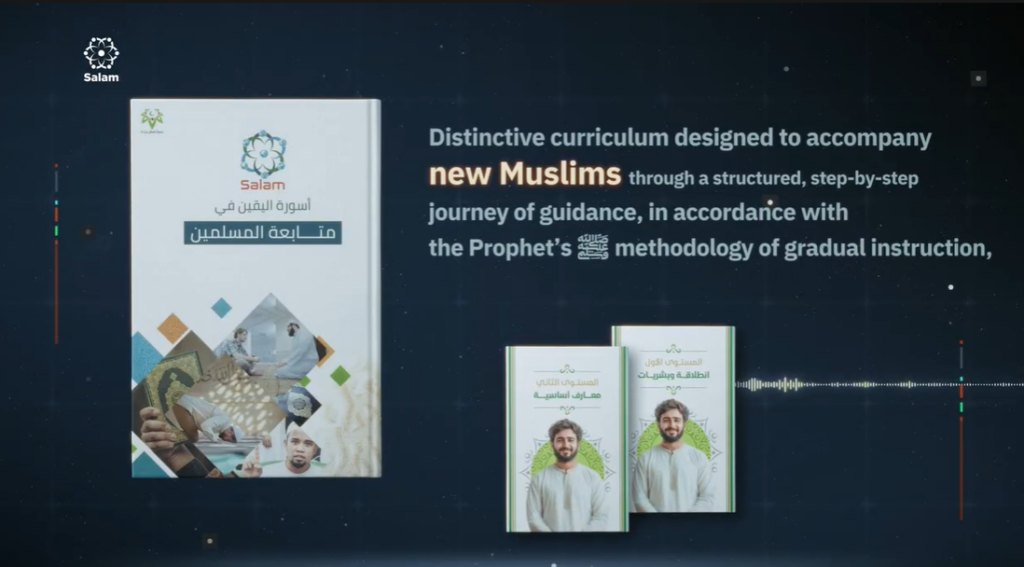
For those who have recently embraced Islam or are seriously considering it, the Salam Center offers its flagship post-conversion program — Asawirat Al-Yaqeen (Bracelets of Certainty). This is a structured four-stage educational journey designed to guide new Muslims from first steps to confident, grounded faith:
- Stage One — The Foundation: Understanding the Shahada, the pillars of Islam, and essential acts of worship including wudu, ghusl, and salah
- Stage Two — The Construction Phase: The six pillars of Iman, zakat, fasting, and Hajj; deepening your knowledge of what you believe and why
- Stage Three — The Consolidation Phase: Spiritual purification, moral development, and practical life rulings drawn from the Sunnah
- Stage Four — The Empowerment Phase: Engaging contemporary questions, understanding Islamic theology, and building a life roadmap grounded in Surah Al-Asr
The program has already accompanied over 114,000 new Muslims across 140 countries. It meets you where you are, and walks with you toward Yaqeen — certainty of faith.
Reach out directly to the Salam Center team to start the Asawirat Al-Yaqeen (Bracelets of Certainty) program for FREE.
Conclusion
Shi’a Islam encompasses a broad range of beliefs across distinct branches. The Ghulat fringe holds doctrines incompatible with Islamic monotheism, while the Zaydis remain close to Sunni theology in both creed and practice. Twelver Imami doctrine diverges from Ahlus Sunnah in significant areas — particularly regarding the Imamate and the infallibility of religious leaders.
Frequently Asked Questions
What are the main differences between Shi’a Islam beliefs and Sunni Islam?
The most significant doctrinal difference concerns the Imamate. Twelver Shi’a Muslims believe that religious and political leadership after the Prophet (PBUH) was divinely designated to Ali ibn Abi Talib and eleven of his descendants. Sunni Islam holds that leadership was determined by communal consultation, not prophetic appointment by divine command.
Twelvers also affirm the infallibility of their twelve Imams — a doctrine Sunni scholarship does not accept, since Islamic theology attributes infallibility in religious communication to prophets alone. Beyond leadership, differences also exist regarding certain aspects of supplication, intercession, and the honor due to the Companions.
What do Shi’a Muslims believe about the Imams?
Twelver Shi’a Muslims believe in twelve Imams beginning with Ali ibn Abi Talib and ending with Muhammad ibn al-Hasan al-Mahdi, who they hold entered a state of occultation and will return at the end of times.
They believe these Imams were appointed by divine designation, are infallible, and possess religious authority that includes the ability to clarify and qualify divine rulings. Sunni Islam affirms the nobility of Ali and his descendants — the Ahlul Bayt — but does not accept the doctrine of their infallibility or divinely mandated political succession. The Sunni understanding of faith in Islam locates religious authority in the Quran, the authenticated Sunnah, and scholarly consensus.
Why do Sunni scholars say it is wrong to make blanket rulings against all Shi’a Muslims?
Because Islamic jurisprudence demands precision, and justice is a foundational Islamic obligation. Sunni scholars including Shaykh Muhammad Abu Zahrah and the scholars of Dar al-Ifta al-Misriyyah — Egypt’s foremost Islamic legal authority — have consistently warned against treating all Shi’a Muslims as a single undifferentiated category.
A Zaydi Muslim in Yemen, a Twelver layperson in a village, and a Ghulat extremist hold vastly different beliefs. Applying the same ruling to all three is not only intellectually indefensible — it actively fuels the sectarian conflict that weakens the Ummah and serves its enemies.
What is the Zaydi branch of Shi’a Islam, and how does it differ from the Twelvers?
Zaydis trace their tradition to Zayd ibn Ali, the great-grandson of Ali ibn Abi Talib. Unlike Twelvers, the early Zaydis accepted the legitimacy of the caliphates of Abu Bakr and Umar, holding that leadership could pass to a less-preferred candidate when necessary.
They also reject the doctrine of the infallibility of Imams and do not subscribe to the concept of the hidden Imam awaiting return. In jurisprudence, they are largely aligned with the Hanafi school. Classical Sunni scholars regarded Zaydis as the closest Shi’a group to Ahlus Sunnah wal Jama’ah — a characterization that reflects genuine doctrinal proximity, not mere diplomatic courtesy.
Curious about Islam?
Journey towards clarity and purpose. Our team is here to support you in your search for truth and spiritual guidance.
Embrace the Truth