Can You Believe In Science And Religion?
| Key Takeaways |
| Islam and science are fundamentally compatible — the Quran contains numerous verses that invite rational inquiry, empirical observation, and reflection on the natural world. |
| The perceived conflict between science and religion originates from the historical tensions between the Church and European scientists — a conflict that Islam never experienced. |
| Islamic civilization produced foundational contributions to mathematics, astronomy, medicine, and optics precisely because faith drove scholars to study Allah’s creation. |
| The Quran preceded modern science in referencing the embryonic development of the human being, the expansion of the universe, and the barrier between bodies of water. |
| Science explains the mechanisms of creation; Islam reveals the purpose, origin, and ultimate meaning behind it — the two answer different questions about the same reality. |
This article explores why the question “can you believe in science and religion?” has a clear and confident answer from an Islamic standpoint — and why that answer matters for seekers, skeptics, and new Muslims alike.
Faith in Islam is not blind — it is built on evidence, reasoning, and certainty (Yaqeen), making intellectual engagement with the natural world an act of worship.
Can You Believe in Science and Religion?
Yes — you can believe in science and religion. In Islam, there is no wall between them. The Quran does not ask its reader to park their intellect at the door. The Quran does the opposite: it commands observation, demands reflection, and treats the study of the natural world as a path toward Allah.
وَفِي الْأَرْضِ آيَاتٌ لِّلْمُوقِنِينَ وَفِي أَنفُسِكُمْ ۚ أَفَلَا تُبْصِرُونَ
“And on the earth are signs for those of certain faith, and in yourselves. Then will you not see?” (Quran 51:20–21)
The conflict most people have in mind — the standoff between science and religion — is a specific Western inheritance rooted in the trials of Galileo, the Inquisition, and centuries of tension between the Church and natural philosophers.
That history belongs to a particular institutional context. It was never Islam’s story.
The “Science vs. Religion” Conflict Is a Western Story, Not a Universal One
When people ask whether science and religion can coexist, they are usually importing a specific cultural memory. In European history, the institutional Church suppressed heliocentrism, resisted dissection, and placed theologians as gatekeepers over natural inquiry.
That is a real and documented history — but it is the history of one tradition’s institutional failures, not a universal law about faith and knowledge.
Islam never produced an Inquisition for scientists. The early Muslim scholarly consensus, rooted in the principle that the universe is Allah’s creation and therefore worthy of study, actively encouraged the pursuit of what later became the natural sciences.
The governing framework was straightforward: the Quran is truth, and observable reality — being Allah’s creation — cannot contradict truth. If an apparent contradiction arises, either the scientific conclusion is incomplete or the Quranic text has been misread.
This is not a modern reconciliation project. It is the original Islamic epistemological position.
The Quran Itself Is an Invitation to Scientific Thinking
The Quran uses the word أَفَلَا تَعْقِلُونَ (“Will you not reason?”) and its grammatical equivalents more than fifty times. It repeatedly calls on human beings to observe the heavens, the earth, the seas, the animals, and their own bodies as evidence for the reality of Allah.
أَوَلَمْ يَنظُرُوا فِي مَلَكُوتِ السَّمَاوَاتِ وَالْأَرْضِ
“Have they not looked into the realm of the heavens and the earth?” (Quran 7:185)
The verb used throughout — nazara, tadabbara, tafakkara — all point to active, engaged observation and contemplation.
The Quran does not present faith as something that replaces thinking. It presents thinking as the mechanism through which genuine faith is reached.
This is precisely what the Salam Center means when it describes Yaqeen — certainty — as the destination of an evidence-grounded journey, not an inherited assumption.
Islamic Civilization Built on the Unity of Faith and Knowledge
Between the 8th and 13th centuries, the Islamic world produced a scientific tradition of extraordinary depth. This was not despite Islamic faith — it emerged from it.
Ibn al-Haytham (965–1040 CE), working in Cairo and widely considered the father of optics, developed the first rigorous scientific method of empirical experimentation and documentation in his Kitab al-Manazir (Book of Optics).
His motivation was theological: to understand light as a sign of Allah’s creation. The History of Science Society has documented his contributions as foundational to the European Scientific Revolution itself.
Al-Biruni (973–1048 CE) calculated the circumference of the Earth with remarkable accuracy, contributed to mineralogy, pharmacology, and comparative religion — all within an explicitly Islamic intellectual framework.
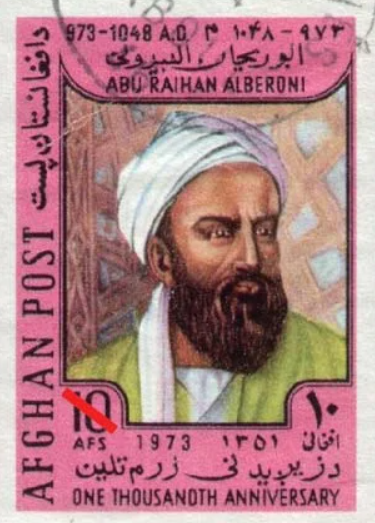
He understood the pursuit of knowledge as a religious duty, traceable to the Prophetic instruction recorded in Sunan Ibn Majah:
“Seeking knowledge is a duty upon every Muslim.” (Sunan Ibn Majah 224)
Ibn Sina (Avicenna, 980–1037 CE), whose Al-Qanun fi al-Tibb (The Canon of Medicine) served as the primary medical textbook in European universities until the 17th century, wrote extensively on the compatibility of philosophical inquiry with Islamic creed.
The Bayt al-Hikmah (House of Wisdom) in Baghdad, established under Caliph Harun al-Rashid and expanded under al-Ma’mun in the 9th century, functioned as the world’s leading center of scientific translation and original research — operating entirely within an Islamic state and Islamic intellectual culture.
Have Questions About Islam?
Our team is ready to answer your questions clearly and respectfully. Ask freely and receive honest guidance.
Ask Us NowThe Quran and Scientific Accuracy: Selected Examples
The compatibility of science and the Quran is strengthened when specific Quranic statements are examined alongside what modern science has since established. These are not cherry-picked curiosities — they are textual facts that carry genuine weight in this discussion.
1. The Expansion of the Universe
وَالسَّمَاءَ بَنَيْنَاهَا بِأَيْدٍ وَإِنَّا لَمُوسِعُونَ
“And the heaven We constructed with strength, and indeed, We are [its] expander.” (Quran 51:47)
This verse, revealed in 7th-century Arabia, describes the universe as continuously expanding. The scientific discovery of cosmic expansion — attributed primarily to Edwin Hubble in 1929 — confirmed what this verse plainly states. No pre-modern astronomical tradition had articulated this concept with equivalent clarity.
2. Embryonic Development
خَلَقَ الْإِنسَانَ مِنْ عَلَقٍ
“He created man from a clinging substance.” (Quran 96:2)
The term ‘alaq refers to something that clings — a description that corresponds precisely to the implantation of the fertilized embryo into the uterine wall, a process invisible to the naked eye and unknown to 7th-century medicine.
Dr. Keith Moore, Professor Emeritus of Anatomy at the University of Toronto and author of The Developing Human — one of the most widely used embryology textbooks in the world — stated that the Quranic descriptions of embryonic development align with what modern embryology has since confirmed.
3. The Barrier Between Two Bodies of Water
مَرَجَ الْبَحْرَيْنِ يَلْتَقِيَانِ بَيْنَهُمَا بَرْزَخٌ لَّا يَبْغِيَانِ
“He released the two seas, meeting [side by side]; between them is a barrier [so] neither of them transgresses.” (Quran 55:19–20)
Modern oceanography has confirmed the existence of haloclines — physical barriers between water masses of differing salinity, temperature, and density that prevent them from fully mixing. This phenomenon was not scientifically documented until the 20th century.
Read also: Shi’a Islam Beliefs
What Science Does Not — and Cannot — Answer
Science is a method. It is a rigorous, enormously powerful method for investigating the mechanisms and patterns of the physical world. What it cannot do — by design, by the nature of its method — is address questions of origin, purpose, meaning, and ultimate truth.
Why is there something rather than nothing? What happens after death? What is the purpose of a human life? Does moral obligation have any grounding beyond human preference?
These are not gaps in current scientific knowledge waiting to be filled. They are questions that fall outside the domain of empirical method entirely, because they are not questions about observable mechanisms.
The Islamic position is that science and revelation address complementary domains. Science maps the creation. Revelation reveals the Creator, the purpose of creation, and the moral framework within which human beings are accountable.
Understanding God in Islam means recognizing that monotheism — the pure, undiluted belief in one Allah — is itself the most rational conclusion available to a thinking human being who looks honestly at the universe.
Read also: Does Islam Believe in the Torah?
Islam’s Engagement with Other Intellectual Traditions
Unlike traditions that historically defined themselves in opposition to outside knowledge, Islam absorbed, evaluated, and built upon the intellectual heritage of Greece, Persia, and India — filtering what aligned with correct belief and rejecting what contradicted it. This was not syncretism. It was confident, discerning engagement from a position of theological clarity.
The foundational principles of Islam include the affirmation that all knowledge, rightly understood, points back to Allah — because all of reality is His creation.
This is why the Islamic tradition has never viewed the natural sciences as a threat to faith. The concern has always been philosophical materialism — the ideological claim that matter is all that exists — rather than empirical investigation itself.
On how Islam views other religions, the Islamic position is clear: truth is singular, and while other traditions may contain remnants of revealed truth, Islam represents the final, preserved, and complete revelation.
This intellectual confidence — rooted in the Islamic understanding of monotheism and the rejection of polytheism — has historically made Islam more, not less, open to rational inquiry.
A Direct Answer to the Sincere Seeker
If you are asking whether a rational, scientifically literate person can embrace Islam — the answer is yes, with complete intellectual integrity. Thousands of scientists, physicians, engineers, and scholars across history and in the present day have found in Islam not a retreat from reason but its fullest expression.
The question “can you believe in science and religion” often carries a hidden assumption: that religion requires the suspension of critical thought.
Islam does not make that demand. It makes the opposite one. It asks you to think, observe, question, and follow the evidence — and then account for where that evidence leads.
Read also: The Principal Ethical Teachings Of Islam
Have Questions About Islam?
Our team is ready to answer your questions clearly and respectfully. Ask freely and receive honest guidance.
Ask Us NowDiscover More at Salam
If this question has opened a door for you, you are warmly welcomed to walk through it — at your own pace, with complete honesty.
Explore the Salam Platform for carefully researched, evidence-grounded articles on Islamic belief, science, and the questions that matter most: Salam Platform
Read more on the Salam blog — where the relationship between faith, reason, and everyday life is explored with clarity and care: Salam Blog
Reach out directly if you have a specific question, want to speak with someone about Islam, or are considering taking the Shahada: Contact Salam
Join the Asawirat Al-Yaqeen (Bracelets of Certainty) Program — the Salam Center‘s structured post-conversion curriculum, designed for new Muslims who want to build firm, grounded faith from day one:
- A four-stage journey from foundational belief through practical life rulings and Islamic identity
- Covers the pillars of Islam and Iman, the Seerah of the Prophet (PBUH), ethics, family rulings, and contemporary issues
- Implemented with over 114,588 new Muslims across 140 countries
- Available in multiple languages, with a smart application and interactive website in development
- Graduates with proven, measurable knowledge — 41.3% of students complete with an “excellent” grade
Contact the Salam Center team to begin

Summary
Islamic scholarship never constructed a wall between faith and empirical inquiry — the Quran commands observation of the natural world as evidence of divine reality, and the Prophet (PBUH) declared seeking knowledge an obligation on every Muslim.
The golden age of Islamic science — built by scholars like Ibn al-Haytham, Ibn Sina, and al-Biruni — demonstrates that deep religious conviction and rigorous scientific investigation have historically reinforced each other within the Islamic tradition, not competed.
Every sincere seeker who asks whether science and religion can coexist is asking a question Islam has already answered with confidence — through its texts, its civilization, and its unbroken scholarly tradition that continues today.
Frequently Asked Questions
Does believing in Islam require rejecting evolution or modern science?
Islam does not require its followers to reject the scientific method or the findings of modern science. What Islam requires is the rejection of ideological materialism — the philosophical claim that matter is the only reality and that there is no Creator.
On specific scientific questions such as cosmology or biology, Islamic scholars hold a range of views, and the tradition permits robust discussion. The core Islamic belief is that Allah is the Creator of all that exists; how that creation unfolded in its physical details is a domain open to scholarly inquiry.
Did the Quran predict scientific discoveries?
Several Quranic verses correspond to scientific facts that were confirmed centuries after the Quran’s revelation — including the expansion of the universe (Quran 51:47), the embryonic stages of human development (Quran 23:12–14), and the barrier between distinct bodies of water (Quran 55:19–20). The Islamic position is that these verses are signs (ayat) pointing to divine authorship — not a science textbook, but evidence of a knowledge that transcends 7th-century Arabia.
Why did Islamic civilization produce so many scientists if religion suppresses inquiry?
Islamic civilization produced foundational contributions to optics, medicine, mathematics, chemistry, astronomy, and geography precisely because the Islamic worldview framed the study of creation as a religious duty.
The Quran’s repeated call to observe, reason, and reflect (afala ta’qiloon) motivated generations of scholars to investigate the natural world. Institutions like the Bayt al-Hikmah in Baghdad functioned as world-leading centers of scientific research within an explicitly Islamic cultural and political context — a historical fact that directly contradicts the assumption that religion and scientific inquiry are inherently in tension.
Is faith in Islam based on evidence or just cultural tradition?
Faith in Islam — Iman — is grounded in evidence and reasoning, not cultural inheritance. The Quran repeatedly challenges its reader to examine its claims, test its coherence, and consider the signs in the natural world and in human experience.
The Salam Center’s educational methodology reflects this: the journey toward certainty (Yaqeen) is built through structured engagement with evidential foundations, not through passive transmission of tradition. A person who arrives at Islam through honest intellectual inquiry is engaging with the religion exactly as the Quran intends.
Can a scientist be a devout Muslim?
Many of the world’s practicing scientists are devout Muslims. The perceived incompatibility between scientific identity and religious commitment is a cultural assumption rooted in Western historical experience, not a universal truth. The Islamic tradition has always held that all genuine knowledge — whether revealed through the Quran or discovered through empirical inquiry — originates from Allah.
A Muslim scientist studying the laws of physics is, in Islamic understanding, reading the signs of Allah written into creation. This is not a modern reconciliation but the original and continuous Islamic position.
How does Islam explain what science cannot answer?
Science, as an empirical method, investigates observable mechanisms and patterns. Questions about ultimate origin, purpose, meaning, moral obligation, and what happens after death are not empirical questions — they fall outside the method’s domain by design.
Islam addresses precisely these questions: why the universe exists, who created it, what the human being is accountable for, and where existence leads. The Islamic understanding of the nature of Allah provides a coherent framework for answering what science — by its own structure — is not equipped to address.
Curious about Islam?
Journey towards clarity and purpose. Our team is here to support you in your search for truth and spiritual guidance.
Embrace the Truth