
Do Muslims Have to Memorize the Quran?
Muslims are not required to memorize the entire Quran; this is a communal duty (Fard Kifayah), not a personal one. Every Muslim is personally obligated (Fard ‘Ayn) to memorize at least Surah Al-Fatiha for valid daily prayer.
The Prophet Muhammad (PBUH) stated there is no valid prayer without reciting Al-Fatiha, as recorded in Sahih al-Bukhari and Sahih Muslim. Allah describes the Quran as made easy for memorization in Surah Al-Qamar, encouraging believers toward Hifz.
Do Muslims have to memorize the Quran?
No, Muslims are not required to memorize the entire Quran. Full memorization of the Quran, known in Islamic scholarship as Hifz, falls under what jurists call Fard Kifayah — a communal obligation. This means the duty rests on the Muslim Ummah as a whole rather than on every individual believer.
As long as a sufficient number of Muslims in each generation dedicate themselves to memorizing the complete text, the obligation is fulfilled on behalf of the whole community.
If nobody undertook this responsibility, the entire community would bear the consequence.
What every Muslim does carry personally is a much smaller, non-negotiable requirement: memorizing enough of the Quran to perform valid Salah (prayer). This minimum threshold is Surah Al-Fatiha, the opening chapter recited in every unit of every prayer. Scholars classify this as Fard ‘Ayn — an individual obligation that cannot be delegated to someone else or fulfilled by the community at large.
Imam al-Nawawi, the renowned Shafi’i jurist, explained this distinction directly in his introduction to Sharh al-Muhadhdhab, describing memorization of the Quran and Hadith as a communal knowledge obligation, while noting that what falls to the individual believer is only that “without which prayer is not valid.”
So the honest answer holds two layers at once. Nobody is sinning by not having memorized all 114 surahs.
But every Muslim who prays five times daily is, in a very real sense, already memorizing — Al-Fatiha, and typically a short additional surah, becomes part of a believer’s spiritual vocabulary within weeks of learning to pray.
What is the difference between Fard Ayn and Fard Kifayah in Quran memorization?
Islamic jurisprudence, or Fiqh, organizes religious duties into categories based on who is accountable for fulfilling them. Understanding this framework clarifies why full Quran memorization carries a different weight than the minimum required for prayer.
1. Fard Ayn in Quran memorization is a personal, unavoidable duty
Fard ‘Ayn obligations apply to every accountable Muslim individually. Nobody else can perform this duty on your behalf, and neglecting it constitutes a personal sin. Memorizing Al-Fatiha falls squarely here because your prayer’s validity depends on it.
This is grounded in a well-known hadith narrated by ‘Ubadah ibn as-Samit, in which the Prophet Muhammad (PBUH) said:
“Whoever does not recite Al-Fatiha in his prayer, his prayer is invalid.” (Sahih al-Bukhari)
This narration is agreed upon by both Sahih al-Bukhari and Sahih Muslim, giving it the highest grade of authenticity in Hadith science.
Because of this text, the four major schools of Sunni Fiqh — while differing on secondary details of application — universally agree that a Muslim capable of memorizing Al-Fatiha must do so.
2. Fard Kifayah in Quran memorization is a shared community responsibility
Fard Kifayah, by contrast, is satisfied once enough members of the community carry out the task. Complete Hifz of the Quran belongs to this category, alongside broader duties like preserving authenticated Hadith literature and maintaining scholarly expertise in Islamic law.
This structure explains why some Muslims dedicate years to becoming Huffaz (memorizers) while others, equally devout, may never memorize beyond what their prayers require — both paths remain fully legitimate within Islamic teaching.
Learn More About Islam
Discover the beauty, teachings, and wisdom of Islam in a clear and welcoming way. Start exploring and deepen your understanding today.
Learn MoreWhy does Islam encourage memorizing the Quran even though it is not obligatory?
Even where memorization is not personally required, the Quran and Sunnah consistently frame it as a deeply rewarding pursuit — something a believer is invited toward rather than merely permitted to attempt.
Allah describes His revelation as specifically structured for ease of memorization. In Surah Al-Qamar, the verse reads:
وَلَقَدْ يَسَّرْنَا الْقُرْآنَ لِلذِّكْرِ فَهَلْ مِن مُّدَّكِرٍ
“And We have certainly made the Qur’an easy for remembrance, so is there any who will remember?” (Quran 54:17)
This verse repeats four times throughout the surah, a structural emphasis that scholars of Tafsir (Quranic exegesis) note underscores just how deliberately Allah designed His final revelation for accessibility — rhythmic, cadenced Arabic that lends itself to being held in the heart, unlike any scripture before it.
The Prophet Muhammad (PBUH) reinforced this spiritual value directly. ‘Uthman ibn ‘Affan, the third Caliph of Islam, narrated that the Prophet (PBUH) said:
“The best among you (Muslims) are those who learn the Qur’an and teach it.” (Sahih al-Bukhari)
This single hadith has motivated centuries of Quranic pedagogy across the Muslim world, from small neighborhood Maktabs to formal Ijazah chains of transmission connecting a student’s memorization back, teacher to teacher, to the Prophet himself.
What is the minimum amount of Quran a new Muslim should memorize?
For someone newly embracing Islam, this question often carries real urgency — prayer cannot wait for years of study. Fortunately, the minimum is genuinely attainable within days.
1. Surah Al-Fatiha comes first
Seven verses long, Al-Fatiha functions as the spiritual core of Salah. It is often called Umm al-Kitab, the Mother of the Book, because it contains praise of Allah, an affirmation of His sovereignty, and a direct supplication for guidance — themes that echo throughout the rest of the Quran.
A new Muslim typically learns this surah first, often within their very first lesson on how to pray.
Read Also: Why Do Muslims Read the Quran?
2. A short additional surah follows
Beyond Al-Fatiha, it is Sunnah — a recommended, though not strictly obligatory, practice — to recite a short additional passage in the first two units of prayer.
Many new Muslims begin with Surah Al-Ikhlas, a concise four-verse chapter affirming Allah’s absolute oneness, a concept central to how Islam views the nature of Allah. Its brevity and clear message make it a natural second step after Al-Fatiha.
Read Also: Can Non-Muslims Read the Quran?
3. Growth happens gradually from there
Beyond these essentials, growth in memorization is entirely a matter of personal capacity and desire — never a source of guilt.
Many believers spend a lifetime slowly adding surahs, a verse or a page at a time, guided by structured curricula designed specifically for the pace of someone building their practice from the ground up.
Read Also: Why Do Muslims Memorize the Quran?
Learn More About Islam
Discover the beauty, teachings, and wisdom of Islam in a clear and welcoming way. Start exploring and deepen your understanding today.
Learn MoreReady to explore your own path with the Quran?
If these questions resonate with something you have been quietly wondering about, you do not have to sit with them alone.
Explore more articles on the Salam blog, where questions about faith, prayer, and daily practice are answered with patience and depth.
Curious about entering Islam, or want to understand what that step actually involves? Reach out directly and speak with someone who can walk through it with you.

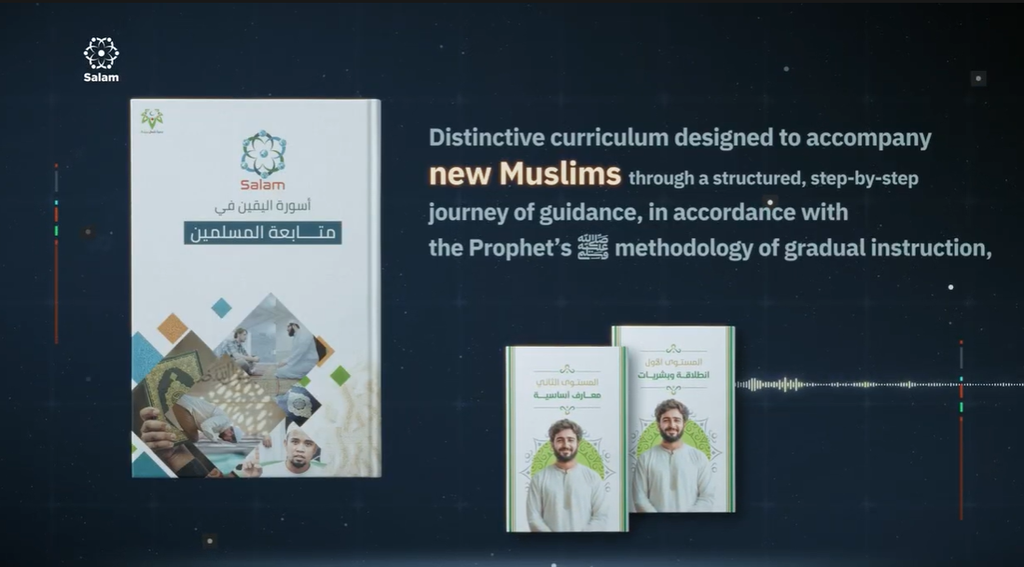
Already Muslim and looking for structured next steps? The Asawirat Al-Yaqeen (Bracelets of Certainty) program offers:
- A four-stage curriculum moving from foundational beliefs to advanced theological literacy
- Practical guidance on prayer, purification, and daily worship from day one
- Lessons on the Seerah of Prophet Muhammad (PBUH) and lasting life lessons drawn from it
- Support available in multiple languages, with new interactive formats in development
Whatever brought you here today — a passing question or a deeper search — the Salam Platform welcomes it without judgment.
Reach out directly to the Salam Center team to start the Asawirat Al-Yaqeen (Bracelets of Certainty) program for FREE.
Summary
Quran memorization operates on two distinct levels in Islamic teaching: a personal duty limited to what prayer requires, and a communal responsibility for preserving the complete text across generations. New Muslims can begin confidently with just Al-Fatiha, building further knowledge gradually through structured support.
Islamic scholarship treats this balance as intentional design rather than a burden, encouraging believers toward Hifz through genuine spiritual reward rather than obligation. Whether someone memorizes seven verses or all 6,236, the invitation to grow closer to the Quran remains open at every stage of the journey.
Frequently Asked Questions
Is it a sin if a Muslim never memorizes the whole Quran?
No, it is not a sin. Complete Hifz is Fard Kifayah, a communal obligation fulfilled once enough Muslims undertake it. Individual Muslims are only required to memorize what makes their prayer valid, primarily Surah Al-Fatiha.
What surah must every Muslim memorize?
Surah Al-Fatiha is mandatory for every Muslim to memorize. The Prophet (PBUH) stated there is no valid prayer without reciting it (Sahih al-Bukhari), making it the one universally required portion of the Quran.
How long does it take to memorize the entire Quran?
There is no fixed timeframe; it varies by dedication, age, and method. Many Huffaz complete it over several years through structured, teacher-guided study, while others achieve it faster with intensive, full-time programs.
Can non-Arabic speakers memorize the Quran?
Yes. Muslims worldwide, regardless of native language, memorize the Quran in its original Arabic through phonetic instruction, since Islamic scholarship holds that only the Arabic text constitutes the Quran itself, distinct from any translation.
Do women have the same Quran memorization obligations as men?
Yes. The obligation to memorize Al-Fatiha for valid prayer applies equally to men and women. Both carry the same Fard ‘Ayn requirement, and both are equally encouraged, without distinction, toward voluntary Hifz.
Curious about Islam?
Journey towards clarity and purpose. Our team is here to support you in your search for truth and spiritual guidance.
Embrace the Truth