The 5 Pillars of Islam in the Quran
| Key Takeaways |
| The five pillars of Islam — Shahada, Salah, Zakah, Sawm, and Hajj — are each established by explicit Quranic verses and confirmed by authenticated Hadiths. |
| The Shahada is the foundational pillar, affirming that there is no god worthy of worship except Allah and that Muhammad (PBUH) is His final messenger. |
| Salah (daily prayer) is the most frequently commanded act of worship in the Quran, mentioned in dozens of verses with explicit instructions for its establishment. |
| Zakah, Sawm, and Hajj each carry dedicated Quranic verses that specify their obligation, conditions, and spiritual purpose. |
The Quran does not present the five pillars as a checklist. Each pillar arrives in the form of a divine address — direct, purposeful, and alive with meaning.
Understanding where each pillar is found in the Quran, and what those verses actually say, transforms the practice of Islam from ritual habit into an act of conscious, joyful obedience to the Creator.
Are the 5 Pillars of Islam Mentioned in the Quran?
Yes, all five pillars of Islam are established in the Quran through explicit verses. The Shahada is rooted in Quran 47:19 and 48:29, Salah in Quran 2:43 and 17:78, Zakah in Quran 2:110 and 9:60, Sawm in Quran 2:183–185, and Hajj in Quran 3:97.
What Are the 5 Pillars of Islam in the Quran?
The five pillars of Islam are: the Shahada (testimony of faith), Salah (prayer), Zakah (obligatory charity), Sawm (fasting in Ramadan), and Hajj (pilgrimage to Mecca). All five are commanded in the Quran and were defined collectively by the Prophet (PBUH) in an authenticated Hadith.
The defining narration comes from Ibn Umar (may Allah be pleased with him), who reported that the Prophet Muhammad (PBUH) said:
“Islam is built on five: testifying that there is no god worthy of worship but Allah and that Muhammad is the Messenger of Allah, establishing prayer, paying Zakah, fasting Ramadan, and performing Hajj to the House.” (Sahih al-Bukhari, Hadith 8)
The metaphor the Prophet (PBUH) used is telling: Islam is a building, and these five are its load-bearing pillars. Remove any one of them, and the structure is compromised.
Now, each pillar deserves to stand in its own light — with its Quranic evidence clear and complete.
Learn More About Islam
Discover the beauty, teachings, and wisdom of Islam in a clear and welcoming way. Start exploring and deepen your understanding today.
Learn MorePillar 1 — The Shahada: The Testimony of Faith in the Quran
The Shahada is the declaration that لَا إِلٰهَ إِلَّا ٱللَّٰهُ مُحَمَّدٌ رَسُولُ ٱللَّٰهِ — “There is no god worthy of worship except Allah, and Muhammad is the Messenger of Allah.” It is the gateway into Islam and the axis around which every other pillar turns.
The first part — the affirmation of Allah’s sole divinity — is established in numerous Quranic verses. Among the clearest:
فَٱعْلَمْ أَنَّهُۥ لَآ إِلَـٰهَ إِلَّا ٱللَّهُ
“So know that there is no deity except Allah.” (Quran 47:19)
This verse addresses the Prophet (PBUH) directly — and through him, all of humanity. The command “know” (i’lam) indicates that Tawhid is not merely a verbal formula; it is a matter of deep, certain knowledge. This is the creed of faith in Islam at its most essential.
The second part of the Shahada — the testimony that Muhammad (PBUH) is the Messenger of Allah — is affirmed in:
مُّحَمَّدٌ رَّسُولُ ٱللَّهِ
“Muhammad is the Messenger of Allah.” (Quran 48:29)
The Prophet (PBUH) is not merely a moral teacher or historical figure; he is the divinely commissioned final messenger whose authority is inseparable from the authority of Allah Himself.
The Shahada, when understood correctly, is the foundation of monotheism and the rejection of all forms of polytheism.
Pillar 2 — Salah: The Obligation of Daily Prayer in the Quran
Salah — the five daily prayers — is the most repeatedly commanded act of worship in the Quran. Allah commands its establishment across dozens of verses, making it the most emphasized pillar after the testimony of faith.
The foundational command appears in:
إِنَّ ٱلصَّلَوٰةَ كَانَتْ عَلَى ٱلْمُؤْمِنِينَ كِتَٰبًا مَّوْقُوتًا
Indeed, prayer has been decreed upon the believers a decree of specified times. (Quran 4:103)
وَأَقِيمُوا۟ ٱلصَّلَوٰةَ وَءَاتُوا۟ ٱلزَّكَوٰةَ وَٱرْكَعُوا۟ مَعَ ٱلرَّـٰكِعِينَ
“And establish prayer and give Zakah and bow with those who bow [in worship and obedience].” (Quran 2:43)
The Quran also specifies prayer times directly:
أَقِمِ ٱلصَّلَوٰةَ لِدُلُوكِ ٱلشَّمْسِ إِلَىٰ غَسَقِ ٱلَّيْلِ وَقُرْءَانَ ٱلْفَجْرِ ۖ إِنَّ قُرْءَانَ ٱلْفَجْرِ كَانَ مَشْهُودًا
“Establish prayer at the decline of the sun [from its meridian] until the darkness of the night and [also] the Qur’an of dawn. Indeed, the recitation of dawn is ever witnessed.” (Quran 17:78)
This single verse encompasses the five daily prayers: Dhuhr and Asr (from the sun’s decline), Maghrib and Isha (the darkness of the night), and Fajr (the dawn prayer).
The spiritual purpose of Salah is also made explicit:
إِنَّ ٱلصَّلَوٰةَ تَنْهَىٰ عَنِ ٱلْفَحْشَآءِ وَٱلْمُنكَرِ
“Indeed, prayer prohibits immorality and wrongdoing.” (Quran 29:45)
Salah was made obligatory upon the Prophet (PBUH) during the Night Journey (Al-Isra’ wal-Mi’raj) — an event confirmed in Surah Al-Isra’ (17:1).
The full story of this miraculous night is recounted in the story of Prophet Muhammad’s night journey. Fifty prayers were initially decreed; through the Prophet’s intercession, they were reduced to five daily prayers while retaining the reward of fifty — a mercy from Allah documented in both Sahih al-Bukhari and Sahih Muslim.
Pillar 3 — Zakah: The Obligation of Purifying Charity in the Quran
Zakah is the obligatory annual payment of a fixed portion of one’s wealth to those in need. In the Quran, Zakah is mentioned alongside Salah no fewer than 28 times — a pairing that underscores the inseparability of spiritual devotion and social responsibility.
The primary verse establishing Zakah as an obligation is:
وَأَقِيمُوا۟ ٱلصَّلَوٰةَ وَءَاتُوا۟ ٱلزَّكَوٰةَ ۚ وَمَا تُقَدِّمُوا۟ لِأَنفُسِكُم مِّنْ خَيْرٍ تَجِدُوهُ عِندَ ٱللَّهِ
“And establish prayer and give Zakah, and whatever good you put forward for yourselves — you will find it with Allah.” (Quran 2:110)
The Quran also specifies the eight categories of those entitled to receive Zakah:
إِنَّمَا ٱلصَّدَقَـٰتُ لِلْفُقَرَآءِ وَٱلْمَسَـٰكِينِ وَٱلْعَـٰمِلِينَ عَلَيْهَا وَٱلْمُؤَلَّفَةِ قُلُوبُهُمْ وَفِى ٱلرِّقَابِ وَٱلْغَـٰرِمِينَ وَفِى سَبِيلِ ٱللَّهِ وَٱبْنِ ٱلسَّبِيلِ
“Zakah expenditures are only for the poor and for the needy and for those employed to collect [Zakah] and for bringing hearts together [for Islam] and for freeing captives [or slaves] and for those in debt and for the cause of Allah and for the [stranded] traveler.” (Quran 9:60)
Zakah is set at 2.5% of savings held above the nisab (minimum threshold) for one lunar year. This rate, while not specified numerically in the Quran, is established through authenticated Hadiths and the unanimous consensus (Ijma’) of Islamic scholars throughout history.
The word Zakah itself comes from the Arabic root meaning purification — paying it purifies the remainder of one’s wealth and cleanses the soul from attachment to material possessions.
Pillar 4 — Sawm: The Obligation of Fasting in the Quran
Sawm — fasting during the month of Ramadan — is one of the most explicitly commanded pillars in the Quran. Its obligation, its timing, its conditions, and its exemptions are all addressed in a single passage of Surah Al-Baqarah.
The central verse:
يَـٰٓأَيُّهَا ٱلَّذِينَ ءَامَنُوا۟ كُتِبَ عَلَيْكُمُ ٱلصِّيَامُ كَمَا كُتِبَ عَلَى ٱلَّذِينَ مِن قَبْلِكُمْ لَعَلَّكُمْ تَتَّقُونَ
“O you who have believed, decreed upon you is fasting as it was decreed upon those before you that you may become righteous.” (Quran 2:183)
Three points from this verse alone carry enormous weight.
First, fasting is decreed (kutiba), using the same word used for the obligation of fighting and prayer — indicating a firm, binding command.
Second, it connects the Muslim community to a broader prophetic tradition — fasting was practiced by earlier nations as well.
Third, the ultimate purpose is stated explicitly: taqwa — God-consciousness, righteousness, and moral awareness.
Ramadan fasting is not primarily about hunger; it is a training in self-mastery before Allah.
The specific month is identified in the following verse:
شَهْرُ رَمَضَانَ ٱلَّذِىٓ أُنزِلَ فِيهِ ٱلْقُرْءَانُ هُدًى لِّلنَّاسِ وَبَيِّنَٰتٍ مِّنَ ٱلْهُدَىٰ وَٱلْفُرْقَانِ ۚ فَمَن شَهِدَ مِنكُمُ ٱلشَّهْرَ فَلْيَصُمْهُ ۖ وَمَن كَانَ مَرِيضًا أَوْ عَلَىٰ سَفَرٍ فَعِدَّةٌ مِّنْ أَيَّامٍ أُخَرَ ۗ يُرِيدُ ٱللَّهُ بِكُمُ ٱلْيُسْرَ وَلَا يُرِيدُ بِكُمُ ٱلْعُسْرَ وَلِتُكْمِلُوا۟ ٱلْعِدَّةَ وَلِتُكَبِّرُوا۟ ٱللَّهَ عَلَىٰ مَا هَدَىٰكُمْ وَلَعَلَّكُمْ تَشْكُرُونَ
“The month of Ramadhan [is that] in which was revealed the Qur’an, a guidance for the people and clear proofs of guidance and criterion. So whoever sights [the new moon of] the month, let him fast it; and whoever is ill or on a journey – then an equal number of other days. Allah intends for you ease and does not intend for you hardship and [wants] for you to complete the period and to glorify Allah for that [to] which He has guided you; and perhaps you will be grateful.” (Quran 2:185)
Ramadan is the month of the Quran. It is the month in which the revelation began, and it is the month in which Muslims renew their relationship with that very Book — another reason fasting and Quranic recitation are inseparable during this time.
To understand the profound relationship Muslims hold with this revelation, the article on what Muslims believe about the Quran provides deeper grounding.
The same verse offers the exemption: those who are ill or traveling may break their fast and make up the missed days later. Islam’s design is merciful — the obligation is real, and its accommodations are equally real.
Read Also: What Is the Definition of Muslim in the Quran?
Pillar 5 — Hajj: The Obligation of Pilgrimage in the Quran
Hajj — the annual pilgrimage to Makkah — is obligatory once in a lifetime for every Muslim who is physically and financially able. Its obligation is established by a direct divine command in Surah Al-Imran.
وَلِلَّهِ عَلَى ٱلنَّاسِ حِجُّ ٱلْبَيْتِ مَنِ ٱسْتَطَاعَ إِلَيْهِ سَبِيلًا ۚ وَمَن كَفَرَ فَإِنَّ ٱللَّهَ غَنِىٌّ عَنِ ٱلْعَـٰلَمِينَ
“And [due] to Allah from the people is a pilgrimage to the House — for whoever is able to find thereto a way. But whoever disbelieves — then indeed, Allah is free from need of the worlds.” (Quran 3:97)
The phrasing is deliberate. Hajj is framed as a right due to Allah — a debt owed by the human being to their Creator. The condition of ability (istita’ah) — physical capacity and financial means — is built directly into the Quranic text, demonstrating Islam’s balance between divine obligation and human reality.
The origins of Hajj trace back to Prophet Ibrahim (Abraham), who built the Ka’bah with his son Ismail (peace be upon them both) and was then commanded to call humanity to pilgrimage:
وَأَذِّن فِى ٱلنَّاسِ بِٱلْحَجِّ يَأْتُوكَ رِجَالًا وَعَلَىٰ كُلِّ ضَامِرٍ يَأْتِينَ مِن كُلِّ فَجٍّ عَمِيقٍ
“And proclaim to the people the Hajj [pilgrimage]; they will come to you on foot and on every lean camel; they will come from every distant pass.” (Quran 22:27)
This establishes Hajj as an institution older than the final revelation itself — a living, embodied connection to the history of monotheism that stretches from Ibrahim through Muhammad (PBUH).
Read Also: Why Do Muslims Read the Quran?
Learn More About Islam
Discover the beauty, teachings, and wisdom of Islam in a clear and welcoming way. Start exploring and deepen your understanding today.
Learn MoreEvery Pillar Serves One Purpose: Yaqeen — Certainty in Allah
The five pillars of Islam are not isolated rituals. They form a single, coherent system — each pillar addressing a different dimension of human life and consciousness:
The Shahada engages the intellect and the heart — it is the creed.
Salah governs the day — five anchors of consciousness throughout every waking cycle.
Zakah governs wealth — purifying it and redistributing it with justice.
Sawm governs the body — training it in restraint and God-awareness.
Hajj governs a lifetime — a single journey that unites the global Ummah in one place, before one Lord.
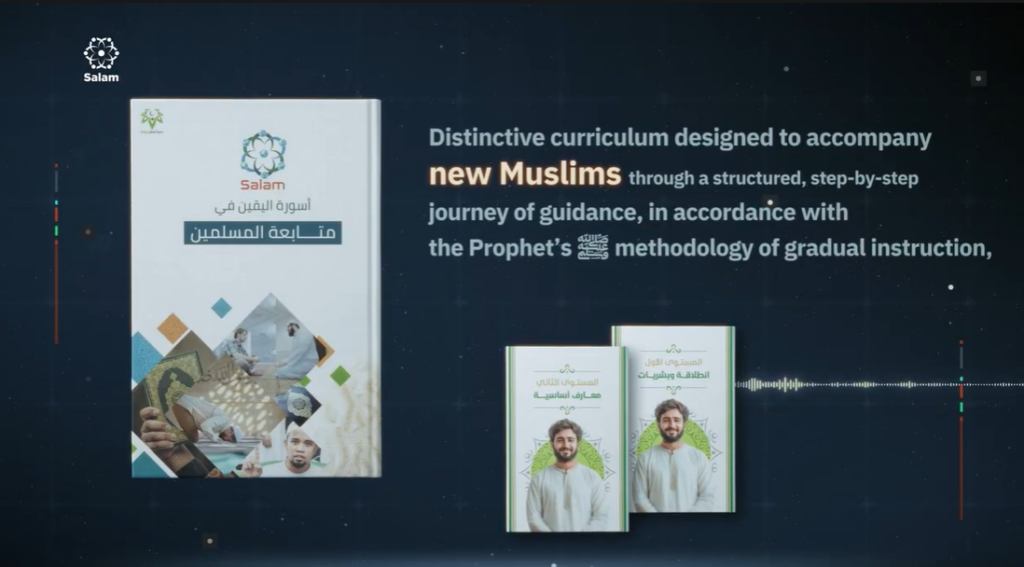
Together, they build what the Quran calls Yaqeen — certain, unshakeable faith. This is precisely the goal of the Asawirat Al-Yaqeen (Bracelets of Certainty) program — to move new Muslims from the moment of Shahada into a deeply rooted, evidence-based certainty about every aspect of their faith.
Reach out directly to the Salam Center team to start the Asawirat Al-Yaqeen (Bracelets of Certainty) program for FREE.
Begin Your Journey with the Salam Platform
If this exploration of the Quran’s evidence for the five pillars has deepened your understanding, there is much more waiting for you.
Whether you are still exploring Islam, recently converted, or looking to strengthen your foundations, the Salam Center is here to walk with you.
Explore more on the Salam Platform:
Browse hundreds of evidence-based Islamic articles at Salam Platform — covering belief, practice, and the most asked questions about Islam.
Read more on the Salam Blog:
Deepen your knowledge through accessible, scholarly articles at the Salam Blog.
Have a question or want to take your Shahada?
Reach out directly — the Salam Center team is available to answer your questions, support your journey into Islam, and enroll you in Asawirat Al-Yaqeen (Bracelets of Certainty).

Join the Asawirat Al-Yaqeen (Bracelets of Certainty) Program:
This is the Salam Center‘s flagship curriculum for new Muslims — a structured, four-stage educational journey designed to build Yaqeen from the ground up. Here is what it offers:
- Stage One — Foundations: Shahada, Wudu, Salah, the pillars of Iman
- Stage Two — Construction: Seerah of the Prophet (PBUH), Tawbah, Zakah, Sawm, Hajj
- Stage Three — Consolidation: Spiritual character, practical life rulings, Islamic etiquette
- Stage Four — Empowerment: Contemporary issues, Islamic theology, and a life roadmap from Surah Al-Asr
The program has guided 114,588 new Muslims across 140 countries, with over 41% achieving an excellent graduation grade.
Summary
The five pillars of Islam — Shahada, Salah, Zakah, Sawm, and Hajj — are each commanded explicitly in the Quran, supported by authenticated Hadiths, and confirmed by over fourteen centuries of unanimous scholarly consensus within Ahlus Sunnah wal Jama’ah.
Tracing these pillars to their Quranic origins transforms religious practice into conscious, evidence-grounded devotion. Every Muslim who understands why these pillars were ordained, and where they come from, builds the kind of Yaqeen that no confusion or doubt can shake.
Frequently Asked Questions
Where exactly is Salah mentioned as obligatory in the Quran?
Salah is commanded in dozens of Quranic verses, with Quran 4:103 establishing its obligation and Quran 17:78 specifying its five daily times. The verse in Surah Al-Isra’ covers the periods from midday to night and the Fajr prayer at dawn, encompassing all five daily prayers. Classical scholars like Imam al-Tabari confirmed this reading in Jami’ al-Bayan.
Is Ramadan fasting explicitly commanded in the Quran?
Yes — the obligation of Ramadan fasting is stated in one of the most direct legislative commands in the Quran. Quran 2:183 uses the word kutiba (decreed), establishing Sawm as binding, and Quran 2:185 identifies the specific month of Ramadan as the month in which the Quran was revealed, making fasting inseparable from the Quran itself.
What Quranic verse makes Hajj obligatory?
Hajj is made obligatory in Quran 3:97, which states that pilgrimage to the House of Allah is a right due from every person who is able to make the journey. The condition of ability (istita’ah) — physical and financial capacity — is built directly into the verse. The historical foundation of Hajj is also addressed in Quran 22:27, where Allah commanded Prophet Ibrahim to call humanity to pilgrimage.
How does the Shahada connect to the Quran’s concept of Tawhid?
The Shahada is the verbal expression of Tawhid — the absolute oneness of Allah — which the Quran establishes as the central truth of existence. Quran 47:19 commands the believer to know (not merely recite) that there is no god worthy of worship except Allah. This knowledge is the foundation of how Islam views the nature of God and the defining difference between Islamic monotheism and all other theological systems.
Curious about Islam?
Journey towards clarity and purpose. Our team is here to support you in your search for truth and spiritual guidance.
Embrace the Truth