
Why Do Muslims Read the Quran?
| Key Takeaways |
| Muslims read the Quran because it is the literal, unaltered word of Allah revealed to Prophet Muhammad (PBUH) through the angel Gabriel. |
| Reciting the Quran is an act of worship in itself, with each letter recited bringing a multiplied reward according to authentic Hadith. |
| The Quran must be read in every unit of the five daily prayers, making it central to a Muslim’s daily life. |
| Most Muslims do not finish the entire Quran, though large numbers read portions regularly and many memorize sections by heart. |
| Reading the Quran provides guidance for daily decisions, moral conduct, and a direct spiritual connection with Allah. |
| The Quran contains healing for the heart, comfort in hardship, and a roadmap for living a purposeful life. |
The reasons why Muslims read the Quran go far beyond ritual. Some center on worship, some on guidance, some on the simple human need for comfort during difficult days.
Below, each reason stands on its own, though together they paint a picture of why the Quran sits at the absolute center of a Muslim’s life.
For readers who want to understand the foundation behind these beliefs, the 9 Islam principles article offers helpful context on the broader framework these practices come from.
Do Muslims Read the Quran?
Yes, Muslims read the Quran because it is Allah’s final revelation to humanity, preserved word-for-word since it was sent down over fourteen centuries ago. For a believer, opening the Quran is an encounter with the speech of Allah Himself, transmitted through Prophet Muhammad (PBUH) and memorized, recited, and lived out by generation after generation of Muslims.
Reason 1: The Quran Is the Literal Word of Allah
Muslims read the Quran because they believe every word in it was spoken by Allah Himself and revealed to Prophet Muhammad (PBUH) through the angel Gabriel (Jibreel).
This is not a book inspired by a human author in the way other religious texts are often described. It is direct divine speech, preserved in its original Arabic without alteration since its revelation.
Allah describes this preservation directly in the Quran:
إِنَّا نَحْنُ نَزَّلْنَا الذِّكْرَ وَإِنَّا لَهُ لَحَافِظُونَ
“Indeed, it is We who sent down the Qur’an and indeed, We will be its guardian.” (Quran 15:9)
Because the Quran is regarded as Allah’s own words rather than a historical record about Him, reading it becomes an act of listening directly to the Creator.
This belief is explored more fully in the article on what Muslims believe about the Quran, which traces how this conviction shapes the entire relationship between a Muslim and the text..
Reason 2: Reciting the Quran Is Itself an Act of Worship
For Muslims, simply reciting the Quran—regardless of whether the reader fully understands the Arabic—carries spiritual reward. The Prophet (PBUH) made this explicit in a well-known hadith:
“Whoever recites a letter from the Book of Allah, he will have a reward. And that reward will be multiplied by ten. I am not saying that ‘Alif, Lam, Meem’ is a letter, rather I am saying that Alif is a letter, Lam is a letter and Meem is a letter.” (Jami’ at-Tirmidhi 2910)
This means a Muslim does not need to be a scholar to benefit from reading the Quran. Each letter recited generates a multiplied reward, transforming even a few minutes of recitation into a meaningful act of devotion.
This is part of why so many Muslims set aside time daily, even briefly, to recite verses—not as an academic exercise, but as worship in its purest form.
Learn More About Islam
Discover the beauty, teachings, and wisdom of Islam in a clear and welcoming way. Start exploring and deepen your understanding today.
Learn MoreReason 3: The Quran Is Recited During Every Daily Prayer
One of the most practical reasons Muslims read the Quran is built directly into the structure of Islam itself: the five daily prayers (salah) cannot be performed without reciting portions of the Quran.
In every unit (rak’ah) of every prayer, a Muslim recites at minimum Surah Al-Fatiha, often followed by another short surah or set of verses.
This means that a practicing Muslim recites Quranic verses at least seventeen times daily across the five obligatory prayers.
Over a lifetime, this repetition embeds large portions of the Quran into memory simply through consistent practice, even for those who never formally sit down to “study” the text.
Surah Al-Fatiha itself sets the tone for this daily encounter:
بِسْمِ ٱللَّهِ ٱلرَّحْمَٰنِ ٱلرَّحِيمِ ﴿١﴾ ٱلْحَمْدُ لِلَّهِ رَبِّ ٱلْعَٰلَمِينَ ﴿٢﴾ ٱلرَّحْمَٰنِ ٱلرَّحِيمِ ﴿٣﴾ مَٰلِكِ يَوْمِ ٱلدِّينِ ﴿٤﴾ إِيَّاكَ نَعْبُدُ وَإِيَّاكَ نَسْتَعِينُ ﴿٥﴾ ٱهْدِنَا ٱلصِّرَٰطَ ٱلْمُسْتَقِيمَ ﴿٦﴾ صِرَٰطَ ٱلَّذِينَ أَنْعَمْتَ عَلَيْهِمْ غَيْرِ ٱلْمَغْضُوبِ عَلَيْهِمْ وَلَا ٱلضَّآلِّينَ ﴿٧﴾
“In the name of Allah, the Entirely Merciful, the Especially Merciful. (1) [All] praise is [due] to Allah, Lord of the worlds – (2) The Entirely Merciful, the Especially Merciful, (3) Sovereign of the Day of Recompense. (4) It is You we worship and You we ask for help. (5) Guide us to the straight path – (6) The path of those upon whom You have bestowed favor, not of those who have evoked [Your] anger or of those who are astray. (7).” (Quran 1:1-7)
Because prayer is one of the core expressions of faith in Islam, reading the Quran becomes inseparable from daily devotional life rather than a separate, optional activity.
Reason 4: The Quran Provides Guidance for Daily Life and Decisions
Muslims turn to the Quran not only for spiritual reward but for practical guidance on how to live. The Quran addresses matters ranging from personal conduct and family relationships to business dealings and community responsibilities. Allah describes the Quran’s purpose explicitly:
هُدًى لِّلْمُتَّقِينَ
“…a guidance for those conscious of Allah.” (Quran 2:2)
When facing a difficult decision—whether about honesty in a transaction, how to treat a parent, or how to respond to conflict—many Muslims will recall a verse or principle from the Quran that informs their choice.
This is why the Quran is often described as a complete way of life rather than simply a book of rituals.
The article on how Islam views the nature of God connects to this point, showing how a Muslim’s understanding of Allah’s attributes directly shapes how they interpret His guidance.
Reason 5: The Quran Offers Comfort and Healing During Hardship
Many Muslims describe turning to the Quran specifically during times of grief, anxiety, illness, or loss. The Quran refers to itself as a source of healing:
وَنُنَزِّلُ مِنَ الْقُرْآنِ مَا هُوَ شِفَاءٌ وَرَحْمَةٌ لِّلْمُؤْمِنِينَ
“And We send down of the Qur’an that which is healing and mercy for the believers.” (Quran 17:82)
This promise of healing is spiritual and psychological, not merely physical. Reciting familiar verses during moments of distress often brings a sense of calm that Muslims describe as deeply tangible.
Hospitals, hospice settings, and grieving households across the Muslim world commonly feature recitation of the Quran for exactly this reason—it is woven into how Muslims process pain and uncertainty.
Reason 6: Memorizing and Reciting the Quran Earns Special Status
Memorizing the Quran (becoming a Hafiz or Hafiza) holds a uniquely honored position in Islamic tradition. The Prophet (PBUH) said:
“The example of the one who recites the Qur’an and memorizes it is that he is with those (angels) who are near to Allah, of high ranks.” (Sahih al-Bukhari 4937)
This honor has driven millions of Muslims across history—children, adults, and the elderly alike—to commit portions or the entirety of the Quran to memory. Memorization is not limited to scholars; entire schools exist worldwide specifically for this purpose, and competitions for Quran memorization draw participants from across the globe, reflecting how widely this practice is embraced.
Read Also: Can Non-Muslims Read the Quran?
Reason 7: Reading the Quran Strengthens the Connection With Allah
Beyond reward and guidance, many Muslims describe reading the Quran as a way of strengthening their personal relationship with Allah. Because the Quran is understood as Allah’s direct speech, reading it is experienced as a two-way conversation—Allah speaking to the reader, and the reader responding through reflection, prayer, and changed behavior.
This relational dimension is why reflection (tadabbur) is encouraged alongside recitation. Allah asks in the Quran:
أَفَلَا يَتَدَبَّرُونَ الْقُرْآنَ
“Then do they not reflect upon the Qur’an…?” (Quran 47:24)
This emphasis on reflection connects closely to broader discussions of why Muslims believe in the Quran as a living, dynamic source of guidance rather than a static historical text.
Read Also: Do Muslims Have to Memorize the Quran?
Reason 8: The Quran Connects Muslims to a Shared Spiritual Heritage
Reading the Quran also serves as a point of connection across the global Muslim community (Ummah). Because the Quran has been preserved in its original Arabic and is recited identically whether in Indonesia, Morocco, or the United States, a Muslim reciting Surah Al-Fatiha in one country is reciting the exact same words as a Muslim doing so on the opposite side of the world.
This shared text creates a sense of unity that transcends language, culture, and nationality.
For readers interested in how this fits within the broader picture of Islamic monotheism and its emphasis on unity, the article on Monotheism explores related themes of how shared belief in one Allah shapes communal identity.
Understanding this connection also sheds light on how Islam views other religions, since the Quran itself frequently references shared prophetic history with Judaism and Christianity.
Read Also: Why Do Muslims Memorize the Quran?
Do Muslims Have to Read the Quran as a Religious Obligation?
Reading the Quran is highly encouraged and rewarded, but the specific obligation that all Muslims share is the recitation of portions of it during the five daily prayers, as covered earlier. Beyond this, regular reading and reflection are strongly recommended rather than strictly mandatory in the same legal sense as prayer or fasting.
Read Also: The 5 Pillars of Islam in the Quran
What Percentage of Muslims Have Read the Quran?
Precise global statistics on Quran readership are difficult to pin down with full accuracy, as comprehensive worldwide surveys on this specific question are limited. What can be said with confidence is that recitation of at least portions of the Quran—particularly Surah Al-Fatiha—is universal among practicing Muslims, since this recitation is required in daily prayer.
Read Also: What Is the Definition of Muslim in the Quran?
Learn More About Islam
Discover the beauty, teachings, and wisdom of Islam in a clear and welcoming way. Start exploring and deepen your understanding today.
Learn MoreContinue Exploring Faith and Guidance With Salam
Curious about what else shapes a Muslim’s relationship with the Quran and faith more broadly?
Visit the Salam Platform to explore more articles on Islamic beliefs, practices, and history.
Browse the Salam blog for ongoing discussions on questions seekers and new Muslims often ask.
Have a specific question about Islam, the Quran, or your own journey? Reach out directly—our team is here to help.
Reach out directly — our team is ready to listen, guide, and welcome you.
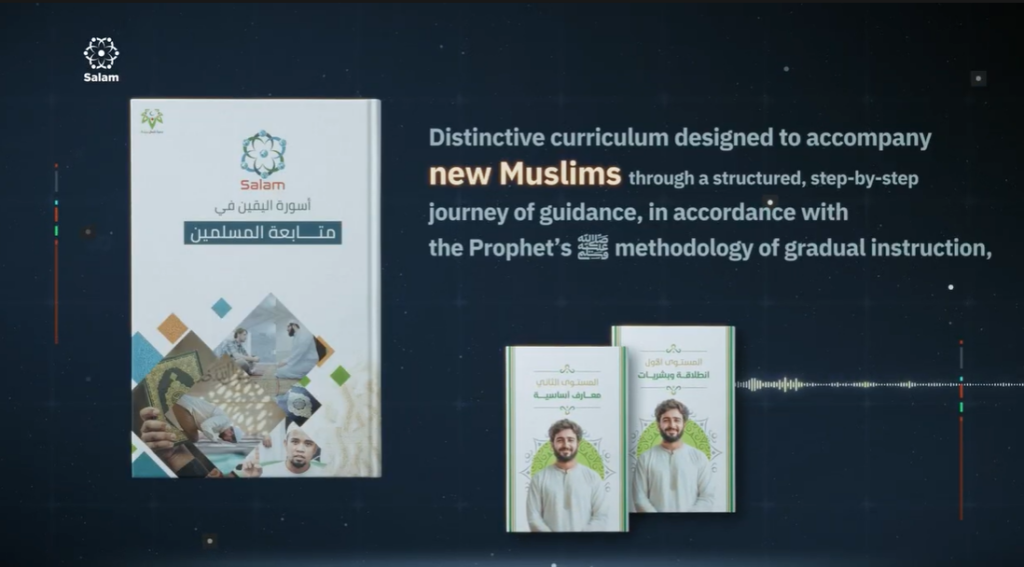
If you’re considering Islam or have recently embraced it, the Salam Center offers the Asawirat Al-Yaqeen (Bracelets of Certainty) program, a structured four-stage journey covering:
- Foundational pillars, prayer, and purification basics
- Core articles of faith, charity, and fasting
- Repentance, sincerity, and the life of the Prophet (PBUH)
- Practical guidance on daily living, family, and community
The Salam Center team is ready to walk alongside you, whatever stage of your journey you’re on.
Reach out directly to the Salam Center team to start the Asawirat Al-Yaqeen (Bracelets of Certainty) program for FREE.
Summary
The Quran holds its place at the center of Muslim life because it is regarded as the direct, unaltered word of Allah, recited in daily prayer and treated as a source of guidance, comfort, and reward for sincere reflection.
While not every Muslim has read the Quran cover to cover, recitation of its verses—especially in prayer—remains a near-universal practice, connecting believers worldwide through shared Arabic recitation and spiritual purpose.
Frequently Asked Questions
Why do Muslims read the Quran every day?
Muslims read the Quran daily because portions of it are recited in each of the five obligatory prayers, and reciting it brings multiplied spiritual reward, as described in Jami’ at-Tirmidhi 2910, where each letter recited earns a tenfold blessing.
Do Muslims have to read the entire Quran?
No, there is no strict obligation to read the entire Quran, though recitation of specific portions during the five daily prayers is mandatory. Reading beyond this is highly encouraged and rewarded but falls into the category of recommended practice.
What language do Muslims read the Quran in?
Muslims recite the Quran in its original Arabic, the exact language of revelation, as stated in Quran 12:2, which describes the Quran as having been sent down in clear Arabic speech.
Is reading the Quran considered an act of worship?
Yes, reciting the Quran is itself an act of worship, regardless of whether the reader understands Arabic fully. The Prophet (PBUH) confirmed that each letter recited brings a multiplied reward, as recorded in Jami’ at-Tirmidhi 2910.
How does the Quran help Muslims during difficult times?
The Quran describes itself as a source of healing and mercy for believers in Quran 17:82, and many Muslims turn to specific verses for comfort during grief, illness, or anxiety, finding psychological and spiritual reassurance through recitation.
Curious about Islam?
Journey towards clarity and purpose. Our team is here to support you in your search for truth and spiritual guidance.
Embrace the Truth