
What Does the Quran Say About Family Problems?
The Quran addresses family problems with specific verses covering marital conflict, parent-child relationships, and sibling disputes among the believers. Surah An-Nisa 4:35 lays out a formal process of mediation when a marriage is breaking down.
Surah Al-Isra commands gentleness toward aging parents even when patience wears thin. Surah Al-Hujurat instructs the wider community to step in and reconcile disputes between believers rather than watch from the sidelines.
What does the Quran say about family problems?
The Quran’s central verse on family conflict is Surah An-Nisa 4:35, which instructs believers to appoint one arbitrator from each spouse’s family when a marriage is under strain. This is not a suggestion aimed at outsiders; it is a command aimed at the family unit itself, drawing in relatives who already know both parties and have a stake in the marriage’s survival.
وَإِنْ خِفْتُمْ شِقَاقَ بَيْنِهِمَا فَابْعَثُوا حَكَمًا مِّنْ أَهْلِهِ وَحَكَمًا مِّنْ أَهْلِهَا إِن يُرِيدَا إِصْلَاحًا يُوَفِّقِ اللَّهُ بَيْنَهُمَا ۗ إِنَّ اللَّهَ كَانَ عَلِيمًا خَبِيرًا
“And if you fear dissension between the two, send an arbitrator from his people and an arbitrator from her people. If they both desire reconciliation, Allah will cause it between them. Indeed, Allah is ever Knowing and Acquainted [with all things].” (Quran 4:35)
Three things stand out in this verse. First, the arbitrators are drawn from each spouse’s own family, meaning the process starts close to home rather than with strangers.
Second, the outcome depends on both parties genuinely wanting reconciliation — Allah does not force resolution onto people who do not desire it.
Third, the verse trusts Allah’s timing: He is described as Knowing and Acquainted with all things, meaning the details of the conflict, however private, are not hidden from Him.
Does the Quran allow divorce when family problems cannot be resolved?
Yes, the Quran permits divorce as a last resort after mediation efforts described in Surah An-Nisa 4:35 have failed.
Islamic guidance favors reconciliation first, but recognizes that some marriages genuinely cannot continue, and permits separation with dignity rather than prolonged harm.
How does the Quran describe the purpose of marriage itself?
Before addressing conflict, the Quran frames marriage as something designed for peace, not friction. Surah Ar-Rum 30:21 describes the marital bond as a sign of Allah’s wisdom, built on tranquility, affection, and mercy.
وَمِنْ آيَاتِهِ أَنْ خَلَقَ لَكُم مِّنْ أَنفُسِكُمْ أَزْوَاجًا لِّتَسْكُنُوا إِلَيْهَا وَجَعَلَ بَيْنَكُم مَّوَدَّةً وَرَحْمَةً ۚ إِنَّ فِي ذَٰلِكَ لَآيَاتٍ لِّقَوْمٍ يَتَفَكَّرُونَ
“And of His signs is that He created for you from yourselves mates that you may find tranquillity in them; and He placed between you affection and mercy. Indeed in that are signs for a people who give thought.” (Quran 30:21)
This verse is often cited at weddings, but its placement in the Quran is deliberate — it appears among verses describing Allah’s broader signs in creation, alongside the diversity of languages and colors among people. Marriage is presented as evidence of divine design, not a contract of convenience.
When conflict arises, this verse gives couples something to return to: the marriage was built for mawaddah (affection) and rahmah (mercy), and any breakdown is a departure from that original purpose, not proof that the purpose was false.
Learn More About Islam
Discover the beauty, teachings, and wisdom of Islam in a clear and welcoming way. Start exploring and deepen your understanding today.
Learn MoreThe Quran addresses parent-child relationships with unusual weight
Surah Al-Isra 17:23-24 places kindness to parents immediately after the command to worship Allah alone, signaling that how a believer treats their parents is treated as a matter close to the core of faith.
وَقَضَىٰ رَبُّكَ أَلَّا تَعْبُدُوا إِلَّا إِيَّاهُ وَبِالْوَالِدَيْنِ إِحْسَانًا ۚ إِمَّا يَبْلُغَنَّ عِندَكَ الْكِبَرَ أَحَدُهُمَا أَوْ كِلَاهُمَا فَلَا تَقُل لَّهُمَا أُفٍّ وَلَا تَنْهَرْهُمَا وَقُل لَّهُمَا قَوْلًا كَرِيمًا
“And your Lord has decreed that you not worship except Him, and to parents, good treatment. Whether one or both of them reach old age [while] with you, say not to them [so much as], ‘uff,’ and do not repel them but speak to them a noble word.” (Quran 17:23)
وَاخْفِضْ لَهُمَا جَنَاحَ الذُّلِّ مِنَ الرَّحْمَةِ وَقُل رَّبِّ ارْحَمْهُمَا كَمَا رَبَّيَانِي صَغِيرًا
“And lower to them the wing of humility out of mercy and say, ‘My Lord, have mercy upon them as they brought me up [when I was] small.'” (Quran 17:24)
What counts as disrespect toward parents under this verse?
The Quran is specific here, not vague. Even the mildest verbal expression of irritation — represented by the single syllable “uff” — is named explicitly as prohibited. This sets a high bar: it is not only harsh words or estrangement that are forbidden, but any dismissive tone directed at aging parents.
The verse then pairs that prohibition with a positive instruction — speaking a “noble word” — so the standard is not merely the absence of harshness but the active presence of dignity and gentleness.
| Behavior Toward Parents | Quranic Instruction |
| Verbal irritation, even mild | Forbidden — not even “uff” |
| Raising one’s voice or pushing back | Forbidden — “do not repel them” |
| General speech | Must be a “noble word” |
| Physical demeanor | Lower the “wing of humility” out of mercy |
| Private supplication | Ask Allah for mercy upon them, citing their care in one’s childhood |
This standard does not disappear when parents are difficult, aging, or in cognitive decline.
If anything, the verse anticipates exactly that scenario — “whether one or both of them reach old age” — and instructs patience precisely at the point when patience is hardest to maintain.
What does the Quran say about resolving disputes between believers more broadly?
Family problems are not confined to marriage and parenting. Siblings, cousins, and extended relatives fall under this guidance too. Surah Al-Hujurat 49:10 frames the entire community of believers as one brotherhood, obligating active intervention when disputes arise.
إِنَّمَا الْمُؤْمِنُونَ إِخْوَةٌ فَأَصْلِحُوا بَيْنَ أَخَوَيْكُمْ ۚ وَاتَّقُوا اللَّهَ لَعَلَّكُمْ تُرْحَمُونَ
“The believers are but brothers, so make settlement between your brothers. And fear Allah that you may receive mercy.” (Quran 49:10)
The verb used here — aslihu, “make settlement” or “reconcile” — is active, not passive. It is not enough to avoid making a dispute worse; believers are commanded to work toward actively resolving it.
The verse also links this effort to receiving mercy from Allah, suggesting that peacemaking within families and communities is itself a path to divine mercy, not just a social nicety.
How did Prophet Muhammad model handling family tension?
The Quran’s principles are matched by the Prophet’s own conduct, recorded in authenticated Hadith collections. Prophet Muhammad (PBUH) explicitly measured a person’s character by how they treated their own household — not by their reputation in public.
“The best of you is he who is best to his family, and I am the best among you to my family.” (Mishkat al-Masabih 3252, citing Sunan al-Tirmidhi)
This hadith is significant precisely because it resists a common human tendency: performing kindness publicly while being short-tempered at home.
The Prophet (PBUH) placed the measure of excellence inside the house, where no one else is watching. This same emphasis on intra-family conduct appears in a second authenticated hadith connecting family ties to tangible blessing:
“Whoever loves that he be granted more wealth and that his lease of life be prolonged then he should keep good relations with his kith and kin.” (Sahih al-Bukhari 5986)
Classical commentators, including in Fath al-Bari, explain that the “expansion” mentioned here refers to barakah — blessing — in one’s provision and years, not merely a literal extension of lifespan.
Maintaining family ties (silat ar-rahim) is treated as a means Allah has established for drawing blessing into a person’s life, reinforcing that family relationships are never peripheral to a Muslim’s spiritual standing.
What steps does Islamic guidance recommend before a marriage reaches crisis point?
Islamic scholarship, drawing on 4:34-35 together, outlines a sequence rather than a single response to marital strain:
Step 1: Direct, honest communication
The first response to noticing distance or discord is verbal advice between spouses — addressing the issue plainly rather than letting resentment build silently.
Step 2: Temporary emotional distance
If direct conversation does not resolve the issue, a period of measured withdrawal is described in the Quran, intended to allow both parties to reflect rather than to punish.
Read Also: The Quran Says Allah’s Word Cannot Be Corrupted
Step 3: Family arbitration
If the first two steps fail, Surah 4:35 calls for arbitrators from each side of the family — people invested in the marriage’s success who can mediate with context neither an imam nor a stranger would have.
Read Also: What Does the Quran Say About Love and Relationships?
Step 4: Reconciliation or amicable separation
The Quran’s language throughout favors reconciliation, but Islamic jurisprudence recognizes that some marriages cannot be preserved, and separation is permitted as a final, dignified option rather than a failure of faith.
This graduated approach mirrors how Islam treats other areas of moral life — with structure, patience, and an insistence that the harder path (working things out) is tried before the easier path (walking away) is taken.
Read Also: What Does the Quran Say About False Prophets?
Learn More About Islam
Discover the beauty, teachings, and wisdom of Islam in a clear and welcoming way. Start exploring and deepen your understanding today.
Learn MoreRead Also: What Does the Quran Say About Fasting?
Discover More About Faith, Certainty, and the Journey to Islam
Family conflict touches nearly every household, and the Quran’s guidance on it is detailed, compassionate, and grounded in mercy. If these verses raised more questions, there’s more to explore.
Curious what else the Quran teaches on relationships and daily life? Visit the Salam blog for more on Quranic guidance across different areas of life.
Reach out directly — our team is ready to listen, guide, and welcome you.

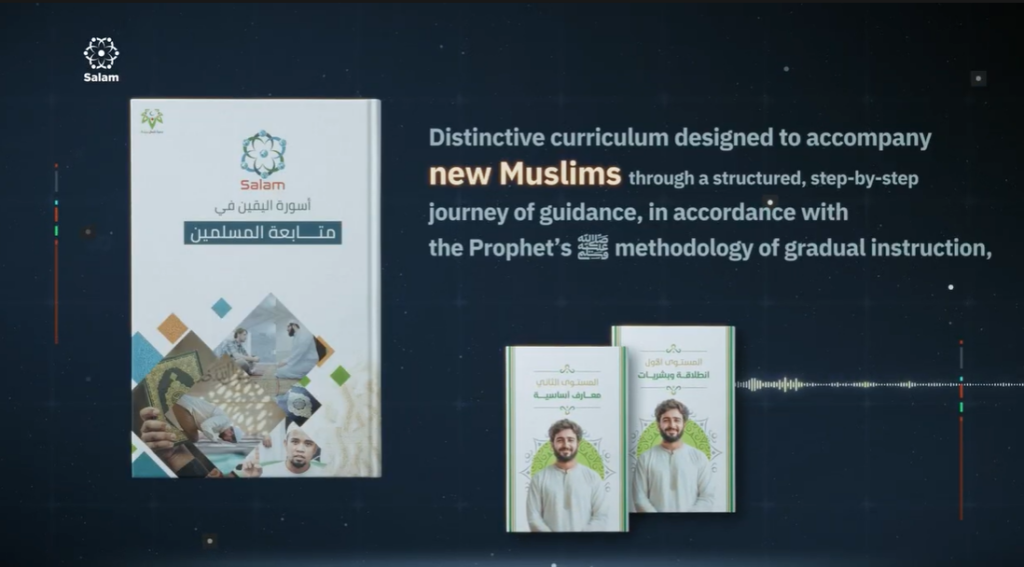
Wondering how new Muslims build a full picture of Islamic practice after conversion? The Asawirat Al-Yaqeen (Bracelets of Certainty) program walks new Muslims through a structured four-stage journey, including:
- Foundational pillars of faith, prayer, and purification
- Repentance and the life of Prophet Muhammad (PBUH)
- Practical rulings on family, marriage, and daily interactions
- Advanced topics addressing contemporary questions and doubts
Have a specific question about your own family situation, or curious about entering Islam?
Reach out directly to the Salam Center team to start the Asawirat Al-Yaqeen (Bracelets of Certainty) program for FREE.
Summary
The Quran treats family conflict as expected, not shameful, offering concrete steps from direct communication to family arbitration in Surah An-Nisa 4:35. Kindness toward parents and reconciliation between believers are tied directly to receiving Allah’s mercy.
Prophet Muhammad (PBUH) modeled this by measuring character through private, household conduct rather than public reputation. These teachings show that Islamic guidance extends fully into the home, treating family harmony as inseparable from genuine faith.
Frequently Asked Questions
What does the Quran say about respecting difficult parents?
Surah Al-Isra 17:23 commands gentle speech and forbids even mild expressions of irritation toward parents, including in old age. This obligation stands even when parents are difficult, reflecting the weight Islam places on filial kindness as an act of worship.
Who should mediate in a Muslim family dispute?
Surah An-Nisa 4:35 specifies one arbitrator from the husband’s family and one from the wife’s family. This structure ensures both parties have advocates who understand them personally, rather than relying solely on outside authorities.
Does Islam blame one spouse automatically in marital conflict?
No. Surah 4:35 addresses “dissension between the two,” placing responsibility for resolution on both spouses jointly. The verse’s arbitration process assumes shared effort toward reconciliation rather than assigning fault to a single party from the outset.
Curious about Islam?
Journey towards clarity and purpose. Our team is here to support you in your search for truth and spiritual guidance.
Embrace the Truth