The Quran Says Allah’s Word Cannot Be Corrupted
| Key Takeaways |
| The Quran states its own preservation directly in Surah Al-Hijr, verse 9, where Allah promises to guard His revelation Himself. |
| This promise of protection is understood by scholars of Ahlus Sunnah wal Jama’ah to cover both the wording and the meaning of the Quranic text. |
| The historical compilation under Caliph Uthman ibn Affan cross-checked written manuscripts against the memorized recitation of thousands of companions. |
| Millions of Muslims across the world today recite the same Quran from memory, a living chain of transmission unmatched by any other ancient text. |
| The Quran distinguishes its own preserved status from the Bible, which it describes Jewish and Christian communities as having altered over time. |
| Prophet Muhammad ﷺ reviewed the entire Quran with the angel Jibril every year, a practice recorded in Sahih al-Bukhari that anchored the text before it was ever written down. |
The Quran declares its own incorruptibility in one of its most quoted verses.
“Indeed, it is We who sent down the Qur’an and indeed, We will be its guardian.” (Quran 15:9)
This is not a claim Muslims layered onto the text centuries later — it is the text’s own statement about itself, made while the Prophet ﷺ was still alive and the revelation still ongoing.
Understanding why this claim matters, and what evidence supports it, requires looking at both the theological reasoning behind it and the historical record of how the Quran was actually transmitted from the 7th century to today.
Does the Quran say God’s word cannot be corrupted?
Yes, the Quran explicitly promises its own preservation, and this promise applies uniquely to the Quran among the scriptures Muslims recognize as revealed by Allah.
The verse in Surah Al-Hijr does not say the Quran might be protected or that its protection depends on human effort. It states that Allah Himself has taken on the responsibility of guarding it.
This matters because it separates the Quran’s claimed status from that of earlier scriptures, which the Quran itself acknowledges were entrusted to human communities for safekeeping — and altered as a result.
The Quran’s own words about its preservation
اِنَّا نَحْنُ نَزَّلْنَا الذِّكْرَ وَاِنَّا لَهٗ لَحٰفِظُوْنَ
“Indeed, it is We who sent down the Qur’an and indeed, We will be its guardian.” (Quran 15:9)
Guarding the Quran means guarding it against loss, against addition, against omission, and against the kind of gradual textual drift that affects documents copied by hand across centuries.
The Arabic word used, la-hafizoon, carries the sense of active, ongoing protection — not a one-time act completed in the past.
A second verse reinforces the same idea from a different angle, describing the Quran’s origin in a realm beyond human interference entirely.
بَلْ هُوَ قُرْآنٌ مَّجِيدٌ فِي لَوْحٍ مَّحْفُوظٍ
“But this is a noble Qur’an. [Inscribed] in a Preserved Slate.” (Quran 85:21-22)
This concept of al-Lawh al-Mahfuz, the Preserved Tablet, describes an archetypal record of the Quran that exists outside the reach of any earthly alteration.
Whatever happens to individual manuscripts or reciters, the source itself remains untouched.
Together, these two verses establish the theological basis for why Muslims hold that faith in Islam includes confidence in the integrity of the text they are reading today.
Learn More About Islam
Discover the beauty, teachings, and wisdom of Islam in a clear and welcoming way. Start exploring and deepen your understanding today.
Learn MoreHow the historical compilation of the Quran matches the fact of Allah’s preservation?
Theological claims mean little without historical evidence behind them, and the Quran’s preservation is unusual among ancient religious texts for how thoroughly documented its transmission actually is.
1. The Prophet ﷺ reviewed the Quran with Jibril every year
Before a single verse was gathered into a bound copy, the Quran existed as a living oral tradition anchored directly to the Prophet ﷺ himself. Every year during Ramadan, the angel Jibril reviewed the entire revealed text with him.
Narrated Abu Huraira: “Gabriel used to repeat the recitation of the Qur’an with the Prophet (ﷺ) once a year, but he repeated it twice with him in the year he died.” (Sahih al-Bukhari 4998)
This annual review, known as al-‘Arda, meant the Quran was checked and re-checked against its original source within the Prophet’s own lifetime, long before any question of manuscript variation could arise.
2. Companions memorized the Quran as it was revealed
Alongside this oral verification, the Prophet ﷺ had scribes record each revelation as it came, and he actively encouraged companions to memorize the text.
By the time of his death, thousands of companions across the Arabian Peninsula held large portions or the entirety of the Quran in memory.
This is the practice of hifz, and it created a second, independent layer of preservation that did not rely on any single written copy surviving intact.
3. The Uthmanic compilation checked writing against memory
The most decisive historical episode came during the caliphate of Uthman ibn Affan. As the Muslim community expanded beyond Arabia, regional differences in recitation style began to cause concern among the companions.
Narrated Anas bin Malik: Hudhaifa was afraid of their (the people of Sham and Iraq) differences in the recitation of the Qur’an, so he said to Uthman, “O chief of the Believers! Save this nation before they differ about the Book (Qur’an) as the Jews and the Christians did before.” So Uthman sent a message to Hafsa saying, “Send us the manuscripts of the Qur’an so that we may compile the Qur’anic materials in perfect copies.” (Sahih al-Bukhari 4987)
Uthman commissioned a committee led by Zaid ibn Thabit, one of the Prophet’s principal scribes, to produce a standardized written text.
Crucially, this was not an act of composing something new — it was a cross-verification project, checking existing manuscripts against the collective memory of companions who had heard the Quran recited by the Prophet ﷺ directly.
Narrated Zaid bin Thabit: Abu Bakr sent for me and said, “You used to write the Divine Revelations for Allah’s Messenger (ﷺ): So you should search for (the Qur’an and collect) it.” (Sahih al-Bukhari 4986)
| Stage of Preservation | Method | Historical Anchor |
| During revelation | Oral memorization by the Prophet ﷺ and companions | Annual review with Jibril, confirmed in Sahih al-Bukhari |
| After the Prophet’s death | Written compilation ordered by Abu Bakr | Zaid ibn Thabit collects scattered scripts (Sahih al-Bukhari 4986) |
| Under Caliph Uthman | Standardized copies cross-checked against memorized recitation | Committee of Zaid ibn Thabit, Sahih al-Bukhari 4987 |
| Present day | Unbroken chains of memorization (isnad) across generations | Millions of huffaz reciting an identical text worldwide |
What does set Quranic preservation apart from other scriptures?
The Quran does not claim that all scripture shares this same guaranteed protection. It explicitly describes earlier communities altering the texts entrusted to them, a theme that recurs across several passages addressing the nature of Allah and His relationship to revealed guidance.
فَوَيْلٌ لِّلَّذِينَ يَكْتُبُونَ الْكِتَابَ بِأَيْدِيهِمْ ثُمَّ يَقُولُونَ هَـٰذَا مِنْ عِندِ اللَّهِ
“So woe to those who write the ‘scripture’ with their own hands, then say, ‘This is from Allah,’ in order to exchange it for a small price.” (Quran 2:79)
This verse is central to understanding what Muslims believe about the Quran in relation to earlier revelations like the Torah and the Gospel. Islamic theology holds that these scriptures were originally revealed by Allah but were not given the same structural safeguard of continuous, mass memorization that the Quran received.
Human hands, in the Quran’s own account, entered the transmission process in a way that did not happen with the Quran itself.
This distinction is also why questions about what do Muslims believe about the Bible come up so frequently in comparative discussions.
Muslims are not claiming the Bible has no value or contains no truth — they are pointing to a specific, documented difference in how each text was transmitted across generations.
Readers exploring Islam vs. Christianity often find this preservation question to be one of the clearest points of comparison between the two traditions.
Quran memorization created a safeguard no manuscript alone could provide
A written document, however carefully copied, is vulnerable to a single point of failure. A fire, a flood, a scribal error repeated across generations — any of these could corrupt a text that exists in only one authoritative form. The Quran’s preservation model worked differently from the start.
1. Living memory functioned as a parallel manuscript
Because thousands of companions held the Quran in memory independently of any written copy, a corruption in one manuscript could always be checked against the recitation of someone who had memorized the text directly.
This created redundancy on a scale that ancient manuscript traditions of other texts did not have.
2. The chain of memorization continued unbroken
This is not merely a historical claim about the 7th century. The practice of memorizing the entire Quran, verse for verse, continued as an unbroken chain from the Prophet’s companions through every generation since.
Today, a reciter in West Africa, a reciter in Southeast Asia, and a reciter in the Arabian Peninsula produce an identical text, despite having no contact with one another and having learned through entirely separate teaching lineages.
3. The absence of contradiction supports the preservation claim
Scholars have also pointed to the Quran’s internal consistency as circumstantial support for its preserved status.
A text assembled or altered by multiple human hands over centuries would be expected to show seams, contradictions, or shifts in style.
Muslims see the Quran’s coherence across 23 years of revelation, addressing vastly different circumstances, as consistent with a single, protected source rather than a compiled or edited document.
Readers interested in this dimension can explore history of the Quran for a fuller account of the compilation process.
Read Also: What Does the Quran Say About Family Problems?
The theological weight behind Allah’s promise to protect His word
For a new Muslim or a sincere seeker, the significance of Quran 15:9 goes beyond an interesting historical fact. It touches on one of the foundational Islam principles — that Allah’s guidance to humanity remains accessible in its original form, unmediated by centuries of committee decisions or lost originals.
This is also why the Quran addresses what the Quran says about other religions with such specificity regarding textual integrity. The claim is not that Islam alone possesses truth while other traditions possess none.
The claim is narrower and more precise: this particular text, in this particular case, was protected through a documented mechanism that can be traced, checked, and verified — not merely asserted.
Read Also: What Does the Quran Say About False Prophets?
Learn More About Islam
Discover the beauty, teachings, and wisdom of Islam in a clear and welcoming way. Start exploring and deepen your understanding today.
Learn MoreRead Also: What Does the Quran Say About Fasting?
Continue exploring what the Quran teaches about itself
If this raised more questions than it answered, that is a good sign — sincere inquiry is where real understanding begins.
Browse more articles on the Salam blog for deeper explorations of Islamic belief, from foundational theology to specific historical questions like these.
Have a question this article didn’t cover?
Reach out directly — our team is ready to listen, guide, and welcome you.

Curious about taking the next step? The Salam Center team also supports:
- Guidance for those considering entering Islam
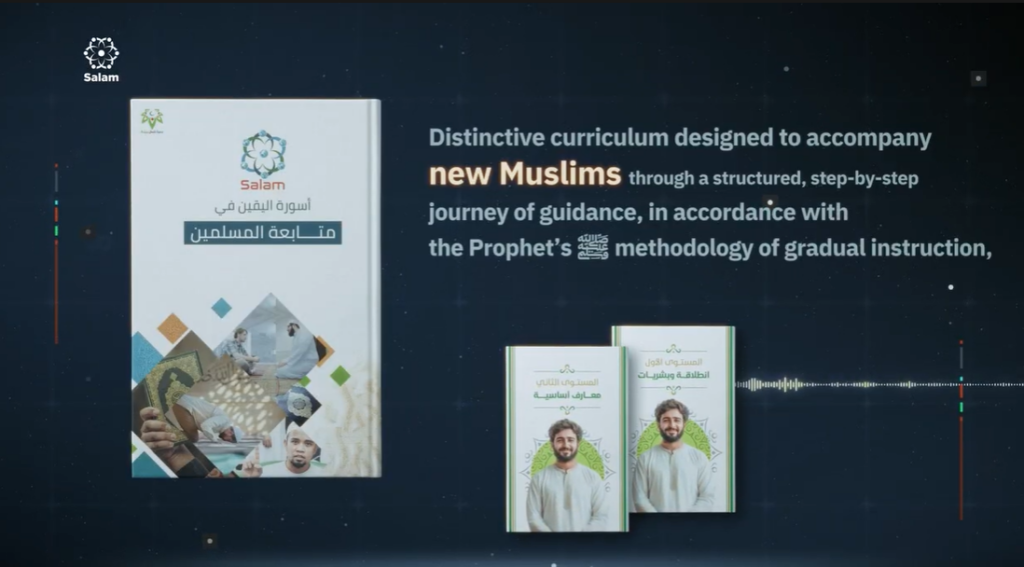
- Enrollment in Asawirat Al-Yaqeen (Bracelets of Certainty), a structured four-stage program for new Muslims covering foundational worship, repentance, the Prophet’s biography, daily life rulings, and contemporary issues
- General questions about Quranic sciences, Hadith authenticity, or Islamic history
Every question is welcome here, at whatever stage you’re asking it from.
Reach out directly to the Salam Center team to start the Asawirat Al-Yaqeen (Bracelets of Certainty) program for FREE.
Summary
The Quran declares its own preservation in Surah Al-Hijr, a claim historically supported by parallel oral memorization and Uthman’s cross-verified written compilation. This documented transmission process distinguishes the Quran from scriptures the Quran itself describes as altered by human hands.
Millions of reciters worldwide today produce an identical text traceable through unbroken memorization chains to the Prophet ﷺ. Exploring this history offers seekers a concrete, verifiable answer to why Muslims hold the Quran’s integrity with such confidence.
Frequently Asked Questions
Does the Quran say it is free from all human alteration?
Yes. Quran 15:9 states that Allah Himself guards the text, a promise distinct from claims made about earlier scriptures. This protection is understood to cover both wording and meaning, verified historically through parallel written and memorized transmission. (Quran 15:9)
What is Al-Lawh Al-Mahfuz in relation to Quranic preservation?
Al-Lawh Al-Mahfuz, the Preserved Tablet, refers to the Quran’s archetype existing beyond earthly interference, mentioned in Surah Al-Buruj. This concept reinforces that the Quran’s source remains untouched regardless of events affecting individual copies. (Quran 85:22)
Did the Prophet Muhammad ﷺ review the Quran regularly?
Yes, the Prophet ﷺ reviewed the complete Quran with the angel Jibril every year during Ramadan, twice in his final year. This annual verification anchored the oral tradition before any large-scale written compilation occurred. (Sahih al-Bukhari 4998)
Why do Muslims say other scriptures were altered but the Quran was not?
The Quran describes some earlier communities writing texts by hand and attributing them to Allah for worldly gain, a documented alteration process. The Quran’s transmission instead relied on parallel memorization by thousands, a structural safeguard absent from those earlier cases. (Quran 2:79)
Curious about Islam?
Journey towards clarity and purpose. Our team is here to support you in your search for truth and spiritual guidance.
Embrace the Truth