
What Does the Quran Say About Fasting?
The Quran addresses fasting directly and repeatedly, most concentratedly in Surah Al-Baqarah, verses 183 through 187. Fasting, known in Arabic as Sawm, is described as an obligation placed on the believers just as it was placed on communities before them.
The verses that follow explain who fasts, who is excused, what breaks the fast, and why the whole practice exists in the first place.
What does the Quran say about fasting?
The Quran states that fasting is prescribed for believers as it was prescribed for those before them, “that you may become righteous” (Quran 2:183). This verse anchors the entire practice. It does present fasting as part of a shared moral inheritance running through earlier scriptural communities, and it names the purpose immediately: taqwa, a consciousness of Allah that shapes behavior long after the fast ends.
يَا أَيُّهَا الَّذِينَ آمَنُوا كُتِبَ عَلَيْكُمُ الصِّيَامُ كَمَا كُتِبَ عَلَى الَّذِينَ مِنْ قَبْلِكُمْ لَعَلَّكُمْ تَتَّقُونَ
“O you who have believed, decreed upon you is fasting as it was decreed upon those before you that you may become righteous.” (Quran 2:183)
The verses immediately following extend this foundation. Fasting is fixed to “a limited number of days” (2:184), meaning the month of Ramadan specifically, not an open-ended demand.
The Quran builds in flexibility from the outset: those who are ill or traveling may postpone their fast to other days, and this accommodation appears in the text itself rather than as a later scholarly addition.
How many days does the Quran require fasting?
The Quran ties the fasting obligation to the month of Ramadan by name, stating that whoever witnesses the month must fast it in full (Quran 2:185). This verse is significant for a second reason beyond the fasting command itself: it identifies Ramadan as the month
“in which was revealed the Qur’an, a guidance for the people and clear proofs of guidance and criterion.”
Fasting and revelation are bound together in the same verse, which is part of why Ramadan carries the weight it does in Islamic practice.
فَمَن شَهِدَ مِنكُمُ الشَّهْرَ فَلْيَصُمْهُ
“So whoever sights [the new moon of] the month, let him fast it.” (Quran 2:185)
The same verse repeats the exemption for illness and travel, adding a closing line that reframes the entire command: “Allah intends for you ease and does not intend for you hardship.”
This is a recurring feature of Quranic legislation generally — obligations arrive paired with built-in relief for genuine hardship, which reflects the broader Islamic principles of proportionality and mercy in religious law.
Who is exempted from fasting in the Quran?
The Quran names specific exemptions directly in the text of Surah Al-Baqarah:
| Category | Quranic Basis | Provision |
| The sick | 2:184–185 | May fast an equal number of days later |
| The traveler | 2:184–185 | May fast an equal number of days later |
| Those unable to fast (e.g., the elderly, chronically ill) | 2:184 | May feed a poor person for each day missed |
| Menstruating or postpartum women | Established through Sunnah alongside the Quranic principle of removing hardship | Make up missed days later |
This structure shows the Quran legislating fasting as a serious obligation while simultaneously refusing to impose it where genuine hardship exists — a pattern consistent with how the nature of Allah is described throughout the Quran: just, but never harsh for the sake of harshness.
Read Also: The Quran Says Allah’s Word Cannot Be Corrupted
Learn More About Islam
Discover the beauty, teachings, and wisdom of Islam in a clear and welcoming way. Start exploring and deepen your understanding today.
Learn MoreRead Also: What Does the Quran Say About False Prophets?
What are the daily boundaries of the Ramadan fast in the Quran?
The Quran fixes the daily fast between two specific points: the moment dawn becomes visually distinguishable and sunset. This boundary is described with a memorable image rather than abstract timekeeping language.
وَكُلُوا وَاشْرَبُوا حَتَّىٰ يَتَبَيَّنَ لَكُمُ الْخَيْطُ الْأَبْيَضُ مِنَ الْخَيْطِ الْأَسْوَدِ مِنَ الْفَجْرِ ثُمَّ أَتِمُّوا الصِّيَامَ إِلَى اللَّيْلِ
“And eat and drink until the white thread of dawn becomes distinct to you from the black thread [of night]. Then complete the fast until the sunset.” (Quran 2:187)
The same verse also permits marital relations at night during Ramadan, correcting what had been a restriction some early Muslims had assumed applied throughout the month:
“It has been made permissible for you the night preceding fasting to go to your wives.”
The Quran describes spouses here as
“a garment for you and you are a garment for them”
— a striking image of closeness and mutual protection embedded in a verse about ritual law.
Read Also: What Does the Quran Say About Family Problems?
Why does the Quran command fasting?
The Quran states the purpose of fasting directly in 2:183: “that you may become righteous,” using the word taqwa, which describes an internal state of God-consciousness rather than mere rule-following. Fasting in the Quranic framework is not primarily about hunger. Hunger is the mechanism; taqwa is the goal.
This distinction matters for anyone approaching Islam from outside the tradition. The Quran does not present self-denial as inherently virtuous.
It presents controlled, purposeful abstention — undertaken with clear rules, defined limits, and built-in mercy for hardship — as a training method for the heart and will.
The fast interrupts habitual consumption long enough for the worshipper to notice dependence on Allah in a way ordinary days don’t require.
This connects to a wider theme running through the Quran’s treatment of worship generally: rituals are rarely presented as ends in themselves.
Prayer, charity, and fasting are each tied explicitly to character outcomes in the text — a pattern worth understanding alongside what Muslims believe about the Quran as a complete guide to conduct, not a checklist.
How does Quranic fasting compare to fasting in other scriptures?
The Quran itself frames fasting as something Allah “decreed upon those before you” (2:183), which scholars of tafsir have connected to fasting traditions known among earlier prophetic communities.
This is not a claim that Ramadan fasting is identical in form to earlier practices, but that the underlying discipline — restraint from consumption for spiritual purposes — has a long history in monotheistic worship.
Readers interested in this continuity may find it useful to explore what the Quran says about other religions more broadly, or compare specific traditions through resources like Islam vs. Christianity and Islam vs. Judaism.
Read Also: Mary in the Quran
Learn More About Islam
Discover the beauty, teachings, and wisdom of Islam in a clear and welcoming way. Start exploring and deepen your understanding today.
Learn MoreRead Also: Gog and Magog in the Quran
Continue Learning About Islam
If these verses raised questions you’d like explored further, you’re welcome to keep going.
Read more on the Salam blog for articles on Quranic law, the Seerah, and comparative religion.
Explore the full Salam Platform for a structured library of Islamic teaching.
Curious about entering Islam, or want personal guidance through the Shahada?
Reach out directly — our team is ready to listen, guide, and welcome you.
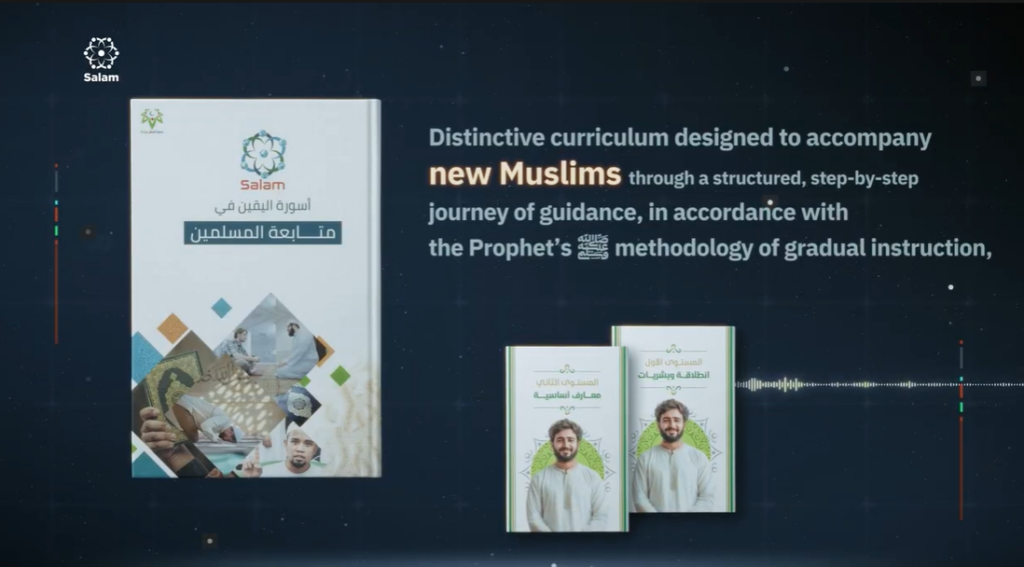
New to Islam and looking for structured post-conversion learning? The Salam Center team built Asawirat Al-Yaqeen (Bracelets of Certainty) for exactly this stage:
- A four-stage guided curriculum moving from foundational pillars through Seerah, ethics, and practical life rulings
- Rooted in the creed of Ahlus Sunnah wal Jama’ah, taught with a gradual, compassionate method
- Includes structured lessons, interactive assessments, and support at every level
- Reach the Salam Center team directly to enroll or ask questions before starting
Reach out directly to the Salam Center team to start the Asawirat Al-Yaqeen (Bracelets of Certainty) program for FREE.
Summary
The Quran commands fasting in Surah Al-Baqarah as an act shared across earlier faith communities, fixing its timing to Ramadan and its daily bounds to dawn and sunset. Genuine hardship is met with real accommodation, not rigid insistence.
Beyond hunger and thirst, the Quran names taqwa as fasting’s actual goal, a purpose later hadith reinforce through descriptions of fasting as a shield and a uniquely private act of devotion.
Frequently Asked Questions
Does the Quran say fasting is only during Ramadan?
Yes, the Quran ties obligatory fasting specifically to Ramadan in Quran 2:185, stating that whoever witnesses the month must fast it. Voluntary fasting outside Ramadan is separately encouraged in the Sunnah but is not commanded in the Quran.
What breaks the fast according to the Quran?
The Quran specifies eating, drinking, and marital relations as invalidating the fast between dawn and sunset (Quran 2:187). Sahih hadith add further detail, such as intentional vomiting or menstruation, that also break the fast.
Why do Muslims fast according to the Quran?
The Quran states the purpose explicitly in 2:183: fasting is prescribed “that you may become righteous,” meaning it exists to build taqwa, or God-consciousness, rather than for physical hardship alone.
Are children required to fast according to Islam?
The Quran does not name an age threshold; this detail comes from the Sunnah and juristic consensus, which place the obligation at puberty. Many Muslim families introduce partial or short fasts earlier for practice.
Does the Quran allow skipping fasts?
Yes. Quran 2:184 explicitly permits the sick and travelers to postpone fasting to other days, and allows those genuinely unable to fast to feed a poor person instead for each day missed.
Curious about Islam?
Journey towards clarity and purpose. Our team is here to support you in your search for truth and spiritual guidance.
Embrace the Truth