
Is There a Punishment for Not Wearing a Hijab in the Quran?
The Quran commands hijab directly, but it does not prescribe a specific worldly punishment for abandoning it. This distinction matters enormously, because confusing “no stated punishment” with “no sin” misunderstands how Islamic law actually works. Allah legislates many obligations in the Quran without attaching a specific criminal penalty to each one in Quranic verses — prayer, honesty, and modesty all fall into this category.
Hijab is fard (obligatory) by the unanimous position of the four Sunni madhabs, and neglecting a fard is a sin. But sin and hadd punishment are not the same category, and untangling that difference is the key to answering this question honestly.
Is there a punishment for not wearing hijab in the Quran?
The Quran commands hijab in two direct verses but does not attach a specific worldly punishment to abandoning it in a Quranic verse. Surah An-Nur instructs believing women to draw their head coverings over their chests, and Surah Al-Ahzab instructs them to draw their outer garments close so they are recognized and not harmed. Neither verse states a hadd (fixed legal penalty) for those who neglect the command, unlike verses addressing theft or slander, which name specific worldly consequences.
The first verse reads:
وَقُل لِّلْمُؤْمِنَاتِ يَغْضُضْنَ مِنْ أَبْصَارِهِنَّ وَيَحْفَظْنَ فُرُوجَهُنَّ وَلَا يُبْدِينَ زِينَتَهُنَّ إِلَّا مَا ظَهَرَ مِنْهَا ۖ وَلْيَضْرِبْنَ بِخُمُرِهِنَّ عَلَىٰ جُيُوبِهِنَّ
“And tell the believing women to reduce [some] of their vision and guard their private parts and not expose their adornment except that which [necessarily] appears thereof and to wrap [a portion of] their headcovers over their chests…” (Quran 24:31)
The second verse reads:
يَا أَيُّهَا النَّبِيُّ قُل لِّأَزْوَاجِكَ وَبَنَاتِكَ وَنِسَاءِ الْمُؤْمِنِينَ يُدْنِينَ عَلَيْهِنَّ مِن جَلَابِيبِهِنَّ
“O Prophet, tell your wives and your daughters and the women of the believers to bring down over themselves [part] of their outer garments.” (Quran 33:59)
Classical exegetes read the second verse’s stated wisdom — recognition and protection from harm — as evidence that hijab serves the woman herself, not merely a formal rule imposed on her.
What does “no fixed punishment” mean in Islamic law?
Islamic law recognizes two broad categories of sin: those with a stated hadd (a specific worldly penalty defined in the Quran or Sunnah) and those without one.
Theft, false accusation of adultery, and highway robbery are hadd crimes with defined penalties. Neglecting hijab is not among them.
This absence of a worldly hadd does not mean the matter is trivial in the sight of Allah; it simply means the consequence, if any, is left to Allah’s judgment in the Hereafter rather than enforced through a court in this world.
This is a critical point for anyone new to Islamic jurisprudence to grasp early, since it prevents two opposite errors: assuming every sin carries a worldly punishment, and assuming the absence of one means the command was optional.
Learn More About Islam
Discover the beauty, teachings, and wisdom of Islam in a clear and welcoming way. Start exploring and deepen your understanding today.
Learn MoreIs not wearing hijab a major sin in the Quran?
Not wearing hijab is classified as a major sin by the classical and contemporary Sunni scholars, based on it being a clear, unambiguous command from Allah that a person knowingly abandons. Islamic scholarship defines a major sin (kabirah) as one for which the Quran or Sunnah gives a specific warning, or one that involves open disobedience to an explicit divine command.
Persistent neglect of hijab, when done knowingly and without valid excuse, fits this definition according to the reasoning found in mainstream fatwa literature such as that of Islam Question and Answer.
How do scholars distinguish major sins from minor ones here?
Minor sins are generally understood to be expiated through ordinary acts of worship — the five daily prayers, fasting, charity, and sincere remembrance of Allah. Major sins require dedicated tawbah (repentance) and cannot simply be washed away by unrelated good deeds.
IslamQA’s fatwa on this topic states plainly that neglecting hijab falls into the category of major sins precisely because it involves disobeying a direct, unambiguous command, and that the response required is genuine repentance rather than an assumption that other worship will automatically cover it.
This is not a call to despair. It is a call to clarity: knowing the weight of a matter is the first step toward addressing it honestly, and Islam never leaves a person without a path back.
Does intention or circumstance change the ruling?
Scholars consistently draw a distinction between someone who neglects hijab out of weakness, social pressure, or ongoing struggle, and someone who rejects the obligation itself as illegitimate.
The first is a sin requiring repentance; the second touches matters of belief and is treated far more seriously in classical theology.
This is why Islamic scholarship insists on gentle correction and education for the first case, while reserving sharper language for outright denial of an established religious ruling.
Someone learning the deen for the first time is almost always in the first category, and this is precisely where compassion, patience, and the nine core Islamic principles matter most.
| Category | Definition | Response Required |
| Minor sin | No specific warning or hadd attached | Expiated by ordinary worship (prayer, charity, sincere dua) |
| Major sin (kabirah) | Specific warning attached or clear defiance of a direct command | Requires sincere, dedicated tawbah |
| Denial of the ruling itself | Rejecting hijab’s legitimacy as a divine command | A matter of belief (aqeedah), addressed through knowledge and dialogue |
Read Also: What Does the Quran Say About Divorce?
Can I go to Jannah without wearing hijab?
Entry into Jannah is never determined by a single deed, whether that deed is a sin or an act of worship — it rests on Allah’s mercy combined with sincere faith (iman) and an overall life of striving toward righteousness. No authentic hadith states that neglecting hijab alone guarantees Hellfire, and no authentic hadith states that any single good deed alone guarantees Paradise.
The Prophet Muhammad (PBUH) himself said this could not be reduced to a formula, not even for himself.
The Prophet (PBUH) said, “None of you will enter Paradise by his deeds alone.” They asked, “Not even you, O Messenger of Allah?” He replied, “Not even me, unless Allah grants me His mercy.” (Sahih Muslim 2818)
A person’s fate is not a scoreboard where hijab is one line item among many, weighed in isolation. It is a matter of Allah’s mercy responding to a heart oriented toward Him, expressed through sincere faith and consistent effort — including working to fulfill obligations like hijab, and turning back to Allah when one falls short.
Allah looks at sincerity and effort, not outward appearance in isolation from the heart behind it. The Prophet (PBUH) said:
“Verily, Allah does not look at your appearance or wealth, but rather He looks at your hearts and actions.” (Sahih Muslim)
This does not diminish the obligation of hijab — the heart that truly submits to Allah works to fulfill His commands, hijab included.
But it corrects a common misconception among both new Muslims and curious seekers: that Islam operates on a rigid, transactional checklist where missing one item disqualifies a person entirely.
Islam’s actual framework is closer to a relationship of sincere effort, continual return, and trust in a Merciful Lord — a framework explored further in how Islam views the nature of Allah.
Read Also: Beautiful Quran Verses About Marriage
Is neglecting hijab worse than other actions?
Scholars caution against ranking sins in a way that produces false comfort or false despair. The Quran and Sunnah do describe severe consequences for public immodesty when it becomes a broader pattern of behavior. The Prophet (PBUH) described one such pattern:
The Prophet (PBUH) said, “Two are the types of the denizens of Hell whom I did not see… and women who would be dressed but appear to be naked, who would be inclined [to evil] and make others incline toward it… They will not enter Paradise and they will not smell its fragrance.” (Sahih Muslim 2128)
Classical commentators, including Imam al-Nawawi in his commentary on Sahih Muslim, explain this hadith as describing women who dress in ways that expose or emphasize the body while actively drawing others toward immorality — a description of a broader lifestyle of open defiance, not a single lapse or private struggle.
This is precisely the kind of hadith that requires careful, contextual reading rather than being lifted as a blanket threat against every Muslim woman who is working on her practice.
Read Also: Quran Verses About Strength in Hard Times
Learn More About Islam
Discover the beauty, teachings, and wisdom of Islam in a clear and welcoming way. Start exploring and deepen your understanding today.
Learn MoreHow Should Someone Struggling With Hijab Think About Repentance?
Tawbah in Islam is immediate, direct, and does not require an intermediary. A person who has neglected hijab, out of weakness, fear, or circumstance, and turns back to Allah sincerely, resolving to change, has fulfilled the condition of authentic repentance. The Quran repeatedly emphasizes Allah’s mercy toward those who return to Him.
This is a central theme of the second stage of the Asawirat Al-Yaqeen (Bracelets of Certainty) program at Salam Center, where sincere repentance without return to the sin is treated as a complete reset — not a partial fix requiring years of penance.
If questions like this one are opening a door for you — questions about what Allah asks of us, and why — that door is meant to be walked through gently, not rushed.
Explore more topics on the Salam Platform
Read more reflections on the Salam blog
Curious about a specific ruling, or thinking about the Shahada yourself? Reach out directly — our team is ready to listen, guide, and welcome you.

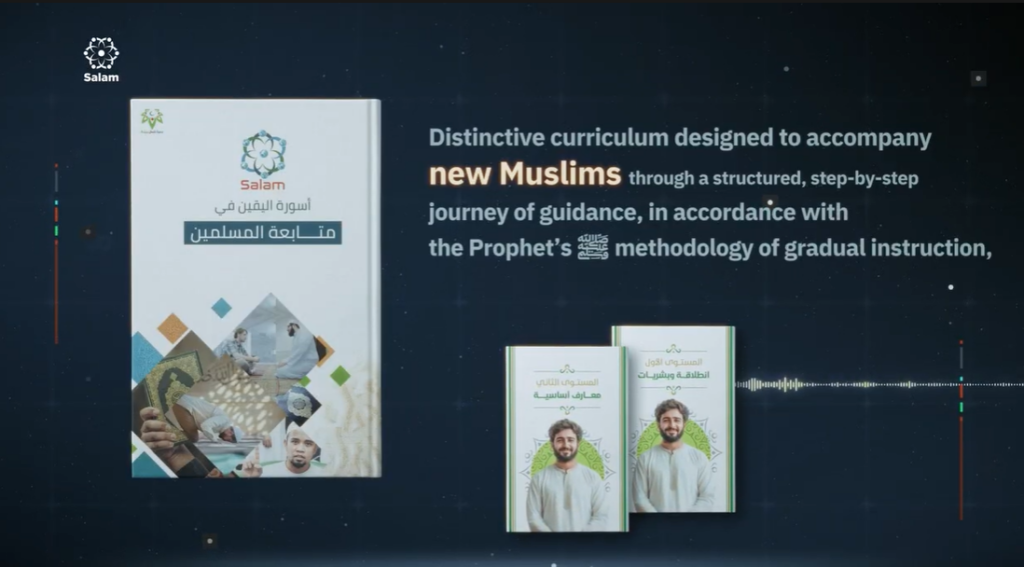
If you’re a new Muslim looking for structure, the Asawirat Al-Yaqeen (Bracelets of Certainty) program was built for exactly this stage. It walks you through:
- Foundational rulings on wudu, ghusl, and salah
- The six pillars of iman and the basics of zakat and sawm
- Sincere repentance and how to move forward without guilt
- The full life and character of the Prophet Muhammad (PBUH)
The Salam Center team is here for general questions too, whether you’re exploring Islam for the first time or simply curious.
Reach out directly to the Salam Center team to start the Asawirat Al-Yaqeen (Bracelets of Certainty) program for FREE.
Summary
Neglecting hijab carries no specific worldly punishment in the Quran, though scholars across the four Sunni schools treat its persistent abandonment as a major sin rooted in explicit divine command. Sincere tawbah remains open to anyone who has fallen short, regardless of how long the struggle has lasted.
A woman’s ultimate fate rests entirely on Allah’s mercy meeting genuine faith and consistent effort, never on a single deed weighed in isolation. Understanding this distinction offers real reassurance without ever diminishing hijab’s status as a genuine, meaningful obligation.
Frequently Asked Questions
Does the Quran state a specific punishment for not wearing hijab?
No. The Quran commands hijab in Quran 24:31 and Quran 33:59 but does not attach a fixed worldly penalty (hadd) to neglecting it, unlike crimes such as theft. The matter is left to Allah’s judgment in the Hereafter, not enforced through worldly legal punishment.
Is not wearing hijab considered haram?
Yes, the majority of Sunni scholars across all four schools of jurisprudence rule that hijab is fard (obligatory), making its deliberate, persistent neglect haram. This is distinct from a woman who is genuinely struggling or in the process of learning her obligations.
Can a woman still enter Jannah if she does not wear hijab?
Entry into Jannah depends on Allah’s mercy responding to sincere faith and overall righteousness, not one isolated action. The Prophet (PBUH) said, “None of you will enter Paradise by his deeds alone… unless Allah grants me His mercy” (Sahih Muslim 2818), meaning no single sin or deed determines a person’s fate in isolation.
What should someone do if they have neglected hijab in the past?
Sincere tawbah (repentance) directly to Allah, combined with genuine intention to change, is the prescribed response. Allah accepts repentance from anyone who returns to Him sincerely, and this sin carries no exception to that general mercy.
Curious about Islam?
Journey towards clarity and purpose. Our team is here to support you in your search for truth and spiritual guidance.
Embrace the Truth