
Scientific Errors in the Quran Answered
| Key Takeaways |
| Every alleged scientific error in the Quran dissolves under careful linguistic and contextual analysis rooted in classical Islamic scholarship. |
| The Quran’s descriptions of human creation reflect sequential, complementary stages — not contradictory accounts — confirmed by modern embryology. |
| The six “days” of creation in the Quran refer to divine periods of immeasurable duration, not 24-hour human days, resolving any perceived conflict with modern cosmology. |
| The verse describing the sun setting in a “muddy spring” narrates visual human perception, a reading confirmed by scholars like al-Qaffal al-Shashi centuries before modern astronomy. |
| The Quran’s use of “zawjayn” (pairs/two kinds) extends beyond male-female biology to encompass all dualities in existence, matching discoveries in cellular biology and particle physics. |
Do scientific errors exist in the Quran? Skeptics have raised this question for centuries, and it deserves a serious, evidence-grounded answer. The short answer, reached through careful study of classical Islamic scholarship and modern science together, is no — the Quran contains no confirmed scientific error.
Every major objection that has circulated, from the stages of human creation to the sunset verse to the pairing of all things, collapses once the Arabic text is read with precision and the relevant scholarly tradition is consulted.
1. Human Creation in the Quran Describes Sequential Stages, Not Contradictory Origins
One of the most common objections points to apparent inconsistency in the Quran’s descriptions of human origins. The Quran mentions creation from clay, water, a drop of fluid, a clot, and dust — sometimes in separate verses. The claim: these cannot all be true simultaneously.
Classical Islamic scholarship resolved this centuries before modern embryology confirmed it. The key is distinguishing between two separate processes: the creation of Adam (peace be upon him), the first human, and the creation of his descendants through biological reproduction.
Adam’s creation passed through sequential material stages. The Quran describes the beginning:
إِنَّ مَثَلَ عِيسَى عِندَ اللَّهِ كَمَثَلِ آدَمَ خَلَقَهُ مِن تُرَابٍ — “Indeed, the likeness of Jesus before Allah is like that of Adam. He created him from dust.” (Quran 3:59).
Earth plus water became clay. Clay transformed into darkened, altered clay — hama’ masnoon. That clay dried without fire into salsaal, resonant hardened clay. Then Allah breathed into it His spirit.
وَلَقَدْ خَلَقْنَا الْإِنسَانَ مِن صَلْصَالٍ مِّنْ حَمَإٍ مَّسْنُونٍ
“And We did certainly create man out of clay from an altered black mud.” (Quran 15:26)
These are stages within one continuous process, not competing accounts.
The Embryological Stages of Human Descendants Match the Quranic Sequence Precisely
For the descendants of Adam, the Quran describes a different but equally sequential process:
وَلَقَدْ خَلَقْنَا الْإِنسَانَ مِن سُلَالَةٍ مِّن طِينٍ ثُمَّ جَعَلْنَاهُ نُطْفَةً فِي قَرَارٍ مَّكِينٍ ثُمَّ خَلَقْنَا النُّطْفَةَ عَلَقَةً فَخَلَقْنَا الْعَلَقَةَ مُضْغَةً فَخَلَقْنَا الْمُضْغَةَ عِظَامًا فَكَسَوْنَا الْعِظَامَ لَحْمًا ثُمَّ أَنشَأْنَاهُ خَلْقًا آخَرَ
“And certainly did We create man from an extract of clay. Then We placed him as a sperm-drop in a firm lodging. Then We made the sperm-drop into a clinging clot, and We made the clot into a lump of flesh, and We made the lump into bones, and We covered the bones with flesh; then We developed him into another creation.” (Quran 23:12–14)
The sequence — nutfah (drop), ‘alaqa (clinging entity), mudgha (chewed-like lump), bones, flesh — aligns with documented stages of human embryonic development.
The Quranic description of embryonic stages corresponds with remarkable precision to what modern science has confirmed. The semen itself is described elsewhere as maa’ maheen — a humble, weak fluid — and as nutfat amshaj — a mixed drop — when the sperm and egg combine:
إِنَّا خَلَقْنَا الْإِنسَانَ مِن نُّطْفَةٍ أَمْشَاجٍ (Quran 76:2).
No contradiction exists across these verses. Each describes a specific phase of a layered, coherent process.
2. The Six Days of Creation Do Not Contradict the Age of the Universe
The Quran states in multiple places that Allah created the heavens and earth in six days. Critics object that science establishes the universe is approximately 13.8 billion years old — far longer than six literal days.
A secondary objection claims that Surah Fussilat (41:9–12) implies eight days, not six.
Both objections rest on a misreading.
A. The Quranic “Day” Is a Divine Period of Unspecified Duration
The Quran itself makes explicit that a “day” in Allah’s reckoning bears no fixed equivalence to a human day:
وَإِنَّ يَوْمًا عِندَ رَبِّكَ كَأَلْفِ سَنَةٍ مِّمَّا تَعُدُّونَ
“And indeed, a day with your Lord is like a thousand years of those which you count.” (Quran 22:47)
The Arabic letter kaf here — meaning “like” — signals comparison, not equation. The duration is placed beyond human calculation. Surah al-Ma’arij further references a day equivalent to fifty thousand years (Quran 70:4).
The Quran’s own language removes any obligation to equate its divine “days” with Earth’s 24-hour rotation.
Billions of years of cosmological development fall within the possible scope of six divine periods, and no contradiction with modern cosmology arises.
B. The “Eight Days” Objection Is Resolved by Classical Arabic Grammar
Surah Fussilat states: the earth was created in two days (41:9); then its sustenance, mountains, and blessings were completed in four days (41:10); then the seven heavens were formed in two days (41:12). A surface reading suggests 2 + 4 + 2 = 8.
Imam al-Qurtubi addressed this directly in his authoritative Al-Jami’ li-Ahkam al-Quran:
“‘In four days’ means in the completion of four days — like saying: ‘I traveled from Basra to Baghdad in ten days, and to Kufa in fifteen’ — meaning in the completion of fifteen, not fifteen additional days.”
Al-Zamakhshari reinforced this in Al-Kashshaf, explaining that the four days represent the total accumulated period including the initial two — not four new days added on top. The calculation is therefore 2 + 2 (completing four) + 2 = 6.
Every verse in the Quran referencing six days of creation is consistent. The objection, as al-Qurtubi concluded, has no foundation in the Arabic text.
Learn More About Islam
Discover the beauty, teachings, and wisdom of Islam in a clear and welcoming way. Start exploring and deepen your understanding today.
Learn More3. The Sunset Verse Describes Visual Human Perception, Not Cosmological Fact
Surah Al-Kahf describes Dhul-Qarnayn reaching the place where the sun sets:
وَجَدَهَا تَغْرُبُ فِي عَيْنٍ حَمِئَةٍ — “he found it setting in a spring of dark mud.” (Quran 18:86).
Critics claim this contradicts the established scientific fact that the sun does not set into any body of water.
The objection misunderstands what the verse is describing. The Quran is narrating what Dhul-Qarnayn found — his visual experience upon reaching the western horizon of the inhabited world.
This is first-person perceptual language, precisely as anyone sitting on a coastal shore at sunset perceives the sun descending into the ocean.
The scholar Abu Bakr al-Qaffal al-Shashi (429–507 AH / 1037–1114 CE), recorded by Imam al-Qurtubi, clarified this centuries ago:
“The intended meaning is not that he actually reached the body of the sun and found it entering a spring — for the sun is far too vast to enter any spring on Earth. Rather, he reached the furthest inhabited western land, and in his visual perception, the sun appeared to set in a muddy spring, just as we observe on flat ground that it appears to enter the earth.”
The verse contains no astronomical claim about the mechanics of the solar system. It records the visual horizon experience of a traveler — the same experience every human being has at sunset.
4. The Quran’s Teaching on Pairs Encompasses All Dualities in Existence
Critics claim the following verse fails when applied to creatures that reproduce asexually, or to species with more than two sexes, or to bacteria.
وَمِن كُلِّ شَيْءٍ خَلَقْنَا زَوْجَيْنِ لَعَلَّكُمْ تَذَكَّرُونَ
“And of all things We created two mates; perhaps you will remember.” (Quran 51:49)
The objection rests on restricting the Arabic word zawjayn to mean exclusively male-and-female biological sex. Classical Arabic lexicons establish that zawj means a pair, a kind, a type, or a counterpart — not solely a biological sex.
The word encompasses any two things that complete or contrast with each other: positive and negative, night and day, motion and rest.
The verse points to the universal principle of duality running through all of creation — a philosophical and scientific truth far broader than biological sex.
Consider the specific objections:
Honeybees: The Quran’s verses on bees (16:68–69) use the feminine verb form throughout — a grammatical precision that modern entomology confirms, since all worker bees performing the tasks described are female. The hive contains male drones, female workers, and a queen — all of which fall within the male-female duality the verse affirms. No contradiction exists.
Asexual organisms: Sea cucumbers, Komodo dragons, and certain sharks reproduce through parthenogenesis, but their cells still contain genetic material that functions through complementary chromosome pairs — the very duality the Quran references. Bacteria replicate by dividing into two — zawjayn — from one. The principle holds.
The Quran’s statement on fruit:
وَمِن كُلِّ الثَّمَرَاتِ جَعَلَ فِيهَا زَوْجَيْنِ اثْنَيْنِ (Quran 13:3)
— every fruit results from the union of pollen and ovum, male and female flower structures. Modern botany confirms that fruit formation requires fertilization through the union of two complementary reproductive elements. The Quran stated this over fourteen centuries before plant reproductive science was formalized.
5. The Bee Verse Matches Apiology, Not Contradicts It
Three objections are raised: that honey does not exit from the bee’s belly; that bees do not eat “fruits”; and that the Quran confines bee habitats to mountains.
وَأَوْحَى رَبُّكَ إِلَى النَّحْلِ أَن اتَّخِذِي مِنَ الْجِبَالِ بُيُوتًا وَمِنَ الشَّجَرِ وَمِمَّا يَعْرِشُونَ ثُمَّ كُلِي مِن كُلِّ الثَّمَرَاتِ فَاسْلُكِي سُبُلَ رَبِّكِ ذُلُلًا يَخْرُجُ مِن بُطُونِهَا شَرَابٌ مُّخْتَلِفٌ أَلْوَانُهُ فِيهِ شِفَاءٌ لِّلنَّاسِ
“And your Lord inspired the bee: ‘Take for yourself among the mountains houses, and among the trees and in that which they construct. Then eat from all the fruits and follow the ways of your Lord laid down for you.’ There emerges from their bellies a drink, varying in colors, in which there is healing for people.” (Quran 16:68–69)
All three collapse on examination.
On the belly: The Quran says sharaab — a drink or fluid — exits from the bee’s belly. This is precisely accurate. Worker bees collect nectar in a specialized honey stomach separate from their digestive stomach. The nectar is processed within this internal organ, mixed with enzymes, and regurgitated as a pre-honey fluid. The Quran says a drink exits from their bellies — it does not say the finished product “honey” drips out fully formed. The process described matches apiology exactly.
On fruits: The objection assumes bees only use flower nectar. Beekeeping research, including published material on HoneyBeeSuite, documents that worker bees harvest from ripe fruits including grapes, peaches, plums, figs, and pears. The Quran says min kulli al-thamaraat — “from all the fruits” — and modern apiology confirms bees do precisely this.
On habitats: The verse lists three habitats: mountains, trees, and mimma ya’rishuun — structures that humans build or raise. This covers wild mountain hives, forest tree colonies, and human-constructed hives. The verse does not restrict bees to mountains — it lists mountains as the first of three named environments.
As for the feminine verb forms used throughout these verses: classical Arabic grammar applies the feminine to bees generically, and modern science confirms that all foraging, nectar-collecting, and honey-producing bees are female workers.
This grammatical precision predates the scientific discovery of bee sex roles by over a millennium.
6. The Quran’s Separation of the Sun from Other Stars Reflects Functional Communication, Not Astronomical Error
Some critics argue that because the Quran mentions the sun and stars separately — as in
وَالشَّمْسَ وَالْقَمَرَ وَالنُّجُومَ مُسَخَّرَاتٍ بِأَمْرِهِ (Quran 7:54)
— it implies the Quran does not recognize the sun as a star, reflecting an ancient cosmological error.
This objection conflates descriptive communication with scientific taxonomy. The Quran addresses human beings on Earth. The sun is the singular star that governs life, time, seasons, and light for every person who has ever lived.
Naming it distinctly from distant stars serves communication, not ignorance. No verse in the Quran states that the sun is not a star or that it belongs to a categorically different class of object.
The Quran invites humanity to reflect on the cosmos repeatedly:
أَفَلَا يَنظُرُونَ إِلَى الْإِبِلِ كَيْفَ خُلِقَتْ وَإِلَى السَّمَاءِ كَيْفَ رُفِعَتْ — an invitation to observe and investigate creation.
The Quran’s function is guidance, not an astronomy textbook, and distinguishing the visible, life-giving sun from distant stars in the sky serves the purpose of directing human reflection without making any taxonomic claim that contradicts science.
Every Objection Follows the Same Pattern
A careful reader will notice that each “scientific error” allegation follows one of three patterns: taking a word’s narrowest possible meaning while ignoring its classical Arabic semantic range; lifting a verse out of its literary and contextual framework; or conflating descriptive language with scientific claims the verse never intended to make.
The Quran itself invites scrutiny:
أَفَلَا يَتَدَبَّرُونَ الْقُرْآنَ وَلَوْ كَانَ مِنْ عِندِ غَيْرِ اللَّهِ لَوَجَدُوا فِيهِ اخْتِلَافًا كَثِيرًا
“Then do they not reflect upon the Quran? If it had been from any other than Allah, they would have found within it much contradiction.” (Quran 4:82)
The challenge stands. Fourteen centuries of sustained scrutiny — including this current era of scientific materialism — have produced no verified contradiction.
What they have produced is a growing library of claimed contradictions, each of which, upon examination, reflects a misreading rather than a genuine flaw.
Read Also: How Is the Quran Organized?
Learn More About Islam
Discover the beauty, teachings, and wisdom of Islam in a clear and welcoming way. Start exploring and deepen your understanding today.
Learn MoreContinue Your Journey with the Salam Platform
These answers represent the intellectual confidence that genuine knowledge of Islam provides. If you found this valuable, there is far more waiting for you.
Explore the full breadth of Islamic thought and belief at the Salam Platform, the content arm of the Salam Center for Da’wah and Dialogue.
Read more grounding articles on the Salam blog — covering faith, science, comparative religion, and the lived questions of seekers and new Muslims.
Have a specific question — about Islam, about faith, or about what you’ve just read? Reach out directly to the Salam Center team. No question is too small, and no seeker is turned away.

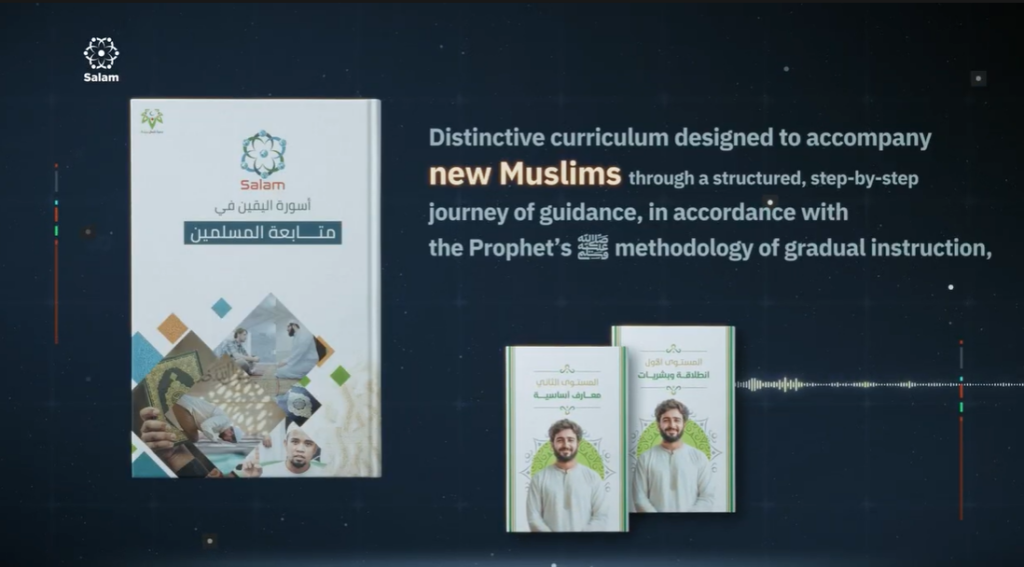
If you have already taken your shahada or are considering Islam, we warmly invite you to join Asawirat Al-Yaqeen (Bracelets of Certainty) — the Salam Center’s structured post-conversion curriculum, implemented with over 114,000 new Muslims across 140 countries:
- Stage One grounds you in the pillars of Islam, the meaning of the shahada, prayer, and purification
- Stage Two deepens your understanding of faith’s six pillars, zakat, fasting, and Hajj
- Stage Three addresses repentance, major sins, and the prophetic biography
- Stage Four equips you to navigate contemporary issues, family life, and intellectual challenges to faith
The curriculum uses therapeutically designed language, professional formatting, and a methodology rooted in gradual, compassionate instruction — following the Prophetic tradition of building certainty step by step.
Reach out directly to the Salam Center team to start the Asawirat Al-Yaqeen (Bracelets of Certainty) program for FREE.
Summary
Every alleged scientific error in the Quran, from the stages of human creation to the six days of creation and the sunset verse, resolves through precise Arabic linguistic analysis and classical Islamic scholarship. The Quran consistently describes stages, dualities, and perceptual realities with a precision that centuries of scrutiny have not overturned.
Frequently Asked Questions
Does the Quran say the sun sets in a muddy spring as a scientific fact?
The verse in Surah Al-Kahf (18:86) narrates Dhul-Qarnayn’s visual perception at the western horizon — the same experience any person has watching a sunset over water. Scholar al-Qaffal al-Shashi confirmed this reading centuries ago. The Quran makes no claim about the sun’s actual mechanics in this passage.
How does the Quran describe human creation if it mentions both clay and sperm?
The Quran distinguishes two separate processes: Adam was created through sequential material stages from earth, water, clay, and hardened clay. His descendants are created through embryonic stages — sperm, clinging clot, lump of flesh, bones, and flesh — as described in Quran 23:12–14. These are complementary accounts, not contradictory ones.
Does the Quran say the universe was created in six 24-hour days?
The Quran’s word yawm (day) in creation contexts refers to divine periods of unspecified duration. Quran 22:47 explicitly states that one day with Allah equals a thousand years by human reckoning, and Quran 70:4 references a day of fifty thousand years. The six periods of creation are compatible with billions of years of cosmological history.
Is the Quran’s description of bees scientifically accurate?
The bee verses in Surah Al-Nahl (16:68–69) use feminine verb forms throughout — confirmed accurate since all foraging bees are female workers. The Quran says a drink exits from bees’ bellies, matching the documented process of nectar processing in the honey stomach. Bees do collect from fruits, as documented in modern apiology. The habitats listed — mountains, trees, and human structures — cover all known bee dwelling environments.
Curious about Islam?
Journey towards clarity and purpose. Our team is here to support you in your search for truth and spiritual guidance.
Embrace the Truth