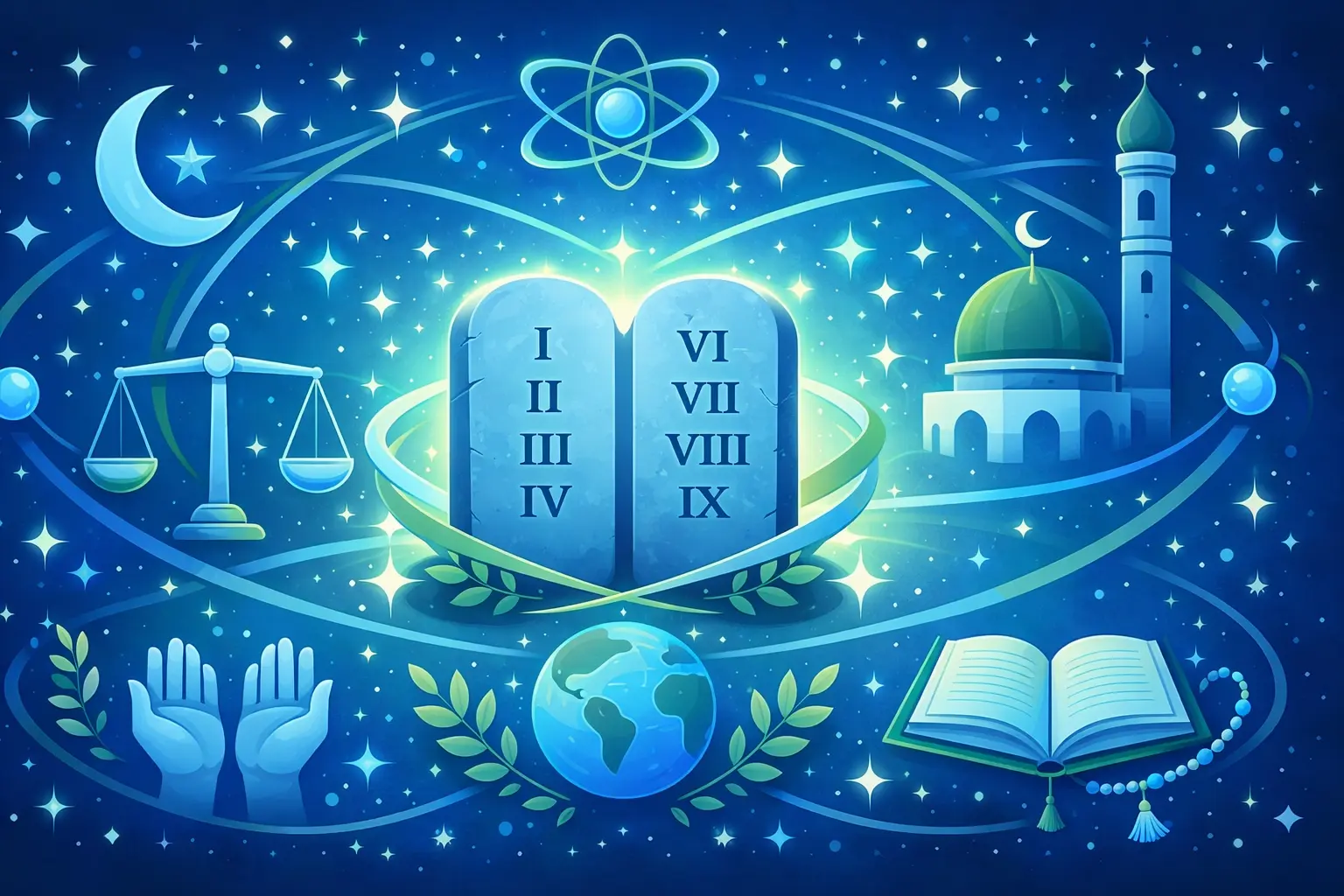
Do Muslims Believe in the Ten Commandments?
| Key Takeaways |
| Muslims accept from the Ten Commandments whatever aligns with the Quran, and reject whatever contradicts it. |
| The Quran affirms the original Torah as a book of guidance and light, while also establishing that portions of it were later altered by human hands. |
| Nine of the Ten Commandments align directly with Quranic verses and authenticated Hadiths — confirming their shared divine origin. |
| The Sabbath commandment reflects a ruling specific to the Children of Israel; the Muslim day of congregational prayer is Friday, not Saturday. |
| Islam preserves the moral core of all previous revelations through the Quran, which functions as a guardian and criterion over earlier scriptures. |
| Believing in all prophets and their original revelations — including Moses and the Torah — is a pillar of Islamic faith, not an optional stance. |
Muslims approach the Ten Commandments as they approach any text in the Torah: whatever aligns with the Quran is accepted as consistent with divine guidance, and whatever contradicts it is rejected — while acknowledging that pinpointing exactly which portions represent the original revelation to Moses (peace be upon him), and which reflect later human alteration, is not something Muslims can determine with certainty.
Do Muslims Believe in the Ten Commandments?
Muslims believe in the most morals embedded in the Ten Commandments. Muslims hold a clear and consistent position toward the Ten Commandments — the same position they hold toward any passage in the Torah: what aligns with the Quran is accepted, and what contradicts it is rejected.
Belief in the Torah as an originally divine book is a pillar of Islamic faith, but Muslims cannot determine with certainty which portions of the existing text preserve the original revelation to Moses (peace be upon him) and which reflect later distortion.
Allah says in the Quran:
كُلٌّ آمَنَ بِاللَّهِ وَمَلَائِكَتِهِ وَكُتُبِهِ وَرُسُلِهِ لَا نُفَرِّقُ بَيْنَ أَحَدٍ مِّن رُّسُلِهِ
“All of them have believed in Allah and His angels and His books and His messengers, saying, ‘We make no distinction between any of His messengers.'” (Quran 2:285)
A Muslim who rejects Prophet Moses (peace be upon him) or the authentic revelation he received has stepped outside the bounds of Islamic belief entirely.
The Prophet Muhammad (PBUH) further instructed:
“Do not believe the People of the Book, and do not disbelieve them — say: ‘We believe in Allah and what has been revealed to us.'” (Sahih Bukhari, 4485)
This narration establishes a precise methodology. Muslims approach the existing biblical text with neither wholesale acceptance nor wholesale rejection.
Where its content aligns with the Quran and the Sunnah, it reflects the original truth. Where it contradicts them, it carries the marks of later alteration — a reality the Quran itself names:
مِّنَ الَّذِينَ هَادُوا يُحَرِّفُونَ الْكَلِمَ عَن مَّوَاضِعِهِ
“Among the Jews are those who distort words from their proper usages.” (Quran 4:46)
With that framework established, examining each commandment reveals exactly where the original divine guidance shines through — and where the distortion entered.
1. Worship Allah Alone — No Other Gods
The first commandment states: “You shall have no other gods before Me.” This principle aligns completely with the Quran and is accepted in Islam on that basis.
This is the foundation upon which every prophet built his message. Every messenger Allah sent to humanity carried a single primary call — to worship Allah alone and reject all rivals to that worship. The Quran states:
وَاعْبُدُوا اللَّهَ وَلَا تُشْرِكُوا بِهِ شَيْئًا
“Worship Allah and associate nothing with Him.” (Quran 4:36)
Monotheism — Tawhid in Islamic theology — is the bedrock of Islamic belief and the very purpose of all prophetic missions. The Islamic understanding of how Islam views the nature of Allah begins precisely here: one Creator, without partners, without rivals, without equals.
2. Make No Idols and Bow to No Images
The prohibition against idol worship in this commandment aligns fully with the Quran and is accepted on that basis.
The Quran addresses idol worship with striking directness, including a specific reminder to the Children of Israel about the moment they demanded a god like the idols of the nations they passed:
وَجَٰوَزْنَا بِبَنِىٓ إِسْرَٰٓءِيلَ ٱلْبَحْرَ فَأَتَوْا۟ عَلَىٰ قَوْمٍ يَعْكُفُونَ عَلَىٰٓ أَصْنَامٍ لَّهُمْ ۚ قَالُوا۟ يَٰمُوسَى ٱجْعَل لَّنَآ إِلَٰهًا كَمَا لَهُمْ ءَالِهَةٌ ۚ قَالَ إِنَّكُمْ قَوْمٌ تَجْهَلُونَ ﴿١٣٨﴾ إِنَّ هَٰٓؤُلَآءِ مُتَبَّرٌ مَّا هُمْ فِيهِ وَبَٰطِلٌ مَّا كَانُوا۟ يَعْمَلُونَ
“And We took the Children of Israel across the sea; then they came upon a people intent in devotion to [some] idols of theirs. They said, “O Moses, make for us a god just as they have gods.” He said, “Indeed, you are a people behaving ignorantly. (138) Indeed, those [worshippers] – destroyed is that in which they are [engaged], and worthless is whatever they were doing.”‘” (Quran 7:138–139)
The Quran also warns of the painful consequence awaiting those who turn to idols and the relationships built around false worship:
ثُمَّ يَوْمَ الْقِيَامَةِ يَكْفُرُ بَعْضُكُمْ بِبَعْضٍ وَيَلْعَنُ بَعْضُكُمْ بَعْضًا وَمَأْوَاكُمُ النَّارُ
“Then on the Day of Resurrection you will deny one another and curse one another, and your refuge will be the Fire.” (Quran 29:25)
The second commandment’s prohibition is a complete match with Islamic teaching. The concept of polytheism is treated in Islam as the one unforgivable sin if carried to death unrepented.
Have Questions About Islam?
Our team is ready to answer your questions clearly and respectfully. Ask freely and receive honest guidance.
Ask Us Now3. Do Not Take the Name of Allah in Vain
The principle of the third commandment aligns with the Quran and is accepted accordingly.
Islam treats false oaths sworn by Allah’s name as a grave sin.
وَلَٰكِن يُؤَاخِذُكُم بِمَا عَقَّدتُّمُ ٱلْأَيْمَٰنَ
“He will impose blame upon you for [breaking] what you intended of oaths.” (Quran 5:89)
The reverence Islam shows for Allah’s name — in supplication, in remembrance, in every invocation of Bismillah — reflects the living spirit of this commandment. The third commandment, in its original form, is wholly affirmed.
4. Honor the Sabbath and Keep It Holy — The Point of Divergence
The fourth commandment instructs keeping the seventh day — Saturday — as a day of rest and sanctity, grounding this in the six days of creation and Allah’s rest on the seventh.
This commandment is where Islamic teaching diverges — on two distinct levels.
The first divergence concerns the day itself. The Sabbath was a ruling specific to the Children of Israel, not a universal obligation carried into all subsequent revelations.
The Prophet (PBUH) explained:
“Allah led astray from Friday those who came before us. The Jews had Saturday and the Christians had Sunday. Then Allah brought us and guided us to Friday. So Friday, Saturday, and Sunday — and likewise they will follow us on the Day of Resurrection. We are the last of the people of this world and the first on the Day of Resurrection, judged before all creation.” (Sahih Muslim, 856)
The second divergence is more serious. The commandment attributes fatigue to Allah — stating that He rested after creation. Islamic theology rejects this absolutely. Allah says:
وَلَقَدْ خَلَقْنَا السَّمَاوَاتِ وَالْأَرْضَ وَمَا بَيْنَهُمَا فِي سِتَّةِ أَيَّامٍ وَمَا مَسَّنَا مِن لُّغُوبٍ
“And We did certainly create the heavens and earth and what is between them in six days, and no weariness touched Us.” (Quran 50:38)
This is a textbook example of the distortion the Quran warns about. The original revelation from Allah could never have attributed tiredness to Him.
This element entered the text through human alteration. The Quran — as the Furqan, the criterion separating truth from falsehood — identifies it clearly.
5. Honor Your Father and Mother
The fifth commandment commands honoring one’s parents, promising long life on the earth as its reward.
Few values receive more consistent emphasis in the Quran than this one. Allah pairs the command to worship Him alone with the command to honor parents — in the same breath, in the same verse:
وَقَضَى رَبُّكَ أَلاَّ تَعْبُدُواْ إِلاَّ إِيَّاهُ وَبِالْوَالِدَيْنِ إِحْسَاناً إِمَّا يَبْلُغَنَّ عِندَكَ الْكِبَرَ أَحَدُهُمَا أَوْ كِلاَهُمَا فَلاَ تَقُل لَّهُمَا أُفٍّ وَلاَ تَنْهَرْهُمَا وَقُل لَّهُمَا قَوْلاً كَرِيماً وَاخْفِضْ لَهُمَا جَنَاحَ الذُّلِّ مِنَ الرَّحْمَةِ وَقُل رَّبِّ ارْحَمْهُمَا كَمَا رَبَّيَانِي صَغِيراً
“Your Lord has decreed that you worship none but Him, and that you be good to parents. Whether one or both of them reach old age with you, say not to them ‘uff,’ nor repel them, but speak to them a noble word. And lower to them the wing of humility out of mercy, and say: ‘My Lord, have mercy upon them as they raised me when I was small.'” (Quran 17:23–24)
The fifth commandment stands fully confirmed in Islam — and the Quran’s expression of it surpasses the original in depth and tenderness.
6. Do Not Kill
The sixth commandment prohibits murder. Islam affirms this with unambiguous force:
وَلَا تَقْتُلُوا النَّفْسَ الَّتِي حَرَّمَ اللَّهُ إِلَّا بِالْحَقِّ
“Do not kill the soul which Allah has forbidden, except in justice.” (Quran 17:33)
The Islamic prohibition on unlawful killing extends beyond a legal ruling — it reflects a worldview in which every human soul carries inherent sanctity by divine decree.
7. Do Not Commit Adultery
The seventh commandment forbids adultery. The Quran not only prohibits the act but seals off the path leading to it:
وَلَا تَقْرَبُوا الزِّنَا ۖ إِنَّهُ كَانَ فَاحِشَةً وَسَاءَ سَبِيلًا
“Do not approach unlawful sexual intercourse. Indeed, it is ever an immorality and is evil as a way.” (Quran 17:32)
The Quran’s phrasing — do not approach — goes further than merely forbidding the act itself. It forecloses the steps, the contexts, and the gradual moral erosion that lead there. The seventh commandment is fully affirmed and reinforced.
8. Do Not Steal
The eighth commandment prohibits theft. Islam affirms this and establishes a deterrent to protect people’s property and social trust:
وَالسَّارِقُ وَالسَّارِقَةُ فَاقْطَعُواْ أَيْدِيَهُمَا جَزَاء بِمَا كَسَبَا نَكَالاً مِّنَ اللّهِ
“As for the thief, the male and the female, amputate their hands in recompense for what they committed as a deterrent from Allah.” (Quran 5:38)
The Prophet (PBUH) also included this prohibition in the foundational pledge of faith he took from his companions:
“Give me your pledge that you will not associate anything with Allah, that you will not steal, that you will not commit adultery.” (Sahih Bukhari, 18; Sahih Muslim, 1709)
9. Do Not Bear False Witness
The ninth commandment forbids giving false testimony. Islam places this among the gravest of major sins.
The Prophet (PBUH) was asked about the greatest sins and responded: “Associating partners with Allah, and disobeying parents.” Then he sat upright and said: “And false speech! And false testimony! And false speech! And false testimony!” — and he repeated it so many times that the narrator said: “I thought he would never stop.” (Sahih Bukhari, 5976; Sahih Muslim, 87)
The Quran describes the true believers as those who:
وَالَّذِينَ لا يَشْهَدُونَ الزُّورَ وَإِذَا مَرُّوا بِاللَّغْوِ مَرُّوا كِرَاماً
“Those who do not testify to falsehood, and when they pass by ill speech, they pass by with dignity.” (Quran 25:72)
Read also: Do Muslims Believe In The Virgin Birth Of Jesus?
10. Do Not Covet What Belongs to Others
The tenth commandment forbids coveting another person’s home, spouse, servants, animals, or possessions. Islam traces moral accountability to its source — not just the external act but the internal inclination of the heart. Allah says:
إِنَّ السَّمْعَ وَالْبَصَرَ وَالْفُؤَادَ كُلُّ أُولَٰئِكَ كَانَ عَنْهُ مَسْئُولًا
“Indeed, the hearing, the sight, and the heart — about all those, one will be questioned.” (Quran 17:36)
This verse captures the Islamic understanding that the soul is accountable for what it nurtures within itself. Covetousness — the desire to possess what Allah has given to another — is a moral failing the Quran addresses at the level of the heart, which is exactly where the tenth commandment locates it. This principle aligns with the Quran and is accepted on that basis.
Read also: Do Muslims Believe In The New Testament?
The Quran as Criterion Over All Previous Revelations
Muslims approach texts like the Ten Commandments through the lens of the Quran, which Allah describes with a precise dual role:
وَأَنزَلْنَا إِلَيْكَ الْكِتَابَ بِالْحَقِّ مُصَدِّقًا لِّمَا بَيْنَ يَدَيْهِ مِنَ الْكِتَابِ وَمُهَيْمِنًا عَلَيْهِ
“And We have revealed to you the Book in truth, confirming that which preceded it of the Scripture and as a criterion over it.” (Quran 5:48)
Musaddiq — confirming: the Quran validates what was originally true in earlier revelations. Muhaymin — a guardian criterion: the Quran identifies what human hands later altered. This is how Islam views other religions and their scriptures — with respect for the divine origin, and clarity about the human distortions that followed.
The Quran does not discard the legacy of Moses (peace be upon him). It honors it, purifies it, and preserves its moral core for all of humanity. Everything genuinely beneficial in the Torah finds its place within the Quran — meaning believers in the final revelation have access to the complete, protected inheritance of all prophetic guidance.
Understanding what Muslims believe about the Quran helps explain why this preservation matters so profoundly, and why Muslims believe in the Quran as the final, uncorrupted divine word.
The Prophet (PBUH) permitted Muslims to narrate from the People of the Book — “Narrate from the Children of Israel, and there is no harm in that” (Sahih Bukhari, 3461) — precisely because the tradition of earlier revelation contains real light.
The Quran is the filter through which that light is separated from what human intervention obscured.
Have Questions About Islam?
Our team is ready to answer your questions clearly and respectfully. Ask freely and receive honest guidance.
Ask Us NowLearn More Authentic Knowledge About Islam with Salam
If this article has opened a door for you — whether you are exploring Islam for the first time or deepening your understanding after your conversion — the Salam Center is here to walk that path with you.
Browse the Salam Platform for articles grounded in authentic Islamic scholarship, covering belief, worship, ethics, and answers to the most sincere questions about this faith.
Visit the Salam blog for a growing library of topics explored with the same depth and clarity.
Reach out directly if you have a question, want to learn how to enter Islam, or simply need someone to speak with — you will find a warm, knowledgeable team ready to help.
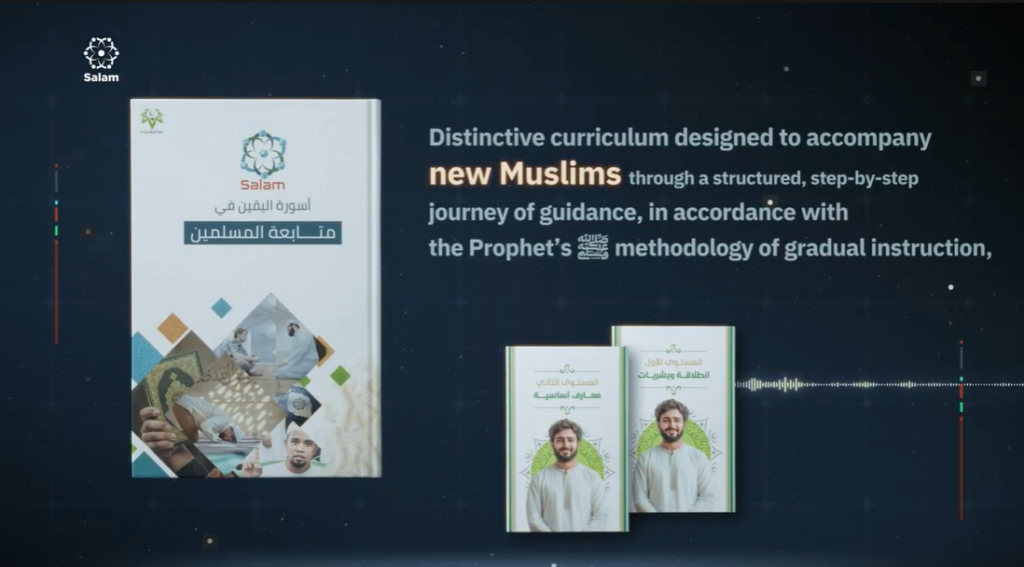
For new Muslims specifically, the Salam Center offers Asawirat Al-Yaqeen (Bracelets of Certainty) — a structured, four-stage curriculum designed to guide you through your post-conversion journey with clarity and confidence:
- Stage One — The Foundation: Learn the Shahada, the pillars of Islam, and essential acts of worship including prayer, purification, and fasting
- Stage Two — The Construction Phase: Deepen your understanding of the six pillars of faith and the life of Prophet Muhammad (PBUH)
- Stage Three — The Consolidation Phase: Build moral character through the ethics of the heart, repentance, and practical life guidance
- Stage Four — The Empowerment Phase: Engage contemporary questions about Islam, the Quran, and your personal roadmap forward
The curriculum has already guided over 114,000 new Muslims across 140 countries. It is built not to overwhelm — but to carry you, one bracelet at a time, toward Yaqeen: certainty that settles in the heart and stays.
Reach out directly to the Salam Center team to start the Asawirat Al-Yaqeen (Bracelets of Certainty) program for FREE.
Conclusion
Muslims approach the Ten Commandments with the same clear standard they apply to all Torah texts: align with the Quran and it is accepted; contradict it and it is rejected. Faith in the original Torah as divine revelation is a pillar of Islam, though Muslims do not claim certainty about which specific passages in the existing text preserve the words originally revealed to Moses (peace be upon him).
Nine of the ten commandments align fully with Quranic verses and authenticated Hadiths — covering worship of Allah alone, rejection of idols, honoring parents, prohibitions on murder, adultery, theft, false testimony, and covetousness — confirming their shared divine origin across all prophetic traditions.
The Quran serves as both a confirmation of what was originally true in earlier scriptures and a guardian criterion that identifies later human distortions, preserving the moral legacy of Moses (peace be upon him) for all of humanity in its final, protected form.
Frequently Asked Questions
Are the Ten Commandments mentioned in the Quran?
The Quran does not present a numbered list called "the Ten Commandments," but it addresses every moral principle they contain. Prohibitions on murder, adultery, theft, false testimony, idolatry, and false oaths — along with commands to honor parents and worship Allah alone — all appear in the Quran with their own Quranic verses and often with greater elaboration than the biblical text provides.
What is the Islamic view of the Torah today?
Islam holds that the Torah was originally a divine book of guidance and light. Today, the existing Torah contains both preserved authentic content and elements altered by human hands across centuries. Muslims do not treat the entire biblical text as corrupted, nor do they accept it wholesale. The Quran functions as the criterion — confirming what remains true and identifying what was changed. Muslims who want the complete, uncorrupted inheritance of Mosaic guidance find it preserved within the Quran itself.
Does believing in the Ten Commandments mean Muslims and Jews share the same religion?
All Abrahamic prophetic missions originated from the same divine source — Allah — which is why shared moral principles appear across them. Muslims acknowledge this shared origin with respect and without embarrassment. The difference lies in completion and preservation: Islam is the final and complete revelation, the Quran is the only divine book preserved without alteration, and Prophet Muhammad (PBUH) is the seal of all prophets. Shared moral foundations reflect the consistency of divine guidance —they do not collapse the distinction between the final revelation and earlier ones that were subject to alteration
Curious about Islam?
Journey towards clarity and purpose. Our team is here to support you in your search for truth and spiritual guidance.
Embrace the Truth