The Difference Between the Quran and the Bible
| Key Takeaways |
| The Quran is the direct, verbatim word of Allah revealed to Prophet Muhammad (PBUH) over approximately 23 years, preserved without alteration to this day. |
| The Bible, as it exists today, is a collection of texts written by multiple human authors across centuries, subject to revision, translation, and documented textual changes. |
| Muslims believe in the original revelations given to Jesus and Moses (peace be upon them), but hold that those scriptures were altered by human hands before the Quran was sent to restore and preserve divine guidance. |
| The Quran and the Bible share certain prophets, moral themes, and references to earlier revelation, but diverge fundamentally on the nature of Allah, the identity of Jesus, and the authority and preservation of the text. |
| The Quran addresses the Bible, confirming what remained true in earlier scriptures while correcting what had been distorted through human intervention. |
Muslims believe in every prophet Allah sent and in every book He revealed — including the Torah given to Moses and the Gospel given to Jesus (peace be upon them both). So when someone asks whether the Quran and the Bible are essentially the same, or whether one replaces the other, the answer requires precision, not a simple yes or no.
The Quran is the final, perfectly preserved word of Allah. The Bible, as it circulates today, is a collection of human-written texts — some containing remnants of earlier divine revelation, others representing the theological opinions and historical accounts of their authors.
1. The Quran and the Current Bible Differ in Their Origin and Divine Authorship
The Quran has a singular, unambiguous authorship: Allah alone. The Quran was revealed to Prophet Muhammad (PBUH) through the Angel Jibreel (Gabriel) over a period of approximately 23 years, beginning in 610 CE. Every single word in the Quran is directly from Allah — not paraphrased, not interpreted, and not filtered through the Prophet’s own thinking.
Allah says in the Quran:
وَإِنَّهُ لَتَنزِيلُ رَبِّ الْعَالَمِينَ نَزَلَ بِهِ الرُّوحُ الْأَمِينُ عَلَىٰ قَلْبِكَ لِتَكُونَ مِنَ الْمُنذِرِينَ
“And indeed, the Quran is the revelation of the Lord of the worlds. The Trustworthy Spirit has brought it down upon your heart, so that you may be of the warners.” (Quran 26:192–194)
The altered Bible, as it exists today, is composed of texts written by human beings — disciples, historians, and letter-writers — across more than a thousand years.
The Old Testament contains writings attributed to multiple prophets and scribes.
The New Testament includes the four Gospels (Matthew, Mark, Luke, and John), none of which claim to be the direct speech of Jesus himself, but rather accounts written by his followers years after his departure.
Biblical scholars have extensively documented that the four Gospels were composed between 65 and 100 CE — decades after the events they describe — and that their authorship remains a subject of ongoing scholarly debate.
2. The Question of Preservation Between the Quran and the Bible
One of the most important differences between the Quran and the Bible concerns textual integrity. The Quran is the only scripture in human history that has remained completely unchanged from the moment of its revelation to today. Allah Himself guaranteed its preservation:
إِنَّا نَحْنُ نَزَّلْنَا الذِّكْرَ وَإِنَّا لَهُ لَحَافِظُونَ
“Indeed, it is We who sent down the message, and indeed, We will be its guardian.” (Quran 15:9)
The Quran was memorized by thousands of companions during the Prophet’s own lifetime, written down simultaneously, and formally compiled under the Caliph Abu Bakr (may Allah be pleased with him) and then standardized under the Caliph Uthman ibn Affan (may Allah be pleased with him).
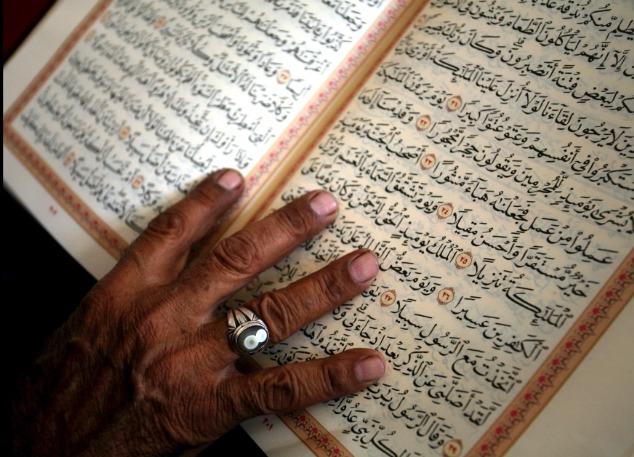
Today, millions of Muslims worldwide have memorized the entire Quran word for word — a living chain of preservation unlike any other religious text. For a deeper look at what Muslims believe about the Quran and its unique status, that distinction in preservation stands at its core.
The Bible’s history is strikingly different. The original manuscripts of the Bible — in Hebrew, Aramaic, and Greek — no longer exist. What scholars work with are copies of copies, spanning thousands of manuscripts that contain well-documented variations.
Have Questions About Islam?
Our team is ready to answer your questions clearly and respectfully. Ask freely and receive honest guidance.
Ask Us Now3. The Nature of God Between The Quran and the Bible
Perhaps the sharpest doctrinal difference between the Quran and the Bible lies in the concept of God in Islam versus the Trinitarian understanding found in mainstream Christianity.
The Quran presents an absolute, uncompromising monotheism:
قُلْ هُوَ اللَّهُ أَحَدٌ اللَّهُ الصَّمَدُ لَمْ يَلِدْ وَلَمْ يُولَدْ وَلَمْ يَكُن لَّهُ كُفُوًاأَحَدٌ
“Say, ‘He is Allah, [who is] One, Allah, the Eternal Refuge. He neither begets nor is born, nor is there to Him any equivalent.'” (Quran 112:1–4)
Allah has no son, no partner, no equal, and no physical form. This is the foundational message of every prophet from Adam to Muhammad (peace be upon them all).
The Quran explicitly and emphatically rejects the doctrine of the Trinity and the divinity of Jesus:
لَّقَدْ كَفَرَ الَّذِينَ قَالُوا إِنَّ اللَّهَ ثَالِثُ ثَلَاثَةٍ ۚ وَمَا مِنْ إِلَٰهٍ إِلَّا إِلَٰهٌ وَاحِدٌ
“They have certainly disbelieved who say, ‘Allah is the third of three.’ And there is no deity except one deity.” (Quran 5:73)
The Bible’s position on the nature of God is more complex. The Old Testament presents a monotheistic portrait of the divine. The New Testament — particularly the Gospel of John and the letters of Paul — contains passages that formed the basis of the later Trinitarian doctrine, which was formally codified at the Council of Nicaea in 325 CE, centuries after Jesus (peace be upon him).
The Council of Nicaea was a human theological council — not a revelation — and its conclusions reflect the human interpretation of scripture, not divine dictation.
4. The Quran and the Bible Are Different in Their View of Jesus
Both the Quran and the Bible affirm the miraculous birth of Jesus to the Virgin Mary (peace be upon her). Both affirm that he performed miracles. The divergence is decisive on his identity and ultimate fate.
The Quran presents Jesus (Isa, peace be upon him) as one of the greatest prophets and messengers of Allah — born of a virgin, given the Gospel (Injeel), capable of raising the dead by Allah’s permission, and the promised Messiah. He was not crucified; Allah saved him and raised him up:
وَقَوْلِهِمْ إِنَّا قَتَلْنَا ٱلْمَسِيحَ عِيسَى ٱبْنَ مَرْيَمَ رَسُولَ ٱللَّهِ وَمَا قَتَلُوهُ وَمَا صَلَبُوهُ وَلَٰكِن شُبِّهَ لَهُمْ ۚ وَإِنَّ ٱلَّذِينَ ٱخْتَلَفُوا۟ فِيهِ لَفِى شَكٍّ مِّنْهُ ۚ مَا لَهُم بِهِۦ مِنْ عِلْمٍ إِلَّا ٱتِّبَاعَ ٱلظَّنِّ ۚ وَمَا قَتَلُوهُ يَقِينَۢا
“And [for] their saying, “Indeed, we have killed the Messiah, Jesus, the son of Mary, the messenger of Allah.” And they did not kill him, nor did they crucify him; but [another] was made to resemble him to them. And indeed, those who differ over it are in doubt about it. They have no knowledge of it except the following of assumption. And they did not kill him, for certain.” (Quran 4:157)
The Bible — specifically the New Testament — presents Jesus as the Son of God, crucified, and resurrected. Paul’s letters in particular develop a theology of atonement through the crucifixion, a concept the Quran rejects entirely.
Both the Quran and the sound Islamic scholarly tradition affirm that Jesus himself never claimed divinity — it was a doctrine developed by his followers after him.
The Quran also specifically points out that Jesus foretold the coming of Prophet Muhammad (PBUH):
وَإِذْ قَالَ عِيسَى ابْنُ مَرْيَمَ يَا بَنِي إِسْرَائِيلَ إِنِّي رَسُولُ اللَّهِ إِلَيْكُم مُّصَدِّقًا لِّمَا بَيْنَ يَدَيَّ مِنَ التَّوْرَاةِ وَمُبَشِّرًا بِرَسُولٍ يَأْتِي مِن بَعْدِي اسْمُهُ أَحْمَدُ
“And when Jesus, the son of Mary, said, ‘O children of Israel, indeed I am the messenger of Allah to you, confirming what came before me of the Torah and bringing good tidings of a messenger to come after me, whose name is Ahmad.'” (Quran 61:6)
5. The Quran and the Bible Differ in Structure and Content
The Quran consists of 114 surahs (chapters) containing 6,236 verses, composed in classical Arabic. Every surah except one opens with the Basmala: Bismillah ir-Rahman ir-Raheem (“In the name of Allah, the Most Gracious, the Most Merciful”). The Quran covers theology, law, ethics, history, eschatology, and spiritual guidance — all in a single, unified book.
The Bible, by comparison, is a compilation of 66 books in Protestant Christianity (73 in Catholicism), written in Hebrew, Aramaic, and Greek. It is divided into the Old Testament and the New Testament. The Old Testament contains the Torah, the Psalms, the writings of the Prophets, and historical books. The New Testament contains the four Gospels, the Acts of the Apostles, the Epistles (letters), and the Book of Revelation.
In terms of length, the Quran is considerably shorter than the full Bible. The Quran contains approximately 77,430 words in Arabic, while the Bible in English contains roughly 788,000 words in its Protestant form. The Quran’s relative concision is part of its miraculous nature — its depth and legal content are compressed into a text that can be memorized in its entirety.
Summary Chart of The Difference Between the Quran and the Bible
| Feature | The Quran | The Bible |
| Authorship | Direct word of Allah | Multiple human authors |
| Language of revelation | Classical Arabic | Hebrew, Aramaic, and Greek |
| Number of books/surahs | 114 surahs (one book) | 66–73 books (compilation) |
| Preservation status | Unchanged since revelation | Thousands of documented manuscript variants |
| Guarantee of preservation | Explicitly guaranteed by Allah (15:9) | No divine guarantee of textual preservation |
| View of Jesus | Prophet and Messiah — not divine | Son of God, crucified and resurrected |
| Concept of God | Absolute monotheism (Tawheed) | Monotheism (OT); Trinity (NT Christianity) |
| Legal content | Extensive (worship, commerce, family, ethics) | Extensive in Torah; limited in NT |
| Duration of revelation | ~23 years | ~1,500 years of composition |
| Oral memorization tradition | Living — millions of Huffadh worldwide | No equivalent living memorization tradition |
What Does the Quran Say About the Bible and Earlier Scriptures?
The Quran’s relationship with earlier scriptures is nuanced and must be understood correctly. Islam does not dismiss the Torah and the Gospel. Rather, it affirms that they were genuine revelations from Allah in their original forms. The Quran confirms what remained authentic and corrects what was altered.
وَأَنزَلْنَا إِلَيْكَ الْكِتَابَ بِالْحَقِّ مُصَدِّقًا لِّمَا بَيْنَ يَدَيْهِ مِنَ الْكِتَابِ وَمُهَيْمِنًا عَلَيْهِ
“And We have revealed to you the Book in truth, confirming that which preceded it of the Scripture and as a criterion over it.” (Quran 5:48)
The Arabic word muhayminan — often translated as “a guardian” or “a criterion” — means that the Quran stands as a judge over all previous scriptures.
Where a passage in the Bible aligns with what the Quran affirms, it reflects a remnant of the original revelation.
Where it contradicts the Quran’s clear teachings, Islamic scholarship treats it as a result of the documented human alteration of those texts.
The Quran explicitly references this alteration:
فَبِمَا نَقْضِهِم مِّيثَاقَهُمْ لَعَنَّاهُمْ وَجَعَلْنَا قُلُوبَهُمْ قَاسِيَةً ۖ يُحَرِّفُونَ الْكَلِمَ عَن مَّوَاضِعِهِ وَنَسُوا۟ حَظًّا مِّمَّا ذُكِّرُوا۟ بِهِ
“So for their breaking of the covenant We cursed them and made their hearts hard. They distort words from their [proper] usages and have forgotten a portion of that of which they were reminded..” (Quran 5:13)
This is not a claim invented by Muslim polemicists — it is a Quranic declaration, and it aligns remarkably with what Western biblical scholars themselves have established through textual criticism.
For a fuller understanding of how Islam views other religions and their scriptures, this principle of confirmed revelation followed by human alteration, followed by the Quran as the final restorer, is central.
Similarities Between the Quran and the Bible
Despite their profound differences, certain similarities between the Quran and the Bible reflect the reality that both trace back to a single divine source — Allah — who sent prophets throughout history with a consistent core message.
Both scriptures share:
1. Shared prophets
Adam, Noah, Abraham, Moses, David, Solomon, Elijah, and Jesus (peace be upon them all) appear in both. The Quran’s accounts often differ in detail from the Biblical accounts, with the Quran’s versions considered the preserved, accurate record.
2. Monotheism as the core message
The central call of every prophet in both scriptures — in their original form — was to worship Allah alone. The Quran treats this as the unbroken thread of all revelation.
3. Moral and ethical teachings
Honesty, justice, care for the poor, parental respect, the prohibition of murder and adultery — these principles appear in both scriptures because they come from the same divine source.
4. The Day of Judgment
Both scriptures affirm that human beings will be held accountable before Allah on a final day. The Quran develops this in extensive detail; the Bible also affirms judgment, though theological frameworks differ.
5. The story of Mary
Maryam (peace be upon her) occupies a uniquely elevated position in the Quran — she is the only woman named in the Quran, and an entire surah (Surah 19) bears her name. Her piety, her miraculous conception, and the birth of Jesus are affirmed in both scriptures.
These similarities confirm the Islamic principle that all prophets came with the same fundamental message, even as their specific laws differed.
The core principles of Islam — including belief in all revealed scriptures and all prophets — place the Quran as the completion and culmination of a long chain of divine guidance.
Why Do Muslims Believe the Quran Is the Final and Preserved Word of Allah?
The Islamic position on the Quran’s authority rests on several interlocking pillars, each grounded in evidence.
1. The Quran’s linguistic miracle
The Quran challenged the greatest Arab poets and orators of the 7th century to produce even a single surah comparable to it — and they could not. This challenge remains open to this day.
Scholars of classical Arabic, including non-Muslim Arabists, have consistently remarked on the Quran’s unparalleled literary and linguistic perfection.
2. The Quran’s internal consistency
The Quran was revealed over 23 years, in vastly different circumstances — times of war, peace, persecution, and triumph — and yet contains no internal contradictions. Allah draws attention to this:
أَفَلَا يَتَدَبَّرُونَ الْقُرْآنَ ۚ وَلَوْ كَانَ مِنْ عِندِ غَيْرِ اللَّهِ لَوَجَدُوا فِيهِ اخْتِلَافًا كَثِيرًا
“Then do they not reflect upon the Quran? If it had been from other than Allah, they would have found within it much contradiction.” (Quran 4:82)
Third, its scientific and historical accuracy — an accuracy that could not have been the product of a 7th-century human author — is documented extensively by scholars in the field of Islamic studies worldwide.
For a deeper look at why Muslims believe in the Quran, these arguments are developed fully with scholarly sourcing.
Read Also: The Quran vs. The Torah
Is the Quran the Same as the Bible?
No — the Quran and the Bible are not the same, in origin, preservation, theology, or authority. They share a common divine lineage in the sense that all true prophets came from Allah, but the Quran is the final, preserved, and unaltered revelation, while the Bible as it exists today has passed through documented human alteration across its history.
A Muslim affirms the original Gospel revealed to Jesus (peace be upon him) — the Injeel — as a true revelation from Allah.
What that Muslim cannot affirm is that the current New Testament is that original Gospel, given the historical evidence of its composition, its divergence from the Quran’s clear teachings, and the documented variance across thousands of surviving manuscripts.
The Quran was sent precisely to correct and complete what came before it. The Prophet Muhammad (PBUH) is reported to have said:
“My similitude in comparison with the other prophets before me is that of a man who has built a house completely and excellently except for a place of one brick. When the people see the house, they admire its beauty and say, ‘Would that this brick be put in its place!’ So I am that brick, and I am the last of the prophets.” (Sahih al-Bukhari, 3535; Sahih Muslim, 2286)
Have Questions About Islam?
Our team is ready to answer your questions clearly and respectfully. Ask freely and receive honest guidance.
Ask Us NowRead Also: When Was the Bible Written Compared to the Quran?
Learn More About Islam and Its Scripture with Salam
If this comparison has opened questions in your heart — or if you are on a journey toward understanding Islam more deeply — the Salam Center is here to walk alongside you.
Explore more on the Salam Platform, where you’ll find grounded, evidence-based articles on Islamic belief, practice, and answers to the questions seekers ask most.
Browse the Salam blog for more in-depth articles on faith, the Quran, the prophets, and the pillars of Islamic belief.
Have a specific question? Reach out directly — to our team, or to learn more about your path toward Islam.
Read Also: Does the Quran Have the Old Testament?
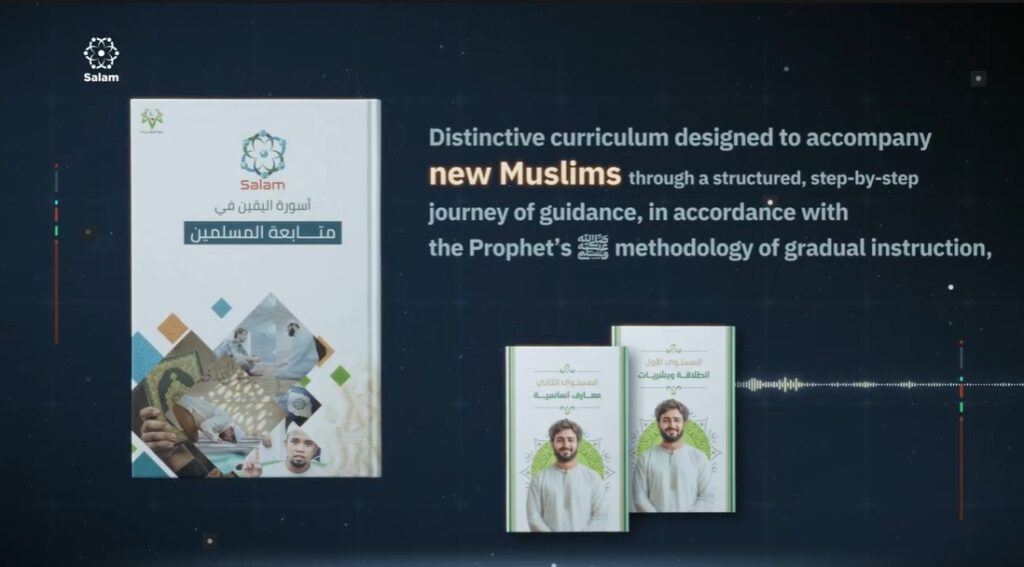
Are you a new Muslim seeking structure and community in your journey? The Salam Center invites you to join Asawirat Al-Yaqeen (Bracelets of Certainty) — a carefully designed, four-stage educational curriculum built specifically for new Muslims:
- Stage One — The Foundation: The Shahada, purification, prayer, and the pillars of Iman
- Stage Two — The Construction Phase: Repentance, the biography of the Prophet (PBUH), and the acts of worship
- Stage Three — The Consolidation Phase: Islamic ethics, family rulings, and daily life guidance
- Stage Four — The Empowerment Phase: Contemporary issues, theological foundations, and a life roadmap rooted in Surah Al-Asr
The curriculum has already guided over 114,000 new Muslims across 140 countries. Grounded in the tradition of Ahlus Sunnah wal Jama’ah, it combines compassionate language with scholarly rigor — so your certainty grows on solid ground.
Reach out directly to the Salam Center team to start the Asawirat Al-Yaqeen (Bracelets of Certainty) program for FREE.
Summary
The Quran is the direct, verbatim word of Allah revealed to Prophet Muhammad (PBUH), preserved unchanged through living oral transmission and written record since the 7th century. The Bible is a compilation of human-authored texts written across centuries, containing remnants of earlier revelation alongside documented human alteration.
Muslims affirm belief in all authentic divine scriptures and all prophets, including Moses and Jesus (peace be upon them), while recognizing that the Quran stands as the final criterion over all earlier texts. Shared prophets, core moral teachings, and the affirmation of monotheism reflect the common divine source of all genuine revelation.
The Quran completes and supersedes earlier scriptures, not by dismissing them, but by restoring the pure message that every prophet carried — the worship of Allah alone, without partner or equal. Every sincere seeker who reflects carefully on this evidence stands at the threshold of the greatest clarity available to humanity.
Frequently Asked Questions
Is the Quran the same as the Bible?
No. The Quran is the direct, preserved word of Allah revealed to Prophet Muhammad (PBUH), guaranteed by Allah Himself to remain unchanged (Quran 15:9). The Bible is a collection of texts written by multiple human authors over roughly 1,500 years and contains thousands of documented textual variants across surviving manuscripts. Both trace to a divine source, but the Quran is the final, unaltered form of that revelation.
How long is the Quran compared to the Bible?
The Quran contains approximately 77,430 Arabic words across 114 surahs. The Protestant Bible contains roughly 788,000 words across 66 books. The Quran is significantly shorter while encompassing theology, law, ethics, history, and spiritual guidance — a compression that is itself considered part of its miraculous nature.
What does the Quran say about the Bible and earlier scriptures?
The Quran affirms that the original Torah and Gospel were genuine revelations from Allah but states that human hands altered those texts over time (Quran 5:13). The Quran was revealed as a “criterion” (muhayminan) over all previous scriptures (Quran 5:48) — confirming what remained authentic and correcting what was distorted, making it the authoritative final word of Allah for all of humanity.
Do Muslims believe in the Bible?
Muslims believe in the original divine revelations sent to Moses (the Torah) and to Jesus (the Injeel/Gospel) as true words of Allah in their original forms. Muslims do not consider the current Bible to be those original texts in their preserved state, given the evidence of textual alteration across centuries. The Quran, which remains perfectly preserved, supersedes and completes all earlier revelation, as affirmed by the unanimous position of Ahlus Sunnah wal Jama’ah.
Curious about Islam?
Journey towards clarity and purpose. Our team is here to support you in your search for truth and spiritual guidance.
Embrace the Truth