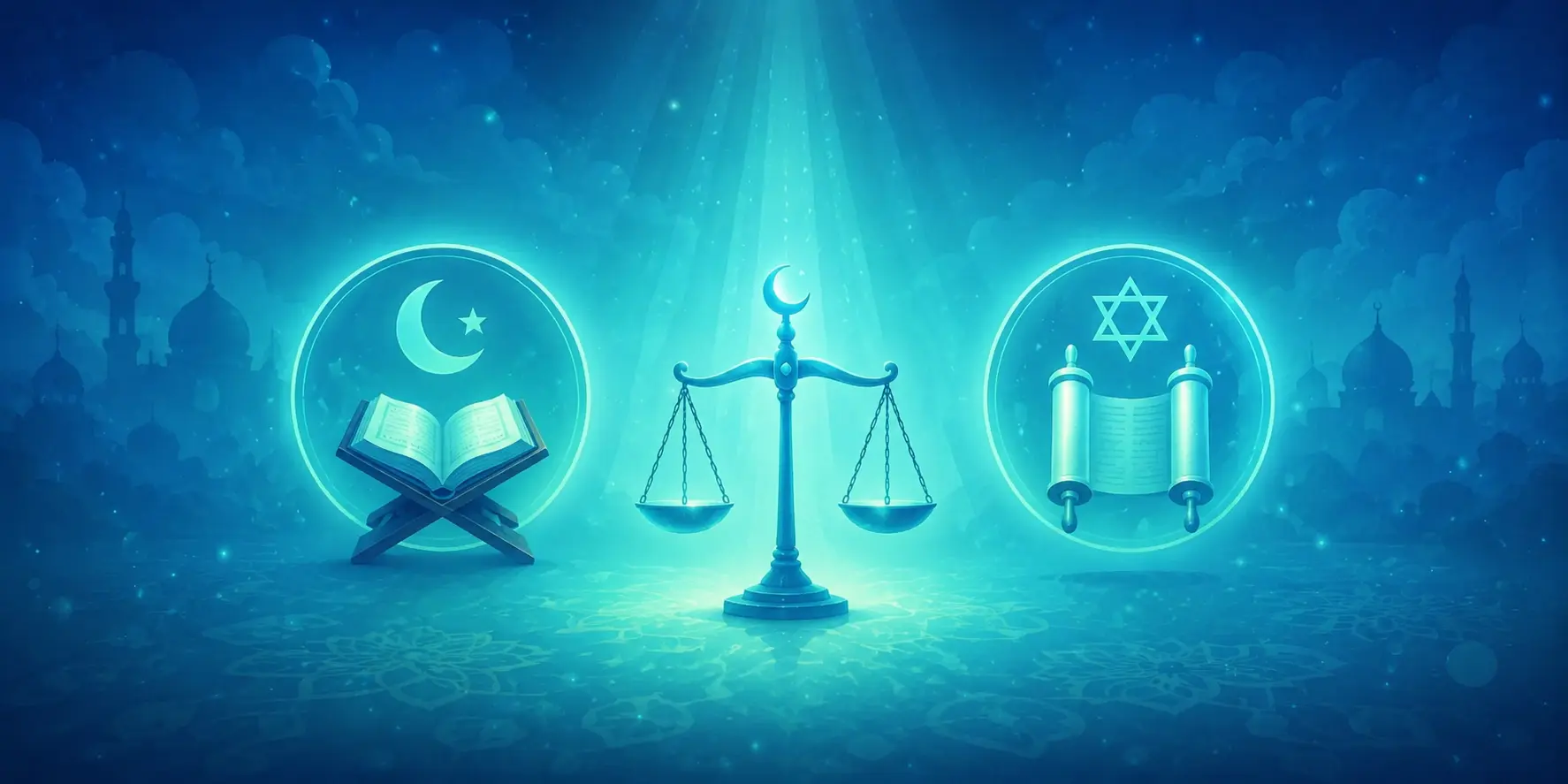
The Quran vs. The Torah – Full Guide
| Key Takeaways |
| The Quran is the final, preserved word of Allah revealed to Prophet Muhammad (PBUH), while the original Torah was revealed to Prophet Musa (Moses, peace be upon him) for the Children of Israel. |
| Muslims believe the original Torah was a divine revelation, but the text preserved today has undergone alterations and distortions over centuries, a fact acknowledged by Muslim and some non-Muslim scholars alike. |
| The Quran confirms and supersedes all previous scriptures, making it the authoritative and final reference for all of humanity until the Day of Judgment. |
| The Quran has been perfectly preserved through an unbroken chain of memorization and written transmission, while no authenticated original manuscript of the Torah exists today. |
| The Quran and the Torah share foundational themes — monotheism, prophethood, moral accountability — yet they differ decisively in their scope, audience, preservation, and finality. |
The Quran and the Torah are two of the most consequential books in human history — and understanding the difference between them is essential for anyone seeking to understand what Islam actually teaches about divine revelation.
Muslims do not reject the Torah. They believe it was a genuine revelation from Allah, sent to Prophet Musa (peace be upon him) as guidance for the Children of Israel. The crucial distinction is what happened afterward: the Quran declares, with decisive evidence, that the Torah available today is not the original text of that revelation.
1. The Quran and the Original Torah Share a Common Origin in Divine Revelation
Islam’s position on the original Torah begins with a profound affirmation, not a rejection. The Quran explicitly names the Torah (Al-Tawrah) as a genuine scripture sent from Allah:
إِنَّا أَنزَلْنَا التَّوْرَاةَ فِيهَا هُدًى وَنُورٌ
“Indeed, We sent down the Torah, in which was guidance and light.” (Quran 5:44)
Prophet Musa (peace be upon him) is among the most frequently mentioned prophets in the Quran — his name appears more than any other prophet’s name in the text. Muslims are required, as part of their faith in Islam, to believe in all divine books as originally revealed.
The original Torah and the Quran therefore share a single ultimate source: the knowledge and will of Allah.
Both address themes of monotheism (Tawhid), moral accountability, prophetic guidance, and the covenant between Allah and humanity.
Both call their recipients to worship Allah alone and to live according to His commands. This shared origin is precisely why Islam views itself not as a rejection of what came before, but as the final chapter in a long prophetic tradition.
2. The Quran and the Torah Differ Fundamentally in Their Intended Audience
One of the clearest differences between the Quran and the Torah lies in who they were sent for.
The Torah was revealed specifically as a covenant and legal framework for the Children of Israel (Bani Isra’il). Its laws, rituals, and rulings were tailored to a specific people, in a specific historical context.
The Quran carries a universal mandate:
وَمَا أَرْسَلْنَاكَ إِلَّا رَحْمَةً لِّلْعَالَمِينَ
“And We have not sent you except as a mercy to the worlds.” (Quran 21:107)
وَمَآ أَرْسَلْنَٰكَ إِلَّا كَآفَّةً لِّلنَّاسِ بَشِيرًا وَنَذِيرًا وَلَٰكِنَّ أَكْثَرَ ٱلنَّاسِ لَا يَعْلَمُونَ
“And We have not sent you except comprehensively to mankind as a bringer of good tidings and a warner. But most of the people do not know.” (Quran 34:28)
This universality distinguishes the Quran in kind, not merely in degree. It addresses all of humanity — Arabs and non-Arabs, men and women, every race and era — with guidance suited to every time and place.
Classical Islamic scholars such as Imam Ibn Kathir (may Allah have mercy on him) emphasized in his renowned Tafsir al-Quran al-Azim that this universal address is one of the most decisive proofs of the Quran’s finality and superiority as a divine guide.
The Quran’s Islam principles were not designed to expire with a generation; they were designed to govern all human civilization until the Day of Judgment.
Learn More About Islam
Discover the beauty, teachings, and wisdom of Islam in a clear and welcoming way. Start exploring and deepen your understanding today.
Learn More3. The Quran and the Torah Diverge Sharply on the Question of Preservation
The Torah, as a divine text, was altered by human hands after its revelation. The Quran refers to this process of alteration using the Arabic term tahrif (distortion):
مِّنَ الَّذِينَ هَادُوا يُحَرِّفُونَ الْكَلِمَ عَن مَّوَاضِعِهِ
“Among the Jews are those who distort words from their [proper] usages.” (Quran 4:46)
Islamic scholars of Tafsir from the earliest generations understood this distortion to include both changes in wording and deliberate misrepresentation of meaning. No authenticated original manuscript of the Torah exists today.
What survives are manuscripts from centuries after Musa (peace be upon him), in varying textual traditions, with known discrepancies between the Masoretic Text, the Samaritan Pentateuch, and the Greek Septuagint.
The Quran, by contrast, has been preserved through a dual system of extraordinary reliability: continuous oral memorization (hifz) passed through an unbroken chain from the Prophet (PBUH) to the present day, and verified written manuscripts dating to within decades of the revelation itself. The Quran makes this preservation an explicit divine promise:
إِنَّا نَحْنُ نَزَّلْنَا الذِّكْرَ وَإِنَّا لَهُ لَحَافِظُونَ
“Indeed, it is We who sent down the Quran, and indeed, We will be its guardian.” (Quran 15:9)
This divine guarantee has no parallel in any other scripture. You can read more about what Muslims believe about the Quran and why Muslims believe in the Quran on the Salam platform.
4. The Quran and the Torah Present Different Conceptions of the Laws They Carry
The Torah contained a legal code (Shari’ah) specific to the Children of Israel — a framework with detailed ritual laws, dietary regulations, and communal rulings designed for that particular nation and era.
The Prophet Muhammad (PBUH) said, as recorded in Sahih Bukhari:
“Every prophet was sent specifically to his own nation, but I was sent to all of humanity.”
The Quran came with a legal framework that is comprehensive, universal, and final. It addresses worship, commerce, family, governance, ethics, and the human relationship with Allah — all within a balanced system suited to every human society in every century.
Importantly, the Quran affirms that it supersedes the earlier scriptures and abrogates laws that were particular to previous nations.
The permissibility of certain foods that were restricted for the Children of Israel, for example, is addressed directly in the Quran as part of this broader, more accessible framework.
The Quran thus does not carry the same particularist legal character as the Torah. Its rulings are not restricted to one bloodline or one territory — they address the human condition as such.
5. The Quran and the Torah Reflect Different Relationships Between the Divine Word and the Text
A key theological difference concerns the nature of divine speech. The Quran is the literal, uncreated speech of Allah — revealed in Arabic, preserved in Arabic, and inseparable from its wording.
The Torah, even at the time of its original revelation, was described in the Quran as written on tablets:
“And We wrote for him on the tablets [the essence] of all things.” (Quran 7:145).
The Quran describes the essence of the Torah’s content, while presenting the Quran itself as a complete, verbatim, and eternally preserved revelation.
This doctrinal distinction shapes how Muslims relate to both books: the Quran is recited in prayer, memorized in its Arabic form, and treated as the direct and living word of Allah. It is not merely a book of teachings — it is itself an act of worship to recite.
6. The Quran and the Torah Agree on Monotheism but Differ on Its Expression
Both the Quran and the original Torah call humanity to the worship of one God alone — the core of what Islam calls Tawhid. The Quran says:
قُلْ هُوَ ٱللَّهُ أَحَدٌ ﴿١﴾ ٱللَّهُ ٱلصَّمَدُ ﴿٢﴾ لَمْ يَلِدْ وَلَمْ يُولَدْ ﴿٣﴾ وَلَمْ يَكُن لَّهُۥ كُفُوًا أَحَدُۢ ﴿٤﴾
“Say, “He is Allah, [who is] One, (1) Allah, the Eternal Refuge. (2) He neither begets nor is born, (3) Nor is there to Him any equivalent.” (4).'” (Quran 112:1)
ٱللَّهُ لَآ إِلَٰهَ إِلَّا هُوَ ٱلْحَىُّ ٱلْقَيُّومُ ۚ لَا تَأْخُذُهُۥ سِنَةٌ وَلَا نَوْمٌ ۚ لَّهُۥ مَا فِى ٱلسَّمَٰوَٰتِ وَمَا فِى ٱلْأَرْضِ ۗ مَن ذَا ٱلَّذِى يَشْفَعُ عِندَهُۥٓ إِلَّا بِإِذْنِهِۦ ۚ يَعْلَمُ مَا بَيْنَ أَيْدِيهِمْ وَمَا خَلْفَهُمْ ۖ وَلَا يُحِيطُونَ بِشَىْءٍ مِّنْ عِلْمِهِۦٓ إِلَّا بِمَا شَآءَ ۚ وَسِعَ كُرْسِيُّهُ ٱلسَّمَٰوَٰتِ وَٱلْأَرْضَ ۖ وَلَا يَـُٔودُهُۥ حِفْظُهُمَا ۚ وَهُوَ ٱلْعَلِىُّ ٱلْعَظِيمُ
“Allah – there is no deity except Him, the Ever-Living, the Sustainer of [all] existence. Neither drowsiness overtakes Him nor sleep. To Him belongs whatever is in the heavens and whatever is on the earth. Who is it that can intercede with Him except by His permission? He knows what is [presently] before them and what will be after them, and they encompass not a thing of His knowledge except for what He wills. His Kursi extends over the heavens and the earth, and their preservation tires Him not. And He is the Most High, the Most Great..” (Quran 2:255)
And the Torah’s Shema declaration similarly affirms divine unity. However, the current Torah, as it exists in Jewish and Christian traditions, contains textual passages that Islamic scholars — and even many critical biblical scholars — have identified as anthropomorphic descriptions of Allah that contradict pure monotheism: attributing physical form, emotions of regret, or change of mind to Allah in ways that Islam categorically rejects.
The Quran’s presentation of Allah’s nature is absolute and unambiguous. You can explore the Salam platform’s detailed treatment of how Islam views the nature of Allah and the foundations of monotheism in Islam for a full picture.
The Quran explicitly guards against any association of partners with Allah — whether through polytheism or through subtle distortions of divine attributes — in a way that is far more systematic and protected than what appears in the current Torah text.
7. The Quran Confirms the Torah While Correcting What Was Changed
A dimension of the Quran–Torah relationship that is often missed: the Quran acts as a muhaymin — a guardian and witness — over the previous scriptures:
وَأَنزَلْنَا إِلَيْكَ الْكِتَابَ بِالْحَقِّ مُصَدِّقًا لِّمَا بَيْنَ يَدَيْهِ مِنَ الْكِتَابِ وَمُهَيْمِنًا عَلَيْهِ
“And We have revealed to you the Book in truth, confirming that which preceded it of the Scripture and as a guardian over it.” (Quran 5:48)
This verse captures the Quran’s dual role: confirmation of original divine truth, and correction of what was distorted.
Where the Torah, in its current form, contains descriptions of prophets committing grave sins — attributions that contradict the Islamic principle of prophetic infallibility (‘Ismah) — the Quran restores their dignity and presents them accurately.
The story of Prophet Yusuf (Joseph), for example, is described in the Quran as “the best of stories” precisely because it corrects and perfects the narrative found in biblical accounts.
The Salam Center for Da’wah and Dialogue has developed comparative resources for new Muslims and seekers who wish to understand how Islam views other religions, including the Islamic position on Judaism and Christianity from the perspective of Ahlus Sunnah wal Jama’ah.
Read Also: Does the Quran Have the Old Testament?
A Direct Comparison: The Quran vs. the Torah
| Dimension | The Quran | The Torah (Al-Tawrah) |
| Revealed to | Prophet Muhammad (PBUH) | The original Torah revealed to Prophet Musa / Moses (peace be upon him) |
| Audience | All of humanity, all time | Children of Israel |
| Language of revelation | Arabic (preserved in original) | Hebrew (no authenticated original manuscript survives) |
| Preservation status | Perfectly preserved — divine guarantee (Quran 15:9) | Altered and distorted over centuries (tahrif) |
| Legal scope | Universal and final | Particular to Bani Isra’il |
| Abrogation | Abrogates all previous scriptures | Abrogated by the Quran |
| Nature of the text | Literal, uncreated speech of Allah | Divine in origin; current text is not the original revelation |
| Role in Islamic practice | Recited in prayer; memorized; central to all worship | Respected as originally revealed; current text not acted upon |
| Textual variants | Single, unified text worldwide | Multiple textual traditions with known discrepancies |
| Coverage | Creed, worship, law, ethics, afterlife, history, science of the soul | Law, history, rituals for Bani Isra’il |
Learn More About Islam
Discover the beauty, teachings, and wisdom of Islam in a clear and welcoming way. Start exploring and deepen your understanding today.
Learn MoreRead Also: The Difference Between the Quran and the Bible
Learn More Authentic Knowledge About Religions with Salam
Whether you are a curious seeker exploring Islam for the first time, or someone who has recently taken the Shahada and is looking for structured guidance, the Salam Center for Da’wah and Dialogue is here to walk with you.
Explore more articles and resources on the Salam Platform — a space built to answer your sincere questions with honesty, depth, and care.
Browse our full library of Islamic knowledge on the Salam blog — from foundational beliefs to comparative religion to everyday Islamic practice.
Reach out directly if you have a specific question, want to learn more about entering Islam, or simply need someone to talk to.
Read Also: When Was the Bible Written Compared to the Quran?
Join the Asawirat Al-Yaqeen (Bracelets of Certainty) Program
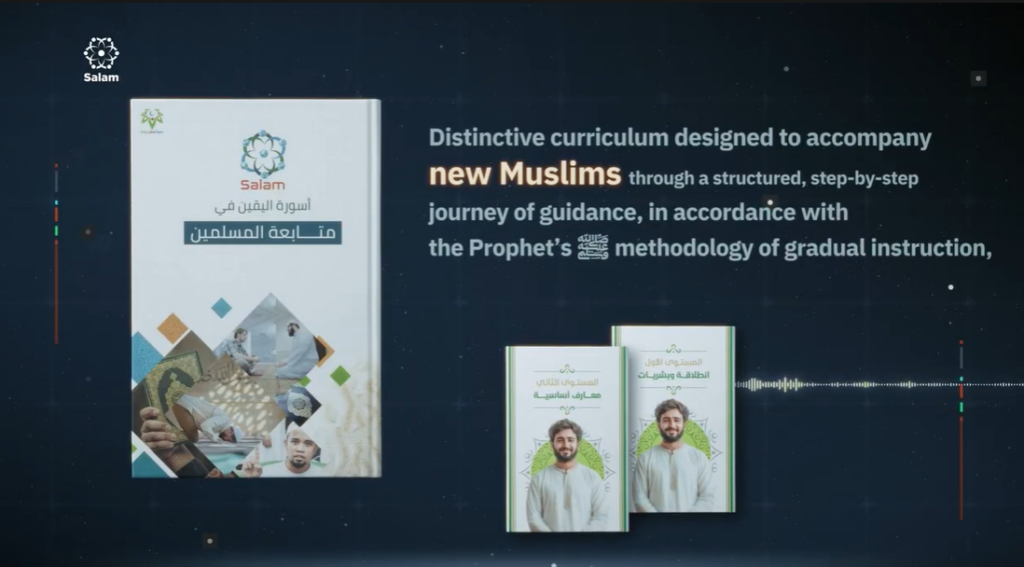
Designed especially for new Muslims, the Asawirat Al-Yaqeen (Bracelets of Certainty) curriculum is a structured four-stage journey toward firm faith (Yaqeen):
- Stage One — The Foundation: Learn the pillars of Islam, the Shahada, and essential acts of worship
- Stage Two — The Construction Phase: Study the six pillars of Iman, repentance, and the life of the Prophet (PBUH)
- Stage Three — The Consolidation Phase: Develop Islamic character, etiquette, and practical life rulings
- Stage Four — The Empowerment Phase: Engage contemporary questions, Islamic theology, and your personal life roadmap
Already implemented with over 114,000 new Muslims across 140 countries — this program meets you exactly where you are.
Reach out directly to the Salam Center team to start the Asawirat Al-Yaqeen (Bracelets of Certainty) program for FREE.
Summary
The Quran and the Torah share a single divine origin, yet they differ profoundly in their scope, audience, preservation, and finality. The Torah was a guidance specific to the Children of Israel, while the Quran carries Allah’s universal message for all of humanity, preserved perfectly through an unbroken chain of transmission across fourteen centuries.
Where the Torah’s current text has been subject to documented alteration — a reality the Quran itself names as tahrif — the Quran remains exactly as it was revealed, word for word, letter for letter. For every sincere seeker, this distinction is the starting point of one of the most important inquiries a human being can undertake.
Frequently Asked Questions
Do Muslims believe the Torah is a holy book?
Muslims believe the Torah (Al-Tawrah) was originally a divine revelation from Allah, sent to Prophet Musa (peace be upon him) as guidance for the Children of Israel. The Quran explicitly affirms this in verse 5:44. However, Muslims believe the Torah’s original text was altered over time — a process the Quran calls tahrif — so the current Torah is not considered an intact, authentic scripture.
What is the main difference between the Quran and the Torah in Islam?
The Quran is the final, perfectly preserved, and universally addressed word of Allah, while the Torah was a revelation sent specifically to the Children of Israel and has since been altered. The Quran abrogates the Torah and all previous scriptures, serving as the authoritative and complete guide for all of humanity until the Day of Judgment.
Why do Muslims say the Torah was changed but the Quran was not?
The Quran carries a direct divine promise of perfect preservation (Quran 15:9), and this promise has been fulfilled through an unbroken dual system of memorization and verified written manuscripts. The Torah, by contrast, has no authenticated original manuscript, and multiple textual traditions — the Masoretic Text, the Samaritan Pentateuch, and the Greek Septuagint — contain known differences, evidencing a history of scribal and editorial change.
Does believing in the Quran mean rejecting Moses (peace be upon him)?
Believing in the Quran means honoring and affirming Prophet Musa (peace be upon him) as one of the greatest prophets sent by Allah. Musa (peace be upon him) is the most frequently named prophet in the Quran. Islam affirms his prophethood, his miracles, and the original divine guidance he brought — while recognizing that the Quran has come as the final, complete, and perfectly preserved continuation of the same prophetic tradition he was part of.
Curious about Islam?
Journey towards clarity and purpose. Our team is here to support you in your search for truth and spiritual guidance.
Embrace the Truth