How Old Is Islam According to the Quran?
| Key Takeaways |
| According to the Quran, Islam is not a religion that began with Prophet Muhammad (PBUH) — it is the original, eternal message that Allah sent to humanity through every prophet. |
| The Quran explicitly states that Ibrahim (Abraham), Nuh (Noah), and even Adam were Muslims, meaning they submitted to Allah alone. |
| Prophet Muhammad (PBUH) was the final prophet in a continuous chain of messengers, completing and perfecting the message of Islam. |
| The formal revelation of the Quran began in 610 CE, making the Islamic civilization approximately 1,416 years old — but the faith itself predates recorded human history. |
| Islam means “submission to Allah,” and every prophet who ever submitted to Allah and called others to pure monotheism was, by definition, a Muslim. |
The Quran presents Islam not as a new religion invented in 7th-century Arabia, but as the primordial call of every prophet Allah ever sent. Understanding this transforms how we think about religious history entirely.
How Old is Islam According to the Quran?
If you’re asking how many years ago Islam started as a formal civilization with a scripture, a Prophet, and a community — the answer is roughly 1,416 years, tracing back to the first revelation received by Prophet Muhammad (PBUH) in 610 CE in the Cave of Hira near Makkah. But if you’re asking how old Islam is as a faith — as a relationship between the Creator and His creation — the Quran gives a profoundly different answer: Islam is as old as humanity itself.
The Quran Identifies Islam as the Religion of All Prophets
The Arabic word Islam (إسلام) means complete submission and surrender to Allah alone. By definition, every prophet who called humanity to worship Allah without partners — from Adam to Nuh, from Ibrahim to Musa, from Isa to Muhammad — carried the same essential message. The Quran is explicit about this:
إِنَّ الدِّينَ عِندَ اللَّهِ الْإِسلَامُ
“Indeed, the religion in the sight of Allah is Islam.” (Quran 3:19)
This verse establishes Islam as the only acceptable path of submission to Allah — not as one religion among many, but as the universal truth that transcends time. The Quran further clarifies that this was always the case:
وَمَن يَبْتَغِ غَيْرَ الْإِسْلَامِ دِينًا فَلَن يُقْبَلَ مِنْهُ
“And whoever seeks a religion other than Islam, it will never be accepted from him.” (Quran 3:85)
The Islam principles rooted in this understanding are not arbitrary doctrines — they flow from a single foundational truth: Allah alone is the Creator, and submission to Him is the purpose of creation.
Adam Was the First Muslim
Adam (peace be upon him), the first human being, received direct guidance from Allah and submitted to Him — making Adam, by the Quran’s own logic, the first Muslim in human history. The question “how old is Islam religion” finds its ultimate Quranic answer here: Islam is as old as human existence on Earth.
The message of Tawhid — the absolute oneness of Allah — was the foundation of every prophet’s mission, and that every prophet who submitted to this truth was a Muslim in the fullest theological sense.
This is precisely why faith in Islam includes belief in all of Allah’s prophets as an essential pillar — not as a matter of courtesy toward other traditions, but because they all carried the same message.
Learn More About Islam
Discover the beauty, teachings, and wisdom of Islam in a clear and welcoming way. Start exploring and deepen your understanding today.
Learn MoreIbrahim Was a Muslim
Perhaps the most powerful evidence for Islam’s eternal nature appears in the Quran’s treatment of Ibrahim (Abraham, peace be upon him). Ibrahim lived roughly 3,700–4,000 years before today — and the Quran explicitly calls him a Muslim:
مَا كَانَ إِبْرَاهِيمُ يَهُودِيًّا وَلَا نَصْرَانِيًّا وَلَٰكِن كَانَ حَنِيفًا مُّسْلِمًا وَمَا كَانَ مِنَ الْمُشْرِكِينَ
“Ibrahim was neither a Jew nor a Christian, but he was one inclining toward truth, a Muslim [submitting to Allah]. And he was not of the polytheists.” (Quran 3:67)
Ibrahim’s submission to Allah — his willingness to leave his homeland, reject idol worship, and sacrifice what he loved most for the sake of his Lord — is the purest expression of Islam in practice.
When we explore the prophet Muhammad family tree from Abraham, we see that the final Prophet (PBUH) descended directly from Ibrahim through his son Ismail — a lineage of prophetic monotheism spanning millennia.
The Quran also records Ibrahim’s own prayer, in which he explicitly asked Allah to make him and his descendants Muslims:
رَبَّنَا وَاجْعَلْنَا مُسْلِمَيْنِ لَكَ وَمِن ذُرِّيَّتِنَا أُمَّةً مُّسْلِمَةً لَّكَ
“Our Lord, and make us Muslims [in submission] to You and from our descendants a Muslim nation [in submission] to You.” (Quran 2:128)
How Old Is Islam in Years?
When most people ask how many years ago Islam started, they are referring to the historical emergence of the final revelation: the Quran, sent to Prophet Muhammad (PBUH). Here is the precise timeline:
610 CE — The first revelation descended upon the Prophet (PBUH) in the Cave of Hira. The word revealed was the beginning of Surah Al-Alaq: “Read in the name of your Lord who created.” (Quran 96:1)
622 CE — The Hijra (migration from Makkah to Madinah), which marks the beginning of the Islamic lunar calendar.
632 CE — The passing of Prophet Muhammad (PBUH) and the completion of the Quranic revelation.
From 610 CE to 2026 CE, Islam as a formal civilization is approximately 1,416 years old. The history of the Quran — its revelation, preservation, and compilation — spans the entire prophetic period and remains the most meticulously documented scripture in human history.
To understand how Muhammad became the Prophet of Islam, one must understand that his mission was not the creation of a new religion. It was the restoration and completion of the one eternal religion that every prophet before him had carried.
The Quran Explains Why Every Prophet Taught Islam
The Quran’s account of earlier prophets consistently reveals the same core message: worship Allah alone, reject all false deities, and live according to His guidance. This is the definition of Islam in practice.
Nuh (Noah) called his people to the same Tawhid — as the Quran records:
وَأُمِرْتُ أَنْ أَكُونَ مِنَ الْمُسْلِمِينَ
“And I have been commanded to be of the Muslims.” (Quran 10:72)
Yusuf (Joseph) prayed for death upon Islam:
تَوَفَّنِي مُسْلِمًا وَأَلْحِقْنِي بِالصَّالِحِينَ
“Cause me to die a Muslim and join me with the righteous.” (Quran 12:101)
Isa (Jesus, peace be upon him) taught submission to Allah — and his disciples declared themselves Muslims:
قَالَ الْحَوَارِيُّونَ نَحْنُ أَنصَارُ اللَّهِ وَاشْهَدْ بِأَنَّنَا مُسْلِمُونَ
“The disciples said, ‘We are the supporters of Allah. Witness that we are Muslims [in submission to Him].'” (Quran 3:52)
This understanding is why how Islam views other religions is grounded not in rivalry but in a theological claim: earlier revelations carried the same truth, but were altered or lost over time.
The Quran came to restore and seal that truth. What the Quran says about other religions reflects this nuanced, confident, and compassionate framework.
Muhammad (PBUH) is the Seal — Not the Origin — of Islam
Prophet Muhammad (PBUH) did not found Islam. The Quran explicitly identifies him as the Khatam al-Nabiyyin — the Seal of the Prophets:
مَّا كَانَ مُحَمَّدٌ أَبَا أَحَدٍ مِّن رِّجَالِكُمْ وَلَٰكِن رَّسُولَ اللَّهِ وَخَاتَمَ النَّبِيِّينَ
“Muhammad is not the father of any of your men, but he is the Messenger of Allah and the seal of the Prophets.” (Quran 33:40)
He sealed a chain that began with Adam. He completed what Ibrahim built, what Musa carried, and what Isa continued. The Prophet (PBUH) himself confirmed this in an authenticated hadith:
“My similitude in comparison with the other prophets is that of a man who built a house perfectly except for a place of one brick. People went around it admiring it, and said, ‘Were it not for this missing brick!’ I am that brick, and I am the last of the Prophets.” (Sahih Bukhari, 3535)
The story of Prophet Muhammad’s childhood and early life shows the spiritual preparation that preceded this climactic role — a life marked by trustworthiness, reflection, and a deep aversion to the idolatry surrounding him long before the first revelation descended.
Read Also: When Was the Quran Revealed?
Why How Old is Islam Religion Matters for Seekers and New Muslims
Understanding Islam’s eternal nature resolves several common misconceptions at once.
Islam was not invented by an Arab man in the 7th century. The Quran makes clear that Allah’s guidance preceded all human civilizations. Prophet Muhammad (PBUH) received, conveyed, and embodied the final, complete, and perfectly preserved version of that guidance.
The Quran’s testimony about God in Islam — that Allah is One, eternal, uncreated, and beyond all comparison — is the same testimony that every prophet carried.
This is Monotheism in its purest, most uncompromised form, sharply distinguished from polytheism in every age.
Read Also: 30 Facts About the Quran
Learn More About Islam
Discover the beauty, teachings, and wisdom of Islam in a clear and welcoming way. Start exploring and deepen your understanding today.
Learn MoreRead Also: Why Is the Quran the Holy Book of Islam?
Learn More Authentic Knowledge About Islam with Salam
If these insights have sparked genuine questions — about Islam’s history, the Quran’s message, or what it means to live in submission to Allah — the Salam Platform is here to accompany you.
Explore hundreds of carefully written, evidence-grounded articles on the Salam blog.
If you want to go deeper — or if you’re considering embracing Islam — reach out directly to our team.

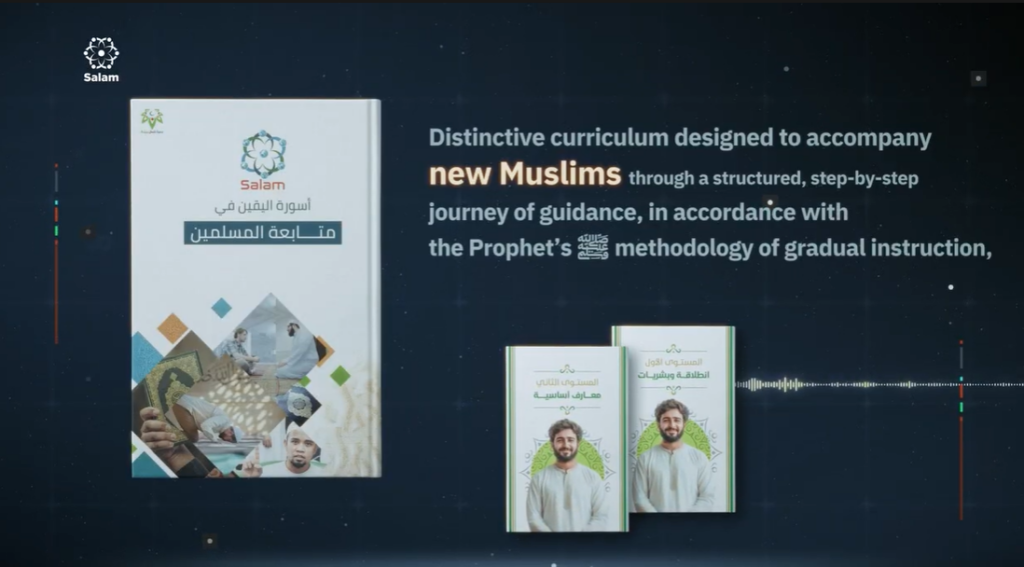
For new Muslims, the Salam Center offers the Asawirat Al-Yaqeen (Bracelets of Certainty) program — a structured four-stage journey toward firm, grounded faith:
- Stage One: The foundational pillars, the Shahada, and essential acts of worship
- Stage Two: The six pillars of Iman, fasting, Zakat, and Hajj
- Stage Three: Tawbah, major sins, and the biography of the Prophet (PBUH)
- Stage Four: Contemporary issues, theological proofs, and a life roadmap from Surah Al-Asr
Over 114,000 new Muslims in 140 countries have completed this journey. Yours can begin today.
Reach out directly to the Salam Center team to start the Asawirat Al-Yaqeen (Bracelets of Certainty) program for FREE.
Summary
Islam’s eternal message — submission to Allah alone — has been taught by every prophet, from Adam to Muhammad (PBUH). The Quran confirms this continuity directly, presenting earlier prophets as Muslims who carried Tawhid across human history before the final revelation sealed and perfected it.
The formal Islamic civilization began approximately 1,416 years ago with the Quran’s revelation in 610 CE. Understanding this dual timeline — eternal faith, historical completion — gives every seeker a richer, truer foundation for exploring what Islam really is.
Frequently Asked Questions
How old is Islam according to the Quran?
According to the Quran, Islam is as old as humanity itself. The Quran explicitly identifies Adam, Nuh, Ibrahim, Musa, and Isa as Muslims who submitted to Allah alone. As a formal civilization anchored to the Quran, Islam is approximately 1,416 years old, beginning with the first revelation to Prophet Muhammad (PBUH) in 610 CE.
How many years ago did Islam start with Prophet Muhammad?
The Quran’s revelation to Prophet Muhammad (PBUH) began in 610 CE, making the Islamic civilization approximately 1,416 years old as of 2026. The Prophet received the first verses in the Cave of Hira in Makkah, and the revelation continued for 23 years until its completion.
Was Ibrahim (Abraham) a Muslim according to the Quran?
Yes — the Quran directly and explicitly calls Ibrahim a Muslim. Quran 3:67 states he was “neither a Jew nor a Christian, but one inclining toward truth, a Muslim.” He prayed for himself and his descendants to be Muslims, and he is considered a foundational figure in the chain of Islamic prophethood.
Did Jesus (Isa) teach Islam according to the Quran?
According to the Quran, Isa (Jesus, peace be upon him) taught submission to Allah — which is Islam by definition. His disciples declared themselves Muslims in Quran 3:52. Islam does not regard Isa as divine; the Islam vs. Christianity distinction is theological, not personal — Isa is honored as a prophet and messenger.
Why is Prophet Muhammad considered the last prophet and not the first?
The Quran identifies Prophet Muhammad (PBUH) as the “Seal of the Prophets” (Quran 33:40) — the final messenger in a long chain beginning with Adam. He completed and preserved the eternal message of Islam, not originated it. The authenticated hadith in Sahih Bukhari compares him to the final brick completing a perfectly constructed building.
Curious about Islam?
Journey towards clarity and purpose. Our team is here to support you in your search for truth and spiritual guidance.
Embrace the Truth