
Does the Quran Say Christians Go to Heaven?
| Key Takeaways |
| No — the Quran does not teach that Christians, as a group, enter Paradise while holding Christian belief. |
| Quran 2:111-112 directly addresses this claim and calls it wishful thinking without proof. |
| Salvation in Islamic theology is tied to believing in the message of Prophet Muhammad (PBUH) and Islamic monotheism, not to religious labels. |
| Sahih Muslim 153 states that anyone who hears of Prophet Muhammad (PBUH) and dies without believing in his message will be among the people of Hellfire. |
| Righteous “People of the Book” who lived and died before the Prophet’s mission, following true monotheism, are judged by different criteria than those who received his message and rejected it. |
| Good deeds alone do not guarantee Paradise — they must be joined with correct belief in Allah’s Oneness (Tawhid). |
The Quran does not say Christians go to Paradise on account of their Christian belief. This is one of the most searched questions from people encountering Islam for the first time, and it deserves a direct, honest answer rather than a diplomatic dodge.
The Quran addresses this exact claim by name, and its answer is unambiguous: entry into Paradise depends on testifying that there is no god but Allah and that Muhammad (PBUH) is His Messenger, paired with sincere good deeds performed according to what Allah has commanded.
Does the Quran say Christians go to heaven?
No, the Quran does not say that Christians enter Paradise based on Christian belief. Surah Al-Baqarah addresses this claim in direct language, describing it as a hope without evidence.
وَقَالُوا لَن يَدْخُلَ الْجَنَّةَ إِلَّا مَن كَانَ هُودًا أَوْ نَصَارَىٰ ۗ تِلْكَ أَمَانِيُّهُمْ ۗ قُلْ هَاتُوا بُرْهَانَكُمْ إِن كُنتُمْ صَادِقِينَ ﴿١١١﴾
“And they say, “None will enter Paradise except one who is a Jew or a Christian.” That is [merely] their wishful thinking, Say, “Produce your proof, if you should be truthful.” (111)'” (Quran 2:111)
The Arabic word used here, amaniyy (وَقَالُوا۟ لَن), means wishful fancy — a hope asserted without proof.
Allah doesn’t argue the point at length; He asks for evidence, and none is given, because the claim rests on group identity rather than on submission to Allah’s actual command. The very next verse then gives the real criterion:
بَلَىٰ مَنْ أَسْلَمَ وَجْهَهُ لِلَّهِ وَهُوَ مُحْسِنٌ فَلَهُ أَجْرُهُ عِندَ رَبِّهِ وَلَا خَوْفٌ عَلَيْهِمْ وَلَا هُمْ يَحْزَنُونَ ﴿١١٢﴾
Yes [on the contrary], whoever submits his face in Islam to Allah while being a doer of good will have his reward with his Lord. And no fear will there be concerning them, nor will they grieve'” (Quran 2:112)
This single passage answers the question at its root. Paradise isn’t granted by tribal or religious label. It’s granted to whoever submits to Allah — which is the literal meaning of the word Islam — and does good according to what Allah has revealed. This is the same standard Surah Al-Ma’idah applies specifically to those who deify Jesus:
لَّقَدْ كَفَرَ ٱلَّذِينَ قَالُوٓا۟ إِنَّ ٱللَّهَ هُوَ ٱلْمَسِيحُ ٱبْنُ مَرْيَمَ
“They have certainly disbelieved who say, ‘Allah is the Messiah, the son of Mary.'” (Quran 5:72)
The same verse continues with words attributed to Jesus (Isa) himself, calling his own people back to pure monotheism:
إِنَّهُۥ مَن يُشْرِكْ بِٱللَّهِ فَقَدْ حَرَّمَ ٱللَّهُ عَلَيْهِ ٱلْجَنَّةَ وَمَأْوَىٰهُ ٱلنَّارُ
“Indeed, he who associates others with Allah – Allah has forbidden him Paradise, and his refuge is the Fire.” (Quran 5:72)
Understanding why this is the standard requires understanding how Islam views the nature of God — a single, indivisible Divine Essence with no partners, no offspring, and no equal.
This is the doctrine of Monotheism, called Tawhid in Arabic, and it sits at the center of every other Islamic teaching. It is the line the Quran draws again and again: not “Jew or Christian versus everyone else,” but “those who affirm Allah’s Oneness and follow His final Messenger versus those who don’t.”
Salvation in Islam depends on correct belief and righteous deeds together
The Quranic criterion for Paradise has two inseparable parts, and Surah Al Imran states the first part with total clarity:
وَمَن يَبْتَغِ غَيْرَ ٱلْإِسْلَـٰمِ دِينًا فَلَن يُقْبَلَ مِنْهُ
“And whoever desires other than Islam as religion – never will it be accepted from him.” (Quran 3:85)
This verse doesn’t describe Islam as one acceptable path among several. It states that Allah accepts no religion but Islam, and that whoever seeks another path — however sincere the effort — will find it rejected, ending in loss in the Hereafter.
This is a hard teaching for many outside the faith to hear, and Salam does not soften it, because intellectual honesty means presenting the core Islamic principles as the Quran actually states them rather than diluting them to sound more comfortable.
The second part of the criterion is righteous action. Belief without corresponding deeds is described throughout the Quran as incomplete — but action without correct belief is described as worthless, because an act of worship directed anywhere but toward Allah alone is an act of Polytheism (shirk), the one sin the Quran describes as unforgivable if a person dies upon it unrepentant.
This is why the phrase “believed and did righteous deeds” (aamanu wa ‘amilus-salihat) appears together dozens of times throughout the Quran — belief and deed are never separated, because one without the other does not fulfill what Allah has commanded.
Understanding this dual structure connects directly to faith in Islam as a whole system — six pillars of belief (in Allah, His angels, His books, His messengers, the Last Day, and divine decree) paired with five pillars of practice. Neither half stands alone.
Learn More About Islam
Discover the beauty, teachings, and wisdom of Islam in a clear and welcoming way. Start exploring and deepen your understanding today.
Learn MoreWill righteous Jews and Christians who lived good, sincere religious lives go to heaven?
A question naturally follows from all this: what about righteous Jews and Christians who lived good, sincere religious lives? The Quran and Sunnah draw a sharp distinction here based on time and knowledge, not on blanket condemnation of entire communities across all of history.
Sahih Muslim records a hadith directly addressing this question, and it is one of the clearest statements in the Sunnah on where the line falls:
“By Him in Whose hand is the life of Muhammad, he who amongst the community of Jews or Christians hears about me, but does not affirm his belief in that with which I have been sent and dies in this state (of disbelief), he shall be but one of the denizens of Hell-Fire.” (Sahih Muslim 153)
The condition in this hadith is precise: hears about the Prophet’s message and does not believe.
It is not a condemnation of everyone who identifies as Jewish or Christian by birth or culture. It’s a statement about what happens after a person genuinely encounters the call to Islam and rejects it.
This is why the Quran describes some People of the Book with real praise elsewhere — for those among earlier communities who held to true monotheism before the Prophet’s message reached them, or who recognized and accepted it when it did.
The criterion has always been submission to Allah’s revealed guidance at the time it reaches a person; the Prophet Muhammad (PBUH) simply represents the final and complete form of that guidance, superseding what came before it, in the same way the Quran itself explains its relationship to earlier scripture.
This connects to why Muslims hold the beliefs they do about earlier revelation in the first place.
What Muslims believe about the Quran explains it as the final, unaltered word of Allah, confirming what was true in earlier scriptures and correcting what was distorted afterward.
Read Also: What Does the Quran Say About Not Believing in Allah?
Good deeds cannot substitute for correct belief in Islamic theology
A common misconception holds that sincerity and good character are sufficient for salvation regardless of what a person believes about Allah. The Quran and Sunnah reject this framing directly, though not in the way people often assume — good deeds matter tremendously, but they cannot function as a replacement for correct belief; they function as its fruit.
The Prophet Muhammad (PBUH) himself made this point about his own deeds, in one of the most humbling statements recorded in the Sunnah:
“The deeds of anyone of you will not save you (from the Hell Fire).” They said, “Even you, O Allah’s Messenger?” He said, “No, even I will not be saved unless and until Allah bestows His Mercy on me. Therefore, do good deeds properly, sincerely and moderately.” (Sahih al-Bukhari 6463)
If the Prophet of Islam himself did not consider his deeds alone sufficient without Allah’s mercy, the same principle applies with far greater force to everyone else.
But mercy in Islamic theology is not unconditional or detached from belief — Allah’s mercy operates within the framework He has revealed, and that framework begins with Tawhid.
A person who rejects Allah’s Oneness, or associates partners with Him, has closed the very door through which mercy is extended, regardless of how much charity, kindness, or moral effort they demonstrate elsewhere.
This is the weight behind the earlier verse from Surah Al-Ma’idah: whoever associates partners with Allah has Paradise forbidden to them, full stop, deeds notwithstanding.
None of this means Islam dismisses good character in other religious communities as meaningless in a worldly sense. It means that ultimate salvation, as the Quran defines it, requires the object of worship to be correct — Allah alone, without partner or intermediary — before deeds can carry weight in a person’s favor before Him.
Read Also: Does the Quran Say the Bible Is Changed?
What does the Quran say about other religions more broadly?
The Quran’s position on other faiths is neither dismissive nor relativistic — it’s precise. It acknowledges that earlier communities received real revelation from Allah through real prophets, including Moses, Jesus, and others, and it commands Muslims to believe in all of Allah’s messengers without exception.
What the Quran does not do is treat all religious paths as equally valid roads to the same destination. What the Quran says about other religions lays out this position with the full range of relevant verses, and how Islam views other religions more broadly covers how this plays out in practice — including guidance on coexistence, dialogue, and mutual respect that does not require Muslims to affirm theological positions the Quran identifies as incorrect.
This is a useful place to compare frameworks directly. Islam vs. Christianity walks through where the two faiths diverge on the nature of God, the status of Jesus, and the criteria for salvation — the very questions at the heart of this article.
A similar comparison, Islam vs. Judaism, shows how Islam relates to the Abrahamic tradition as a whole, correcting what it identifies as later distortions while affirming the core monotheistic message shared by earlier prophets.
Read Also: What Does the Quran Say About Jews?
Learn More About Islam
Discover the beauty, teachings, and wisdom of Islam in a clear and welcoming way. Start exploring and deepen your understanding today.
Learn MoreContinue exploring what Islam actually teaches
Questions like this one deserve more than a quick answer — they deserve a foundation. The Salam Center exists to walk through exactly this kind of question with patience and without apology for what the Quran actually says.
A few places to go next:
- Read more on the Salam blog for articles addressing sincere questions from seekers and skeptics alike
- Explore the foundations of Islamic belief, starting with the nature of Allah and what faith in Islam actually requires
Reach out directly — our team is ready to listen, guide, and welcome you.

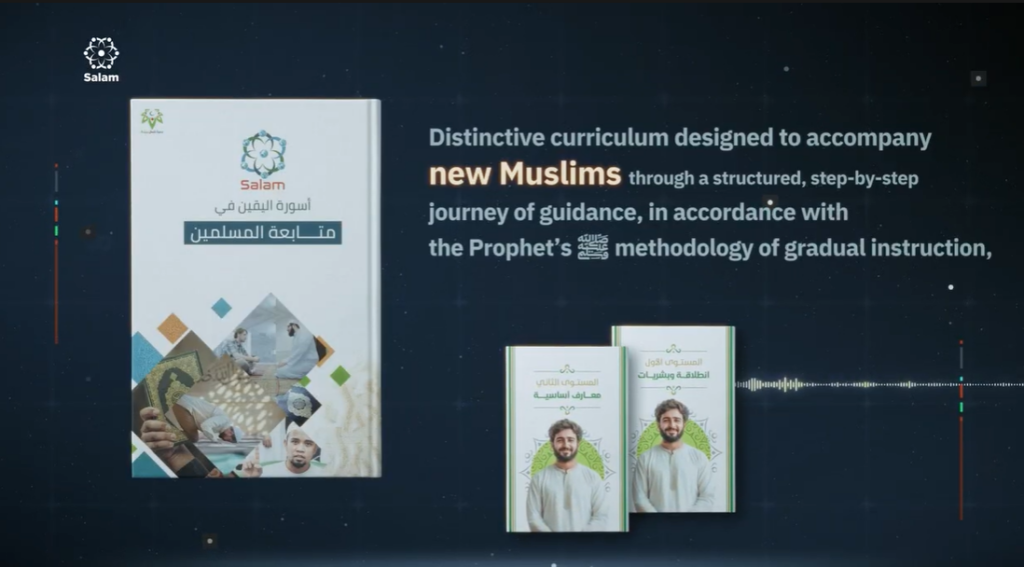
If you’re a new Muslim looking for structured guidance, the Salam Center offers the Asawirat Al-Yaqeen (Bracelets of Certainty) program — a four-stage curriculum built specifically for the post-conversion journey:
- Stage One covers the foundations: the Shahada, prayer, and the basic pillars of practice
- Stage Two addresses repentance and the biography of Prophet Muhammad (PBUH)
- Stage Three covers etiquette, family life, and daily conduct
- Stage Four tackles harder contemporary questions, including theological comparisons with Christianity
Reach out directly to the Salam Center team to start the Asawirat Al-Yaqeen (Bracelets of Certainty) program for FREE.
Summary
The Quran addresses this question with more directness than many expect, naming the claim itself and calling for evidence that never arrives. Salvation, according to the Quran, rests on submitting to Allah’s Oneness and following His final Messenger — not on inherited religious labels, however sincerely held.
This standard applies without exception across every community the Quran discusses, drawing its line at belief and knowledge rather than ethnicity or upbringing. Understanding this framework opens the door to understanding the rest of Islamic theology built upon it.
Frequently Asked Questions
Does the Quran say all religions lead to Paradise?
No. Quran 3:85 states that whoever seeks a religion other than Islam will never have it accepted, and will be among the losers in the Hereafter. Salvation is tied to submission to Allah’s final revelation, not to sincerity within any religious framework a person happens to follow.
What does the Quran say about Christians specifically?
The Quran corrects the belief that Jesus is divine (Quran 5:72) while affirming him as a genuine prophet of Allah. It states that whoever associates partners with Allah — including by deifying Jesus — has Paradise forbidden to them, regardless of other religious devotion.
Can a good Christian still go to hell according to Islam?
According to the hadith in Sahih Muslim 153, anyone from the Jewish or Christian community who hears of Prophet Muhammad (PBUH) and dies without believing his message will be among the people of Hellfire, regardless of personal moral character.
What is required for someone to enter Paradise in Islam?
Testifying that there is no god but Allah and that Muhammad (PBUH) is His Messenger, combined with sincere good deeds performed according to Allah’s commands. Quran 2:112 states this reward belongs to whoever “submits his face to Allah while being a doer of good.”
Curious about Islam?
Journey towards clarity and purpose. Our team is here to support you in your search for truth and spiritual guidance.
Embrace the Truth