
Islam’s Teachings on Love and Hate
| Key Takeaways |
| Islam commands believers to love and hate specific things and people for the sake of Allah, not from personal whim or ego. |
| The Quran states that Allah loves those who do good (Al-Muhsinin), the repentant, the just, and the patient. |
| The Prophet Muhammad (PBUH) taught that true faith requires loving for one’s brother what one loves for oneself. |
| Islam forbids hatred rooted in tribalism, racism, or personal grudge, restricting hate to what Allah Himself hates: sin, oppression, and disbelief as a state, never the human being as a target of cruelty. |
| Mercy sits at the center of the emotional life Islam asks of a Muslim, since the Prophet (PBUH) said the merciful are shown mercy by Ar-Rahman. |
| Loving and hating for Allah’s sake is described in Sahih Hadith as the strongest handhold of faith. |
Love and hate are not left to instinct in Islam. Muslims are taught to feel both, but to direct them according to a divine standard rather than personal taste, tribal loyalty, or fleeting emotion.
In Islamic teaching, both emotions carry moral weight. A Muslim’s love is meant to gravitate toward what Allah loves: sincerity, justice, mercy, and good character.
A Muslim’s hate is meant to gravitate toward what Allah hates: injustice, cruelty, arrogance, and sin itself — never toward another human being as a person, and never toward entire groups because of their ethnicity, nationality, or background.
What does Islam teach about love and hate?
Islam teaches that love and hate must be directed according to Allah’s pleasure rather than personal desire, meaning a Muslim loves what Allah loves and hates what Allah hates. This principle, known among scholars as al-hubb wal-bughd fillah (love and hate for the sake of Allah), governs how a believer relates to people, actions, and ideas.
The Prophet Muhammad (PBUH) described this orientation as foundational to faith itself. He said:
مَنْ أَحَبَّ لِلَّهِ وَأَبْغَضَ لِلَّهِ وَأَعْطَى لِلَّهِ وَمَنَعَ لِلَّهِ فَقَدِ اسْتكْمل الْإِيمَان
“If anyone loves for Allah’s sake, hates for Allah’s sake, gives for Allah’s sake and withholds for Allah’s sake, he will have perfect faith.” (Sunan Abi Dawud 4681)
This means hatred, in the Islamic framework, is never a license for cruelty or prejudice. A Muslim is taught to hate the sin, not annihilate the sinner from consideration as a human being deserving of justice and basic dignity.
Love, meanwhile, is not reduced to sentiment. It becomes an act of worship when it is offered for Allah’s sake — loving a fellow believer because of their taqwa (Allah-consciousness), or loving any person, Muslim or not, for their honesty and good character.
1. Allah loves those who do good and act with excellence
Allah explicitly states in the Quran that He loves Al-Muhsinin, meaning those who do good with excellence and sincerity, making righteous action a direct path to divine love. This is not a vague spiritual sentiment. It is stated as a concrete promise tied to observable behavior.
وَأَحْسِنُوا إِنَّ اللَّـهَ يُحِبُّ الْمُحْسِنِينَ
“And do good; indeed, Allah loves the doers of good.” (Quran 2:195)
The word Muhsinin comes from ihsan, a term with a specific technical meaning in Islamic theology.
Ihsan describes worshiping and treating others as though one perceives Allah directly, or at minimum, knows that Allah perceives him. It is a standard higher than mere correctness — it demands sincerity and beauty in action, not just the avoidance of wrongdoing.
This concept connects directly to broader Islam principles that structure the entire moral life of a Muslim. The pursuit of ihsan touches business dealings, family relationships, and even how one treats animals, since the standard is excellence, not the bare minimum of obligation.
2. Allah loves those who repent and purify themselves
Allah’s love extends to those who return to Him after error, showing that divine love is not reserved only for those who never stumble. The Quran pairs two groups together in this promise, revealing something important about how repentance and purification work together.
إِنَّ اللَّهَ يُحِبُّ التَّوَّابِينَ وَيُحِبُّ الْمُتَطَهِّرِينَ
“Indeed, Allah loves those who are constantly repentant and loves those who purify themselves.” (Quran 2:222)
The repeated use of “loves” for both groups signals that repentance is not a grudging concession from Allah — it is something He actively welcomes and rewards with His love. This matters enormously for how Islam frames human failure.
A person is not permanently disqualified from divine affection by mistakes; the door back remains open, and walking through it is itself described as beloved to Allah.
Learn More About Islam
Discover the beauty, teachings, and wisdom of Islam in a clear and welcoming way. Start exploring and deepen your understanding today.
Learn More3. Allah loves those who are just and those who trust in Him
Justice and reliance on Allah (tawakkul) both appear repeatedly among the qualities Allah says He loves, tying love directly to how a believer treats others and how they respond to hardship.
إِنَّ اللَّهَ يُحِبُّ الْمُقْسِطِينَ
“Indeed, Allah loves those who act justly.” (Quran 49:9)
This verse arrives in a specific context: instructions for making peace between two groups of believers who are fighting.
Allah does not simply command justice in the abstract — He ties it to His love, elevating fairness from a legal obligation to a spiritual aspiration.
This intersects meaningfully with how Islam views other religions, since justice in the Quran is explicitly commanded even toward those outside the faith community, not reserved exclusively for fellow Muslims.
4. Allah is Al-Wadud, meaning He is inherently the Loving One
Beyond loving specific actions, Allah describes Himself with a name that reflects love as an intrinsic divine attribute rather than a conditional response. This name is Al-Wadud.
إِنَّ رَبِّي رَحِيمٌ وَدُودٌ
“Indeed, my Lord is Merciful and Affectionate.” (Quran 11:90)
وَهُوَ الْغَفُورُ الْوَدُودُ
“And He is the Forgiving, the Affectionate.” (Quran 85:14)
The Yaqeen Institute notes that Al-Wadud derives from a root distinct from the more general Arabic word for love, carrying connotations of active affection and warm friendship rather than distant approval.
In both Quranic occurrences, Al-Wadud is paired with forgiveness — a pattern scholars have read as evidence that Allah’s love is not contingent on a servant’s perfection, but is extended precisely at the moment of turning back to Him.
5. The Prophet taught that true faith requires loving for others what you love for yourself
Prophet Muhammad (PBUH) established that genuine faith is measured partly by whether a believer wants for other people the same good things they want for themselves, transforming love from a private feeling into an ethical obligation toward the community. This teaching appears in one of the most frequently cited Hadith in Islamic ethics.
لاَ يُؤْمِنُ أَحَدُكُمْ حَتَّى يُحِبَّ لأَخِيهِ مَا يُحِبُّ لِنَفْسِهِ
“None of you will have faith till he wishes for his brother what he likes for himself.” (Sahih al-Bukhari 13)
A version narrated in Sahih Muslim adds the alternative wording “for his neighbor,” widening the circle of concern beyond fellow Muslims to anyone in proximity (Sahih Muslim 45a).

6. Islam commands loving the Prophet and Allah above all worldly attachments
The Quran places love of Allah, His Messenger, and striving in His cause above even the deepest natural human attachments — family, wealth, and comfort — as a marker of sincere faith.
قُلْ إِن كَانَ آبَاؤُكُمْ وَأَبْنَاؤُكُمْ وَإِخْوَانُكُمْ وَأَزْوَاجُكُمْ وَعَشِيرَتُكُمْ وَأَمْوَالٌ اقْتَرَفْتُمُوهَا وَتِجَارَةٌ تَخْشَوْنَ كَسَادَهَا وَمَسَاكِنُ تَرْضَوْنَهَا أَحَبَّ إِلَيْكُم مِّنَ اللَّهِ وَرَسُولِهِ وَجِهَادٍ فِي سَبِيلِهِ فَتَرَبَّصُوا حَتَّىٰ يَأْتِيَ اللَّهُ بِأَمْرِهِ
“Say, ‘If your fathers, your sons, your brothers, your wives, your relatives, wealth which you have obtained, commerce wherein you fear decline, and dwellings with which you are pleased are more beloved to you than Allah and His Messenger and jihad in His cause, then wait until Allah executes His command.'” (Quran 9:24)
This is not a rejection of family love or ordinary attachments — the Quran elsewhere commands kindness to parents and love within marriage.
Rather, it establishes a hierarchy: no worldly love should override submission to Allah when the two come into direct conflict.
This principle connects to faith in Islam more broadly, since Iman is described as a comprehensive orientation of loyalty, not a compartment of life separate from daily relationships.
7. Loving and hating for Allah’s sake is the strongest bond of faith
Beyond individual verses about what Allah loves, the Sunnah describes the entire practice of directing love and hate toward Allah’s pleasure as the single strongest connection a believer can hold to their faith.
Muadh ibn Jabal reported that he heard the Prophet (PBUH) relate a divine statement:
“Allah, the Exalted, has said: ‘For those who love one another for the sake of My Glory, there will be seats of light on the Day of Resurrection, and they will be envied by the Prophets and martyrs.'” (At- Tirmidhi)
This Hadith reframes ordinary friendship. A friendship built for Allah’s sake — because a person recognizes and loves piety, honesty, or good character in another — is elevated to an act of worship carrying reward that surpasses even that given to some martyrs.
The emphasis on “for My Glory” underscores that the motivation matters as much as the relationship itself; love built on worldly benefit alone does not carry this same spiritual weight.
8. Islam forbids hatred rooted in tribalism racism or personal grudge
Islam explicitly condemns hatred based on lineage, race, tribal loyalty, or ego, restricting legitimate hatred to what Allah Himself dislikes: sin, oppression, and injustice. This distinction is critical, because it separates Islamic teaching from any form of hatred directed at human beings because of their ancestry or group identity.
The Prophet (PBUH) delivered his Farewell Sermon with language that directly dismantles tribal supremacy:
“There is no superiority for an Arab over a non-Arab, nor for a non-Arab over an Arab, and no superiority for a white person over a black person, nor for a black person over a white person, except through righteousness (taqwa).”
This is reinforced by the Quran’s framing of human diversity as intentional divine design rather than a hierarchy to exploit:
يَا أَيُّهَا النَّاسُ إِنَّا خَلَقْنَاكُم مِّن ذَكَرٍ وَأُنثَىٰ وَجَعَلْنَاكُمْ شُعُوبًا وَقَبَائِلَ لِتَعَارَفُوا إِنَّ أَكْرَمَكُمْ عِندَ اللَّهِ أَتْقَاكُمْ
“O mankind, indeed We have created you from male and female and made you peoples and tribes that you may know one another. Indeed, the most noble of you in the sight of Allah is the most righteous of you.” (Quran 49:13)
Hatred, when it is legitimate in Islam, is directed at actions and states — cruelty, deceit, oppression — never at a person’s ethnicity, nationality, or the group they were born into.
Read Also: How Did The Teachings Of Islam Spread?
9. The Prophet condemned suspicion spying and enmity between believers
Islam draws a sharp boundary around the kinds of negative feeling that corrode a community, explicitly naming behaviors the Prophet (PBUH) forbade because they breed unjustified hatred between people.
“Beware of suspicion, as suspicion is the falsest talk, and do not spy upon each other, and do not have enmity with one another, but be brothers.”
This Hadith targets the mechanisms by which hatred typically forms — assumption without evidence, invasive scrutiny of others’ private affairs, and the slow accumulation of grudges.
By naming these specifically, the Prophet (PBUH) treats the prevention of unjust hatred as an active discipline, not something that simply happens to a well-meaning believer by accident.
Read Also: Islam’s Teachings on Forgiveness
10. Mercy is central to how Allah relates to His creation and how Muslims must relate to each other
Islam positions mercy as the operative expression of Allah’s love in the world, and ties a believer’s own portion of that mercy directly to how they treat other creatures. This is stated with unusual directness in a Hadith graded authentic by multiple hadith scholars.
“The Compassionate One has mercy on those who are merciful. If you show mercy to those who are on the earth, He Who is in the heaven will show mercy to you.” (Sunan Abi Dawud 4941)
The scope of this Hadith is deliberately unqualified. It does not say mercy toward believers, or toward the deserving, or toward the pious — it says mercy toward “those who are on the earth,” a category scholars have read as encompassing all people and even animals. This universalism reflects the Quran’s own description of Prophet Muhammad’s mission:
وَمَا أَرْسَلْنَاكَ إِلَّا رَحْمَةً لِّلْعَالَمِينَ
“And We have not sent you, [O Muhammad], except as a mercy to the worlds.” (Quran 21:107)
Read Also: Islam’s Teachings on Human Rights
11. Islam teaches greeting and spreading peace as a practical path to mutual love
The Prophet Muhammad (PBUH) did not leave love as an abstract command — he provided a specific, repeatable practice for cultivating it between people who might otherwise remain strangers or rivals.
“You will not enter Paradise until you believe, and you will not believe until you love one another. Shall I not tell you of something which, if you do it, you will love one another? Spread the greetings of Salam amongst yourselves.” (Sunan Ibn Majah 68)
This Hadith connects three things in sequence: entering Paradise, genuine faith, and mutual love among believers — and then offers a concrete, low-barrier action (spreading greetings of peace) as the mechanism for building that love.
It transforms a simple social greeting into a spiritually significant act, showing that Islam treats the small daily habits of courtesy as building blocks of a larger emotional and communal fabric.
Read Also: Islam’s Teachings on Peace and Violence
Learn More About Islam
Discover the beauty, teachings, and wisdom of Islam in a clear and welcoming way. Start exploring and deepen your understanding today.
Learn MoreYour Path to Deeper Authentic Knowledge Starts Here with Salam
Understanding Allah’s love and the boundaries around legitimate hatred is only one piece of a much larger picture. Islam offers a complete framework for meaning, purpose, and belonging — one that many people find brings clarity to questions they’ve carried for years.
The Salam platform exists for exactly this kind of exploration. Whether the questions are about theology, the Prophet’s life, or the Quran itself, honest inquiry is always welcome here.
Browse the Salam blog for deeper articles across every dimension of Islamic belief and practice.
Reach out directly — our team is ready to listen, guide, and welcome you.

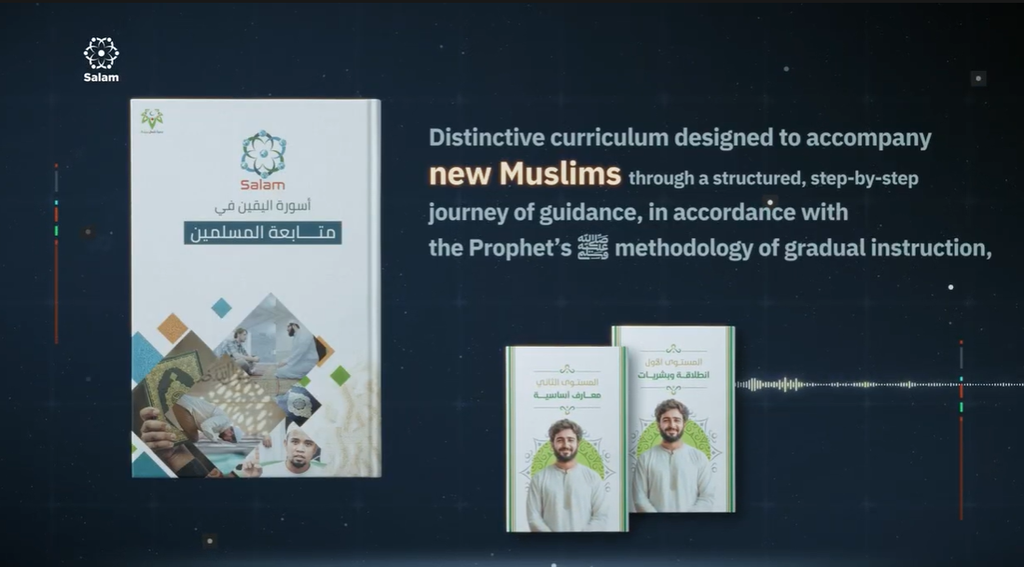
For those who feel ready to take the Shahada, or want structured support after converting, the Salam Center offers the Asawirat Al-Yaqeen (Bracelets of Certainty) program — a four-stage curriculum built specifically for new Muslims, covering:
- Foundational pillars of faith and practical worship (wudu, salah, the Shahada)
- Repentance, the Seerah of Prophet Muhammad (PBUH), and moral character
- Etiquette, family rulings, and daily Islamic practice
- Contemporary issues, theological evidence, and a complete life roadmap
Reach out directly to the Salam Center team to start the Asawirat Al-Yaqeen (Bracelets of Certainty) program for FREE.
Summary
Islamic teaching directs love toward what Allah loves — good deeds, repentance, justice, and mercy — while restricting hatred to sin and oppression rather than any human being’s identity. This dual command, rooted in both Quranic revelation and Prophetic example, shapes daily Muslim conduct toward believers and non-believers alike.
Far from encouraging hostility, the Sunnah frames mutual love, mercy, and the rejection of tribal hatred as prerequisites for genuine faith. Anyone exploring this dimension of Islam will find a tradition centered on disciplined compassion rather than unchecked emotion.
Frequently Asked Questions
Does Islam teach Muslims to hate non-Muslims?
No, Islam does not teach hatred toward non-Muslims as people. The Quran commands justice and kindness toward all of humanity (Quran 60:8) and restricts legitimate hatred to sin and oppression as concepts, never to a person’s identity, religion, or ethnicity.
What does Allah love according to the Quran?
The Quran states Allah loves those who do good (Al-Muhsinin), the repentant, the just, and those who purify themselves. These qualities appear repeatedly across multiple surahs, including Quran 2:195 and Quran 49:9, tying divine love directly to observable righteous conduct.
What is love and hate for the sake of Allah in Islam?
Love and hate for the sake of Allah, known as al-hubb wal-bughd fillah, means directing affection and dislike according to what pleases Allah rather than personal ego or tribal bias. The Prophet (PBUH) called this the path to perfected faith in Sunan Abi Dawud 4681.
Why is mercy so central to Islamic teaching on emotions?
Mercy functions as the practical expression of divine love within Islam, since the Prophet (PBUH) taught that those who show mercy to creation receive mercy from Allah, described as Ar-Rahman. This principle appears in Sunan Abi Dawud 4941 and shapes Muslim ethics toward both people and animals.
Is hatred ever permitted in Islam?
Yes, but only toward sin, oppression, and injustice as concepts, never toward a human being because of their race, tribe, or identity. The Prophet’s Farewell Sermon explicitly rejected tribal and racial superiority, establishing taqwa (righteousness) as the only valid measure of distinction between people.
Curious about Islam?
Journey towards clarity and purpose. Our team is here to support you in your search for truth and spiritual guidance.
Embrace the Truth