
Islam’s Teachings on Forgiveness
| Key Takeaways |
| Islam grounds forgiveness in the nature of Allah Himself, whose mercy the Prophet ﷺ described as prevailing over His wrath (Sahih al-Bukhari 3194). |
| The Quran states plainly that Allah forgives all sins for those who turn to Him sincerely, as declared in Surah Az-Zumar 39:53. |
| Forgiving others is not weakness in Islam; the Prophet ﷺ taught that Allah raises the honor of anyone who forgives (Sahih Muslim 2588). |
| Repentance (Tawbah) in Islam has no expiration date short of death, since Allah’s hand of acceptance is described as outstretched day and night (Sahih Muslim 2759a). |
| The Quran links forgiving other people directly to receiving Allah’s own forgiveness, most famously in the verse revealed about Abu Bakr (Quran 24:22). |
| Islamic forgiveness operates on two connected tracks: seeking Allah’s pardon for one’s own sins, and extending pardon to those who have wronged you. |
Forgiveness is a foundational principle in Islam, woven into the names of Allah, the practice of the Prophet ﷺ, and the daily conduct expected of every believer. Allah describes Himself in the Quran as Al-Ghafur (the Oft-Forgiving) and Al-‘Afuww (the Pardoner), names that appear dozens of times across the text.
The Prophet Muhammad ﷺ once told his companions something that captures the whole picture in a single sentence: “When Allah completed the creation, He wrote in His book with Him upon the Throne: Verily, My mercy prevails over My wrath.”
1. Allah’s mercy is described as greater than His wrath
The starting point for understanding forgiveness in Islam is Allah’s own character, not human effort. Before a single sin was committed, before creation even existed, the Quran and Sunnah describe Allah as having already decided that mercy would define His relationship with humanity.
The clearest statement of this comes directly from Allah’s own words in the Quran:
قُلْ يَا عِبَادِيَ الَّذِينَ أَسْرَفُوا عَلَىٰ أَنفُسِهِمْ لَا تَقْنَطُوا مِن رَّحْمَةِ اللَّهِ ۚ إِنَّ اللَّهَ يَغْفِرُ الذُّنُوبَ جَمِيعًا ۚ إِنَّهُ هُوَ الْغَفُورُ الرَّحِيمُ
“Say, ‘O My servants who have transgressed against themselves [by sinning], do not despair of the mercy of Allah. Indeed, Allah forgives all sins. Indeed, it is He who is the Forgiving, the Merciful.'” (Quran 39:53)
Notice the wording. Allah does not say He forgives most sins, or sins under a certain threshold.
He says He forgives them all, for anyone who turns back to Him sincerely. This single verse has brought comfort to generations of Muslims who feared their mistakes had placed them beyond hope.
The Prophet ﷺ reinforced this same idea in a hadith that scholars classify among the sacred sayings (Hadith Qudsi), where Allah speaks in the first person through His Messenger:
“When Allah completed the creation, He wrote in His book with Him upon the Throne: Verily, My mercy prevails over My wrath.” (Sahih al-Bukhari, Hadith 3194)
Understanding Allah in this way, as a Being whose defining trait is compassion rather than retribution, is central to how Islam frames the nature of God more broadly.
It also explains why despair itself is treated seriously in Islamic teaching. Giving up hope in Allah’s mercy is not humility. It’s a misunderstanding of who Allah actually is.
2. Sincere repentance opens the door to forgiveness at any moment
Islam does not place a time limit on when a person can seek Allah’s forgiveness, short of the moment of death itself. This is one of the most reassuring aspects of Islamic teaching for anyone carrying guilt over past actions.
The Prophet ﷺ described Allah’s continuous invitation to repent using a vivid image:
“Verily, Allah Almighty stretches out His hand by night to accept the repentance of those who sin by day, and He stretches out His hand by day to accept the repentance of those who sin by night, until the sun rises from the west.” (Sahih Muslim, Hadith 2759a)
The reference to the sun rising from the west points to a major sign of the approaching Day of Judgment. Until that moment arrives, the door stays open. There is no sin, according to authentic Islamic teaching, that places a sincere penitent beyond reach.
Perhaps the most striking illustration of this principle appears in a hadith narrated by Abu Sa’id al-Khudri, describing a man who had killed ninety-nine people:
“There was a person before you who had killed ninety-nine persons and then made an inquiry about the learned persons of the world… He then asked about the learned persons of the earth and he was directed to a scholar, and he told him that he had killed one hundred persons and asked him whether there was any scope for his repentance to be accepted. He said: Yes; what stands between you and the repentance?” (Sahih al-Bukhari 3470)
The man set out toward a righteous community, and Allah forgave him before he even arrived, based purely on the sincerity of his intention.
Islamic scholarship draws a specific lesson from this account: repentance is measured by the honesty of the heart turning back to Allah, not by the size of the sin being left behind.
Learn More About Islam
Discover the beauty, teachings, and wisdom of Islam in a clear and welcoming way. Start exploring and deepen your understanding today.
Learn More3. Forgiving other people is treated as an act of strength in Islam
Islam explicitly rejects the idea that forgiving someone who wronged you is a sign of weakness. Quite the opposite. The Quran and Sunnah frame it as a mark of moral excellence that Allah personally rewards.
Allah describes the believers He loves most in these terms:
الَّذِينَ يُنفِقُونَ فِي السَّرَّاءِ وَالضَّرَّاءِ وَالْكَاظِمِينَ الْغَيْظَ وَالْعَافِينَ عَنِ النَّاسِ ۗ وَاللَّهُ يُحِبُّ الْمُحْسِنِينَ
“Who spend [in the cause of Allah] during ease and hardship and who restrain anger and who pardon the people – and Allah loves the doers of good.” (Quran 3:134)
The pairing here is deliberate. Restraining anger and pardoning people are listed alongside financial generosity as marks of a Muhsin, someone who does good with excellence.
This connects directly to what Islam expects in daily conduct, an ethic explored more broadly in the Quran’s teachings on faith and practice.
The Prophet ﷺ made the personal reward explicit as well:
“Charity does not decrease wealth, no one forgives another except that Allah increases his honor, and no one humbles himself for the sake of Allah except that Allah raises his status.” (Sahih Muslim, Hadith 2588)
Far from diminishing a person, forgiveness elevates them in Allah’s sight. This single hadith reshapes how forgiveness should be understood, not as surrendering dignity, but as gaining it.
4. Forgiving others is directly connected to receiving Allah’s forgiveness
One of the strongest principles in Islamic teaching is reciprocity between how a person treats others and how Allah treats that person. This isn’t presented as a vague spiritual sentiment. It appears in a specific Quranic verse tied to a real historical event during the Prophet’s ﷺ lifetime.
The context involves Abu Bakr, the closest companion of the Prophet ﷺ, and his relative Mistah, who had been financially supported by him for years.
After Mistah took part in spreading a slanderous accusation against Abu Bakr’s daughter, Aisha, Abu Bakr swore he would stop supporting him. Allah then revealed:
وَلَا يَأْتَلِ أُولُو الْفَضْلِ مِنكُمْ وَالسَّعَةِ أَن يُؤْتُوا أُولِي الْقُرْبَىٰ وَالْمَسَاكِينَ وَالْمُهَاجِرِينَ فِي سَبِيلِ اللَّهِ ۖ وَلْيَعْفُوا وَلْيَصْفَحُوا ۗ أَلَا تُحِبُّونَ أَن يَغْفِرَ اللَّهُ لَكُمْ ۗ وَاللَّهُ غَفُورٌ رَّحِيمٌ
“And let not those of virtue among you and wealth swear not to give [aid] to their relatives and the needy and the emigrants for the cause of Allah, and let them pardon and overlook. Would you not like that Allah should forgive you? And Allah is Forgiving and Merciful.” (Quran 24:22)
Upon hearing this verse, Abu Bakr immediately resumed his support for Mistah, choosing forgiveness the moment he understood what Allah was asking of him.
The rhetorical question embedded in the verse, would you not like that Allah should forgive you?, places the choice squarely before every believer.
Withholding forgiveness from others while hoping for it from Allah is presented as inconsistent.
Read Also: How Did The Teachings Of Islam Spread?
5. Wrongdoing between people carries its own accountability separate from Allah’s forgiveness
Islam distinguishes between sins against Allah directly and wrongs committed against other people, and this distinction matters for how forgiveness actually works. A person cannot simply ask Allah to forgive a debt, a theft, or an injury done to someone else without also making things right with that person, where possible.
The recompense structure for interpersonal wrongs is described this way:
وَجَزَاءُ سَيِّئَةٍ سَيِّئَةٌ مِّثْلُهَا ۖ فَمَنْ عَفَا وَأَصْلَحَ فَأَجْرُهُ عَلَى اللَّهِ ۚ إِنَّهُ لَا يُحِبُّ الظَّالِمِينَ
“And the retribution for an evil act is an evil one like it, but whoever pardons and makes reconciliation – his reward is [due] from Allah. Indeed, He does not like wrongdoers.” (Quran 42:40)
This verse holds two ideas in balance. Justice is affirmed as legitimate, a wronged person has a right to appropriate recompense.
But immediately after, forgiveness is elevated as the higher path, one that earns a reward directly from Allah rather than from the person who caused the harm.
Islamic scholarship consistently teaches that choosing reconciliation over retaliation, when it can be done safely and wisely, reflects the character the Quran calls believers toward.
This principle of balancing justice with mercy runs throughout Islamic ethical teaching, including how Islam approaches interactions with people outside the faith community.
Read Also: Islam’s Teachings on an Eye for an Eye
6. The Prophet’s own life models forgiveness at its most extreme test
No teaching illustrates Islamic forgiveness more powerfully than what the Prophet ﷺ actually did when he had every opportunity for revenge. After nearly two decades of persecution, exile, and the killing of his companions and family members at the hands of the Quraysh, the Prophet ﷺ entered Makkah in the year 8 AH not as a conqueror seeking retribution, but as someone standing before the very people who had wronged him the most.
Standing before the Quraysh leadership who had once driven him from his home, the Prophet ﷺ asked them directly what they expected from him.
They answered, hoping for mercy, that they expected only goodness from a noble brother. His response drew on a moment from the Quran itself, echoing the words of Prophet Yusuf (Joseph) to the brothers who had once betrayed him:
قَالَ لَا تَثْرِيبَ عَلَيْكُمُ الْيَوْمَ ۖ يَغْفِرُ اللَّهُ لَكُمْ ۖ وَهُوَ أَرْحَمُ الرَّاحِمِينَ
“He said, ‘No blame will there be upon you today. Allah will forgive you; and He is the most merciful of the merciful.'” (Quran 12:92)
The Prophet ﷺ applied this same verse to the people who had once tried to kill him, declaring them free rather than settling old scores. This single episode has shaped Islamic understanding of forgiveness for fourteen centuries, demonstrating that the principle isn’t theoretical. It was lived out at the exact moment when revenge would have been easiest to justify.
Read Also: Islam’s Teachings on Human Rights
7. Human weakness does not disqualify a person from Allah’s mercy
Islam teaches that sin itself is part of the human condition Allah designed, not a flaw that shocks Him or exhausts His patience. This might be one of the more counterintuitive teachings for someone new to Islamic theology, yet it appears explicitly in an authentic hadith.
The Prophet ﷺ said:
“By Him in Whose Hand is my life, if you were not to commit sin, Allah would sweep you out of existence and He would replace (you by) those people who would commit sin and seek forgiveness from Allah, and He would have pardoned them.” (Sahih Muslim, Hadith 2749)
This hadith reframes how a Muslim should relate to their own mistakes. Sin followed by sincere seeking of forgiveness (Istighfar) is not a failure of the religious life. It is, in a sense, the expected rhythm of it.
What Allah dislikes is not the initial slip, but persistence in sin without any turning back. This is why Islamic teaching places such heavy emphasis on Istighfar as a daily practice, not reserved only for moments of major wrongdoing.
Read Also: Islam’s Teachings on Love and Hate
8. Forgiveness and mercy operate as a two-way exchange between believers and Allah
A recurring pattern across the Quran and Sunnah ties the mercy a person shows to others with the mercy they can expect to receive. This principle extends beyond the specific case of Abu Bakr and Mistah into a general rule for how Muslims are meant to treat everyone around them, including those outside the faith.
Understanding this reciprocity also connects to how Islam frames its relationship with other religious communities, a topic explored further in how Islam views other religions.
The logic is straightforward once laid out: a Muslim seeking Allah’s forgiveness for their own shortcomings is, at the same time, being asked to extend that same quality outward.
Withholding mercy from a spouse, a family member, a neighbor, or even a stranger while expecting boundless mercy from Allah creates an inconsistency the Quran directly addresses. This is part of why Islamic scholars consistently teach that forgiveness is not optional politeness.
It’s woven into what it means to have a properly ordered relationship with Allah in the first place, alongside the broader foundational principles that structure Islamic life.
Read Also: Islam’s Teachings on Peace and Violence
Learn More About Islam
Discover the beauty, teachings, and wisdom of Islam in a clear and welcoming way. Start exploring and deepen your understanding today.
Learn MoreLearn More About Faith, Certainty, and the Journey to Islam
Learning about forgiveness in Islam often opens the door to bigger questions about faith, the Quran, and the character of the Prophet Muhammad ﷺ. If any of this resonated with you, there’s a lot more to explore.
Read more reflections on the Salam blog, where new articles on Islamic beliefs and practice are added regularly.
Curious about specific verses, hadiths, or how Islam addresses your own questions?
Reach out directly — our team is ready to listen, guide, and welcome you.

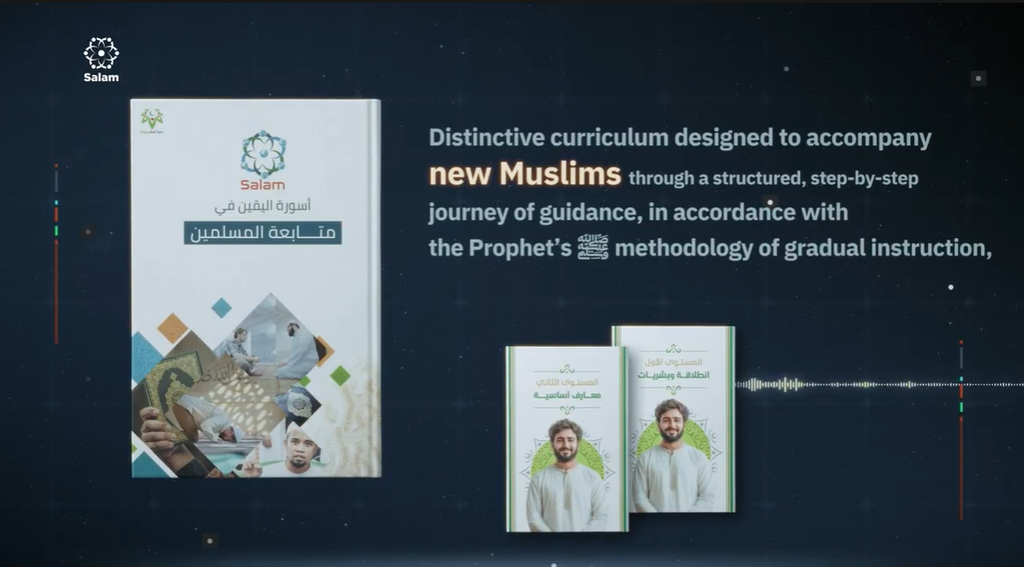
If you’re already Muslim, whether newly so or exploring more deeply, the Salam Center team built Asawirat Al-Yaqeen (Bracelets of Certainty) specifically for this stage of the journey. It’s a structured four-stage program covering:
- The foundations of faith, prayer, and purification
- Repentance, the Seerah of the Prophet ﷺ, and personal character
- Practical daily life rulings, from family matters to trade
- Deeper theological grounding and contemporary issues
Getting started is simple, just reach out and someone from the Salam Center will walk you through enrollment.
Reach out directly to the Salam Center team to start the Asawirat Al-Yaqeen (Bracelets of Certainty) program for FREE.
Summary
Islam presents forgiveness as central to Allah’s own nature, expressed through names like Al-Ghafur and confirmed by the Prophet’s ﷺ teaching that divine mercy prevails over wrath in every circumstance.
Believers are called to mirror this quality by forgiving others, a practice the Quran and Sunnah connect directly to receiving Allah’s own forgiveness in return, both now and on the Day of Judgment.
Frequently Asked Questions
Does Allah forgive all sins in Islam?
Yes. Quran 39:53 states that Allah “forgives all sins” for anyone who turns to Him sincerely and does not despair of His mercy. This applies to major and minor sins alike, provided repentance is genuine and the person does not associate partners with Allah while remaining unrepentant of that specific matter.
Is there a limit on how many times a person can ask for forgiveness in Islam?
No. Sahih Muslim 2759a describes Allah as accepting repentance continuously, day and night, with no cap on frequency. The only limit is the moment of death or the appearance of major end-times signs, after which repentance is no longer accepted.
Does Islam require forgiving someone who never apologizes?
Islam encourages forgiveness even without an apology, framing it as a source of honor rather than an obligation contingent on the other person’s remorse. Sahih Muslim 2588 states that “no one forgives another except that Allah increases his honor,” independent of whether the offender ever seeks pardon.
What is the difference between forgiveness and repentance in Islam?
Forgiveness (Maghfirah) is what Allah or another person grants after a wrong has occurred. Repentance (Tawbah) is the internal act of turning back to Allah with regret and a commitment to change. Tawbah is what a person offers; Maghfirah is what they receive in response, whether from Allah directly or from someone they wronged.
Curious about Islam?
Journey towards clarity and purpose. Our team is here to support you in your search for truth and spiritual guidance.
Embrace the Truth