
What Does the Quran Say About Infidels?
| Key Takeaways |
| The Arabic word kāfir (كافر), often translated as “infidel,” derives from the root k-f-r, meaning “to cover” — one who covers or conceals the truth after it has reached them. |
| The Quran addresses disbelievers across multiple contexts: theological distinction, worldly relations, and the consequences of rejection in the Hereafter. |
| Islam commands justice and fair treatment toward non-hostile disbelievers in this worldly life, as explicitly stated in Surah Al-Mumtahanah (60:8). |
| The Quran declares a complete disavowal of shirk (associating partners with Allah) while simultaneously forbidding aggression toward those who do not wage war against Muslims. |
| Disbelief, according to the Quran, is the one condition that renders a person without divine forgiveness in the Hereafter — not a license for hostility in the present world. |
The Quran addresses disbelievers — those it calls al-kāfirūn or al-kuffār — with clarity, precision, and without apology. For anyone genuinely asking what the Quran says about “infidels,” the word “infidel” is a Latin-derived English translation that carries its own historical baggage. The Quran’s actual term, kāfir, carries a precise theological meaning — one who conceals or rejects the truth after it has reached them.
From that foundation, the Quran speaks about disbelievers in matters of creed, in matters of worldly relations, and in matters of the Hereafter. Each category deserves its own explanation, and that is exactly what this article provides.
1. The Meaning of Kāfir in the Quran
Before any verse can be understood, the word itself must be properly established. Kāfir (كافر) is the active participle of the Arabic root k-f-r (ك ف ر), which literally means “to cover” or “to conceal.”
In pre-Islamic Arabic usage, a farmer (kāfir) was one who buried seeds in the ground — covering them with soil. The Quran itself uses this exact sense in Surah Al-Hadid (57:20), where the tillers of the earth are called kuffār in the agricultural meaning.
When the Quran uses kāfir in the theological sense, it refers to a person who covers or suppresses the truth — one who knows, or has received the message, and turns away from it. Theologically, it describes the one who conceals the truth of Allah.
The Quran uses it as a precise legal and theological category — and classical Ahlus Sunnah scholarship has always been careful to apply it with the same precision.
2. The Quran’s Declaration of Creedal Disavowal in Surah Al-Kafirun
One of the most direct Quranic statements about disbelievers comes in an entire chapter named for them: Surah Al-Kafirun (Chapter 109). Allah commanded the Prophet Muhammad (PBUH) to address the polytheists of Mecca with these words:
قُلْ يَٰٓأَيُّهَا ٱلْكَٰفِرُونَ لَآ أَعْبُدُ مَا تَعْبُدُونَ وَلَآ أَنتُمْ عَٰبِدُونَ مَآ أَعْبُدُ وَلَآ أَنَا۠ عَابِدٌ مَّا عَبَدتُّمْ وَلَآ أَنتُمْ عَٰبِدُونَ مَآ أَعْبُدُ لَكُمْ دِينُكُمْ وَلِيَ دِينِ
“Say, ‘O disbelievers, I do not worship what you worship. Nor are you worshippers of what I worship. Nor will I be a worshipper of what you worship. Nor will you be worshippers of what I worship. For you is your religion, and for me is my religion.'” (Quran 109:1–6)
The context of this revelation is essential to its meaning. The polytheists of the Quraysh approached the Prophet (PBUH) with a compromise: worship their gods for a year, and they would worship Allah for a year. Allah revealed this Surah in complete and unambiguous rejection of that proposal.
This Surah represents a total disavowal (bara’ah) from the religion of the idolators — their rites, their deities, their entire framework of worship.
The Surah was not revealed to preach religious pluralism in the modern secular sense — it was revealed to declare that Islam and kufr share no common ground, and that no merger between them is possible.
The final verse
— “For you is your religion, and for me is my religion”
— is a statement of complete creedal separation, not an endorsement of moral equivalence between belief and disbelief. It drew a permanent line between two paths that cannot converge.
This is how faith in Islam operates: it demands clarity about what is true and what is false, without the softening of one into the other.
3. What the Quran Says About the Fate of Disbelievers in the Hereafter
The Quran is unequivocal on the matter of the fate of disbelievers in the hereafter. Surah Al-Bayyinah addresses it directly:
إِنَّ ٱلَّذِينَ كَفَرُوا۟ مِنْ أَهْلِ ٱلْكِتَٰبِ وَٱلْمُشْرِكِينَ فِى نَارِ جَهَنَّمَ خَٰلِدِينَ فِيهَآ ۚ أُو۟لَٰٓئِكَ هُمْ شَرُّ ٱلْبَرِيَّةِ
“Indeed, those who disbelieved among the People of the Scripture and the polytheists will be in the fire of Hell, abiding eternally therein. Those are the worst of creatures.” (Quran 98:6)
This verse specifically refers to those who rejected the Prophet Muhammad (PBUH) after the clear evidence had reached them. The verse is addressed to two groups: the Ahl al-Kitab (People of the Book — Jews and Christians) who had knowledge of previous revelations yet rejected the final messenger, and the polytheists who rejected Allah altogether.
The Quran also states:
إِنَّ ٱللَّهَ لَا يَغْفِرُ أَن يُشْرَكَ بِهِۦ وَيَغْفِرُ مَا دُونَ ذَٰلِكَ لِمَن يَشَآءُ
“Indeed, Allah does not forgive association with Him, but He forgives what is less than that for whom He wills.” (Quran 4:48)
This verse establishes the singular gravity of shirk — associating partners with Allah — as the one sin that excludes a person from divine forgiveness in the Hereafter without repentance.
This is directly connected to understanding monotheism in Islam and why the Quran addresses polytheism with such seriousness.
The Quran also states in Surah Al-Imran (3:91):
إِنَّ ٱلَّذِينَ كَفَرُوا۟ وَمَاتُوا۟ وَهُمْ كُفَّارٌ فَلَن يُقْبَلَ مِنْ أَحَدِهِمْ مِّلْءُ ٱلْأَرْضِ ذَهَبًا
“Indeed, those who disbelieved and died while they were disbelievers — never would the [whole] capacity of the earth in gold be accepted from one of them.” (Quran 3:91)
These are not verses of hatred. They are statements of divine truth about the spiritual consequence of rejecting the message of Allah after it has been made clear.
Have Questions About Islam?
Our team is ready to answer your questions clearly and respectfully. Ask freely and receive honest guidance.
Ask Us Now4. The Quran’s Command for Justice and Kindness Toward Non-Hostile Disbelievers
The Quran’s position on disbelievers in the worldly dimension is governed by a principle that cannot be overlooked. Allah says in Surah Al-Mumtahanah:
لَّا يَنْهَىٰكُمُ ٱللَّهُ عَنِ ٱلَّذِينَ لَمْ يُقَٰتِلُوكُمْ فِى ٱلدِّينِ وَلَمْ يُخْرِجُوكُم مِّن دِيَٰرِكُمْ أَن تَبَرُّوهُمْ وَتُقْسِطُوٓا۟ إِلَيْهِمْ ۚ إِنَّ ٱللَّهَ يُحِبُّ ٱلْمُقْسِطِينَ
“Allah does not forbid you from those who do not fight you because of religion and do not expel you from your homes — from being righteous toward them and acting justly toward them. Indeed, Allah loves those who act justly.” (Quran 60:8)
This verse is one of the clearest in the entire Quran on the matter of Muslim-nonMuslim relations in times of peace.
justice (qist) toward every non-Muslim is obligatory, whether that person is a citizen of an Islamic state, bound by a peace treaty, or even a citizen of a non-Muslim state not at war with Muslims.
The cause for severing relations with disbelievers, when it exists, is not their disbelief alone — it is their active hostility and aggression.
The Islamic scholarly tradition has always drawn this distinction. This shapes the entire Islamic view of other religions and the principles governing coexistence.
5. The Quran on Those Who Wage War Against Islam
While the Quran commands justice toward peaceful non-Muslims, it equally commands firmness toward those who wage war against Muslims and their faith. This is not a contradiction — it is a coherent ethical framework. The Quran states in Surah Al-Baqarah:
وَقَٰتِلُوا۟ فِى سَبِيلِ ٱللَّهِ ٱلَّذِينَ يُقَٰتِلُونَكُمْ وَلَا تَعْتَدُوٓا۟ ۚ إِنَّ ٱللَّهَ لَا يُحِبُّ ٱلْمُعْتَدِينَ
“Fight in the way of Allah those who fight you but do not transgress. Indeed, Allah does not like transgressors.” (Quran 2:190)
The verse itself contains the limiting principle within it: do not transgress. Offensive aggression against those who have not attacked is forbidden. The command to fight is conditional upon being fought first.
Fighting is prescribed in defense of the Muslim community and their right to practice their faith — not as a vehicle for forced conversion or unconstrained aggression. The Quran elsewhere states emphatically:
لَآ إِكْرَاهَ فِى ٱلدِّينِ
“There is no compulsion in religion.” (Quran 2:256)
Conversion to Islam, per the Quran’s own declaration, cannot be forced. This verse is absolute in its scope confirms that this verse establishes a foundational principle of Islamic law.
These are core Islam principles that must be understood together, not in isolation.
Read Also: Can Non-Muslims Read the Quran?
6. The Quran’s Creedal Verdict on the Beliefs of Disbelievers
The Quran also directly addresses specific theological claims that constitute disbelief. Regarding those who claimed that Allah has a son:
لَّقَدْ كَفَرَ ٱلَّذِينَ قَالُوٓا۟ إِنَّ ٱللَّهَ هُوَ ٱلْمَسِيحُ ٱبْنُ مَرْيَمَ
“They have certainly disbelieved who say that Allah is the Messiah, the son of Mary.” (Quran 5:17)
This is not a statement of personal hostility toward Christians. The Quran acknowledges what Muslims believe about Jesus and honors him as a prophet of Allah — but the claim of divine sonship is, per Quranic declaration, an act of kufr.
The same applies to the Trinity doctrine and to any form of polytheism. This connects directly to the Quranic understanding of the nature of Allah — absolute, indivisible, and without partners.
This is what the Quran teaches, and the Quran — as established across generations of Islamic scholarship — is the uncreated speech of Allah, preserved intact.
Those who want to understand what Muslims believe about the Quran and why Muslims believe in the Quran will find that its authority rests on rational and revelatory foundations that have sustained scrutiny across fourteen centuries.
Read Also: How to Read the Quran as a Non-Muslim?
7. The Da’wah Obligation Toward Disbelievers
A dimension often missed when people ask what the Quran says about disbelievers is the da’wah (call to Islam) imperative. The Quran’s position on disbelief is not one of contempt for people — it is one of profound concern for their eternal wellbeing. Allah says:
وَمَا كُنَّا مُعَذِّبِينَ حَتَّىٰ نَبْعَثَ رَسُولًا
“And never would We punish until We had sent a messenger.” (Quran 17:15)
This verse establishes a divine principle of justice: punishment is contingent upon the message reaching a person. This is why the Quran elsewhere describes the believers as witnesses to humanity — because conveying the message is a trust.
The Prophet Muhammad (PBUH) spent twenty-three years calling people to Islam with patience, wisdom, and compassion. His companions extended that mission to the corners of the earth.
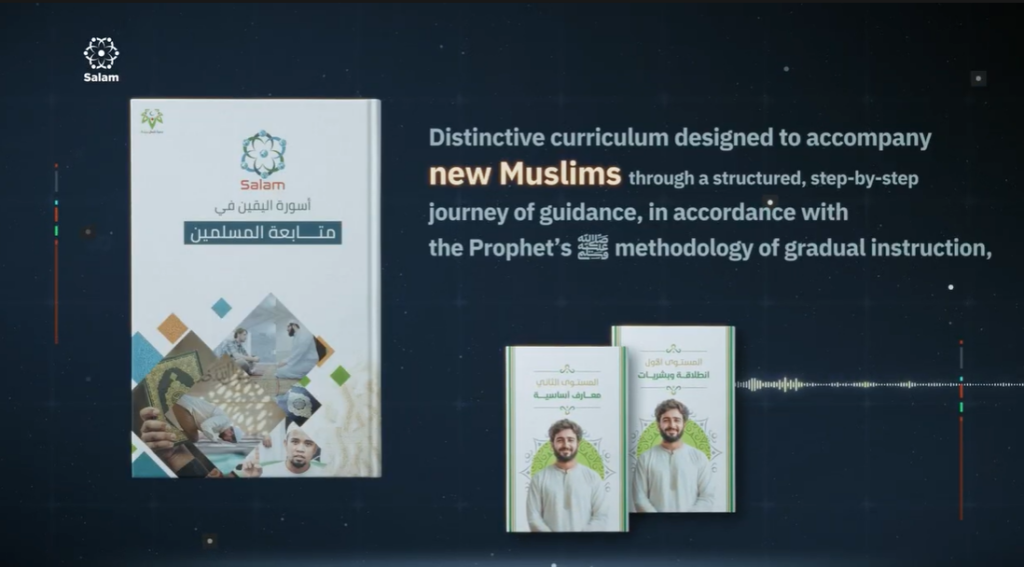
The Salam Center’s Asawirat Al-Yaqeen (Bracelets of Certainty) curriculum, which has guided over 114,000 new Muslims across 140 countries, carries this tradition forward — grounding new Muslims in the same Quranic understanding through a structured, compassionate journey toward firm faith.
Read Also: What the Quran Says About How to Treat Non-Muslims
Have Questions About Islam?
Our team is ready to answer your questions clearly and respectfully. Ask freely and receive honest guidance.
Ask Us NowRead Also: Do You Have to Read the Quran to Be a Muslim?
Learn More About Islam at the Salam Platform
If this article has opened questions — about the Quran, about Islam, or about your own path — the Salam Platform is here for you.
Visit the Salam blog for in-depth, authentic articles on Islamic belief, practice, and the answers to the questions that matter most.
Explore God in Islam to understand the Islamic concept of Allah — the foundation of everything the Quran addresses.
If you have a personal question, want to learn more about Islam, or are considering taking your Shahada — reach out directly to the Salam Center team. They are here to guide you with knowledge, patience, and care.

If you have recently embraced Islam and want structured, progressive learning grounded in authentic scholarship, ask about the Asawirat Al-Yaqeen (Bracelets of Certainty) program:
- A four-stage curriculum covering creed, worship, character, and contemporary issues
- Designed specifically for new Muslims, combining compassionate guidance with solid Islamic evidences
- Implemented with over 114,000 new Muslims across 140 countries
- Available in multiple languages, with a smart application under development
- Grounded in the methodology of Ahlus Sunnah wal Jama’ah from the very first lesson
Reach out directly to the Salam Center team to start the Asawirat Al-Yaqeen (Bracelets of Certainty) program for FREE.
Summary
The Quran addresses disbelievers with theological precision across three distinct domains: the creedal separation between belief and kufr, the worldly obligation of justice toward peaceful non-Muslims, and the Hereafter’s consequence for dying upon rejection of the truth. Classical Ahlus Sunnah scholarship, from Imam al-Tabari to Ibn Kathir, has consistently maintained these distinctions rather than collapsing them.
Understanding the Quran’s full teaching requires holding all three dimensions together. Disbelief carries eternal gravity, yet the Muslim in this world is obligated to convey the message with wisdom and to treat peaceful non-Muslims with equity — because the Quran commands both, and the Prophet Muhammad (PBUH) modeled both throughout his life.
Frequently Asked Questions
What is the Quranic definition of a “kafir” or “infidel”?
The Quran uses the word kāfir (كافر) for one who rejects or conceals the truth after it has reached them. Derived from the Arabic root k-f-r meaning “to cover,” it is a theological category referring to one who disbelieves in Allah and refuses the message of His final Prophet (PBUH).
Does the Quran say Muslims should hate or harm non-Muslims?
The Quran explicitly commands kindness and justice toward non-hostile non-Muslims in Surah Al-Mumtahanah (60:8), stating that Allah loves those who act equitably. Harm or aggression is forbidden against those who have not waged war against Muslims. The principle of la ikraha fid-din — “no compulsion in religion” (Quran 2:256) — confirms that coercion has no place in Islamic conduct.
What does the Quran say will happen to disbelievers in the Hereafter?
Surah Al-Bayyinah (98:6) states that those who disbelieve from among the People of the Book and the polytheists will abide in the fire of Hell permanently. Surah An-Nisa (4:48) establishes that shirk — associating partners with Allah — is the one sin He does not forgive in the Hereafter without repentance, making disbelief the gravest spiritual condition.
Is Surah Al-Kafirun a statement of religious tolerance?
Surah Al-Kafirun is a declaration of creedal disavowal, not religious pluralism in the modern secular sense. It was revealed to permanently reject the Quraysh’s proposal of theological compromise — declaring that Islam and kufr share no common ground and cannot be merged. The final verse separates two paths categorically.
Curious about Islam?
Journey towards clarity and purpose. Our team is here to support you in your search for truth and spiritual guidance.
Embrace the Truth