Does the Quran Say the Bible Is True?
| Key Takeaways |
| The Quran affirms that Allah originally revealed the Torah (Tawrat) to Moses, the Psalms (Zabur) to David, and the Gospel (Injil) to Jesus — all as divine guidance and light. |
| The Quran confirms the divine origin of previous scriptures but simultaneously declares itself the guardian (muhaymin) over them, superseding and correcting what has been altered. |
| The Bible in its current form is not identical to the original Tawrat or Injil as revealed to Moses and Jesus; Islamic theology holds that those original revelations were not preserved intact. |
| The Quran is the final, perfectly preserved revelation from Allah — the criterion by which all prior scriptures are judged and the only scripture whose divine preservation is guaranteed. |
The Quran affirms the divine origin of the scriptures that came before it — the Torah given to Moses, the Psalms given to David, and the Gospel given to Jesus, peace be upon them all. At the same time, it declares itself the supreme authority over those earlier revelations, confirming what remains authentic within them and exposing what has been distorted.
Does the Quran Say the Bible Is True?
The Quran says yes to the divine origin of the original scriptures, and no to the claim that those original scriptures are fully preserved in the Bible as it exists today.
The Quran is unambiguous that previous revelations came from Allah. Surah Al-Imran (3:3) states:
نَزَّلَ عَلَيْكَ الْكِتَابَ بِالْحَقِّ مُصَدِّقًا لِّمَا بَيْنَ يَدَيْهِ وَأَنزَلَ التَّوْرَاةَ وَالْإِنجِيلَ
“He has sent down upon you, [O Muhammad], the Book in truth, confirming what was before it. And He revealed the Torah and the Gospel.” (Quran 3:3)
This verse establishes two things at once: the Quran confirms the revelations that preceded it, and those prior revelations — the Torah and the Gospel — were genuinely from Allah.
Surah Al-Maidah (5:44) adds another dimension:
إِنَّا أَنزَلْنَا التَّوْرَاةَ فِيهَا هُدًى وَنُورٌ
“Indeed, We sent down the Torah, in which was guidance and light.” (Quran 5:44)
And of the Gospel, Surah Al-Maidah (5:46) states:
وَآتَيْنَاهُ الْإِنجِيلَ فِيهِ هُدًى وَنُورٌ
“And We gave him the Gospel, in which was guidance and light and confirming that which preceded it of the Torah.” (Quran 5:46)
These are powerful affirmations. The original Torah and Gospel were real, divinely revealed books containing guidance and light from Allah.
So where does the Quran’s qualified position come from?
The Quran’s qualified position comes from a verse that describes the Quran’s relationship to those earlier scriptures in a word that carries enormous theological weight: muhaymin.
Surah Al-Maidah (5:48) describes the Quran as:
وَأَنزَلْنَا إِلَيْكَ الْكِتَابَ بِالْحَقِّ مُصَدِّقًا لِّمَا بَيْنَ يَدَيْهِ مِنَ الْكِتَابِ وَمُهَيْمِنًا عَلَيْهِ
“We have revealed to you [O Prophet] this Book with the truth, as a confirmation of previous Scriptures and a supreme authority on them.” (Quran 5:48)
The Arabic word muhaymin means trustworthy guardian, supreme witness, and criterion of judgment.
As Ibn Kathir — the preeminent 14th-century mufassir — explains in his Tafsir Ibn Kathir, the Quran “is trustworthy over every Divine Book that preceded it — whatever in these previous Books conforms to the Quran is true, and whatever disagrees with the Quran is false.”
The Quran stands as a witness over earlier scriptures, confirming what remains divinely true in them and exposing what has been altered.
This is the precise Islamic position: the Quran confirms the divine origin of the original Torah and Gospel, but stands as the final authority over whatever circulates today in their name.
بسم الله. Let me verify the exact Quranic verses before rewriting, then craft the section with precision.All the verses and scholarly positions are now verified with precision. Here is the fully rewritten section:
Learn More About Islam
Discover the beauty, teachings, and wisdom of Islam in a clear and welcoming way. Start exploring and deepen your understanding today.
Learn MoreWhat Does Tahrif Mean?
Tahrif is the Quranic term for the distortion that befell earlier scriptures, and the Quran describes it across two distinct forms, distortion of meaning and textual addition and fabrication.
The first form: distortion of meaning
Surah Al-Nisa (4:46) states:
مِّنَ الَّذِينَ هَادُوا يُحَرِّفُونَ الْكَلِمَ عَن مَّوَاضِعِهِ
“Among the Jews are those who displace words from their right places.” (Quran 4:46)
This is tahrif al-ma’na — displacing divine words from their true meanings by misinterpreting them, concealing what they point to, or applying them to purposes other than those Allah intended.
They interpret it against its true interpretation and explain it other than what Allah intended, deliberately and falsely.”
The distortion condemned here is purposeful — a conscious turning of divine guidance away from its intended meaning, driven by desire and worldly gain.
The second form: textual addition and fabrication
Surah Al-Baqarah (2:79) addresses a distinct act:
فَوَيْلٌ لِّلَّذِينَ يَكْتُبُونَ الْكِتَابَ بِأَيْدِيهِمْ ثُمَّ يَقُولُونَ هَٰذَا مِنْ عِندِ اللَّهِ
“So woe to those who write the Scripture with their own hands, then say, ‘This is from Allah.'” (Quran 2:79)
This verse describes tahrif al-nass in one of its most condemned expressions: scribes physically adding fabricated material to the revealed text and attributing it to Allah for worldly profit.
Ibn Kathir, in his tafsir of this verse, records the narration of Ibn Abbas: “Allah told you that the People of the Book altered the Book of Allah, changed it, and wrote another book with their own hands. They then said: ‘This book is from Allah,’ so that they acquired a small profit by it.”
These two forms of tahrif are not mutually exclusive — and the Quran addresses both. A community can distort scripture by misinterpreting it while leaving its letters intact; another can physically alter its text through addition and omission. The Quran’s charges cover the full spectrum.
Read Also: Has the Quran Been Changed?
The Quran Confirms Original Revelation and Supersedes It
A crucial distinction that clarity requires: the Quran confirming previous divine revelations is entirely different from the Quran endorsing the Bible in its current printed form.
The Injil spoken of by the Quran is not the New Testament. It is not the four Gospels now received as canonical. The original Injil — the direct word of Allah as revealed to the Prophet Isa, peace be upon him — is not the same document as the New Testament compiled by later communities over centuries.
This understanding flows directly from the principles of faith in Islam: belief in all of Allah’s revealed books is a pillar of iman. But believing in the original Torah and Gospel as divine revelations is distinct from treating every passage in the modern Bible as the preserved word of Allah.
The Quran itself settles this question by declaring itself the final criterion. Where the Bible’s contents align with the Quran, there may be surviving divine truth within them.
Where they contradict the Quran’s clear teachings — on the nature of Allah, on the prophethood of Muhammad (PBUH), on core creed — the Quran’s authority is absolute.
For a deeper exploration of this dynamic, see what does the Quran say about other religions.
Why Is the Quran the Only Fully Preserved Scripture?
Muslims hold that the divine wisdom behind the Quran’s preservation is itself a theological statement. Allah did not promise to preserve the Torah or the Gospel after their communities received them — that responsibility was placed on those communities, and they fell short. The Quran, by contrast, carries Allah’s own guarantee of preservation:
إِنَّا نَحْنُ نَزَّلْنَا الذِّكْرَ وَإِنَّا لَهُ لَحَافِظُونَ
“Indeed, it is We who sent down the Qur’an and indeed, We will be its guardian.” (Quran 15:9)
No such guarantee was extended to earlier scriptures. This is not a criticism of Prophets Moses or Jesus, peace be upon them both — it is simply the completion of the divine plan. Each revelation served its time and its people.
The Quran came as the final, universal message, preserved in its original Arabic precisely as revealed to the Prophet Muhammad (PBUH), without addition or subtraction.
The history of the Quran itself — its memorization, transmission, and standardized compilation under the Companions — stands as one of the most documented phenomena in human history.
This is also why the Quran instructs the Prophet (PBUH) and Muslims to judge by what Allah has revealed — meaning the Quran — rather than deferring to the Books of earlier communities.
The Quran supersedes without dishonoring. It confirms the divine truth that came before it and corrects what human hands distorted over centuries.
Read Also: Why Is the Quran in Arabic?
Learn More About Islam
Discover the beauty, teachings, and wisdom of Islam in a clear and welcoming way. Start exploring and deepen your understanding today.
Learn MoreRead Also: What Is the Quran in Islam?
Explore More on the Salam Platform
If this article has opened a door for you, we invite you to walk further through it.
Browse the Salam blog for in-depth articles on Islamic belief, the prophets, the Quran, and some of the deepest questions people bring to their spiritual journey.
Visit the Salam Platform to explore structured content built for sincere seekers and new Muslims alike.
Reach out directly to our team if you have personal questions about Islam, want to understand more about Islamic belief, or simply need someone to speak with honestly and without pressure.
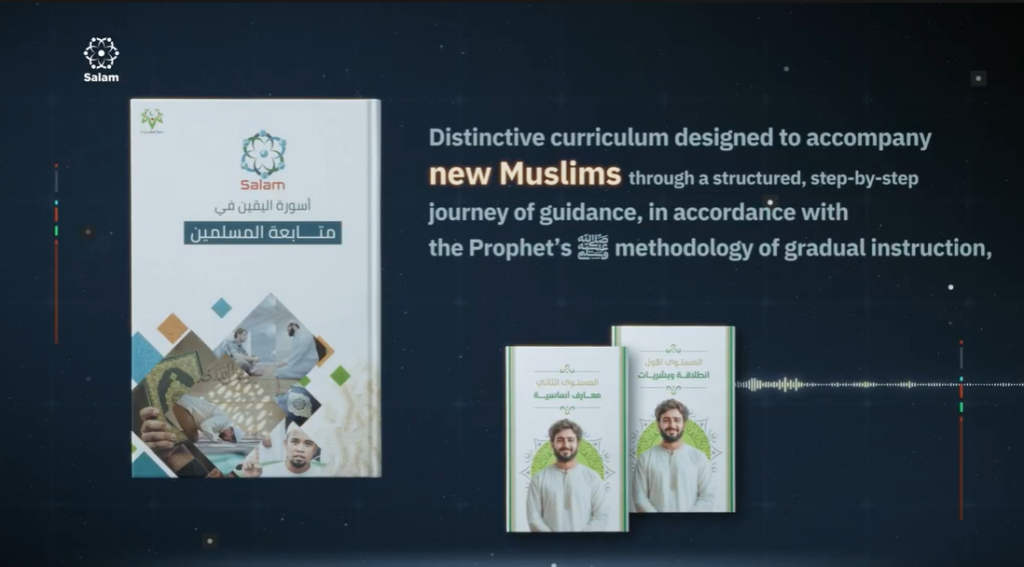
For new Muslims, the Salam Center offers the Asawirat Al-Yaqeen (Bracelets of Certainty) program — a structured four-stage educational journey designed to give you firm ground after your shahada. Here’s what it includes:
- Stage One — The Foundation: The meaning of the shahada, the pillars of Islam, the essentials of prayer, purification, and the six pillars of faith
- Stage Two — The Construction Phase: Major sins, repentance, and a deep study of the Prophet’s biography (PBUH)
- Stage Three — The Consolidation Phase: Spiritual development, Islamic etiquette, family rulings, and daily life guidance
- Stage Four — The Empowerment Phase: Contemporary issues, intellectual foundations of Islamic belief, and a life roadmap drawn from Surah Al-Asr
The program has reached 114,588 new Muslims across 140 countries, with 63.3% completing all four stages. Join this journey through the Salam Platform.
Reach out directly to the Salam Center team to start the Asawirat Al-Yaqeen (Bracelets of Certainty) program for FREE.
Summary
The Quran affirms that the Torah, Psalms, and Gospel were genuine revelations from Allah, each containing divine guidance and light when originally revealed to their respective prophets. The Bible in its current form is not identical to the original Tawrat or Injil as revealed to Moses and Jesus; Islamic theology holds that those original revelations were not preserved intact.
The Quran stands as the final, perfectly preserved word of Allah, acting as guardian and supreme criterion over all prior revelations. It confirms the divine truths that survive within earlier scriptures while superseding them entirely — offering every seeker today a direct, uncorrupted connection to the message Allah intended for all of humanity.
Frequently Asked Questions
Does the Quran say the Bible is the word of Allah?
The Quran affirms that the original Torah and Gospel were revealed by Allah as divine guidance. However, Islamic theology holds that the Bible in its current form is not identical to those original revelations, as the Quran describes a process of distortion (tahrif) affecting how those scriptures were transmitted, interpreted, and recorded by later communities.
What does the Quran say about the Torah and Gospel?
The Quran describes both the Torah and the Gospel as divine books containing guidance and light. Surah Al-Maidah (5:44) states that guidance and light were in the Torah, and Surah Al-Maidah (5:46) affirms the same of the Gospel. Both were genuine revelations, though not preserved in their original form.
What does muhaymin mean in Quran 5:48?
Muhaymin means trustworthy guardian, supreme witness, and criterion of truth. Ibn Kathir explains in his tafsir that the Quran is “trustworthy over every Divine Book that preceded it” — whatever in earlier scriptures conforms to the Quran is confirmed as true, and whatever contradicts it is identified as distortion.
Curious about Islam?
Journey towards clarity and purpose. Our team is here to support you in your search for truth and spiritual guidance.
Embrace the Truth