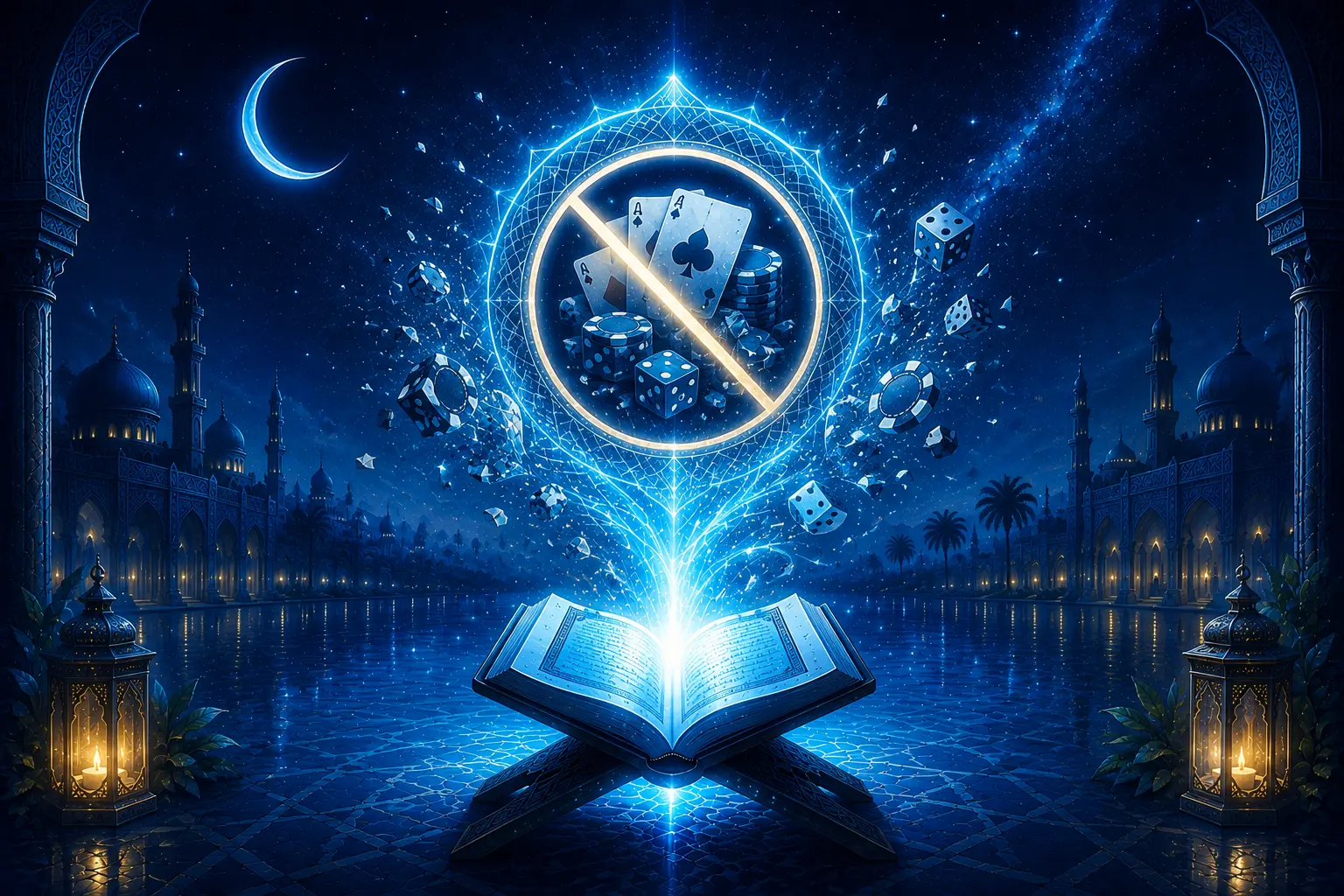
What Does the Quran Say About Gambling?
| Key Takeaways |
| The Quran directly names gambling (maysir) alongside intoxicants as a major sin in Quran 2:219 and Quran 5:90-91. |
| Quran 5:90 classifies gambling as “defilement from the work of Satan,” placing it in the same category as intoxicants and idol worship. |
| Islamic scholarship defines maysir broadly enough to cover modern lotteries, betting apps, and speculative wagering, not only traditional dice games. |
| Even inviting someone to gamble carries a religious consequence. |
The Quran forbids gambling. It calls gambling maysir and places it in the same category as intoxicants, describing both as carrying greater sin than benefit. This ruling appears explicitly in two places in the Quran, and it did not arrive all at once.
Allah addressed gambling the way He addressed alcohol: gradually, meeting a society deeply attached to the practice with wisdom rather than a single abrupt decree.
What Does the Quran Say About Gambling?
The Quran addresses gambling directly in two surahs, first acknowledging a mixed reality and then closing the door on it entirely. The earliest reference appears in Surah Al-Baqarah, revealed in Medina in response to a question the early Muslim community actually asked the Prophet ﷺ.
People wanted to know the ruling on khamr (intoxicants) and maysir (gambling), two practices deeply woven into pre-Islamic Arabian life.
Allah answered:
يَسْأَلُونَكَ عَنِ الْخَمْرِ وَالْمَيْسِرِ ۖ قُلْ فِيهِمَا إِثْمٌ كَبِيرٌ وَمَنَافِعُ لِلنَّاسِ وَإِثْمُهُمَا أَكْبَرُ مِن نَّفْعِهِمَا
“They ask you about wine and gambling. Say, ‘In them is great sin and [yet, some] benefit for people. But their sin is greater than their benefit.'” (Quran 2:219)
This verse does not yet issue an outright ban. It reframes the question. Pre-Islamic Arabs saw gambling as socially useful — winnings were sometimes redistributed to the poor, and it built camaraderie among tribesmen.
Allah does not deny that some perceived benefit exists. He establishes instead that the harm outweighs it, a principle that later became foundational to Islamic legal reasoning around anything that mixes benefit and harm.
How Did The Quran’s Ruling On Gambling Develop Over Time?
Allah finalized the prohibition of gambling in Surah Al-Ma’idah, revealed later in the Medinan period, using far stronger language than the earlier verse. By this point, the Muslim community had matured enough to receive a decisive ruling.
يَا أَيُّهَا الَّذِينَ آمَنُوا إِنَّمَا الْخَمْرُ وَالْمَيْسِرُ وَالْأَنصَابُ وَالْأَزْلَامُ رِجْسٌ مِّنْ عَمَلِ الشَّيْطَانِ فَاجْتَنِبُوهُ لَعَلَّكُمْ تُفْلِحُونَ
“O you who have believed, indeed, intoxicants, gambling, [sacrificing on] stone alters [to other than Allah], and divining arrows are but defilement from the work of Satan, so avoid it that you may be successful.” (Quran 5:90)
The very next verse explains why:
إِنَّمَا يُرِيدُ الشَّيْطَانُ أَن يُوقِعَ بَيْنَكُمُ الْعَدَاوَةَ وَالْبَغْضَاءَ فِي الْخَمْرِ وَالْمَيْسِرِ وَيَصُدَّكُمْ عَن ذِكْرِ اللَّهِ وَعَنِ الصَّلَاةِ ۖ فَهَلْ أَنتُم مُّنتَهُونَ
“Satan only wants to cause between you animosity and hatred through intoxicants and gambling and to avert you from the remembrance of Allah and from prayer. So will you not desist?” (Quran 5:91)
This is the verse most Islamic scholars point to as the final, unambiguous prohibition. Notice the structure: gambling is grouped with idol worship and pagan divination, not merely with bad habits.
Allah is not simply discouraging a wasteful pastime. He is naming gambling as spiritually corrosive — something that severs a person from remembrance of Allah and from prayer itself, the two anchors of a believer’s daily life.
Why Does the Quran Call Gambling “Satan’s Handiwork”?
The phrase “defilement from the work of Satan” (رِجْسٌ مِّنْ عَمَلِ الشَّيْطَانِ) is deliberate. Gambling produces a psychological cycle designed to trap the gambler: the thrill of a win invites repetition, and the sting of a loss invites the same pursuit in hope of recovering what was lost. Either outcome pulls the person back to the table.
Allah’s description in 5:91 names the social cost precisely — enmity and hatred among people who were, moments before, friends or family. Anyone who has watched a friendly bet sour into resentment recognizes the pattern the verse describes.
Learn More About Islam
Discover the beauty, teachings, and wisdom of Islam in a clear and welcoming way. Start exploring and deepen your understanding today.
Learn MoreWhat Is Maysir, and How Does Islam Define Gambling?
Maysir is the Arabic term the Quran uses for gambling, and it refers to any transaction where money or value changes hands based purely on a game of chance rather than skill, labor, or fair trade. The word comes from the root yasara, meaning ease — the pre-Islamic maysir was literally a game of drawing arrows to divide a slaughtered camel’s meat without labor, an “easy” gain with no productive effort behind it.
Islamic scholars, drawing on the Quran’s teachings on faith and its comprehensive legal framework, have extended this core definition to cover:
| Category | Examples |
| Games of pure chance for stakes | Dice games, card games played for money, lottery tickets |
| Wagering on outcomes | Sports betting, prediction markets involving stakes |
| Speculative financial instruments | Certain derivatives and contracts lacking real underlying assets |
| Chance-based prize schemes | Raffles requiring a paid entry fee with no guaranteed return |
The common thread across every category is the absence of productive effort and the presence of a zero-sum outcome — one party’s gain is entirely the other party’s loss, with nothing of real value created in between.
This is precisely what separates maysir from permissible trade, where both parties benefit from an exchange of genuine value.
What Did The Prophet Muhammad ﷺ Say About Gambling?
The Sunnah expands on the Quran’s ruling with specific hadiths that apply the prohibition to concrete situations, leaving no ambiguity about how seriously the early Muslim community treated this sin.
One authentic hadith addresses games of chance played for stakes directly:
“He who played Nardashir (a game similar to backgammon) is like one who dyed his hand with the flesh and blood of swine.” (Sahih Muslim)
The comparison to swine’s flesh and blood is intentional and severe — both are explicitly forbidden in the Quran, and the Prophet ﷺ used that association to convey how seriously Allah regards gambling, even in something as seemingly casual as a board game played for money.
A second hadith shows that the prohibition extends even to the invitation itself:
“Whoever swears saying in his oath, ‘By Al-Lat and Al-‘Uzza,’ should say, ‘None has the right to be worshipped but Allah’; and whoever says to his friend, ‘Come, let me gamble with you,’ should give something in charity.” (Sahih al-Bukhari)
What Does This Hadith Reveal About Islam’s View Of Gambling?
Scholars draw a striking legal principle from this narration: the Prophet ﷺ did not wait for an actual wager to occur before prescribing an act of expiation. Merely proposing a bet — even in jest, even if no one accepted — required charity as a corrective.
This reflects a broader theme found throughout Islamic principles: Islam often legislates at the level of intention and inclination, not only completed action, because the heart’s orientation matters as much as the deed itself.
Why Does Islam Prohibit Gambling?
Islam prohibits gambling because it destroys wealth without productive value, breeds enmity between people, and distracts the heart from the remembrance of Allah — three harms the Quran names explicitly in Surah Al-Ma’idah.
1. Gambling Transfers Wealth Without Creating Value
Islamic economic ethics, as reflected across how Islam views the nature of God and His creation, treat wealth as something earned through honest labor, trade, or productive risk — the kind of risk a merchant takes when investing in goods that might sell well or poorly. Gambling offers none of that.
It merely reshuffles existing wealth from losers to winners with nothing of value produced in the process, which is why classical jurists classified it alongside usury (riba) as a corrupting economic practice.
Read Also: The Quran Says Allah Has No Son
2. Gambling Breeds Enmity Where There Should Be Brotherhood
Verse 5:91 names this harm specifically — intoxicants and gambling create animosity and hatred between people.
Anyone who has seen a family gathering turn tense over a card game for money, or watched a friendship strain under unpaid gambling debts, recognizes exactly what the verse describes.
Islam consistently prioritizes the health of human relationships, and gambling works directly against that priority.
Read Also: Does the Quran Say Good Men Are for Good Women?
3. Gambling Distracts From Prayer And Remembrance Of Allah
The verse closes with a rhetorical question — “So will you not desist?” — following the statement that gambling averts a person from prayer and the remembrance of Allah.
Anyone who has experienced the compulsive pull of a gambling habit understands this diagnosis intimately: the mind returns obsessively to the next bet, the next possible win, crowding out the stillness that prayer requires.
Read Also: Does the Quran Say Jesus Is the Word of God?
Learn More About Islam
Discover the beauty, teachings, and wisdom of Islam in a clear and welcoming way. Start exploring and deepen your understanding today.
Learn MoreGet Guidance And Support From Salam Platform
Questions about what Islam actually teaches — beyond headlines and assumptions — deserve honest, sourced answers.
Explore more on the Salam blog for in-depth explorations of Islamic belief, practice, and the life of the Prophet ﷺ.
Curious about entering Islam, or simply want to talk something through? Reach out directly — our team welcomes every question, without pressure and without judgment.
Reach out directly — our team is ready to listen, guide, and welcome you.

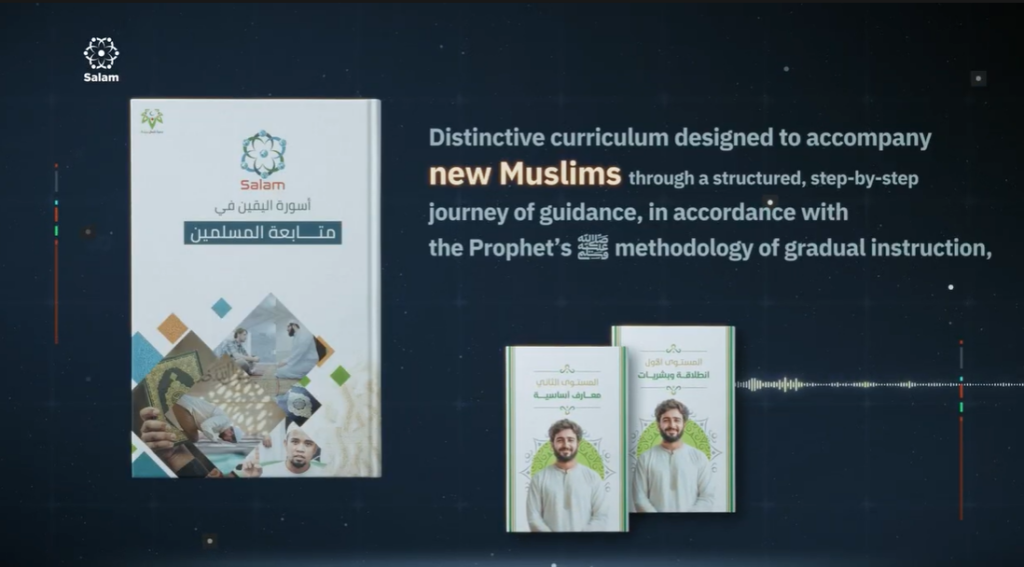
New Muslims can also find structured, guided learning through the Asawirat Al-Yaqeen (Bracelets of Certainty) program, a four-stage curriculum built by the Salam Center team to walk new Muslims from foundational knowledge toward lasting certainty:
- Stage One covers the essentials — the Shahada, prayer, purification, and the pillars of faith
- Stage Two addresses repentance and the life of the Prophet Muhammad ﷺ
- Stage Three focuses on character, etiquette, and practical daily rulings
- Stage Four explores contemporary questions and a life roadmap rooted in the Quran
General inquiries, guidance on specific rulings, or simply a conversation — the door stays open.
Reach out directly to the Salam Center team to start the Asawirat Al-Yaqeen (Bracelets of Certainty) program for FREE.
Summary
Gambling occupies a firmly settled position in Islamic law, moving from cautious disapproval in Quran 2:219 to an unequivocal ban in 5:90-91, which names it Satan’s handiwork alongside intoxicants and idolatry.
The Sunnah reinforces this ruling with striking clarity, extending the prohibition to games of pure chance and even casual invitations to bet, protecting the believer’s wealth, relationships, and connection to prayer.
Frequently Asked Questions
Is all gambling haram in Islam?
Yes, all forms of maysir — wagering money or value on an outcome of pure chance — are prohibited in Islam. This ruling is established in Quran 5:90-91, which calls gambling “defilement from the work of Satan,” and reinforced through authentic hadiths in Sahih Muslim.
Does the Quran mention gambling directly?
Yes, the Quran mentions gambling by name (maysir) in two places: Quran 2:219, which introduces the ruling, and Quran 5:90-91, which finalizes the prohibition and groups gambling with intoxicants and idol worship.
Are lotteries considered gambling in Islam?
Yes, scholars classify lotteries requiring a paid entry as maysir because the outcome depends purely on chance, with one party’s gain coming entirely from another party’s loss. This falls under the same ruling as Quran 5:90 establishes for traditional gambling.
Curious about Islam?
Journey towards clarity and purpose. Our team is here to support you in your search for truth and spiritual guidance.
Embrace the Truth