
What the Quran Says About How to Treat Non-Muslims
| Key Takeaways |
| The Quran establishes a clear framework for treating non-Muslims based on justice, fairness, and the recognition of their humanity. |
| Muslims are commanded to show kindness and equity toward non-Muslims who do not wage war against them or expel them from their homes. |
| Quranic verses referencing combat apply specifically to defined contexts of aggression and warfare — they are not general commands against all non-believers. |
| The Prophet Muhammad (PBUH) maintained respectful, just relations with non-Muslims throughout his life, and his Sunnah is the living commentary on these Quranic principles. |
| Islam’s treatment of non-Muslims is governed by firm principles: no compulsion in religion, protection of life, and the right to live with dignity regardless of faith. |
The Quran commands Muslims to treat non-Muslims with justice and kindness — a principle stated directly, without ambiguity. This is not a fringe position or a diplomatic softening of a harder message. It is the explicit ruling of the Book itself, grounded in verses that have been recited, memorized, and taught across fourteen centuries of Islamic scholarship.
The question of how to treat non-believers sits at the heart of how people understand Islam today — and, too often, it is shaped by selective quotation, cultural friction, or deliberate distortion. What the Quran actually says, read honestly and in full context, tells a different story from the one frequently circulated in media.
The Quran’s Foundational Verse on Justice Toward Non-Muslims
The clearest Quranic statement on the subject of how to treat non-Muslims appears in Surah Al-Mumtahanah:
لَّا يَنْهَاكُمُ اللَّهُ عَنِ الَّذِينَ لَمْ يُقَاتِلُوكُمْ فِي الدِّينِ وَلَمْ يُخْرِجُوكُم مِّن دِيَارِكُمْ أَن تَبَرُّوهُمْ وَتُقْسِطُوا إِلَيْهِمْ ۚ إِنَّ اللَّهَ يُحِبُّ الْمُقْسِطِينَ
“Allah does not forbid you from those who do not fight you because of religion and do not expel you from your homes – from being righteous toward them and acting justly toward them. Indeed, Allah loves those who act justly.” (Quran 60:8)
The Arabic word used here is taburrūhum — from the same root as birr, the word for excellence in goodness, the highest standard of moral conduct. This is the same word used in the famous verse commanding excellence toward parents.
The Quran is not merely permitting tolerance toward non-Muslims who are peaceful; it is commanding a proactive standard of goodness toward them.
This verse was revealed in reference to non-combatant polytheists and permits Muslims to maintain kind and fair relations with them. The prohibition applies only to those who actively wage war against Muslims or participate in their expulsion.
What Does the Quran Say About Non-Believers?
The Arabic term kafir (plural: kuffar) in the Quran refers broadly to those who reject faith. It is a theological term. The Quran’s treatment of non-believers ranges across many categories — and the context of each verse determines its meaning and ruling.
Several Quranic verses address mushrikeen (polytheists), Ahl al-Kitab (People of the Book — Jews and Christians), and those actively hostile to the Muslim community. These categories carry distinct rulings. Collapsing them into a single, undifferentiated mass — “non-believers” as one block — is a fundamental misreading that no serious scholar has ever endorsed.
The Quran explicitly recognizes the dignity of human beings regardless of faith. In Surah Al-Isra, Allah says:
وَلَقَدْ كَرَّمْنَا بَنِي آدَمَ
“And We have certainly honored the children of Adam.” (Quran 17:70)
This honor — karama — is granted to all descendants of Adam, Muslim and non-Muslim alike. It forms the anthropological bedrock of how Muslims are required to view every human being.
Have Questions About Islam?
Our team is ready to answer your questions clearly and respectfully. Ask freely and receive honest guidance.
Ask Us NowDoes the Quran Say to Kill Non-Believers?
The Quran does not issue a general, open-ended command to kill non-believers. Verses that reference fighting are embedded in specific historical and legal contexts, and Islamic scholarship has always interpreted them within those contexts.
The most frequently misquoted verse is from Surah At-Tawbah:
فَاقْتُلُوا الْمُشْرِكِينَ حَيْثُ وَجَدتُّمُوهُمْ
“…then kill the polytheists wherever you find them…” (Quran 9:5)
Reading this verse in isolation — as critics routinely do — strips it entirely of its legislative context. The full passage, spanning verses 1–13 of Surah At-Tawbah, addresses a specific situation: the formal termination of treaties with particular Arab tribal groups who had repeatedly violated their agreements and actively conspired against the Muslim community in Madinah. This was not a universal declaration of war against all polytheists everywhere.
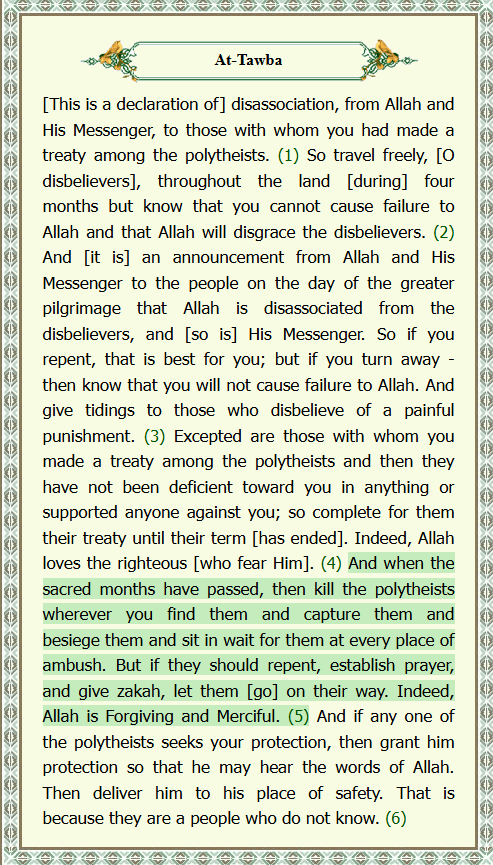
Imam al-Tabari, whose Jami’ al-Bayan fi Ta’wil al-Quran is among the most authoritative classical commentaries, identifies the verse as addressing specifically those who broke the treaty (nakathū ‘ahdahum). The verse itself is immediately followed by:
فَإِن تَابُوا وَأَقَامُوا الصَّلَاةَ وَآتَوُا الزَّكَاةَ فَخَلُّوا سَبِيلَهُمْ
“But if they repent, establish prayer, and give zakah, let them go on their way.” (Quran 9:5)
A universal command to kill all non-believers would have no room for this conditional clause. The legal scholars have consistently held that combat in Islam is tied to specific conditions of aggression, not to the mere fact of disbelief.
Where Does the Quran Draw the Line on Relations With Non-Muslims?
The Quran distinguishes clearly between two categories of non-Muslims: those who are peaceful and those who are actively hostile. The ruling on each group is different.
Surah Al-Mumtahanah, verse 9, directly follows the verse cited above:
إِنَّمَا يَنْهَاكُمُ اللَّهُ عَنِ الَّذِينَ قَاتَلُوكُمْ فِي الدِّينِ وَأَخْرَجُوكُم مِّن دِيَارِكُمْ وَظَاهَرُوا عَلَىٰ إِخْرَاجِكُمْ أَن تَوَلَّوْهُمْ
“Allah only forbids you from those who fight you because of religion and expel you from your homes and aid in your expulsion — forbids you from befriending them. And whoever does that, then it is those who are the wrongdoers.” (Quran 60:9)
The dividing criterion is conduct — specifically, active aggression. Non-Muslims who live peacefully alongside Muslims retain full claims to just and kind treatment.
This principle is directly connected to the broader Islam principles that govern how Muslims navigate every dimension of life, including civic and social relations.
The Prophet’s Treatment of Non-Muslims as Quranic Application
The Sunnah of the Prophet Muhammad (PBUH) is the living application of these Quranic principles. His conduct with non-Muslims — in Makkah, in Madinah, in his treaties, in his personal dealings — is inseparable from understanding what the Quran commands.
When the Prophet (PBUH) established the Constitution of Madinah (Sahifat al-Madinah), he created a political compact with the Jewish tribes of the city that guaranteed them the right to practice their religion, retain their property, and receive military protection alongside the Muslim community.
This document — recorded by historians including Ibn Hisham in his Sirah al-Nabawiyyah — remains one of the earliest examples of a pluralistic civic covenant in recorded history.
The Prophet (PBUH) also said, as recorded in Sahih Bukhari:
“Whoever killed a person having a treaty with the Muslims, shall not smell the smell of Paradise though its smell is perceived from a distance of forty years.”
Read Also: Can Non-Muslims Read the Quran?
The Quran’s Stance on Religious Freedom
One of the most unequivocal statements in the entire Quran concerns the freedom of religious belief:
لَا إِكْرَاهَ فِي الدِّينِ ۖ قَد تَّبَيَّنَ الرُّشْدُ مِنَ الْغَيِّ
“There is no compulsion in religion. The right course has become clear from the wrong.” (Quran 2:256)
This verse is Madani — revealed during the period when the Prophet (PBUH) had established governance in Madinah and held political authority. Its timing matters: it was not a concession made from a position of weakness. It was a theological declaration made from a position of authority.
Non-Muslims were not to be forced into Islam — not in private, not in public, not under any governing arrangement.
Read Also: Do You Have to Read the Quran to Be a Muslim?
What Does the Quran Say About Non-Muslims From the People of the Book?
The Quran addresses Jews and Christians — collectively referred to as Ahl al-Kitab (People of the Book) — with distinct nuance. They receive recognition as recipients of earlier divine revelation.
The Quran acknowledges their original scriptures, honors their prophets, and in multiple places commends those among them who are sincere:
وَإِنَّ مِنْ أَهْلِ الْكِتَابِ لَمَن يُؤْمِنُ بِاللَّهِ وَمَا أُنزِلَ إِلَيْكُمْ وَمَا أُنزِلَ إِلَيْهِمْ خَاشِعِينَ لِلَّهِ
“And indeed, among the People of the Scripture are those who believe in Allah and what was revealed to you and what was revealed to them, humbling themselves before Allah.” (Quran 3:199)
Muslims are permitted to eat the food of the People of the Book and to marry their women — rulings that reflect a framework of coexistence, not hostility.
Those interested in understanding how Islam views other religions will find that the Quran’s approach is neither relativistic nor dismissive — it affirms Islam as the final and complete revelation while recognizing the shared Abrahamic heritage of earlier scriptures.
The question of whether Muslims believe the Bible is directly connected to this: Muslims affirm the original divine revelation given to Jesus and Moses, while holding that the scriptures in their current form have undergone alteration over time. This position is held with respect for those who follow these traditions sincerely.
Read Also: How Is the Quran Organized?
Justice as a Quranic Absolute Regardless of Faith
The Quran commands justice even toward those who are hostile:
يَا أَيُّهَا الَّذِينَ آمَنُوا كُونُوا قَوَّامِينَ لِلَّهِ شُهَدَاءَ بِالْقِسْطِ ۖ وَلَا يَجْرِمَنَّكُمْ شَنَآنُ قَوْمٍ عَلَىٰ أَلَّا تَعْدِلُوا ۚ اعْدِلُوا هُوَ أَقْرَبُ لِلتَّقْوَىٰ
“O you who have believed, be persistently standing firm for Allah, witnesses in justice, and do not let the hatred of a people prevent you from being just. Be just; that is nearer to righteousness.” (Quran 5:8)
The Arabic construction lā yajrimannakum — “let it not drive you to crime” — is extraordinarily strong. It forbids allowing personal enmity or collective grievance to corrupt one’s commitment to fair dealing.
Even toward those who are hostile, the standard is justice. This is the Quranic command, stated plainly, with no conditions attached to the character or beliefs of the person being treated justly.
This principle is inseparable from faith in Islam at its deepest level — because justice toward all of humanity is a natural expression of Tawheed, the recognition that all human beings stand before the One Creator who is Himself Al-‘Adl, the Perfectly Just.
Read Also: How to Read the Quran as a Non-Muslim?
What Does Dawah Toward Non-Muslims Look Like in the Quran?
The Quran is explicit about how Muslims are to convey Islam to those who have not yet embraced it:
ادْعُ إِلَىٰ سَبِيلِ رَبِّكَ بِالْحِكْمَةِ وَالْمَوْعِظَةِ الْحَسَنَةِ ۖ وَجَادِلْهُم بِالَّتِي هِيَ أَحْسَنُ
“Invite to the way of your Lord with wisdom and good instruction, and argue with them in a way that is best.” (Quran 16:125)
Three methods are specified: hikmah (wisdom), maw’izah hasanah (beautiful admonition), and debate conducted in the most excellent manner. Force, coercion, and hostility are not on this list. The mission of conveying Islam is one of clarity and excellence — not compulsion.
Those who understand what Muslims believe about the Quran will recognize that this reflects the Quran’s own self-understanding: it is a huda (guidance), not a sword.
ses how classical Islamic law understood the ethics of warfare and coexistence.
Read Also: What Does the Quran Say About Infidels?
Have Questions About Islam?
Our team is ready to answer your questions clearly and respectfully. Ask freely and receive honest guidance.
Ask Us NowRead Also: Scientific Errors in the Quran Answered
Explore Further Authentic Knowledge About Islam with Salam
If you found this article valuable, there is much more to explore.
The Salam Platform publishes in-depth, source-grounded articles on Islamic beliefs, common questions about the Quran, and the realities of Muslim life — written for seekers, new Muslims, and the intellectually curious. Browse the full library at the Salam blog.
Have a specific question about Islam — one you have been sitting with, perhaps for a long time? The Salam Center welcomes direct conversation.
Reach out directly and someone from the team will respond with care and without judgment.
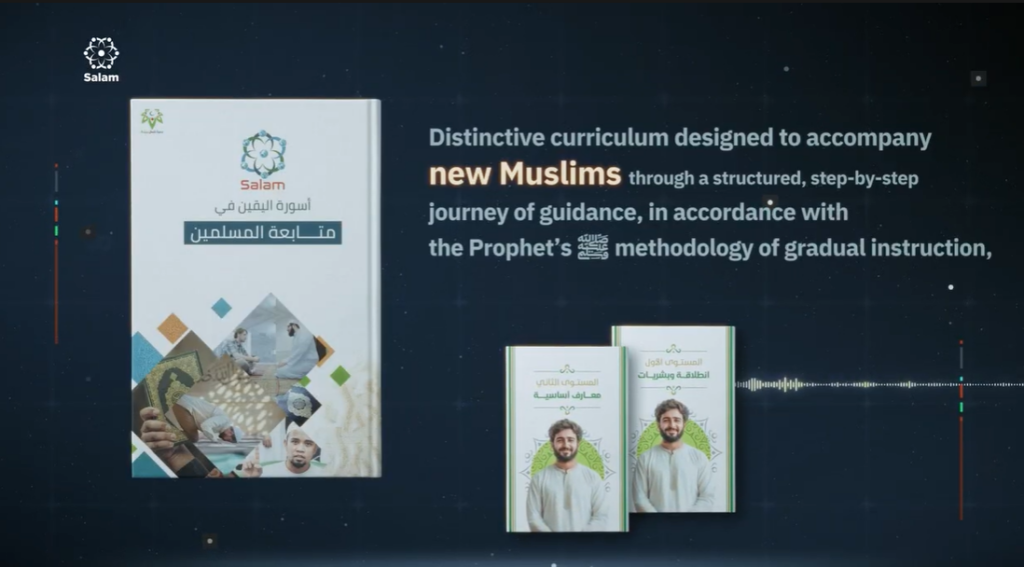
For those who have already embraced Islam and are looking for structured, progressive guidance in their new life of faith, the Asawirat Al-Yaqeen (Bracelets of Certainty) program was built precisely for this moment:
- A four-stage curriculum covering creed, worship, character, and practical life rulings
- Grounded in the pure methodology of Ahlus Sunnah wal Jama’ah
- Used by over 114,000 new Muslims across 140 countries
- Progressive levels that move from foundational certainty through to real-world empowerment
- A pedagogical voice described as therapeutic — combining compassionate language with evidential reasoning
Enroll and begin your structured journey toward Yaqeen (certainty) at the Salam Platform.
Reach out directly to the Salam Center team to start the Asawirat Al-Yaqeen (Bracelets of Certainty) program for FREE.
Summary
The Quran establishes justice and kindness toward peaceful non-Muslims as a binding command — using the same moral standard (birr) it applies to honoring parents. Verses concerning combat address defined contexts of aggression and treaty violation, not a standing order against all who hold different beliefs.
The Prophet Muhammad’s (PBUH) lived practice — from the Constitution of Madinah to his personal protection of non-Muslim neighbors — confirms that the Quranic framework is one of principled coexistence, grounded in Tawheed and the recognition that every human being carries divinely granted dignity.
Frequently Asked Questions
What does the Quran say about how to treat non-Muslims?
The Quran commands Muslims to treat peaceful non-Muslims with birr (active goodness) and qist (justice), as stated explicitly in Surah Al-Mumtahanah (60:8). This standard is binding on all Muslims. The only restriction applies to those who actively wage war against Muslims or expel them from their homes.
Does the Quran say to kill non-believers?
The Quran does not issue a general command to kill non-believers. Verses referencing combat — such as Quran 9:5 — apply to specific groups who violated treaties and waged war against the Muslim community in Madinah. Classical scholars like Imam al-Tabari have consistently explained these verses within their precise historical and legal context.
Where in the Quran does it say to kill non-believers?
Quran 9:5 is the most frequently cited verse on this subject. It addresses Arab tribal groups who repeatedly broke their peace treaties with the Prophet (PBUH) and actively conspired against the Muslim community. The same verse immediately permits peace if they cease hostilities — confirming that the command was conditional and contextual, not universal.
What does Islam say about forcing non-Muslims to convert?
The Quran forbids compulsion in religion in Surah Al-Baqarah (2:256) — a verse revealed when the Prophet (PBUH) held full political authority in Madinah. The Quran also specifies that Da’wah (conveying Islam) must be carried out with wisdom and excellent instruction (Quran 16:125). Forcing anyone to enter Islam contradicts both the letter and spirit of the Quran.
Curious about Islam?
Journey towards clarity and purpose. Our team is here to support you in your search for truth and spiritual guidance.
Embrace the Truth