
What Does the Quran Say About False Prophets?
The Quran addresses false prophets, describing anyone who fabricates a claim of divine revelation as among the most unjust of people. This is not a peripheral theme tucked into a single verse.
It runs through the Quran’s account of previous nations, through the seal placed on prophethood in Surah Al-Ahzab, and through the Prophet’s own warnings about deceivers who would rise after him.
What does the Quran say about false prophets?
The Quran’s clearest statement on false claims to prophethood appears in Surah Al-An’am, where Allah describes fabricating revelation as an act of extreme injustice. The verse reads:
وَمَنْ أَظْلَمُ مِمَّنِ افْتَرَىٰ عَلَى اللَّهِ كَذِبًا أَوْ قَالَ أُوحِيَ إِلَيَّ وَلَمْ يُوحَ إِلَيْهِ شَيْءٌ وَمَن قَالَ سَأُنزِلُ مِثْلَ مَا أَنزَلَ اللَّهُ
“And who is more unjust than one who invents a lie about Allah or says, ‘It has been inspired to me,’ while nothing has been inspired to him, and one who says, ‘I will reveal [something] like what Allah revealed.'” (Quran 6:93)
Classical commentary on this verse, including the tafsir of Ibn Kathir, explains that it addresses two distinct forms of fabrication: falsely claiming Allah has sent revelation to someone who never received it, and falsely claiming that one’s own words can rival or replicate divine speech.
Both are treated as grave transgressions because they corrupt the one thing a religious community depends on most — trustworthy knowledge of what Allah actually said.
This principle connects to the broader Quranic teaching on how Islam views the nature of God. Allah’s speech is not something any human can imitate or forge without consequence, and the Quran treats the attempt itself as a serious moral failure.
Learn More About Islam
Discover the beauty, teachings, and wisdom of Islam in a clear and welcoming way. Start exploring and deepen your understanding today.
Learn MoreWhy does the Quran call Muhammad the Seal of the Prophets?
The Quran designates Prophet Muhammad (PBUH) as the final prophet in Surah Al-Ahzab, using language that Islamic scholarship has treated as definitive since the earliest generations. The verse states:
مَّا كَانَ مُحَمَّدٌ أَبَا أَحَدٍ مِّن رِّجَالِكُمْ وَلَٰكِن رَّسُولَ اللَّهِ وَخَاتَمَ النَّبِيِّينَ ۗ وَكَانَ اللَّهُ بِكُلِّ شَيْءٍ عَلِيمًا
“Muhammad is not the father of [any] one of your men, but [he is] the Messenger of Allah and last of the prophets. And ever is Allah, of all things, Knowing.” (Quran 33:40)
The term used here, khatam al-nabiyyin (Seal of the Prophets), closes the chain of prophethood that began with Adam and passed through figures recognized across the Abrahamic tradition. Any claim to prophethood made after Muhammad (PBUH), by this verse alone, stands outside the boundaries of orthodox Islamic belief. This is a matter of consensus (ijma) among scholars of Ahlus Sunnah wal Jama’ah, not a minority opinion.
The Prophet (PBUH) reinforced this himself. In an authentic hadith recorded in Sahih al-Bukhari, he said:
“There will be no prophet after me, but there will be Caliphs who will increase in number.” (Sahih al-Bukhari, Hadith 3455)
Did the Prophet Muhammad warn about false prophets who would come after him?
Yes — the Prophet (PBUH) explicitly foretold that a wave of false claimants to prophethood would rise after his death, numbering close to thirty. This warning appears in more than one authentic narration. In Sahih al-Bukhari, he said:
“The Hour will not be established till about thirty Dajjals (liars) appear, and each one of them will claim that he is Allah’s Messenger.” (Sahih al-Bukhari, Hadith 7121)
A parallel narration states it plainly:
“And the Hour will not be established till there appear about thirty liars, all of whom will be claiming to be the messengers of Allah.” (Sahih al-Bukhari, Hadith 3609)
This prophecy is significant for two reasons. First, it demonstrates the Prophet’s (PBUH) own awareness that impostors would exploit the language of revelation for personal or tribal gain.
Second, it gave the early Muslim community — and every generation since — a clear theological framework for evaluating such claims: they are expected, they are false by definition, and they do not disturb the finality already established in Surah Al-Ahzab.
Read Also: The Quran Says Allah’s Word Cannot Be Corrupted
Musaylimah al-Kadhab is the most documented false prophet in early Islamic history
Musaylimah ibn Habib, known in Islamic history as al-Kadhab (“the liar”), claimed prophethood during the lifetime of the Prophet Muhammad (PBUH) himself. He belonged to the tribe of Banu Hanifa, based in the region of al-Yamamah near present-day Riyadh.
He wrote to the Prophet (PBUH) proposing that the two of them divide authority over the earth between them.
The Prophet’s (PBUH) reply was direct: he addressed him as Musaylimah the liar and affirmed that dominion belongs to Allah alone, granted to whomever He wills.
Musaylimah’s following persisted after the Prophet’s (PBUH) death, drawing strength from tribal loyalty rather than any credible claim to revelation. The first caliph, Abu Bakr (RA), launched the Ridda Wars to confront the tribes that had either apostatized, refused zakat, or rallied behind false prophets.
Musaylimah was killed at the Battle of Yamama in 632 CE (11 AH), led by the companion Khalid ibn al-Walid (RA).
Other claimants from the same period included Sajah bint al-Harith, who briefly allied with Musaylimah, and al-Aswad al-Ansi in Yemen, whose claim collapsed even before the Prophet’s (PBUH) death.
| False Claimant | Region | Outcome |
| Musaylimah al-Kadhab | Al-Yamamah (near Riyadh) | Killed at the Battle of Yamama, 11 AH |
| Al-Aswad al-Ansi | Yemen | Killed shortly before the Prophet’s (PBUH) death |
| Sajah bint al-Harith | Najd | Allied with, then married, Musaylimah |
Read Also: What Does the Quran Say About Family Problems?
How does Islam distinguish a true prophet from a false claimant?
Islamic scholarship identifies several markers that separate authentic prophethood from fabricated claims, drawn directly from the Quran and the Prophet’s (PBUH) own teaching. These include:
1. Consistency with prior revelation
A true prophet’s message affirms rather than contradicts the core monotheism taught by every previous messenger, a principle tied to how Islam views monotheism as the unbroken thread of every genuine prophetic mission.
2. Moral integrity of the message
The Quran notes in 26:221-222 that deceptive inspiration descends upon “every lying, sinful person” — a contrast drawn deliberately against the truthfulness expected of genuine prophets.
Read Also: What Does the Quran Say About Love and Relationships?
3. The seal already placed on prophethood
Because Quran 33:40 closes the prophetic chain, any claim made after Muhammad (PBUH) fails this test regardless of other apparent signs.
Read Also: What Does the Quran Say About Fasting?
4. Historical transparency
Genuine prophetic missions, as seen in the Seerah of the Prophet Muhammad (PBUH), unfold publicly, under scrutiny, and endure scholarly and historical verification rather than depending on secrecy or coercion.
Read Also: Mary in the Quran
Learn More About Islam
Discover the beauty, teachings, and wisdom of Islam in a clear and welcoming way. Start exploring and deepen your understanding today.
Learn MoreRead Also: Gog and Magog in the Quran
Discover More About Faith, Certainty, and the Journey to Islam
Questions about prophethood, revelation, and how Islam preserves its foundational truths come up often for sincere seekers — and there’s no need to sit with them alone.
Explore more on the Salam Platform for structured, evidence-based answers to real questions.
Read more reflections and teachings on the Salam blog.
Reach out directly — our team is ready to listen, guide, and welcome you.

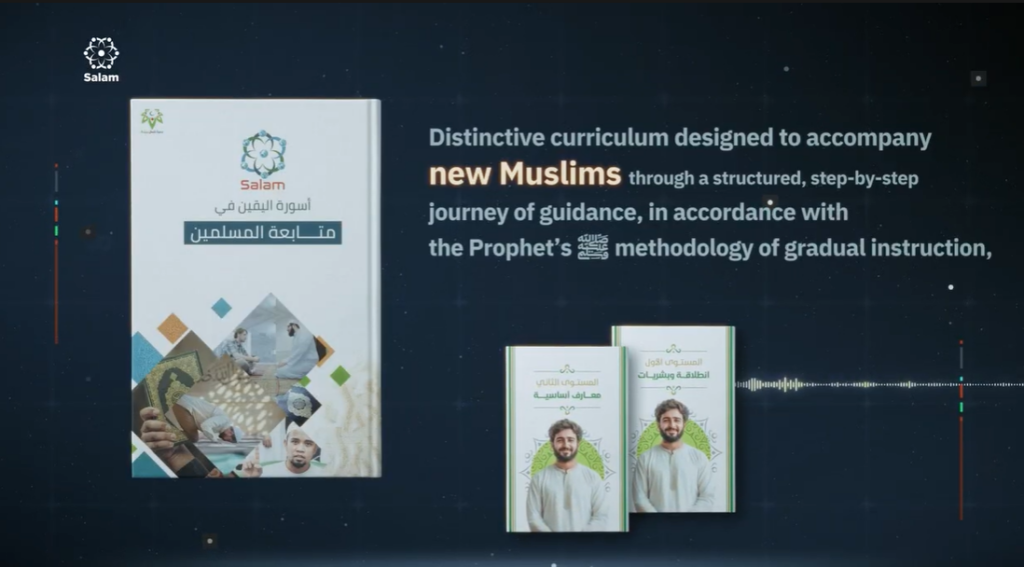
If you’re a new Muslim looking for structured guidance, the Salam Center offers Asawirat Al-Yaqeen (Bracelets of Certainty) — a four-stage program built for exactly this stage of the journey:
- Stage One lays the foundation: the Shahada, prayer, and purification.
- Stage Two builds through repentance and the Seerah of the Prophet (PBUH).
- Stage Three consolidates character, etiquette, and daily life rulings.
- Stage Four empowers you to engage confidently with contemporary questions, including topics like this one.
Reach out directly to the Salam Center team to start the Asawirat Al-Yaqeen (Bracelets of Certainty) program for FREE.
Summary
The Quran condemns false claims to revelation as a severe act of injustice, and Surah Al-Ahzab formally closes prophethood with Prophet Muhammad (PBUH) as its final seal. Authentic hadith and early Islamic history, from Musaylimah’s defeat to the Prophet’s own prophecy, confirm this teaching consistently.
This foundation gives seekers and new Muslims alike a stable framework for evaluating any claim to revelation, past or present. Understanding it deepens confidence in the Quran’s completeness and the enduring clarity of the Prophet’s (PBUH) final message.
Frequently Asked Questions
Does the Quran name specific false prophets?
The Quran does not name individual false prophets by name; instead, it establishes the principle in Quran 6:93 that fabricating revelation is a severe injustice. Specific figures like Musaylimah are documented in authentic hadith and early Islamic history.
Who was Musaylimah al-Kadhab?
Musaylimah al-Kadhab was a claimant to prophethood from the Banu Hanifa tribe who lived during the Prophet Muhammad’s (PBUH) lifetime and was defeated at the Battle of Yamama in 11 AH. His story remains the most documented case of false prophethood in early Islam.
What does “Seal of the Prophets” mean in Islam?
“Seal of the Prophets” (khatam al-nabiyyin) means Prophet Muhammad (PBUH) is the final prophet sent by Allah, as stated in Quran 33:40. No claim to prophethood after him is valid in Islamic belief.
Did Prophet Muhammad predict future false prophets?
Yes, in an authentic hadith in Sahih al-Bukhari, the Prophet (PBUH) said nearly thirty liars would appear claiming prophethood before the Hour arrives (Sahih al-Bukhari, Hadith 7121). This prophecy is treated as historically fulfilled multiple times.
How do Muslims respond to modern claims of new prophethood?
Muslims measure any such claim against Quran 33:40, which closes prophethood after Muhammad (PBUH). Any post-Muhammad claim to prophetic revelation is considered false regardless of the claimant’s arguments or following.
Curious about Islam?
Journey towards clarity and purpose. Our team is here to support you in your search for truth and spiritual guidance.
Embrace the Truth