
What Islam Teaches About Other Religions and Prophets
| Key Takeaways |
| Islam teaches that every prophet in human history, from Adam to Muhammad (PBUH), delivered the same core message of worshipping one Allah. |
| Muslims are religiously obligated to believe in Moses, Jesus, and all other prophets named in the Quran as genuine messengers of Allah. |
| Jews and Christians hold a distinct legal status in Islam as “People of the Book,” granted rights in food, marriage, and treatment not extended to other communities. |
| The Quran states that earlier scriptures came from Allah but were altered by human hands over centuries, which is why the Quran was preserved as the final, unchanged revelation. |
| Salvation in Islam requires sincere belief in one Allah and in Muhammad (PBUH) as His final messenger, alongside righteous deeds — not lineage, ritual alone, or group membership. |
| Prophet Muhammad (PBUH) is described in the Quran as the Seal of the Prophets, sent to confirm and complete the message every earlier prophet carried. |
A Christian who prays to Jesus and a Muslim who prays to Allah alone are, according to Islamic theology, closer in origin than either might expect.
Islam teaches that Jesus, Moses, and every other recognized prophet preached the same essential faith that Muhammad (PBUH) later delivered in its final form. This isn’t a diplomatic gesture meant to smooth over religious differences.
It’s a specific theological claim, built on Quranic verses and authenticated hadiths, about how divine revelation has actually unfolded across human history.
What does Islam teach about other religions and prophets?
Islam teaches that Allah sent thousands of prophets to every nation throughout history, each carrying the identical core message of monotheism, and that Muhammad (PBUH) was the final prophet sent to confirm and complete what came before him. Muslims are commanded to believe in Moses, Jesus, Abraham, and every other prophet named in the Quran without exception — rejecting even one invalidates a person’s faith entirely.
At the same time, Islam holds that the scriptures given to earlier communities, including the Torah and the Gospel, suffered corruption through human transmission over centuries.
This is precisely why the Quran exists: as Allah’s final, textually preserved revelation, sent to correct what had drifted and to address every human being rather than one nation alone.
This produces a distinctive relationship with Judaism and Christianity. Islam doesn’t treat them as foreign belief systems. It treats them as branches of the same original tree, honored at the root and corrected at the point where human hands altered the text.
قُلْ آمَنَّا بِاللَّهِ وَمَا أُنزِلَ عَلَيْنَا وَمَا أُنزِلَ عَلَىٰ إِبْرَاهِيمَ وَإِسْمَاعِيلَ وَإِسْحَاقَ وَيَعْقُوبَ وَالْأَسْبَاطِ وَمَا أُوتِيَ مُوسَىٰ وَعِيسَىٰ وَالنَّبِيُّونَ مِن رَّبِّهِمْ لَا نُفَرِّقُ بَيْنَ أَحَدٍ مِّنْهُمْ وَنَحْنُ لَهُ مُسْلِمُونَ
“Say, ‘We have believed in Allah and in what was revealed to us and what was revealed to Abraham, Ishmael, Isaac, Jacob, and the Descendants, and in what was given to Moses and Jesus and to the prophets from their Lord. We make no distinction between any of them, and we are Muslims [submitting] to Him.'” (Quran 3:84)
That verse is quoted every time a Muslim recites this part of the Quran in prayer. It isn’t a marginal footnote about interfaith relations. It’s a foundational article of belief recited daily by over a billion people.
Islam recognizes one continuous prophetic mission across history
Every religious tradition tells its own origin story. Islam’s version begins not with Muhammad (PBUH) in seventh-century Arabia, but with Adam, the first human and, according to Islamic belief, the first prophet.
The Quran describes humanity as having originally shared a single religion before division set in. According to Surah Al-Baqarah, Allah sent prophets to guide people back toward that original monotheism whenever communities strayed.
This means the diversity of world religions today reflects centuries of accumulated deviation, not the starting condition of mankind.
كَانَ النَّاسُ أُمَّةً وَاحِدَةً فَبَعَثَ اللَّهُ النَّبِيِّينَ مُبَشِّرِينَ وَمُنذِرِينَ
“Mankind was [of] one religion [before their deviation]; then Allah sent the prophets as bringers of good tidings and warners.” (Quran 2:213)
The prophets themselves shared something beyond a common message. According to Prophet Muhammad’s (PBUH) own words, they shared a kind of spiritual kinship.
Sahih al-Bukhari records Abu Huraira narrating: “Both in this world and in the Hereafter, I am the nearest of all the people to Jesus, the son of Mary. The prophets are paternal brothers; their mothers are different, but their religion is one.”
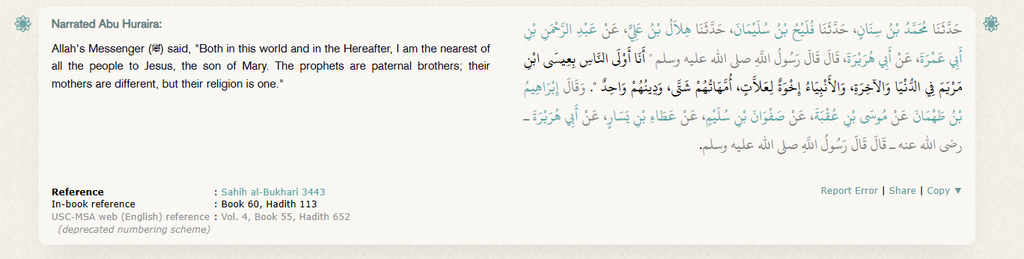
Classical scholars, including the commentators cited in Riyad as-Salihin and Mishkat al-Masabih, explain this brotherhood metaphor precisely: the shared “father” is the single religion of Tawhid — belief in one Allah — while the different “mothers” represent the varying laws and rituals each prophet’s community was given. The substance never changed. Only the details of practice did.
Muslims must believe in all prophets named in the Quran
This isn’t a soft cultural nod toward other faiths. Belief in every prophet Allah sent — including Moses and Jesus — is one of the six pillars of Iman in Islam, the core articles of faith without which a person’s Islam is incomplete.
The Quran states this obligation with striking directness in the same breath as it names Abraham, Isaac, Jacob, and the descendants:
قُولُوا آمَنَّا بِاللَّهِ وَمَا أُنزِلَ إِلَيْنَا وَمَا أُنزِلَ إِلَىٰ إِبْرَاهِيمَ وَإِسْمَاعِيلَ وَإِسْحَاقَ وَيَعْقُوبَ وَالْأَسْبَاطِ وَمَا أُوتِيَ مُوسَىٰ وَعِيسَىٰ وَمَا أُوتِيَ النَّبِيُّونَ مِن رَّبِّهِمْ لَا نُفَرِّقُ بَيْنَ أَحَدٍ مِّنْهُمْ وَنَحْنُ لَهُ مُسْلِمُونَ
“Say, ‘We have believed in Allah and what has been revealed to us and what has been revealed to Abraham and Ishmael and Isaac and Jacob and the Descendants and what was given to Moses and Jesus and what was given to the prophets from their Lord. We make no distinction between any of them, and we are Muslims [submitting] to Him.'” (Quran 2:136)
This isn’t a passive recognition that other prophets existed. It’s an active theological requirement.
Denying the prophethood of Moses or Jesus while claiming to accept Muhammad (PBUH) contradicts the internal logic of Islam itself, since the Quran presents all of them as links in the same chain of revelation.
The Prophet Muhammad’s (PBUH) own genealogy traces back through Ishmael to Abraham — the same patriarch from whom Isaac’s line produced Moses, David, and Jesus.
Islamic scholarship, including the work of the medieval historian Ibn Kathir in his multi-volume history Al-Bidaya wa al-Nihaya, documents this lineage as evidence that the final prophet emerged from within the same Abrahamic family tree, not from outside it.
Learn More About Islam
Discover the beauty, teachings, and wisdom of Islam in a clear and welcoming way. Start exploring and deepen your understanding today.
Learn MoreWhat does Islam teach about Jesus specifically?
No figure besides Muhammad (PBUH) receives warmer or more detailed treatment in the Quran than Jesus, known in Islam as Isa ibn Maryam. Islam teaches that Jesus was one of Allah’s mightiest messengers, born of a miraculous virgin birth, granted the power to heal the blind and the leper, and raised bodily to Allah rather than crucified. An entire chapter of the Quran is named after his mother, Mary, described in the Quran as chosen above all women.
إِذْ قَالَتِ الْمَلَائِكَةُ يَا مَرْيَمُ إِنَّ اللَّهَ اصْطَفَاكِ وَطَهَّرَكِ وَاصْطَفَاكِ عَلَىٰ نِسَاءِ الْعَالَمِينَ
“And [mention] when the angels said, ‘O Mary, indeed Allah has chosen you and purified you and chosen you above the women of the worlds.'” (Quran 3:42)
What Islam rejects is not Jesus’s prophethood but his divinity. The Quran directly addresses the doctrine of the Trinity as a later theological development rather than Jesus’s own teaching:
لَّقَدْ كَفَرَ الَّذِينَ قَالُوا إِنَّ اللَّهَ ثَالِثُ ثَلَاثَةٍ ۘ وَمَا مِنْ إِلَٰهٍ إِلَّا إِلَٰهٌ وَاحِدٌ
“They have certainly disbelieved who say, ‘Allah is the third of three.’ And there is no god except one God.” (Quran 5:73)
This connects to the wider comparison of Islam versus Christianity, where the central dividing line is almost always Jesus’s nature rather than his status as a genuine messenger.
Islamic theology holds that Jesus himself preached pure monotheism, and that the doctrines separating Christianity from that original message developed through later councils and institutional decisions — a claim addressed further in discussions of what the Quran says about other religions.
Islamic belief also affirms that Jesus was neither killed nor crucified, that this was made to appear so, and that he will return before the Day of Judgment as a just ruler under the same message Muhammad (PBUH) delivered — not with a new religion of his own.
The Quran describes earlier scriptures as divinely revealed but later altered
Here the theology becomes more precise, and more consequential. Islam does not claim the Torah or the Gospel were fabricated from nothing. It claims they were genuine revelations from Allah that were subsequently changed by human hands over the centuries that followed.
The Quran identifies specific mechanisms of alteration — not vague accusations, but named patterns of textual corruption. One is the deliberate rewriting of scripture by religious authorities:
فَوَيْلٌ لِّلَّذِينَ يَكْتُبُونَ الْكِتَابَ بِأَيْدِيهِمْ ثُمَّ يَقُولُونَ هَٰذَا مِنْ عِندِ اللَّهِ لِيَشْتَرُوا بِهِ ثَمَنًا قَلِيلًا
“So woe to those who write the ‘scripture’ with their own hands, then say, ‘This is from Allah,’ in order to exchange it for a small price.” (Quran 2:79)
Another is the distortion of words from their intended meaning:
مِّنَ الَّذِينَ هَادُوا يُحَرِّفُونَ الْكَلِمَ عَن مَّوَاضِعِهِ
“Among the Jews are those who distort words from their [proper] usages.” (Quran 4:46)
This is the theological reason the Quran exists in its current form. Muslims believe Allah promised to preserve this final revelation from the same fate that befell earlier scriptures, which is why questions like why Muslims believe in the Quran and what Muslims believe about the Quran’s nature trace back to this specific claim of textual preservation, distinct from claims made about earlier books.
Islam teaches that Jews and Christians are People of the Book
Not every non-Muslim community receives the same treatment in Islamic law. Jews and Christians are given a specific designation, Ahl al-Kitab — People of the Book — because they received genuine scripture from Allah through Moses and Jesus, even though Islam holds that scripture was later altered.
This status is not symbolic. It carries concrete legal rights that don’t extend to other groups.
Food slaughtered by Jews and Christians is permitted for Muslims to eat, and marriage between a Muslim man and a chaste woman from the People of the Book is explicitly permitted:
الْيَوْمَ أُحِلَّ لَكُمُ الطَّيِّبَاتُ ۖ وَطَعَامُ الَّذِينَ أُوتُوا الْكِتَابَ حِلٌّ لَّكُمْ وَطَعَامُكُمْ حِلٌّ لَّهُمْ ۖ وَالْمُحْصَنَاتُ مِنَ الْمُؤْمِنَاتِ وَالْمُحْصَنَاتُ مِنَ الَّذِينَ أُوتُوا الْكِتَابَ مِن قَبْلِكُمْ
“This day [all] good foods have been made lawful, and the food of those who were given the Scripture is lawful for you and your food is lawful for them. And [lawful in marriage are] chaste women from among the believers and chaste women from among those who were given the Scripture before you.” (Quran 5:5)
The Quran does not treat the People of the Book as a single, uniform bloc. It distinguishes between those who reject clear truth and those who remain sincere and upright:
لَيْسُوا سَوَاءً ۗ مِّنْ أَهْلِ الْكِتَابِ أُمَّةٌ قَائِمَةٌ يَتْلُونَ آيَاتِ اللَّهِ آنَاءَ اللَّيْلِ وَهُمْ يَسْجُدُونَ
“They are not all the same; among the People of the Scripture is a community standing [in obedience], reciting the verses of Allah during periods of the night and prostrating.” (Quran 3:113)
This designation reflects the broader theological principle running through the whole topic: Judaism and Christianity are honored as originating from real prophets and real revelation, even where Islam holds their present textual and doctrinal state to have diverged from what those prophets actually taught.
What does Islam teach about the nature of Allah?
Every claim examined so far — about prophets, scripture, and salvation — rests on a single foundation: Islam teaches that Allah is absolutely One, without partners, without a son, and without any equal, a concept known as Tawhid.
قُلْ هُوَ اللَّهُ أَحَدٌ ﴿١﴾ اللَّهُ الصَّمَدُ ﴿٢﴾ لَمْ يَلِدْ وَلَمْ يُولَدْ ﴿٣﴾ وَلَمْ يَكُن لَّهُ كُفُوًا أَحَدٌ ﴿٤﴾
“Say, “He is Allah, [who is] One, (1) Allah, the Eternal Refuge. (2) He neither begets nor is born, (3) Nor is there to Him any equivalent.” (4).'” (Quran 112:1-4)
This is precisely why Islam’s critique of the Trinity and its insistence on Jesus’s status as a messenger rather than a deity are not peripheral disagreements. They follow directly from Tawhid.
Every prophet, in Islamic understanding, called people back to this same undivided worship — which is why the Quran describes Abraham himself as neither Jew nor Christian, but a Muslim in the root sense of one who submits to Allah alone.
The fuller picture of how Islam understands Allah’s nature covers His attributes, mercy, and relationship to creation in depth; here, what matters is that this oneness is the thread connecting every prophet’s message across every era.
What does Islam teach about salvation?
Islam teaches that salvation requires sincere belief in the oneness of Allah and in Muhammad (PBUH) as His final messenger, combined with righteous deeds — not ethnic descent, ritual membership, or belonging to a particular community by birth.
The Quran directly confronts the claim that salvation belongs exclusively to one group:
وَقَالُوا لَن يَدْخُلَ الْجَنَّةَ إِلَّا مَن كَانَ هُودًا أَوْ نَصَارَىٰ ۗ تِلْكَ أَمَانِيُّهُمْ ۗ قُلْ هَاتُوا بُرْهَانَكُمْ إِن كُنتُمْ صَادِقِينَ
“And they say, ‘None will enter Paradise except one who is a Jew or a Christian.’ That is [merely] their wishful thinking. Say, ‘Produce your proof, if you should be truthful.'” (Quran 2:111)
بَلَىٰ مَنْ أَسْلَمَ وَجْهَهُ لِلَّهِ وَهُوَ مُحْسِنٌ فَلَهُ أَجْرُهُ عِندَ رَبِّهِ وَلَا خَوْفٌ عَلَيْهِمْ وَلَا هُمْ يَحْزَنُونَ
“But yes, whoever submits his face in Islam to Allah while being a doer of good will have his reward with his Lord. There will be no fear concerning them, nor will they grieve.” (Quran 2:112)
This principle is echoed precisely in what the shahada — the Islamic testimony of faith — actually requires a person to affirm, including belief in Jesus’s true status:
Sahih al-Bukhari records the Prophet (PBUH) saying:
“If anyone testifies that None has the right to be worshipped but Allah Alone Who has no partners, and that Muhammad is His Slave and His Apostle, and that Jesus is Allah’s Slave and His Apostle and His Word which He bestowed on Mary and a Spirit created by Him, and that Paradise is true, and Hell is true, Allah will admit him into Paradise with the deeds which he had done even if those deeds were few.”
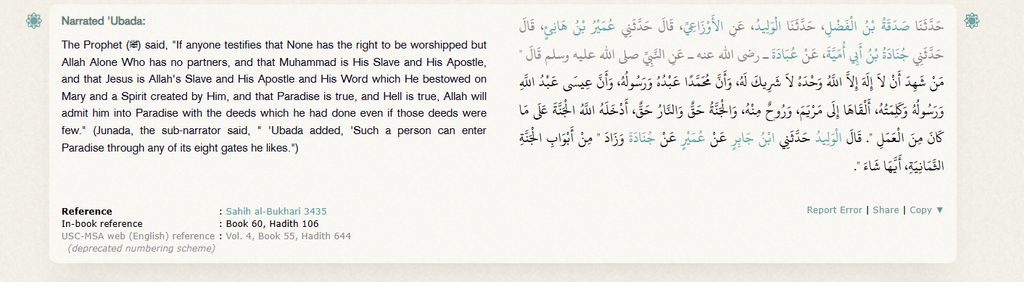
Salvation in Islam, in other words, is not earned through lineage or automatic through group identity. It rests on sincere belief correctly directed — toward Allah alone, and toward every prophet He sent, including Jesus, understood as Islam understands him.
Read Also: What Was the Significance of Gabriel’s Messages to Muhammad in Islam?
What does Islam teach about Muhammad?
Every earlier thread in this discussion converges on a single claim. Islam teaches that Muhammad (PBUH) is the Seal of the Prophets — the last messenger Allah will ever send, whose mission was to confirm and complete every revelation that came before him rather than replace it with something new.
مَّا كَانَ مُحَمَّدٌ أَبَا أَحَدٍ مِّن رِّجَالِكُمْ وَلَٰكِن رَّسُولَ اللَّهِ وَخَاتَمَ النَّبِيِّينَ ۗ وَكَانَ اللَّهُ بِكُلِّ شَيْءٍ عَلِيمًا
“Muhammad is not the father of [any] one of your men, but [he is] the Messenger of Allah and last of the prophets. And ever is Allah, of all things, Knowing.” (Quran 33:40)
Classical commentators, including Ibn Kathir, explain that this verse settles a specific theological question: no prophet will come after Muhammad (PBUH), which is why Islam holds that Jesus’s foretold return will occur under Muhammad’s (PBUH) message rather than as a new, separate revelation.
This finality is inseparable from the universality already discussed. Where Moses was sent primarily to the Children of Israel, Muhammad (PBUH) was the first prophet explicitly commissioned for every person on earth, for all time:
وَمَا أَرْسَلْنَاكَ إِلَّا كَافَّةً لِّلنَّاسِ بَشِيرًا وَنَذِيرًا
“And We have not sent you except comprehensively to mankind as a bringer of good tidings and a warner.” (Quran 34:28)
Muhammad’s (PBUH) role, in the framework this entire article has traced, is not that of a founder introducing something unprecedented.
It is that of a final messenger, completing a single mission that began with Adam and continued through every prophet named in the Quran, including Moses and Jesus.
Read Also: What Was The First Religion That Believed In One God?
Islam has universal, final authority while commanding justice toward others
Two ideas sit together in Islamic theology without contradiction, even though they can seem to pull in opposite directions at first glance. The first is that Islam presents itself as the final and complete message, valid for every person regardless of background.
إِنَّ الدِّينَ عِندَ اللَّهِ الْإِسْلَامُ
“Indeed, the religion in the sight of Allah is Islam.” (Quran 3:19)
This universality shapes how Islam understands its own principles and the nature of faith itself — not as one option among several, but as the completion of a project that began with Adam.
The second idea, held simultaneously, is a firm command toward fairness. The Quran does not permit hostility toward people of other faiths who live peacefully.
لَّا يَنْهَاكُمُ اللَّهُ عَنِ الَّذِينَ لَمْ يُقَاتِلُوكُمْ فِي الدِّينِ وَلَمْ يُخْرِجُوكُم مِّن دِيَارِكُمْ أَن تَبَرُّوهُمْ وَتُقْسِطُوا إِلَيْهِمْ
“Allah does not forbid you from those who do not fight you because of religion and do not expel you from your homes — from being righteous toward them and acting justly toward them.” (Quran 60:8)
Theological confidence in Islam’s finality and personal decency toward neighbors of other faiths are not treated as competing values.
A Muslim can hold both without contradiction, precisely because Islam’s claim rests on shared prophetic origin rather than a rejection of what came before.
Read Also: What Did Muslims Believe Before the Quran?
Learn More About Islam
Discover the beauty, teachings, and wisdom of Islam in a clear and welcoming way. Start exploring and deepen your understanding today.
Learn MoreDiscover More About Faith, Certainty, and the Journey to Islam
Questions about how the prophets connect, why scriptures diverged, or what any of this means for your own search for truth deserve more than a single article can hold.
The Salam Center team welcomes every question, without judgment and without pressure.
Browse the Salam blog for deeper reading on Islamic theology, the lives of the prophets, and common misconceptions addressed directly from Quranic and hadith sources.
Reach out directly — our team is ready to listen, guide, and welcome you.

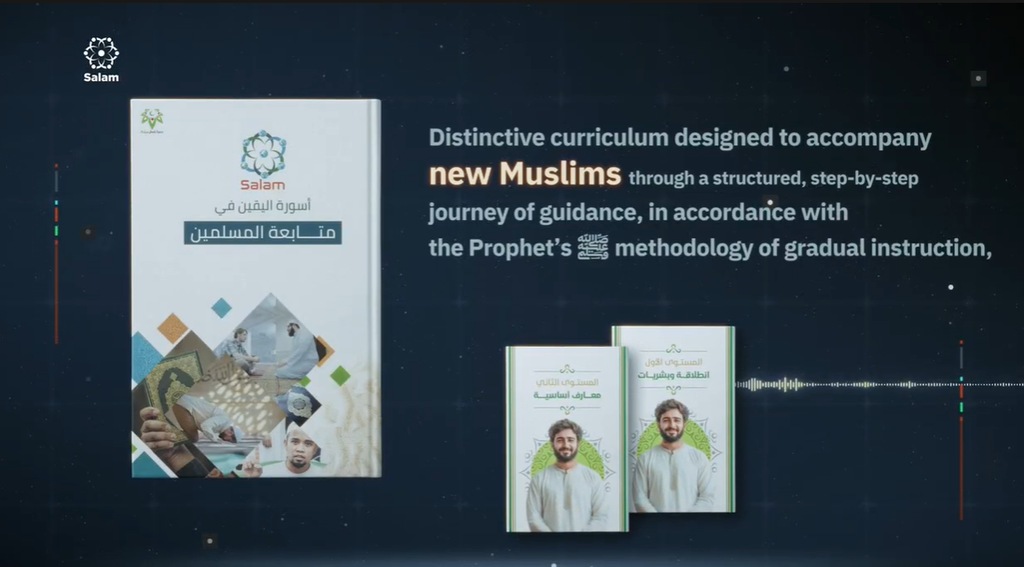
If you’re ready to learn more structurally, the Asawirat Al-Yaqeen (Bracelets of Certainty) program offers new Muslims a guided four-stage path:
- Foundational knowledge of the pillars of faith and daily worship
- Deeper grounding in Quran, Seerah, and Islamic character
- Practical rulings for daily life, family, and personal conduct
- Advanced study of contemporary questions and interfaith evidence
For anything specific — entering Islam, understanding a teaching, or simply talking something through — reach out directly through the Salam Platform.
Reach out directly to the Salam Center team to start the Asawirat Al-Yaqeen (Bracelets of Certainty) program for FREE.
Summary
Every prophet Allah sent carried the identical core message of worshipping one God alone, a thread Islam traces unbroken from Adam through Moses and Jesus to Muhammad (PBUH) as the Seal of the Prophets.
Earlier scriptures came from genuine revelation but were altered by human hands, which explains both the special status granted to Jews and Christians as People of the Book and the Quran’s claim to be the final, preserved word.
Frequently Asked Questions
Do Muslims believe Jesus was a prophet or the son of Allah?
Muslims believe Jesus (Isa ibn Maryam) was one of Allah’s greatest prophets, born of a miraculous virgin birth, but not the son of Allah. The Quran explicitly rejects this claim in Quran 5:73, affirming Jesus as a human messenger while denying his divinity.
What does it mean that Jews and Christians are People of the Book in Islam?
People of the Book (Ahl al-Kitab) is the Quranic term for Jews and Christians, recognizing them as recipients of genuine earlier revelation through Moses and Jesus. This status grants specific rights, including permission to eat their food and marry chaste women from their communities, per Quran 5:5.
What does Islam say about how a person achieves salvation?
Islam teaches that salvation requires sincere belief in Allah’s oneness and Muhammad’s (PBUH) prophethood, combined with righteous deeds. Quran 2:112 states this explicitly, rejecting the idea that salvation is limited to any single group by birth or lineage.
Why does the Quran say earlier scriptures were changed?
The Quran states that earlier scriptures like the Torah were altered through human transmission, including deliberate rewriting described in Quran 2:79. This is a central reason Islam considers the Quran Allah’s final, preserved revelation.
What does it mean that Muhammad is the final prophet in Islam?
Muhammad (PBUH) is called the Seal of the Prophets in Quran 33:40, meaning no prophet will follow him and his message confirms and completes all revelation that came before, including what Moses and Jesus taught.
Curious about Islam?
Journey towards clarity and purpose. Our team is here to support you in your search for truth and spiritual guidance.
Embrace the Truth