
What Are the Teachings of the Qur’an?
| Key Takeaways |
| The Qur’an’s central teaching is Tawhid, the absolute Oneness of Allah, from which every other doctrine flows. |
| The Qur’an teaches that Prophet Muhammad (PBUH) was sent as a mercy to all creation, not as a source of violence or coercion. |
| The Qur’an commands justice, kindness to parents and neighbors, and good character as inseparable from true faith. |
| The Qur’an explicitly forbids compulsion in religion and instructs believers toward reasoned, respectful dialogue. |
| The Qur’an affirms Jesus (peace be upon him) as a prophet and the Messiah, born of a virgin, while rejecting his divinity. |
| The Qur’an addresses the full scope of human life — worship, family, trade, and society — as a unified moral system. |
The Qur’an teaches the absolute Oneness of Allah, the accountability of every soul, and a complete moral framework governing worship, family, and society. This single doctrine of Tawhid — monotheism without partners or intermediaries — anchors everything else the Qur’an reveals about belief, ethics, and purpose.
For a curious reader trying to understand what does the Quran teach at its foundation, the answer begins here: a Creator who is One, Merciful, and directly accessible to every human being without priesthood or ritual mediation.
What Are the Teachings of the Qur’an (Doctrine)?
The Qur’an’s core doctrine centers on Tawhid — the indivisible Oneness of Allah — alongside belief in prophethood, revelation, the Hereafter, and a comprehensive code of moral conduct governing every aspect of human life. Allah declares this directly:
قُلْ هُوَ اللَّهُ أَحَدٌ
“Say, ‘He is Allah, [who is] One.'” (Quran 112:1)
This verse from Surah Al-Ikhlas is often described by scholars as encapsulating a third of the Qur’an’s essential meaning, because it distills the entirety of Islamic theology into a single declaration.
Every teaching that follows — prayer, charity, fasting, family ethics, and social justice — flows from this one foundational truth.
Readers asking what is the central teaching of the Quran will find the answer consistently returns to this point: Allah alone deserves worship, and nothing in creation shares His essence, attributes, or right to be worshipped.
1. Tawhid — The Absolute Oneness of Allah
The single teaching from which all Qur’anic doctrine derives is Tawhid, the belief that Allah is One without partner, equal, or intermediary. This is not merely a numerical claim but a total reorientation of human purpose — every act of worship, obedience, and moral choice is directed to Him alone. The Qur’an states:
هُوَ اللَّهُ الَّذِي لَا إِلَٰهَ إِلَّا هُوَ
“He is Allah, other than whom there is no deity.” (Quran 59:22)
Understanding God In Islam begins with grasping that Tawhid rejects any form of shirk — the association of partners with Allah in worship, attributes, or authority.
This stands in direct contrast to Polytheism, which the Qur’an identifies as the gravest possible error a soul can make.
The concept of Monotheism in Islam is uncompromising precisely because it protects the purity of the relationship between Creator and creation.
2. Belief in the Unseen and the Six Pillars of Iman
The Qur’an structures faith (Iman) around belief in six unseen realities: Allah, His angels, His revealed books, His messengers, the Day of Judgment, and divine decree. These are not abstract philosophical positions but the framework that gives meaning to daily worship and moral responsibility. The opening of Surah Al-Baqarah describes the successful believers this way:
الَّذِينَ يُؤْمِنُونَ بِالْغَيْبِ وَيُقِيمُونَ الصَّلَاةَ وَمِمَّا رَزَقْنَاهُمْ يُنفِقُونَ
“Who believe in the unseen, establish prayer, and spend out of what We have provided for them.” (Quran 2:3)
This structure of belief connects directly to lived practice. It is not enough to affirm the unseen intellectually; the Qur’an consistently pairs belief with visible action — prayer, charity, and righteous conduct.
A deeper look at faith in islam shows how each of these six pillars shapes a Muslim’s relationship to worship, ethics, and the afterlife in practical, everyday terms.
3. Prophethood and the Finality of Muhammad’s Message
The Qur’an teaches that Allah sent a continuous chain of prophets to every nation, culminating in Muhammad (PBUH) as the final messenger and a mercy to all creation. This doctrine of prophethood establishes continuity between the message given to earlier prophets and the revelation completed through the Qur’an. Allah describes the purpose of this final prophethood clearly:
وَمَا أَرْسَلْنَاكَ إِلَّا رَحْمَةً لِّلْعَالَمِينَ
“And We have not sent you, [O Muhammad], except as a mercy to the worlds.” (Quran 21:107)
This single verse dismantles the common misconception that the Qur’an’s teachings center on conflict or coercion.
The Prophet’s mission, as described in the text itself, was mercy — to mankind, to the natural world, and to every creature within it.
Understanding how did muhammad become the prophet of islam and tracing prophet muhammad family tree from abraham reveals how this final prophethood connects to the earlier prophets recognized across Abrahamic tradition, including Abraham, Moses, and Jesus.
Learn More About Islam
Discover the beauty, teachings, and wisdom of Islam in a clear and welcoming way. Start exploring and deepen your understanding today.
Learn More4. Quran Teachings About Jesus and the People of the Book
The Qur’an honors Jesus (peace be upon him) as a prophet, the Messiah, and a servant of Allah born miraculously to the Virgin Mary, while firmly rejecting the doctrine of his divinity. This teaching places the Qur’an in direct theological conversation with Christianity, affirming shared reverence for Jesus while correcting what it identifies as a later doctrinal deviation. The Qur’an states:
مَّا الْمَسِيحُ ابْنُ مَرْيَمَ إِلَّا رَسُولٌ قَدْ خَلَتْ مِن قَبْلِهِ الرُّسُلُ
“The Messiah, son of Mary, was not but a messenger; [other] messengers have passed on before him.” (Quran 5:75)
This doctrine is central to understanding what does the quran say about jesus and forms one of the sharpest points of distinction explored in comparative studies of islam vs. christianity.
The Qur’an also addresses do muslims believe the bible with nuance — affirming the divine origin of earlier scriptures while teaching that later human transmission introduced alterations, which is why the Qur’an itself was preserved through a distinct, verified chain of memorization and written compilation.
5. The Qur’an as a Complete Guide for Daily Life
The Qur’an addresses worship, trade, marriage, inheritance, and social conduct as a unified system rather than separating “religious” life from “worldly” affairs. This comprehensiveness is one of the doctrine’s most distinctive features — nothing in a believer’s life falls outside the scope of divine guidance. The Qur’an describes itself in these terms:
وَنَزَّلْنَا عَلَيْكَ الْكِتَابَ تِبْيَانًا لِّكُلِّ شَيْءٍ
“And We have sent down to you the Book as clarification for all things.” (Quran 16:89)
This doctrine of comprehensiveness is why new Muslims are guided through structured, sequential learning rather than left to piece together isolated rulings.
For readers wanting the full picture of what do muslims believe about the quran? and why do muslims believe in the quran, this comprehensiveness is often the detail that most reshapes initial assumptions about the text.
6. Tawbah — Sincere Repentance and Return to Allah
The Qur’an teaches that Allah’s mercy is limitless for anyone who sincerely repents, regardless of the magnitude of their previous sins. This doctrine of Tawbah removes despair from the believer’s relationship with Allah and reframes moral failure as an opportunity for renewed closeness rather than permanent separation. Allah says:
قُلْ يَا عِبَادِيَ الَّذِينَ أَسْرَفُوا عَلَىٰ أَنفُسِهِمْ لَا تَقْنَطُوا مِن رَّحْمَةِ اللَّهِ ۚ إِنَّ اللَّهَ يَغْفِرُ الذُّنُوبَ جَمِيعًا
“Say, ‘O My servants who have transgressed against themselves [by sinning], do not despair of the mercy of Allah. Indeed, Allah forgives all sins.'” (Quran 39:53)
This teaching holds particular significance for new Muslims navigating the post-conversion journey, since it establishes that past actions — however serious — do not define one’s standing before Allah once genuine repentance is made.
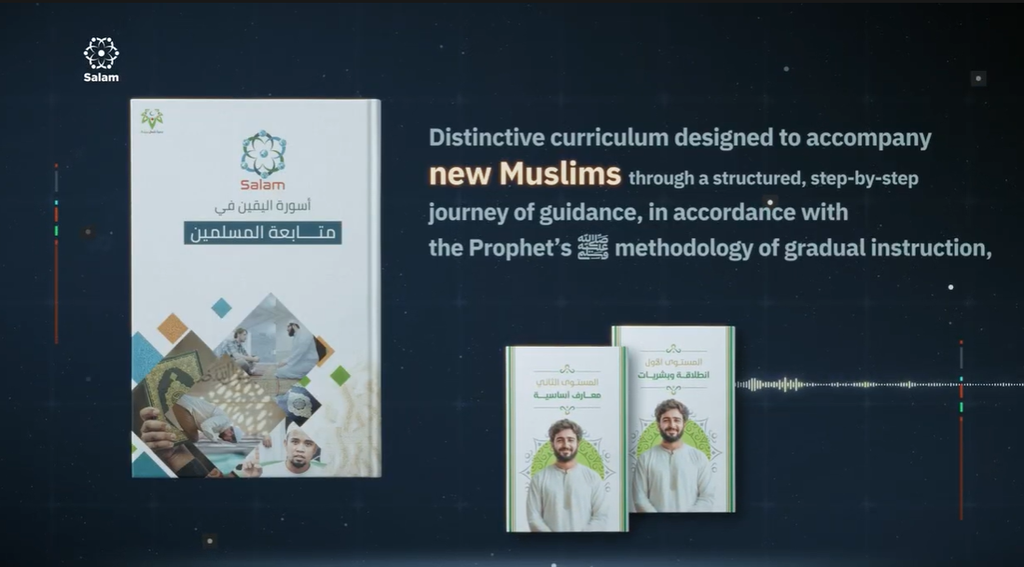
The Salam Center team addresses this doctrine in depth within the second stage of the Asawirat Al-Yaqeen (Bracelets of Certainty) curriculum, where students study the rulings and spiritual dimensions of sincere repentance.
Reach out directly to the Salam Center team to start the Asawirat Al-Yaqeen (Bracelets of Certainty) program for FREE.
Read Also: What Are the Teachings of Islam?
7. Justice and Moral Conduct as Inseparable from Faith
The Qur’an commands justice, kindness, and good character as direct expressions of faith rather than optional ethical add-ons. This teaching dismantles any separation between private belief and public conduct — a Muslim’s character toward parents, neighbors, and strangers is treated as a measure of the sincerity of their faith. Allah instructs:
إِنَّ اللَّهَ يَأْمُرُ بِالْعَدْلِ وَالْإِحْسَانِ وَإِيتَاءِ ذِي الْقُرْبَىٰ
“Indeed, Allah orders justice and good conduct and giving to relatives.” (Quran 16:90)
This verse is often cited by scholars as one of the most comprehensive ethical statements in the entire Qur’an.
The Qur’an extends this principle into specific family obligations as well, commanding kindness to parents, relatives, orphans, and neighbors near and far:
وَاعْبُدُوا اللَّهَ وَلَا تُشْرِكُوا بِهِ شَيْئًا ۖ وَبِالْوَالِدَيْنِ إِحْسَانًا
“Worship Allah and associate nothing with Him, and to parents do good.” (Quran 4:36)
Does the Qur’an Teach Violence or Peace?
The Qur’an explicitly forbids compulsion in matters of faith and frames warfare only as a defensive response to aggression, never as a tool for forced conversion. This is one of the most searched and most misunderstood questions non-Muslims bring to the text, often shaped by verses read outside their historical and textual context. The Qur’an states directly:
لَا إِكْرَاهَ فِي الدِّينِ
“There shall be no compulsion in [acceptance of] the religion.” (Quran 2:256)
This principle is not an isolated statement but a governing rule that shapes the Qur’an’s broader ethical vision.
Scholars of Ahlus Sunnah wal Jama’ah have consistently taught that verses addressing conflict in the Qur’an were revealed in the context of specific defensive struggles faced by the early Muslim community, not as a general license for aggression against non-combatants.
The Prophet’s own conduct — recorded across authenticated Hadith — reinforced restraint, mercy toward captives, and protection of civilians, women, children, and places of worship.
Readers examining what does the quran say about other religions will find a consistent thread of coexistence woven through the text rather than the antagonism often assumed.
Read Also: Teaching Islam to Kids & in Schools
Does the Qur’an Teach Forgiveness?
Yes — the Qur’an repeatedly commands forgiveness, patience, and restraint even when a believer has been wronged, presenting mercy as a higher virtue than retribution. This teaching runs through both the Meccan and Medinan portions of the text, reflecting its centrality rather than a phase-specific concession. Allah instructs:
خُذِ الْعَفْوَ وَأْمُرْ بِالْعُرْفِ وَأَعْرِضْ عَنِ الْجَاهِلِينَ
“Take what is given freely, enjoin what is good, and turn away from the ignorant.” (Quran 7:199)
Forgiveness in Qur’anic doctrine is not passive submission but an active moral discipline — one that requires greater strength than retaliation.
The Prophet Muhammad (PBUH) modeled this teaching throughout his life, most famously in his response to those who had persecuted him for over a decade.
This pattern of mercy connects directly to the doctrine discussed above: a Prophet sent as rahmah (mercy) to all creation could not have taught a religion built on vengeance.
Read Also: What Are the Teachings of Prophet Muhammad?
Learn More About Islam
Discover the beauty, teachings, and wisdom of Islam in a clear and welcoming way. Start exploring and deepen your understanding today.
Learn MoreLearn More About Faith, Certainty, and the Journey to Islam
Every teaching explored here is only a starting point. If any of this resonated, there is more waiting for you.
Continue exploring:
- Browse the Salam Platform for a full library of evidence-based Islamic content
- Read more on the Salam blog for ongoing discussions of Qur’anic doctrine and belief
- Reach out directly with your own questions — no question is too basic or too difficult
If you’re considering Islam or have recently embraced it, the Salam Center team offers:
- One-on-one guidance for those exploring the Shahada and entering Islam
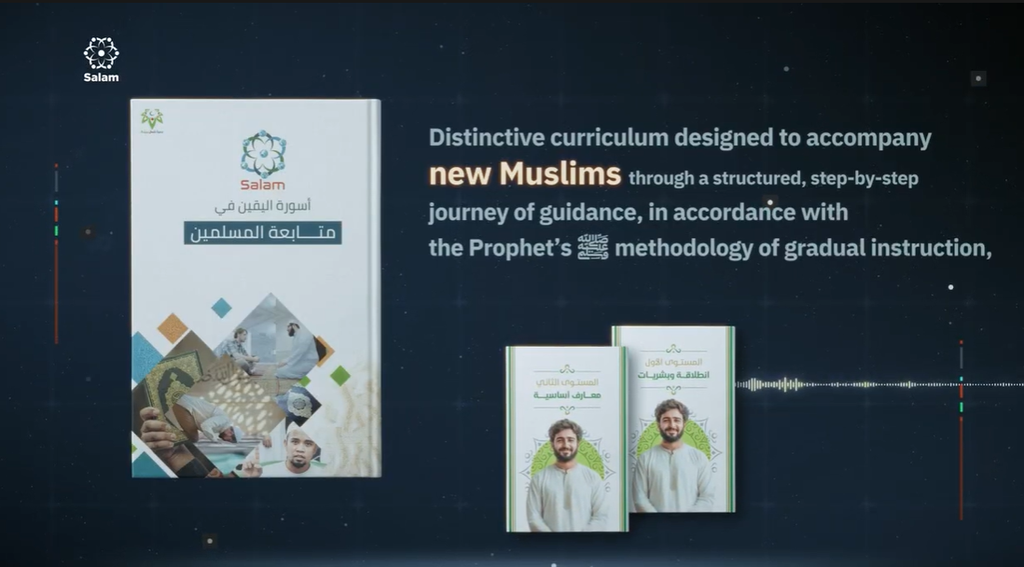
- Enrollment in Asawirat Al-Yaqeen (Bracelets of Certainty), a structured four-stage program covering foundational worship, repentance, the Prophet’s biography, moral etiquette, and practical life rulings
- Ongoing support from trained specialists for questions specific to your journey, in your own language and at your own pace
- A welcoming, non-judgmental space for general inquiries about Islamic belief and practice
Reach out directly to the Salam Center team to start the Asawirat Al-Yaqeen (Bracelets of Certainty) program for FREE.
Summary
The Qur’an’s teachings center on Tawhid, the absolute Oneness of Allah, extending outward into prophethood, accountability, and a moral code governing prayer, family life, and justice. Mercy defines the Prophet’s mission, while forgiveness and sincere repentance remain open to every believer.
Qur’anic doctrine rejects religious compulsion, honors Jesus as a prophet without accepting his divinity, and treats daily conduct as inseparable from faith itself. These teachings offer sincere seekers a coherent, evidence-grounded path toward understanding Islam’s foundational worldview.
Frequently Asked Questions
What is the central teaching of the Quran?
The central teaching is Tawhid — the absolute, indivisible Oneness of Allah. Every other doctrine, including prophethood, moral conduct, and the Day of Judgment, flows from this foundational belief, as affirmed in Surah Al-Ikhlas: “Say, ‘He is Allah, [who is] One.'” (Quran 112:1).
Does the Quran teach violence against non-Muslims?
No. The Qur’an states there is “no compulsion in religion” (Quran 2:256), and other verses were revealed in specific historical contexts of conflict, not as general commands against peaceful non-Muslims or civilians.
What does the Quran teach about forgiveness?
The Qur’an commands believers to forgive and show restraint, calling it a higher virtue than retaliation: “Take what is given freely, enjoin what is good.” (Quran 7:199). The Prophet (PBUH) modeled this teaching throughout his life.
What does the Quran teach about Jesus?
The Qur’an honors Jesus (peace be upon him) as a prophet and the Messiah, born to the Virgin Mary, while rejecting his divinity: “The Messiah, son of Mary, was not but a messenger.” (Quran 5:75).
What are the main teachings of the Quran about daily life?
The Qur’an addresses worship, family, trade, and social conduct as one unified system, describing itself as “clarification for all things.” (Quran 16:89). Nothing in daily life falls outside its moral guidance.
Curious about Islam?
Journey towards clarity and purpose. Our team is here to support you in your search for truth and spiritual guidance.
Embrace the Truth