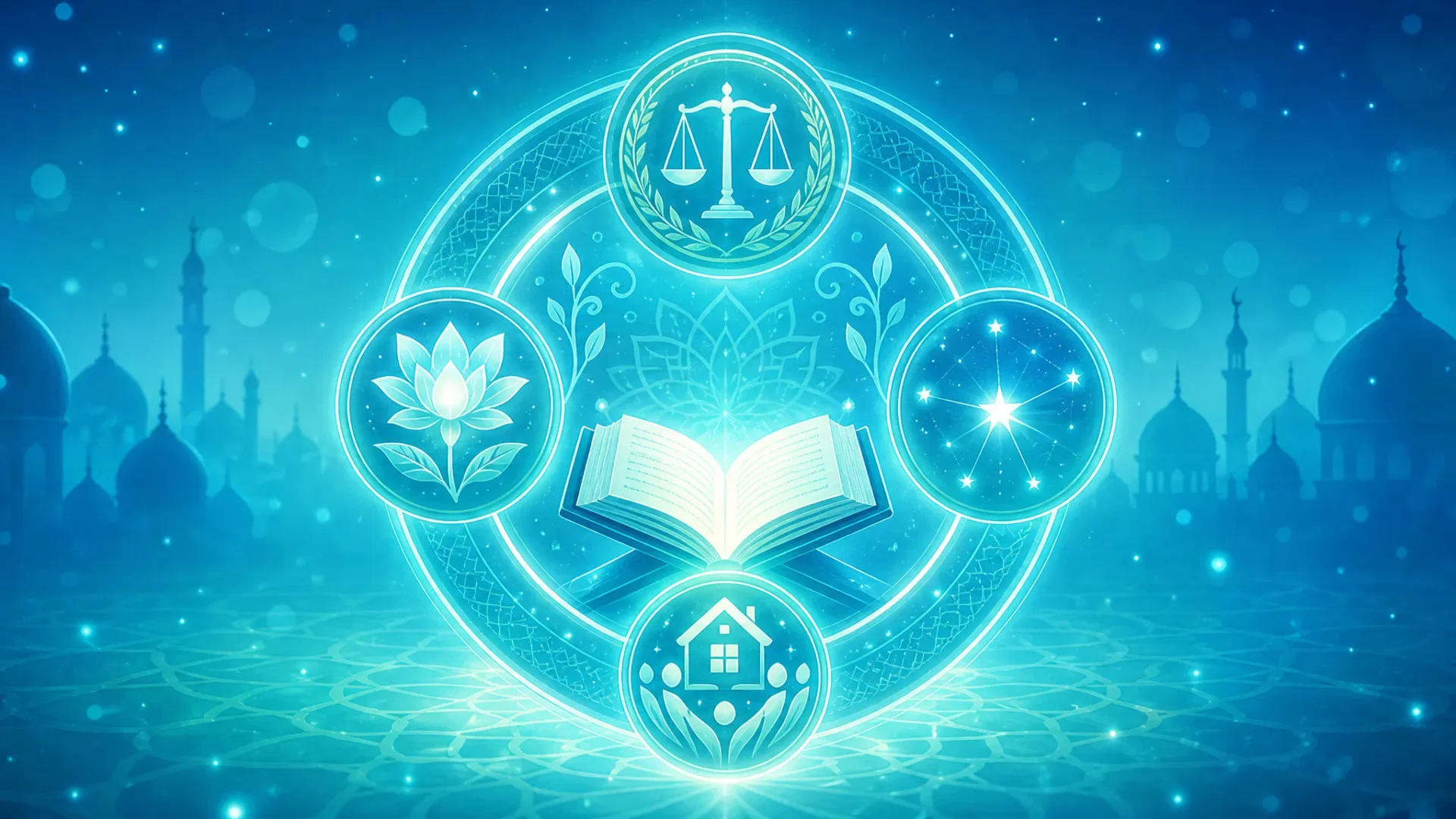
What Are the Teachings of Islam?
| Key Takeaways |
| Islam teaches absolute monotheism (Tawheed), the belief that Allah alone deserves worship, with no partners, sons, or intermediaries. |
| The Five Pillars — Shahada, Salah, Zakat, Sawm, and Hajj — form the practical framework through which Muslims express submission to Allah. |
| Six Articles of Faith define Islamic belief: Allah, the Angels, the Revealed Books, the Prophets, the Day of Judgment, and Divine Decree (Qadar). |
| The Quran and the authenticated Sunnah of Prophet Muhammad (PBUH) together form the complete source of Islamic teaching, covering worship, ethics, law, and social life. |
| Islamic teachings extend beyond ritual into a full ethical system — justice, mercy, honesty, and human dignity are treated as religious obligations, not optional virtues. |
| Islam is the final, universal message to all humanity, affirming the earlier prophets while correcting what was altered in the traditions that came before it. |
Islam’s teachings rest on one core reality: Allah alone is worthy of worship, and He has provided complete guidance for how a human being should believe, worship, and live. That guidance is not scattered across abstract principles. It is structured, specific, and traceable to the Quran and the authenticated Sunnah of Prophet Muhammad ﷺ.
For someone asking what Islam actually teaches — beyond headlines, beyond assumptions — the honest answer is a coherent system spanning belief, worship, ethics, and daily conduct. Nothing in it is left to guesswork. Every major teaching connects directly back to revealed text.
What Are the Main Teachings of Islam?
The teachings of Islam center on Tawheed (the oneness of Allah), the Five Pillars of practice, the Six Articles of Faith, and a comprehensive code of ethics governing every dimension of human life. These teachings are drawn exclusively from the Quran, Allah’s final revelation, and the Sunnah, the verified words and actions of Prophet Muhammad ﷺ.
Allah describes the completeness of this guidance directly:
وَنَزَّلْنَا عَلَيْكَ الْكِتَابَ تِبْيَانًا لِّكُلِّ شَيْءٍ
“And We have sent down to you the Book as clarification for all things.” (Quran 16:89)
This single verse explains why Islamic teaching feels so structured. Nothing essential to guidance was left unaddressed — not belief, not worship, not the way a person treats a neighbor or conducts a business transaction.
Readers exploring the broader islam principles that underlie this framework will find these teachings repeatedly branch from two roots: aqeedah (creed) and shari’ah (law) — belief and its lived expression, functioning as one inseparable whole.
1. Tawheed — The Absolute Oneness of Allah
Every teaching in Islam begins with Tawheed, the conviction that Allah is one, without partner, without equal, and without need. This is not merely the first item on a list. It is the lens through which every other teaching makes sense.
Allah states this with total clarity:
قُلْ هُوَ اللَّهُ أَحَدٌ ٱللَّهُ ٱلصَّمَدُ لَمْ يَلِدْ وَلَمْ يُولَدْ وَلَمْ يَكُن لَّهُۥ كُفُوًا أَحَدٌ
“Say, ‘He is Allah, [who is] One, Allah, the Eternal Refuge. He neither begets nor is born, nor is there to Him any equivalent.'” (Quran 112:1–4)
Tawheed rejects every form of shared divinity — not only ancient idolatry but the subtler idols of modern life: wealth chased as an ultimate goal, status treated as identity, ego elevated above conscience.
Readers wanting the fuller theological picture can explore how God in Islam is understood as a being of total self-sufficiency, mercy, and justice, distinct from every created thing.
The contrast with polytheism, the association of partners with Allah, runs through the entire Quran as the one sin Islam treats as unforgivable without sincere repentance before death.
2. The Shahada — The Declaration of Faith
The Shahada is the sentence that opens the door to Islam: bearing witness that there is no deity worthy of worship except Allah, and that Muhammad ﷺ is His Messenger. Every other teaching in Islam flows outward from this single declaration.
The Prophet ﷺ described it, alongside the rest of Islam’s structure, when a man came and questioned him directly:
“Al-Islam implies that you testify that there is no god but Allah and that Muhammad is the messenger of Allah, and you establish prayer, pay Zakat, observe the fast of Ramadan, and perform pilgrimage to the House if you are solvent enough to bear the expense of the journey.” (Sahih Muslim)
This narration, known among scholars as the Hadith of Jibril, is one of the most foundational texts in Islamic theology — the angel Gabriel himself came in human form to ask the Prophet ﷺ to define Islam, Iman, and Ihsan in front of the Companions.
To say the Shahada sincerely is to reject every false claimant to ultimate authority, whether that claimant is an idol, an ideology, or one’s own desires.
Learn More About Islam
Discover the beauty, teachings, and wisdom of Islam in a clear and welcoming way. Start exploring and deepen your understanding today.
Learn More3. Salah — The Five Daily Prayers
Salah, the five daily prayers, is the physical rhythm through which a Muslim maintains conscious connection with Allah throughout the day. Prayer in Islam is not an occasional gesture — it structures dawn, midday, afternoon, sunset, and night around remembrance.
Allah commands this directly in the Quran, tying prayer explicitly to moral restraint:
إِنَّ الصَّلَاةَ تَنْهَىٰ عَنِ الْفَحْشَاءِ وَالْمُنكَرِ
“Indeed, prayer prohibits immorality and wrongdoing.” (Quran 29:45)
Salah is repeated, deliberate, and physical — standing, bowing, prostrating — which distinguishes it from private meditation.
It is communal at its core, drawing Muslims to the mosque, and personal at the same time, since no prayer requires an intermediary between the worshiper and Allah.
4. Zakat — Obligatory Charity
Zakat is the annual, fixed percentage of wealth that financially capable Muslims are obligated to give to those in need. Islam treats wealth as a trust from Allah rather than a private possession with no attached responsibility.
خُذْ مِنْ أَمْوَالِهِمْ صَدَقَةً تُطَهِّرُهُمْ وَتُزَكِّيهِم بِهَا
“Take, [O Muhammad], from their wealth a charity by which you purify them and cause them increase.” (Quran 9:103)
The word Zakat itself derives from purification and growth — the belief that giving does not diminish wealth but purifies what remains and grows it in ways beyond the material.
This single teaching reshapes how a believer relates to money: not as something hoarded, but as something circulated with accountability.
5. Sawm — Fasting During Ramadan
Sawm is the obligatory fast observed during the month of Ramadan, abstaining from food, drink, and marital relations from dawn until sunset. Its purpose extends far past physical restraint.
يَا أَيُّهَا الَّذِينَ آمَنُوا كُتِبَ عَلَيْكُمُ الصِّيَامُ كَمَا كُتِبَ عَلَى الَّذِينَ مِن قَبْلِكُمْ لَعَلَّكُمْ تَتَّقُونَ
“O you who have believed, decreed upon you is fasting as it was decreed upon those before you that you may become righteous.” (Quran 2:183)
Fasting cultivates empathy for those who go without by necessity rather than choice, disciplines desire, and creates a shared spiritual atmosphere across the entire global Muslim community simultaneously — over a billion people observing the same practice in the same month.
6. Hajj — The Pilgrimage to Mecca
Hajj is the pilgrimage to Mecca, obligatory once in a lifetime for every Muslim who is physically and financially able. It stands as the most visually striking demonstration of Islamic equality in practice.
وَلِلَّهِ عَلَى النَّاسِ حِجُّ الْبَيْتِ مَنِ اسْتَطَاعَ إِلَيْهِ سَبِيلًا
“And [due] to Allah from the people is a pilgrimage to the House — for whoever is able to find thereto a way.” (Quran 3:97)
Millions of people from every nation, race, and economic background dress identically in simple white cloth and perform the same rites before the same House.
Wealth, ethnicity, and social rank disappear entirely for the duration of the pilgrimage — a lived teaching that Islam recognizes no hierarchy of worth among believers except through God-consciousness.
Learn More About Islam
Discover the beauty, teachings, and wisdom of Islam in a clear and welcoming way. Start exploring and deepen your understanding today.
Learn More7. The Six Articles of Faith
Alongside the practices of the Five Pillars, Islam requires belief in six specific articles of faith: Allah, the Angels, the Revealed Books, the Prophets, the Day of Judgment, and Divine Decree. These form the complete theological architecture of Iman.
When the same inquirer asked the Prophet ﷺ to define faith, he received a precise answer:
“That you affirm your faith in Allah, in His angels, in His Books, in His Apostles, in the Day of Judgment, and you affirm your faith in the Divine Decree about good and evil.” (Sahih Muslim)
Belief in the Revealed Books requires accepting that Allah sent scripture before the Quran — the Torah, the Psalms, the Gospel — though Islam teaches these were altered over time, leaving the Quran as the final, preserved word.
Readers curious about this claim specifically can explore what do Muslims believe about the Quran and the deeper question of why do Muslims believe in the Quran as an unaltered revelation.
Belief in the Prophets includes Adam, Noah, Abraham, Moses, and Jesus — Islam does not treat them as rivals but as one continuous chain culminating in Muhammad ﷺ.
8. Divine Decree and the Balance of Free Will
Qadar, belief in Divine Decree, teaches that Allah’s knowledge encompasses all things without eliminating human free will or moral responsibility. This is frequently one of the most misunderstood teachings among newcomers to Islam.
Allah affirms both His comprehensive knowledge and the reality of human choice throughout the Quran, without contradiction between the two.
A believer who internalizes Qadar grieves hardship without despair and receives success without arrogance, understanding that both sit within a wisdom larger than immediate circumstance.
This teaching does not remove accountability — a person is still judged for the choices they freely make — but it situates those choices inside a Creator’s complete knowledge of time.
9. Islamic Ethics as Divine Obligation
Islam treats honesty, justice, mercy, and human dignity as religious obligations rooted in revelation, not as optional social preferences subject to changing consensus. This distinguishes Islamic ethics sharply from frameworks that derive morality from shifting cultural agreement.
The Prophet ﷺ tied this ethical dimension directly to the reality of faith itself:
“None of you [truly] believes until he loves for his brother that which he loves for himself.” (Sahih al-Bukhari)
This single teaching is regarded by scholars as containing an enormous share of Islamic ethics compressed into one sentence — reciprocity, empathy, and the rejection of selfishness, all treated as a condition of authentic faith rather than a supplementary virtue. Mercy runs through this ethical vision as a defining thread. The Prophet ﷺ said:
“Allah has divided Mercy into one hundred parts. He kept ninety-nine parts with Him and sent down one part to the earth, and because of that one part, His creations are merciful to each other.” (Sahih al-Bukhari)
10. Justice, Accountability, and the Day of Judgment
Islam teaches that every human being will stand before Allah on the Day of Judgment to answer for their deeds, and that justice must be upheld even when it costs the believer personally. This belief gives Islamic ethics their weight — nothing is wasted, no wrong goes unaddressed indefinitely.
يَا أَيُّهَا الَّذِينَ آمَنُوا كُونُوا قَوَّامِينَ بِالْقِسْطِ شُهَدَاءَ لِلَّهِ وَلَوْ عَلَىٰ أَنفُسِكُمْ
“O you who have believed, be persistently standing firm in justice, witnesses for Allah, even if it be against yourselves.” (Quran 4:135)
The awareness that Allah observes every action, publicly or privately, functions simultaneously as comfort and restraint.
It removes the illusion that any injustice goes permanently unseen and grounds the believer’s conduct in something beyond immediate consequence.
Read Also: What Are the Teachings of the Qur’an?
11. Islam’s Relationship to Earlier Revelation
Islam teaches that it is the continuation and correction of the same monotheistic message carried by every prophet before Muhammad ﷺ, not a separate or competing religion. Understanding how Islam views other religions clarifies much of the confusion surrounding this claim.
قُولُوا آمَنَّا بِاللَّهِ وَمَا أُنزِلَ إِلَيْنَا وَمَا أُنزِلَ إِلَىٰ إِبْرَاهِيمَ وَإِسْمَاعِيلَ وَإِسْحَاقَ وَيَعْقُوبَ وَالْأَسْبَاطِ وَمَا أُوتِيَ مُوسَىٰ وَعِيسَىٰ
“Say, ‘We have believed in Allah and what has been revealed to us and what has been revealed to Abraham and Ishmael and Isaac and Jacob… and what was given to Moses and Jesus.'” (Quran 2:136)
This teaching requires Muslims to honor Moses and Jesus as genuine prophets of Allah while holding that their communities’ scriptures were altered over centuries — a position explored in depth in the comparison between Islam vs. Christianity and Islam vs. Judaism. The Prophet ﷺ affirmed this continuity of mission directly:
“Every prophet used to be sent to his nation only, but I have been sent to all mankind.” (Sahih al-Bukhari)
Read Also: Teaching Islam to Kids & in Schools
12. Islam as a Complete Guidance for Daily Life
Islamic teachings do not stop at ritual worship — they extend into commerce, family life, food, dress, and everyday social conduct, treating the entirety of a sincere life as an act of worship. The Quran states the purpose behind this comprehensive scope directly:
وَمَا خَلَقْتُ الْجِنَّ وَالْإِنسَ إِلَّا لِيَعْبُدُونِ
“And I did not create the jinn and mankind except to worship Me.” (Quran 51:56)
Worship (‘ibadah) in this teaching is broader than prayer — it includes honest work, raising children with care, treating neighbors fairly, and seeking beneficial knowledge.
There is no wall in Islamic teaching between the sacred and the ordinary; an intention oriented toward Allah transforms routine action into worship.
Read Also: What Are the Teachings of Prophet Muhammad?
Learn More About Islam
Discover the beauty, teachings, and wisdom of Islam in a clear and welcoming way. Start exploring and deepen your understanding today.
Learn MoreDiscover More About Faith, Certainty, and the Journey to Islam
If these teachings raised questions of your own, that curiosity is worth following.
Read more on the Salam blog for articles covering Islamic belief, the life of the Prophet ﷺ, and answers to common questions non-Muslims ask about Islam.
Explore the full Salam Platform for a structured library of Islamic learning resources.
Reach out directly — our team is ready to listen, guide, and welcome you.
Considering the next step in your own journey? The Salam Center team offers a few pathways depending on where you are:
- Guidance on taking the Shahada and formally entering Islam
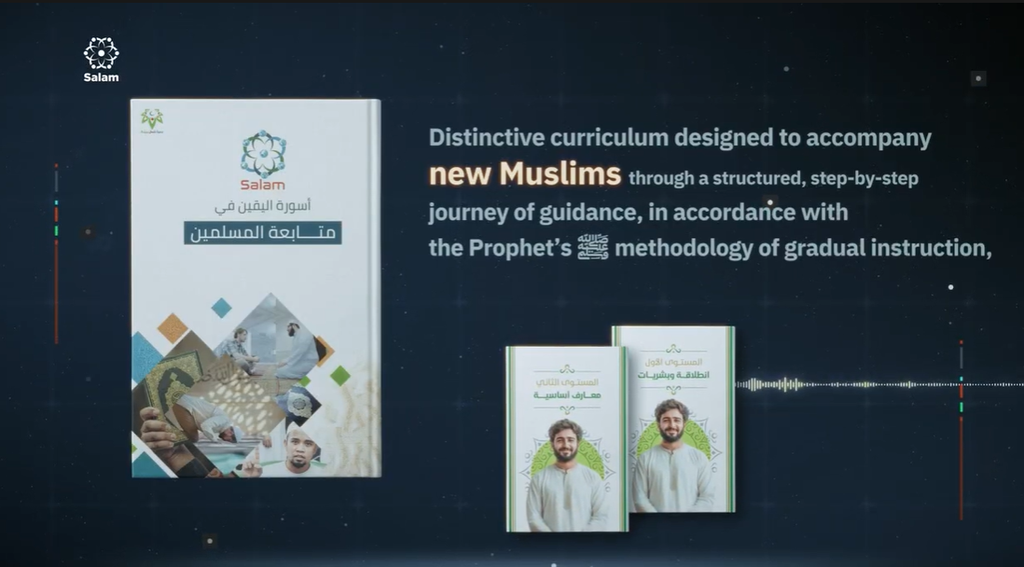
- Enrollment in Asawirat Al-Yaqeen (Bracelets of Certainty), a structured four-stage program for new Muslims covering foundational worship, repentance, the Prophet’s biography, daily life rulings, and contemporary issues
- General questions about any teaching, belief, or practice mentioned here
Reach out directly to the Salam Center team to start the Asawirat Al-Yaqeen (Bracelets of Certainty) program for FREE.
Summary
The teachings of Islam form one coherent system rather than a loose collection of rules: Tawheed anchors belief, the Five Pillars structure practice, and the Six Articles of Faith complete the theological framework a Muslim holds. Ethics and daily conduct are not separate from worship in this system — they are its lived extension, tying honesty and mercy directly to the authenticity of a person’s faith.
Anyone approaching these teachings with sincerity will find a religion that answers the largest human questions with unusual directness, while grounding every claim in a text and a prophetic example that Muslims believe has remained intact since its revelation.
Frequently Asked Questions
What is the most important teaching in Islam?
The most important teaching in Islam is Tawheed — the absolute oneness of Allah, with no partners, sons, or equals in divinity. Every other teaching, from the Five Pillars to Islamic ethics, flows directly from this single foundational principle stated throughout the Quran.
What are the 5 basic teachings of Islam?
The five foundational teachings are the Five Pillars: Shahada (declaration of faith), Salah (five daily prayers), Zakat (obligatory charity), Sawm (fasting during Ramadan), and Hajj (pilgrimage to Mecca). Together they form the practical expression of Islamic belief.
Do Islamic teachings come only from the Quran?
No. Islamic teachings come from both the Quran, Allah’s revealed word, and the Sunnah, the authenticated words and actions of Prophet Muhammad ﷺ preserved in verified hadith collections like Sahih al-Bukhari and Sahih Muslim. Both sources work together, never in contradiction.
Does Islam teach respect for other religions?
Islam teaches that it is the final continuation of the same monotheistic message carried by earlier prophets like Moses and Jesus, while holding that their scriptures were altered over time. Muslims are commanded to treat people of other faiths with justice and kindness (Quran 60:8), even while maintaining Islam’s theological claims.
What does Islam teach about daily conduct, not just worship?
Islam teaches that daily conduct — honesty in trade, kindness to neighbors, fairness in speech — is itself a form of worship when done with sincere intention toward Allah. The Prophet ﷺ tied authentic faith directly to how a person treats others, not only to ritual practice.
Curious about Islam?
Journey towards clarity and purpose. Our team is here to support you in your search for truth and spiritual guidance.
Embrace the Truth