
Quran Quotes About Patience
Patience and success are bound together in the Quran with a directness that surprises many new readers. Sabr, the Arabic term usually translated as patience, appears more than ninety times across the revelation, and it is rarely presented as passive waiting.
It is presented as active steadiness — the deliberate choice to keep obeying Allah, keep avoiding sin, and keep trusting His plan when circumstances make all three difficult. For a seeker examining Islamic beliefs about hardship and reward, or a new Muslim trying to hold onto composure during a hard season, these verses are not abstract theology.
1. Allah Promises His Direct Companionship to the Patient
Surah Al-Baqarah opens its guidance to the early Muslim community with a command that pairs two disciplines together: patience and prayer. The verse does not present patience as an isolated virtue. It ties it to worship, suggesting that steadfastness is sustained through connection with Allah rather than willpower alone.
يَا أَيُّهَا الَّذِينَ آمَنُوا اسْتَعِينُوا بِالصَّبْرِ وَالصَّلَاةِ ۚ إِنَّ اللَّهَ مَعَ الصَّابِرِينَ
Yā ayyuhal-ladhīna āmanū ista’īnū biṣ-ṣabri waṣ-ṣalāh, inna Allāha ma’a aṣ-ṣābirīn
“O you who have believed, seek help through patience and prayer. Indeed, Allah is with the patient.” (Quran 2:153)
The Arabic preposition ma’a (with) signals nearness, not mere approval. Allah is not simply pleased with the patient — He is present with them in a way that transforms hardship into a site of closeness rather than abandonment.
2. Trials Are a Test Followed By Glad Tidings for the Patient
This verse arrives immediately after the promise of companionship, and it explains why patience is needed in the first place. Allah tells believers plainly that fear, hunger, loss of wealth, and loss of life are coming. There is no attempt to soften this reality or suggest that faith exempts anyone from difficulty.
Instead, the verse redirects attention toward the outcome: those who remain patient receive glad tidings, a phrase that in Arabic (bushra) carries the sense of good news delivered in advance of its arrival.
وَلَنَبْلُوَنَّكُمْ بِشَيْءٍ مِّنَ الْخَوْفِ وَالْجُوعِ وَنَقْصٍ مِّنَ الْأَمْوَالِ وَالْأَنفُسِ وَالثَّمَرَاتِ ۗ وَبَشِّرِ الصَّابِرِينَ
Wa lanabluwannakum bishay’im minal-khawfi wal-jū’i wa naqṣim minal-amwāli wal-anfusi wath-thamarāt, wa bashshiriṣ-ṣābirīn
“And We will surely test you with something of fear and hunger and a loss of wealth and lives and fruits, but give good tidings to the patient.” (Quran 2:155)
The verse frames hardship as expected rather than exceptional, which is precisely why sabr matters. Trials are not a sign of divine neglect — they are described as the ordinary terrain of a tested life.
3. Recognizing Ownership Belongs To Allah Anchors The Believer During Loss
Following directly from the previous verse, this passage gives the actual formula the patient use when disaster strikes. It is the phrase inna lillahi wa inna ilayhi raji’un — a declaration that everything, including one’s own life, ultimately belongs to Allah and returns to Him.
This single sentence reframes loss: nothing was ever truly possessed outright, so nothing is truly and finally lost.
الَّذِينَ إِذَا أَصَابَتْهُم مُّصِيبَةٌ قَالُوا إِنَّا لِلَّهِ وَإِنَّا إِلَيْهِ رَاجِعُونَ
Alladhīna idhā aṣābat-hum muṣībatun qālū innā lillāhi wa innā ilayhi rāji’ūn
“Who, when disaster strikes them, say, ‘Indeed we belong to Allah, and indeed to Him we will return.'” (Quran 2:156)
The next verse (2:157) completes the promise: those who respond this way receive blessings and mercy from their Lord, and are described as rightly guided.
This connects directly to how Islam views the nature of Allah — as one who does not merely permit suffering but responds to patient endurance with mercy.
Learn More About Islam
Discover the beauty, teachings, and wisdom of Islam in a clear and welcoming way. Start exploring and deepen your understanding today.
Learn More4. Ease Accompanies Hardship Rather Than Simply Following It
Surah Ash-Sharh was revealed to comfort Prophet Muhammad (PBUH) during a period of intense difficulty in Makkah, and its central promise is repeated twice in successive verses.
Classical commentators, including Ibn Kathir, observed that the Arabic grammar uses the definite article for “hardship” both times while using the indefinite form for “ease,” a structural signal that one hardship is met with more than one form of relief.
The repetition itself functions as emphasis, reinforcing certainty rather than simply restating the point.
فَإِنَّ مَعَ الْعُسْرِ يُسْرًا . إِنَّ مَعَ الْعُسْرِ يُسْرًا
Fa-inna ma’al-‘usri yusrā. Inna ma’al-‘usri yusrā
“For indeed, with hardship [will be] ease. Indeed, with hardship [will be] ease.” (Quran 94:5-6)
The verse does not promise ease after hardship as a distant future event. The Arabic preposition ma’a places ease alongside hardship, suggesting the two arrive close together rather than separated by an indefinite waiting period.
5. The Patient Receive Their Reward Without Any Limit
This is widely regarded as the clearest Quran verse about patience and success, because it makes an explicit, unqualified promise.
Unlike many other rewards described in the Quran, which are often tied to measured scales of good deeds, this verse states that the patient are repaid bighayri hisab — without account, without reckoning, without limit.
At-Tabari’s classical tafsir notes that this phrase has been understood to mean the reward bypasses the normal process of weighing deeds altogether.
إِنَّمَا يُوَفَّى الصَّابِرُونَ أَجْرَهُم بِغَيْرِ حِسَابٍ
Innamā yuwaffaṣ-ṣābirūna ajrahum bighayri ḥisāb
“Indeed, the patient will be given their reward without account.” (Quran 39:10)
This verse appears within a broader passage (Quran 39:10) urging believers to remain conscious of Allah despite the constraints of their circumstances, reminding them that Allah’s earth is spacious — meaning that hardship in one place or condition is never the final word.
6. Patience Is Sustained Through Allah Rather Than Personal Willpower
This verse, addressed directly to Prophet Muhammad (PBUH), corrects a subtle misunderstanding about the source of patience. It does not instruct the Prophet to simply try harder.
It states that his patience is only possible through Allah — removing the burden of sabr from pure self-discipline and placing it within a relationship of reliance on the divine.
وَاصْبِرْ وَمَا صَبْرُكَ إِلَّا بِاللَّهِ
Waṣbir wa mā ṣabruka illā billāh
“And be patient, [O Muhammad], and your patience is not but through Allah.” (Quran 16:127)
This distinction matters for anyone exploring faith in Islam: sabr is not framed as a personality trait some people happen to have. It is framed as a capacity granted and sustained by Allah, accessible through supplication and trust.
7. Steadfast Patience Combined With Charity Earns The Best Outcome
Surah Ar-Ra’d links patience to a cluster of other righteous actions — seeking Allah’s pleasure, maintaining prayer, giving charity openly and secretly, and repelling evil with good.
وَالَّذِينَ صَبَرُوا ابْتِغَاءَ وَجْهِ رَبِّهِمْ وَأَقَامُوا الصَّلَاةَ وَأَنفَقُوا مِمَّا رَزَقْنَاهُمْ سِرًّا وَعَلَانِيَةً وَيَدْرَءُونَ بِالْحَسَنَةِ السَّيِّئَةَ أُولَٰئِكَ لَهُمْ عُقْبَى الدَّارِ
Wal-ladhīna ṣabarū-btighā’a wajhi rabbihim wa aqāmuṣ-ṣalāta wa anfaqū mimmā razaqnāhum sirran wa ‘alāniyatan wa yadra’ūna bil-ḥasanatis-sayyi’ata ulā’ika lahum ‘uqbad-dār
“And those who are patient, seeking the countenance of their Lord, and establish prayer and spend from what We have provided for them secretly and publicly and repel evil with good — those will have the good consequence of [this] home.” (Quran 13:22)
The verse presents sabr not as an isolated act but as one strand within a coherent life of worship and ethical conduct, culminating in what the verse calls “the final good” — a description often understood as referring to Paradise.
This verse illustrates that patience in the Quranic sense is rarely presented alone. It functions as one part of an integrated life built on the nine principles of Islam, where worship, ethics, and endurance reinforce one another.
Read Also: Beautiful Quran Quotes About Life That Reveal Its True Purpose
8. Believers Are Commanded To Vie With One Another In Steadfastness To Attain Success
Surah Ali ‘Imran closes with a command directed at the believing community as a whole, addressed after a passage discussing hardship in battle.
يَا أَيُّهَا الَّذِينَ آمَنُوا اصْبِرُوا وَصَابِرُوا وَرَابِطُوا وَاتَّقُوا اللَّهَ لَعَلَّكُمْ تُفْلِحُونَ
Yā ayyuhal-ladhīna āmanuṣbirū wa ṣābirū wa rābiṭū wattaqullāha la’allakum tufliḥūn
“O you who have believed, persevere and endure and remain stationed and fear Allah that you may be successful.” (Quran 3:200)
What distinguishes this verse from earlier ones on the list is its explicit outcome clause: the Arabic word tuflihun, meaning “you may succeed” or “you may prosper,” is stated as the direct result of steadfastness.
Ibn Kathir’s tafsir explains this instruction as covering two dimensions of patience: endurance in obedience to Allah and endurance while facing opposition from others.
This is the verse most directly linked to the phrase “patience and success” in Islamic teaching, since it names falah — the specific Quranic term for true success and prosperity, both worldly and eternal — as the fruit of sustained patience.
Read Also: Islamic Motivational Quotes from the Quran
9. Patience Sustains Strength and Courage During Conflict And Disagreement
Revealed in the context of the believers preparing to face hardship, this verse from Surah Al-Anfal warns against internal disputes that weaken resolve, then names patience as the remedy that preserves both courage and strength.
وَأَطِيعُوا اللَّهَ وَرَسُولَهُ وَلَا تَنَازَعُوا فَتَفْشَلُوا وَتَذْهَبَ رِيحُكُمْ ۖ وَاصْبِرُوا ۚ إِنَّ اللَّهَ مَعَ الصَّابِرِينَ
Wa aṭī’ullāha wa rasūlahū wa lā tanāza’ū fatafshalū wa tadh-haba rīḥukum wa-ṣbirū innallāha ma’aṣ-ṣābirīn
“And obey Allah and His Messenger, and do not dispute and [thus] lose courage and [then] your strength would depart; and be patient. Indeed, Allah is with the patient.” (Quran 8:46)
The structure of the verse is instructive: obedience to Allah and His Messenger comes first, unity comes second, and patience is presented as the quality that holds both together when pressure mounts.
The verse links patience not to isolation but to collective strength, showing that sabr functions as a stabilizing force in shared struggle, not only in private hardship.
Read Also: Beautiful Quran Quotes
Learn More About Islam
Discover the beauty, teachings, and wisdom of Islam in a clear and welcoming way. Start exploring and deepen your understanding today.
Learn MoreDiscover More About Faith, Certainty, and the Journey to Islam
Curious about how patience fits into the wider picture of Islamic belief? There is more to explore.
Visit the Salam Platform for articles on core Islamic beliefs, worship, and the life of Prophet Muhammad (PBUH).
Read more reflections and teachings on the Salam blog.
Have a personal question about faith, patience, or entering Islam? Reach out directly — the Salam Center team responds with care and without pressure.

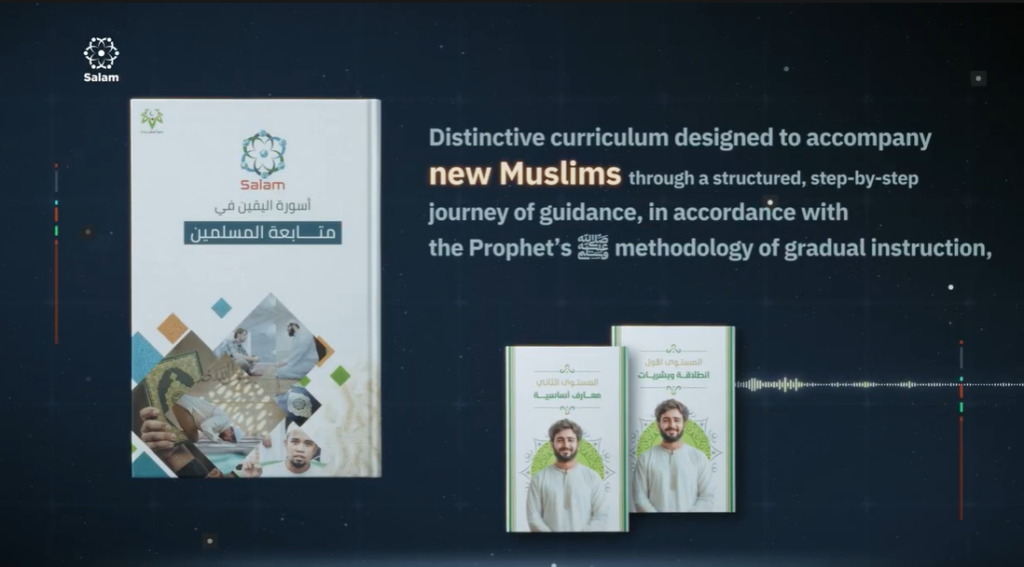
If you are a new Muslim looking for structured guidance, the Asawirat Al-Yaqeen (Bracelets of Certainty) program offers a four-stage journey:
- Foundational knowledge of the pillars of faith, prayer, and purification
- Guidance on repentance and understanding the life of the Prophet (PBUH)
- Etiquette, moral development, and practical life rulings
- Advanced study of contemporary issues and Islamic distinctiveness
Reach out directly to the Salam Center team to start the Asawirat Al-Yaqeen (Bracelets of Certainty) program for FREE.
Summary
Patience in the Quran is never passive. It is paired with prayer, sustained through reliance on Allah, and rewarded without any limit — a promise stated explicitly in Surah Az-Zumar and echoed throughout the Sunnah.
New Muslims and sincere seekers alike can find real comfort in these verses during hardship. Ease genuinely accompanies difficulty, and the Salam Center remains ready to guide anyone exploring this journey further.
Curious about Islam?
Journey towards clarity and purpose. Our team is here to support you in your search for truth and spiritual guidance.
Embrace the Truth