
Islamic Motivational Quotes from the Quran
The Quran contains some of the most direct, repeated reassurances found in any scripture — that hardship is temporary, that no burden exceeds a person’s capacity, and that Allah remains near to whoever calls on Him.
These are recurring themes woven through Meccan and Medinan chapters alike, addressed first to Prophet Muhammad (PBUH) during his most difficult years, then extended to every believer who reads them afterward.
1. Ease follows hardship
This chapter was revealed during one of the most emotionally difficult periods of the Prophet’s mission, when opposition in Mecca was mounting and support felt scarce.
The repetition of the phrase across two consecutive verses is deliberate — classical exegetes such as Ibn Kathir note that repeating “with hardship comes ease” functions as emphasis, not redundancy, underscoring that ease is not merely possible but certain.
فَإِنَّ مَعَ الْعُسْرِ يُسْرًا * إِنَّ مَعَ الْعُسْرِ يُسْرًا
Fa-inna ma’al ‘usri yusra, inna ma’al ‘usri yusra
“For indeed, with hardship [will be] ease. Indeed, with hardship [will be] ease.” (Quran 94:5-6)
The grammatical structure matters here. Classical commentators point out that “hardship” appears with the definite article (al-‘usr) both times, while “ease” appears indefinite (yusran) both times — a linguistic signal, according to some scholars, that a single hardship may be met by multiple forms of ease.
This is one reason the verse is so often recited by people going through prolonged difficulty; it does not promise an end to hardship in the abstract, it promises accompaniment by relief.
2. No soul is burdened beyond its capacity
This verse closes one of the longest chapters in the Quran and sits alongside foundational statements of belief, making it a kind of theological anchor. It directly addresses a fear common to anyone facing overwhelming circumstances — the fear that a trial has become too much to survive.
لَا يُكَلِّفُ اللَّهُ نَفْسًا إِلَّا وُسْعَهَا
La yukallifullahu nafsan illa wus’aha
“Allah does not charge a soul except [with that within] its capacity.” (Quran 2:286)
Read in context, this verse follows a prayer taught to believers asking Allah not to place a burden on them like that placed on earlier nations, and not to burden them beyond what they can bear.
The verse is therefore both a statement of fact about Allah’s justice and a template for supplication — a reminder that struggle is measured, not arbitrary, which connects directly to broader Islamic principles concerning divine wisdom and fairness.
3. Patience through Allah alone and do not grieve
Revealed toward the close of a chapter dealing extensively with the natural world and divine favor, this verse shifts to address the Prophet personally, instructing him on how to endure the mockery and plotting of his opponents without succumbing to grief or anxiety.
وَاصْبِرْ وَمَا صَبْرُكَ إِلَّا بِاللَّهِ ۚ وَلَا تَحْزَنْ عَلَيْهِمْ وَلَا تَكُ فِي ضَيْقٍ مِّمَّا يَمْكُرُونَ
Wasbir wa ma sabruka illa billah, wa la tahzan ‘alayhim wa la taku fi daykin mimma yamkurun
“And be patient, [O Muhammad], and your patience is not but through Allah. And do not grieve over them and do not be in distress over what they conspire.” (Quran 16:127)
The phrase “your patience is not but through Allah” reframes patience itself — not as a personal trait someone either has or lacks, but as something granted and sustained by Allah.
This distinction matters practically: it shifts the burden of endurance from self-reliance toward reliance on Allah, a concept explored further in discussions of faith in Islam.
4. A way out is promised to those who are mindful of Allah
These two verses are among the most memorized in the Quran for their promise of relief tied to a specific condition — taqwa, often translated as God-consciousness or mindfulness of Allah. The surah itself addresses matters of divorce and family law, yet pauses to deliver a sweeping spiritual principle applicable to any hardship.
وَمَن يَتَّقِ اللَّهَ يَجْعَل لَّهُ مَخْرَجًا * وَيَرْزُقْهُ مِنْ حَيْثُ لَا يَحْتَسِبُ ۚ وَمَن يَتَوَكَّلْ عَلَى اللَّهِ فَهُوَ حَسْبُهُ
Wa man yattaqillaha yaj’al lahu makhraja, wa yarzuqhu min haythu la yahtasib, wa man yatawakkal ‘alallahi fahuwa hasbuh
“And whoever fears Allah – He will make for him a way out. And will provide for him from where he does not expect. And whoever relies upon Allah – then He is sufficient for him.” (Quran 65:2-3)
The phrase “from where he does not expect” is what gives this verse its enduring emotional resonance.
It does not promise that provision will arrive through the channels a person anticipates, but that it will arrive through channels entirely outside their planning — a claim that ties closely to Islamic teaching on the nature of Allah as the ultimate sustainer, or Ar-Razzaq.
Learn More About Islam
Discover the beauty, teachings, and wisdom of Islam in a clear and welcoming way. Start exploring and deepen your understanding today.
Learn More5. A future of contentment is promised
Surah Ad-Duha was revealed after a pause in revelation that had caused the Prophet real anguish, with some early reports suggesting his opponents mocked the silence as abandonment. The chapter opens by refuting that claim directly, then moves toward a personal promise.
وَلَسَوْفَ يُعْطِيكَ رَبُّكَ فَتَرْضَى
Wa lasawfa yu’tika rabbuka fatarda
“And your Lord is going to give you, and you will be satisfied.” (Quran 93:5)
The verb structure here — “sawfa” combined with the future tense — signals a certainty projected forward, not a vague hope.
Commentators generally read this as extending beyond the Prophet’s immediate circumstances to the ultimate reward awaiting him, while the surah as a whole models how to respond to a period that feels like divine silence: with patience rather than despair.
6. Reliance on what is written brings peace
This verse appears within the account of events surrounding the Prophet’s emigration from Mecca, framed as a direct statement of trust in divine decree that believers are instructed to declare for themselves.
قُل لَّن يُصِيبَنَا إِلَّا مَا كَتَبَ اللَّهُ لَنَا هُوَ مَوْلَانَا ۚ وَعَلَى اللَّهِ فَلْيَتَوَكَّلِ الْمُؤْمِنُونَ
Qul lan yusibana illa ma kataballahu lana huwa mawlana, wa ‘alallahi falyatawakkalil mu’minun
“Say, ‘Never will we be struck except by what Allah has decreed for us; He is our protector.’ And upon Allah let the believers rely.” (Quran 9:51)
This verse is often cited in discussions of qadar, or divine decree, one of the six pillars of faith. It does not counsel passivity, but rather frames every outcome — favorable or difficult — as falling within what has already been written by Allah’s knowledge, which removes a layer of anxiety about the unknown.
7. Hearts find rest through the remembrance of Allah
This verse appears in a chapter that spends considerable time contrasting those who respond to Allah’s signs with gratitude against those who turn away, before arriving at a description of what genuinely settles the human heart.
الَّذِينَ آمَنُوا وَتَطْمَئِنُّ قُلُوبُهُم بِذِكْرِ اللَّهِ ۗ أَلَا بِذِكْرِ اللَّهِ تَطْمَئِنُّ الْقُلُوبُ
Alladhina amanu wa tatma’innu qulubuhum bidhikrillah, ala bidhikrillahi tatma’innul qulub
“Those who have believed and whose hearts are assured by the remembrance of Allah. Unquestionably, by the remembrance of Allah hearts are assured.” (Quran 13:28)
The verse closes with “ala,” an Arabic particle used to draw sharp attention to what follows, functioning almost like an exclamation.
This grammatical emphasis reinforces that dhikr — remembrance through prayer, recitation, and reflection — is presented not as one path to peace among many, but as the defining source of it.
8. Allah watches over the patient
Positioned among a cluster of oaths and reassurances directed at the Prophet during a period of intense opposition, this verse offers a strikingly intimate image of divine attention.
وَاصْبِرْ لِحُكْمِ رَبِّكَ فَإِنَّكَ بِأَعْيُنِنَا
Wasbir lihukmi rabbika fa-innaka bi-a’yunina
“So be patient, [O Muhammad], for the decision of your Lord, for indeed, you are in Our eyes.” (Quran 52:48)
The phrase “in Our eyes” is an anthropomorphic expression that Ahl al-Sunnah scholarship affirms without assigning it a literal human form, consistent with the broader Sunni methodology of affirming Allah’s attributes as mentioned in text while negating resemblance to creation.
Practically, the verse conveys constant divine awareness of a person’s struggle, even when that struggle feels unseen by others.
9. Allah’s nearness during the darkest moment is affirmed
This verse recounts the moment inside the cave of Thawr, when the Prophet and Abu Bakr were being actively pursued during the migration to Medina. It captures one of the most tense episodes in early Islamic history and the reassurance offered within it.
إِذْ يَقُولُ لِصَاحِبِهِ لَا تَحْزَنْ إِنَّ اللَّهَ مَعَنَا
Idh yaqulu lisahibihi la tahzan innallaha ma’ana
“When he said to his companion, ‘Do not grieve; indeed Allah is with us.'” (Quran 9:40)
This episode is frequently referenced alongside the broader account of the Prophet Muhammad’s life as an example of trust exercised under literal life-threatening pressure, not abstract difficulty.
The reassurance was spoken in a cave, in hiding, with pursuers audibly near — which is part of why the verse resonates so strongly with anyone facing acute fear.
Read Also: Quran Quotes About Patience
10. Allah responds to those who call upon Him
This verse sits within a passage discussing the rulings of fasting during Ramadan, and its placement is often noted by commentators as significant — a reminder of Allah’s closeness inserted directly into instructions about worship.
وَإِذَا سَأَلَكَ عِبَادِي عَنِّي فَإِنِّي قَرِيبٌ ۖ أُجِيبُ دَعْوَةَ الدَّاعِ إِذَا دَعَانِ
Wa idha sa-alaka ‘ibadi ‘anni fa-inni qarib, ujibu da’wataddda’i idha da’an
“And when My servants ask you, [O Muhammad], concerning Me, indeed I am near. I respond to the invocation of the supplicant when he calls upon Me.” (Quran 2:186)
Unlike many verses where Allah is addressed in the third person, this verse shifts to first person directly — “I am near,” “I respond” — without an intermediary. Scholars of tafsir have noted this shift as deliberate, emphasizing an unmediated relationship between the caller and Allah, distinct from concepts of intercession found in other traditions and connected to the broader Islamic view on how Islam differs from other religious frameworks.
Read Also: Beautiful Quran Quotes About Life That Reveal Its True Purpose
11. Allah answers the distressed
This verse is framed as a rhetorical question within a series of questions posed throughout the chapter, each contrasting the true, singular power of Allah against the powerlessness of anything worshipped besides Him.
أَمَّن يُجِيبُ الْمُضْطَرَّ إِذَا دَعَاهُ وَيَكْشِفُ السُّوءَ
Amman yujibul mudtarra idha da’ahu wa yakshifus-su’
“Is He [not best] who responds to the desperate one when he calls upon Him and removes evil…?” (Quran 27:62)
The word “mudtarr” describes someone in a state of dire compulsion or desperation, not ordinary difficulty.
The verse’s rhetorical structure — implicitly demanding an answer no honest listener could deny — is part of a broader Quranic argument for monotheism built on lived human experience of crying out in genuine distress.
Read Also: Beautiful Quran Quotes
12. Call upon Allah and He will answer
This final verse is a direct divine command paired with an equally direct promise, situated in a chapter largely concerned with the fate of past nations and Allah’s mercy toward those who turn to Him.
وَقَالَ رَبُّكُمُ ادْعُونِي أَسْتَجِبْ لَكُمْ
Wa qala rabbukumud’uni astajib lakum
“And your Lord says, ‘Call upon Me; I will respond to you.'” (Quran 40:60)
The verse continues by warning that those too arrogant to worship will enter Hell in humiliation, making supplication (du’a) itself an act of worship rather than a mere request.
This connects to the wider Quranic teaching explored in the discussion of why Muslims believe in the Quran as a living text meant to be returned to, not simply read once.
Learn More About Islam
Discover the beauty, teachings, and wisdom of Islam in a clear and welcoming way. Start exploring and deepen your understanding today.
Learn MoreGet Guidance And Support From Salam Platform
If these verses have stirred something in you, that response is worth exploring further.
Read more reflections and articles on the Salam Platform.
Explore ongoing discussions and teachings on the Salam blog.
Have a specific question about faith, belief, or entering Islam? Reach out directly — the Salam Center team responds personally to every sincere inquiry.
Reach out directly — our team is ready to listen, guide, and welcome you.

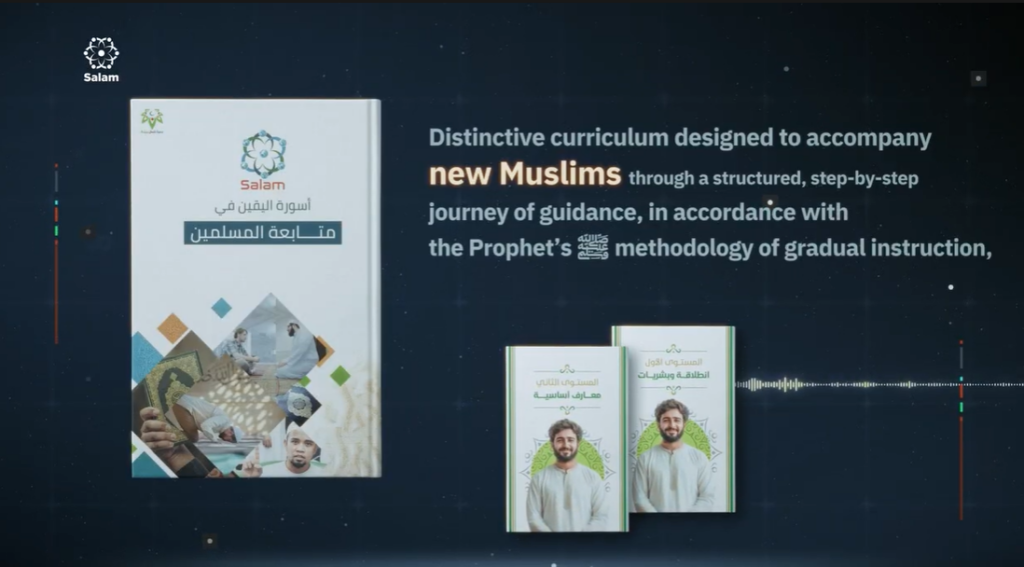
For those who have already taken their shahada, the Salam Center offers the Asawirat Al-Yaqeen (Bracelets of Certainty) program — a structured, four-stage post-conversion journey covering:
- Foundational pillars, purification, and prayer
- The six pillars of faith, zakat, fasting, and Hajj
- Repentance, the Seerah of Prophet Muhammad (PBUH), and moral character
- Practical life rulings and contemporary Islamic thought
The program has guided over 114,000 new Muslims across 140 countries through firm, grounded faith.
Reach out directly to the Salam Center team to start the Asawirat Al-Yaqeen (Bracelets of Certainty) program for FREE.
Summary
These ten verses show that the Quran addresses hardship directly, offering both emotional reassurance and specific theological grounding for trust in Allah during difficulty. Each promise, from ease after hardship to Allah’s nearness in distress, is tied to real historical moments in the Prophet’s life.
Reading these verses in context deepens their meaning far beyond isolated quotation, revealing a consistent Quranic message of patience, reliance, and hope. New Muslims and sincere seekers alike are invited to continue this exploration through structured study and direct engagement with the text itself.
Curious about Islam?
Journey towards clarity and purpose. Our team is here to support you in your search for truth and spiritual guidance.
Embrace the Truth