How Many Versions of the Quran Are There?
| Key Takeaways |
| There is only one Quran — the same text preserved unchanged since its revelation to Prophet Muhammad (PBUH) over 1,400 years ago. |
| What appear as “versions” are Qira’at (recitation modes) — variations in pronunciation and intonation, not differences in meaning or doctrine. |
| The standardized written Quran was compiled under Caliph Uthman ibn Affan (RA) into a single authorized text, called the Uthmani Mushaf. |
| Unlike the Bible, which exists in manuscripts with documented textual discrepancies, the Quran has a single unified text confirmed by mass oral transmission across centuries. |
The Quran that a child memorizes in Cairo, a convert reads in Chicago, and a scholar recites in Kuala Lumpur is the same word-for-word text, unchanged since its revelation to Prophet Muhammad (PBUH) in the 7th century CE.
How Many Versions of the Quran Are There?
There is only one Quran. Only one version of the authentic Quranic text. One preserved revelation. Zero alternate versions, one authentic text.
The Quran was revealed in Arabic to Prophet Muhammad (PBUH) over approximately 23 years. Throughout that period, designated companions — known as the Kuttab al-Wahy (scribes of revelation) — recorded every verse as it descended.
Simultaneously, thousands of companions memorized the Quranic text with an accuracy monitored directly by the Prophet (PBUH) himself.
Allah promised its preservation explicitly:
إِنَّا نَحْنُ نَزَّلْنَا الذِّكْرَ وَإِنَّا لَهُ لَحَافِظُونَ
“Indeed, it is We who sent down the Quran, and indeed, We will be its guardian.” (Quran 15:9)
This divine guarantee is not merely a theological claim — it manifests as a historical and empirical reality.
No credible manuscript tradition, no archaeological find, and no serious academic scholarship has produced an alternate Arabic Quranic text that differs substantively from the one in use today.
The Quran is the most memorized book in human history, with millions of huffaz (memorizers) preserving every letter, vowel marking, and pause sign across continents and centuries.
Are There Different Versions of the Quran Like the Bible?
No, there are no different versions of the Quran like the Bible. The Quran and the Bible have fundamentally different transmission histories.
The Bible’s many “versions” (KJV, NIV, ESV, RSV, and others) reflect genuine textual diversity — different source manuscripts, translation choices, and in some cases, additions or omissions in the underlying Greek and Hebrew texts.
The New Testament alone is reconstructed from thousands of manuscripts with documented variants. This is not an accusation against Christianity; it is the established position of Biblical textual criticism itself, including the work of scholars at the Society of Biblical Literature.
The Quran’s primary form was never a manuscript alone — it was simultaneous written record plus mass oral memorization by thousands of people who learned directly from the Prophet (PBUH).
This dual-channel preservation means no single scribe’s error, no regional copying mistake, and no political editor could introduce a change without thousands of memorizers instantly contradicting it.
Learn More About Islam
Discover the beauty, teachings, and wisdom of Islam in a clear and welcoming way. Start exploring and deepen your understanding today.
Learn MoreHow Was the Quran Standardized With The Uthmani Mushaf?
During the lifetime of Prophet Muhammad (PBUH), the Quran existed in three simultaneous forms: in the hearts of memorizers, on written materials (parchment, bone, palm leaves), and in the living practice of daily recitation.
After the Prophet’s (PBUH) passing, Caliph Abu Bakr al-Siddiq (RA) commissioned the first official compilation into a single written document, with Zayd ibn Thabit (RA) — the Prophet’s own scribe — leading the effort.
The most consequential standardization came under the third Caliph, Uthman ibn Affan (RA), around 650 CE. As Islam spread rapidly across Persia, Syria, Egypt, and Iraq, regional pronunciation differences in recitation began creating confusion among newer Muslims.
Uthman (RA) convened a committee of senior companions and produced multiple identical copies of a single authorized written text — the Uthmani Mushaf — sending one copy to each major Islamic province and ordering all other written collections to be unified with this standard.
Sahih al-Bukhari records Anas ibn Malik (RA) narrating that Hudhayfah ibn al-Yaman warned Uthman (RA) about the spreading recitation disputes, prompting the standardization.
The companions who had memorized directly from the Prophet (PBUH) verified every word of the Uthmani Mushaf against their memorized texts. This dual verification — written and memorized — is what makes the Quranic transmission uniquely reliable.
Why Do Muslims Believe in the Quran’s Unique Preservation?
The Quran’s preservation is not merely claimed — it is demonstrable. Several reinforcing factors make the Quranic text the most robustly attested religious scripture in history.
The system of Ijazah (authorized certification) means that every Quran teacher today holds a documented, named chain of transmission connecting them, teacher by teacher, back to the Prophet Muhammad (PBUH).
A hafiz certified in Cairo today can trace her recitation through her sheikh, his sheikh, and so on through fourteen centuries to the companions who learned directly from the Prophet (PBUH).
No other religious text on earth has this living, name-by-name chain of human transmission.
Millions of huffaz across every country, ethnicity, and language background hold the complete Quran in memory.
Any discrepancy in any printed Quran is immediately detectable because it contradicts what millions of people independently memorized. This is a living verification system with no single point of failure.
The broader framework of faith in Islam — which includes belief in the Quran as the literal word of Allah — is grounded not in blind tradition but in this verifiable chain of transmission and the text’s own coherence across time.
The Quran’s Uniqueness Among Scripture
The Quran itself challenges anyone who doubts its divine origin to produce something comparable:
أَفَلَا يَتَدَبَّرُونَ الْقُرْآنَ ۚ وَلَوْ كَانَ مِنْ عِندِ غَيْرِ اللَّهِ لَوَجَدُوا فِيهِ اخْتِلَافًا كَثِيرًا
“Then do they not reflect upon the Quran? If it had been from any other than Allah, they would have found within it much contradiction.” (Quran 4:82)
This verse is both a theological statement and an empirical invitation. The Quran’s internal consistency across 114 surahs revealed over 23 years — addressing theology, law, history, ethics, and the human soul — without contradiction is itself presented as evidence of its divine source.
Understanding what Muslims believe about the Quran and why Muslims believe in the Quran goes deeper than historical arguments — it connects to the Quranic worldview of Tawhid (the oneness of Allah) and the nature of divine communication with humanity.
These principles of Islam form an interconnected framework in which the Quran’s preservation is both expected and essential.
Read Also: How Was the Quran Revealed and Compiled?
Learn More About Islam
Discover the beauty, teachings, and wisdom of Islam in a clear and welcoming way. Start exploring and deepen your understanding today.
Learn MoreRead Also: Who Wrote the Quran?
Learn More Authentic Knowledge About Islam with Salam
If this article opened a door for you — welcome. Every sincere question deserves a sincere answer, and the Salam platform exists precisely for that.
Explore more on the Salam Platform — a growing library of evidence-grounded answers about Islam, built for seekers and new Muslims alike.
Read more articles on the Salam blog covering faith, worship, theology, and practical Muslim life.
Have a specific question, or are you considering taking your Shahada? Reach out directly — our team is here to listen, without pressure.
Read Also: History of the Quran – Revelation, Preservation, & Transmission

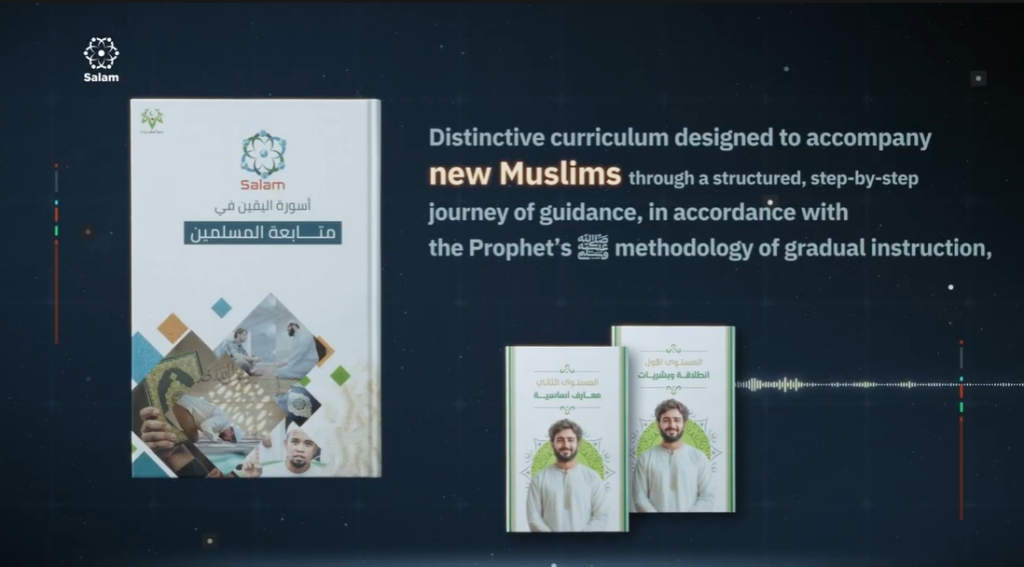
For new Muslims ready to deepen their foundation, the Salam Center offers enrollment in the Asawirat Al-Yaqeen (Bracelets of Certainty) program — a structured four-stage curriculum designed specifically for post-conversion growth:
- Stage One builds your foundation: Shahada, prayer (Salah), purification, and the pillars of faith
- Stage Two covers sincere repentance, the Prophet’s biography (Seerah), Zakat, fasting, and Hajj
- Stage Three develops your character: ethics, family rulings, and practical life guidance
- Stage Four equips you with theological clarity and an Islamic life roadmap rooted in Surah Al-Asr
The Asawirat Al-Yaqeen (Bracelets of Certainty) curriculum has guided 114,588 new Muslims across 140 countries. It is compassionate, structured, and built around your pace and your questions.
Reach out directly to the Salam Center team to start the Asawirat Al-Yaqeen (Bracelets of Certainty) program for FREE.
Summary
The Quran is a single, unified text revealed in Arabic to Prophet Muhammad (PBUH), preserved through simultaneous written record and mass oral memorization, and standardized under Caliph Uthman ibn Affan (RA) into the Uthmani Mushaf used globally today. The Qira’at — different authenticated modes of recitation — represent phonetic variations, not doctrinal differences.
Unlike biblical texts, which scholars reconstruct from thousands of manuscripts with documented variants, the Quran carries an unbroken living chain of human transmission through millions of memorizers across fourteen centuries.
Frequently Asked Questions
How many versions of the Quran are there?
There is one Quran. The Arabic text — standardized under Caliph Uthman ibn Affan (RA) around 650 CE — has remained unchanged across all Muslim communities worldwide. Different recitation modes (Qira’at) and translated editions exist, but none constitute an alternate version of the Quranic text itself.
What are the different Qira’at and why do they exist?
The Qira’at are ten authenticated modes of Quranic recitation, each traced through a verified chain of transmission back to the Prophet Muhammad (PBUH). They represent phonetic and pronunciation variations reflecting the Arabic dialects of the Prophet’s companions — not different texts or different meanings. The two most common today are Hafs ‘an ‘Asim and Warsh ‘an Nafi’.
Is translating the Quran into English considered of the Quran?
English translations of the Quran — such as Sahih International or the Yusuf Ali translation — are scholarly renderings of meaning, not the Quran itself. The Quran exists only in its original Arabic. Translations are reference tools, and Muslims worldwide recite their prayers in Arabic regardless of their native language, precisely because the Arabic text is the revelation.
Curious about Islam?
Journey towards clarity and purpose. Our team is here to support you in your search for truth and spiritual guidance.
Embrace the Truth