
What Does the Quran Say About Parents?
The Quran speaks about parents with a weight and tenderness that surprises many people encountering Islam for the first time. Honoring one’s mother and father is not tucked away as a minor virtue. It sits beside the declaration of Tawheed itself, right after the command to worship Allah and associate nothing with Him.
This pairing is deliberate. It tells the reader something essential about how Islam understands gratitude: the debt owed to the Creator and the debt owed to the two people who carried, fed, and raised a child are woven together in the same breath.
1. Allah Places Kindness To Parents Right After The Command To Worship Him Alone
This is the verse most often quoted in any discussion of Quran verses on parents in Arabic, and for good reason. It comes from Surah Al-Isra, a Meccan chapter dense with ethical instruction, and it sets the tone for everything that follows in this list.
وَقَضَىٰ رَبُّكَ أَلَّا تَعْبُدُوا إِلَّا إِيَّاهُ وَبِالْوَالِدَيْنِ إِحْسَانًا
“And your Lord has decreed that you not worship except Him, and to parents, good treatment.” (Quran 17:23)
The word used here, ihsan, means more than politeness. It implies excellence, going beyond the minimum, doing good with sincerity rather than obligation alone. Allah does not simply ask believers to avoid harming their parents.
He asks for active, deliberate goodness toward them, placed in the same sentence as the very foundation of Islamic Monotheism.
2. Raising Your Voice Against Your Own Parents Is Forbidden
Immediately following the verse above, Allah continues with practical guidance on how this kindness plays out when parents grow old and become dependent again, much as they once cared for a helpless infant.
فَلَا تَقُلْ لَهُمَا أُفٍّ وَلَا تَنْهَرْهُمَا وَقُلْ لَهُمَا قَوْلًا كَرِيمًا
“Do not say to them [so much as], ‘uff,’ and do not repel them but speak to them a noble word.” (Quran 17:23)
The word “uff” is a small sound of irritation, barely a word at all. Its inclusion is precise. Allah is closing off even the smallest gesture of impatience, not only outright disrespect. This verse is often cited in discussions of elder care within Muslim households, where patience with aging parents is treated as a direct test of faith rather than a private family matter.
Learn More About Islam
Discover the beauty, teachings, and wisdom of Islam in a clear and welcoming way. Start exploring and deepen your understanding today.
Learn More3. Lower Your Wing In Humility And Pray For Mercy On Your Parents
The next verse moves from speech to posture and prayer, instructing believers to carry themselves with humility before their parents and to make a specific supplication on their behalf.
وَاخْفِضْ لَهُمَا جَنَاحَ الذُّلِّ مِنَ الرَّحْمَةِ وَقُلْ رَبِّ ارْحَمْهُمَا كَمَا رَبَّيَانِي صَغِيرًا
“And lower to them the wing of humility out of mercy and say, ‘My Lord, have mercy upon them as they brought me up [when I was] small.'” (Quran 17:24)
This dua is one of the most widely memorized supplications in Muslim households, taught to children from a young age.
It links a person’s own upbringing directly to their ongoing prayer for their parents, reinforcing the idea that the relationship between a believer and Allah is inseparable from how they treat those who raised them, a theme that runs throughout discussions of faith in Islam.
4. A Mother’s Hardship In Pregnancy And Nursing Is Named By Allah
Surah Luqman contains one of the most emotionally resonant verses about mothers in the entire Quran, describing in physical terms what a mother endures before a child is even weaned.
وَوَصَّيْنَا الْإِنسَانَ بِوَالِدَيْهِ حَمَلَتْهُ أُمُّهُ وَهْنًا عَلَىٰ وَهْنٍ وَفِصَالُهُ فِي عَامَيْنِ أَنِ اشْكُرْ لِي وَلِوَالِدَيْكَ إِلَيَّ الْمَصِيرُ
“And We have enjoined upon man [care] for his parents. His mother carried him, [increasing her] in weakness upon weakness, and his weaning is in two years. Be grateful to Me and to your parents; to Me is the [final] destination.” (Quran 31:14)
Scholars of tafsir, including Ibn Kathir, note that this verse specifically singles out the mother’s suffering even while the broader command concerns both parents.
The two-year weaning period mentioned here is also referenced in classical fiqh discussions regarding breastfeeding and its rulings within family matters in Islam.
5. Obedience To Parents Has A Limit When It Comes To Faith Itself
The very next verse in Surah Luqman introduces a boundary that many seekers find striking: kindness to parents is commanded absolutely, but obedience to them is not unconditional when it conflicts with Tawheed.
وَإِن جَاهَدَاكَ عَلَىٰ أَن تُشْرِكَ بِي مَا لَيْسَ لَكَ بِهِ عِلْمٌ فَلَا تُطِعْهُمَا وَصَاحِبْهُمَا فِي الدُّنْيَا مَعْرُوفًا
“But if they endeavor to make you associate with Me that of which you have no knowledge, do not obey them but accompany them in [this] world with appropriate kindness.” (Quran 31:15)
This verse is theologically significant. It clarifies that a child’s ultimate loyalty belongs to Allah alone, yet even in disagreement over religion, the relationship with a parent does not collapse into hostility.
This principle directly informs how Islam approaches other religions within a family and shows that respect for parents survives even theological difference, a nuance often missing from outside portrayals of Islamic family life.
Read Also: What Does the Quran Say About Dogs?
6. Kindness To Parents Extends Even When They Do Not Share Your Faith
Surah Al-Ankabut reinforces the same principle found in Luqman, making clear this is not an isolated instruction but a consistent Quranic position on how Muslims relate to non-Muslim parents.
وَوَصَّيْنَا الْإِنسَانَ بِوَالِدَيْهِ حُسْنًا وَإِن جَاهَدَاكَ لِتُشْرِكَ بِي مَا لَيْسَ لَكَ بِهِ عِلْمٌ فَلَا تُطِعْهُمَا
“And We have enjoined upon man goodness to parents. But if they endeavor to make you associate with Me that of which you have no knowledge, do not obey them.” (Quran 29:8)
This repetition across two separate surahs signals its importance in the Quranic worldview.
New Muslims whose parents remain outside the faith often turn to this verse for reassurance that entering Islam does not require abandoning filial duty.
Read Also: What Does the Quran Say About Jesus’s Death?
7. Thirty Months Of Gestation And Weaning Reveals The Weight Of A Mother’s Sacrifice
Surah Al-Ahqaf offers the most detailed physical description of a mother’s experience found anywhere in the Quran, extending the theme introduced in Luqman with additional specificity.
وَوَصَّيْنَا الْإِنسَانَ بِوَالِدَيْهِ إِحْسَانًا حَمَلَتْهُ أُمُّهُ كُرْهًا وَوَضَعَتْهُ كُرْهًا وَحَمْلُهُ وَفِصَالُهُ ثَلَاثُونَ شَهْرًا
“And We have enjoined upon man, to his parents, good treatment. His mother carried him with hardship and gave birth to him with hardship, and his gestation and weaning [period] is thirty months.” (Quran 46:15)
Classical jurists, including within the Shafi’i school, have drawn on the thirty-month figure combined with the two-year weaning period from Surah Luqman to calculate a minimum possible pregnancy length in Islamic law, an example of how a verse about parental gratitude also carries legal weight in fiqh.
This layered depth is part of why understanding what the Quran says about other topics requires reading verses in their full context rather than in isolation.
Read Also: Where in the Quran Does It Say Music Is Haram?
Learn More About Islam
Discover the beauty, teachings, and wisdom of Islam in a clear and welcoming way. Start exploring and deepen your understanding today.
Learn MoreTake the Next Step Toward Understanding Islam
If these verses have opened new questions about the Quran and Islamic family life, there is more to explore.
Browse the Salam Platform for deeper articles on Islamic beliefs, worship, and daily practice.
Visit the Salam blog for ongoing reflections on Quranic themes, including family, faith, and personal transformation.
Reach out directly — our team is ready to listen, guide, and welcome you.
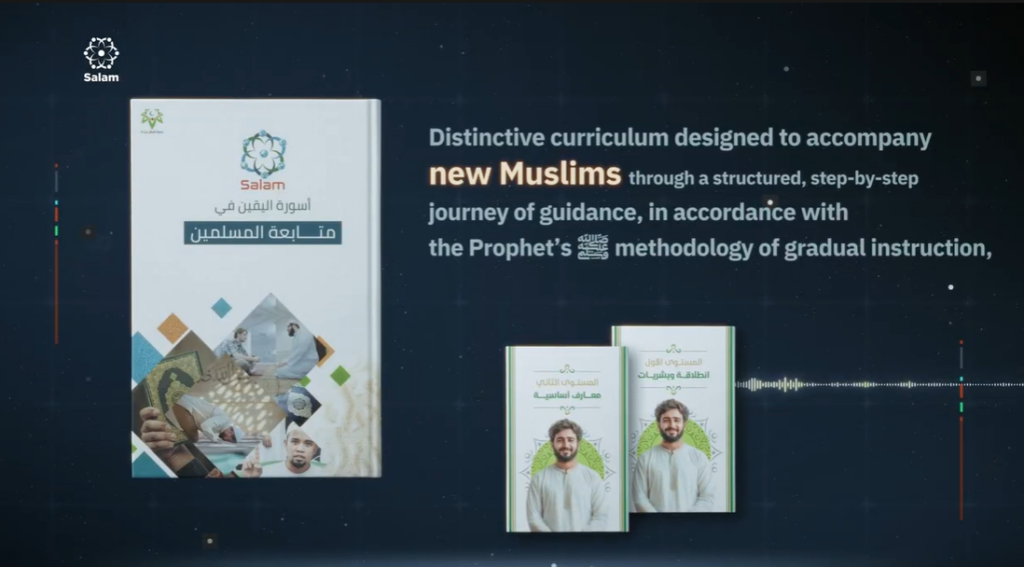
For those who have already taken their shahada or are considering it, the Salam Center offers structured post-conversion support through the Asawirat Al-Yaqeen (Bracelets of Certainty) program, including:
- A four-stage learning path covering foundational beliefs, character, practical rulings, and advanced topics
- Guided lessons on family relationships, including navigating faith differences with parents
- One-on-one support from the Salam Center team throughout the journey
- Interactive assessments to track progress at each stage
Reach out directly to the Salam Center team to start the Asawirat Al-Yaqeen (Bracelets of Certainty) program for FREE.
Summary
The Quran addresses parents with a consistency that spans multiple surahs, tying kindness to them directly to the worship of Allah and to a mother’s documented physical sacrifice during pregnancy and nursing.
Even where faith divides a family, the Quran commands continued goodness toward parents, a principle the Prophet Muhammad (PBUH) reinforced by naming the mother three times before the father in Sahih Bukhari.
Frequently Asked Questions
What does the Quran say about parents in Islam?
The Quran commands ihsan, or excellent treatment, toward parents immediately after the command to worship Allah alone, as stated in Surah Al-Isra 17:23. This includes gentle speech, humility, and prayer for their mercy, making parental care a direct act of worship rather than a separate social duty.
What is the most important Quran verse about mothers?
Surah Luqman 31:14 is widely cited as the central verse on mothers, describing how “his mother carried him, [increasing her] in weakness upon weakness” and commanding gratitude toward her alongside gratitude to Allah, reflecting the unique physical sacrifice of motherhood.
Does the Quran require obeying non-Muslim parents?
The Quran commands continued kindness toward non-Muslim parents in Surah Luqman 31:15 and Surah Al-Ankabut 29:8, but it prohibits obedience specifically if a parent pressures a child into associating partners with Allah. Respect and companionship remain obligatory regardless of belief.
Curious about Islam?
Journey towards clarity and purpose. Our team is here to support you in your search for truth and spiritual guidance.
Embrace the Truth