
What Are the Teachings of Prophet Muhammad?
| Key Takeaways |
| Prophet Muhammad’s teachings center on the absolute Oneness of Allah (Tawheed) and rejection of all forms of polytheism. |
| The Quran describes Prophet Muhammad as sent as a mercy to all created beings, not to one nation or era. |
| Sahih al-Bukhari records that the Prophet defined the best among people as those with the best character. |
| Core teachings include honesty, kindness to neighbors, care for parents, and gentleness even toward opponents. |
| The Prophet taught that faith is incomplete until a believer wishes for others what he wishes for himself. |
| Prophet Muhammad’s example, called his Sunnah, remains the practical model for daily worship and conduct in Islam. |
Prophet Muhammad taught the worship of Allah alone, sincere devotion in character and conduct, and mercy extended to every living creature. These form a coherent message rooted in the Quran and preserved meticulously through the science of Hadith.
For someone encountering Islam for the first time, or a new Muslim seeking a clear map of the Prophet’s message, this matters immensely.
Prophet Muhammad (PBUH) did not simply deliver a set of rituals. He modeled an entire way of living — one that Muslims are asked to study, absorb, and apply, verse by verse and narration by narration.
What Are the Main Teachings of Prophet Muhammad?
Prophet Muhammad’s teachings are built on the worship of Allah alone, sincere moral character, mercy toward all creation, and a complete way of life covering belief, worship, and daily conduct. Every instruction he gave traces back to the Quran, which Allah describes as a guide he was sent to deliver. Allah says regarding him:
وَمَا أَرْسَلْنَاكَ إِلَّا رَحْمَةً لِّلْعَالَمِينَ
“And We have not sent you, [O Muhammad], except as a mercy to the worlds.” (Quran 21:107)
This single verse frames everything that follows. His teachings were never designed for one tribe, one century, or one region. They address the human being as such — his relationship with his Creator, his family, his neighbors, and himself.
According to Islamic teaching, this mercy expressed itself through concrete instruction: how to pray, how to speak, how to trade, how to treat a parent, and how to forgive an enemy.
New Muslims exploring these islam principles often find that the Prophet’s teachings are less a checklist and more an integrated worldview, one where worship and daily ethics are inseparable.
1. Tawheed Anchors Every Teaching of Prophet Muhammad
The first and most foundational teaching of Prophet Muhammad was Tawheed — the unwavering belief that Allah alone deserves worship, with no partners, intermediaries, or equals. Every other teaching he brought rests on this single pillar. Without it, prayer, charity, and good character lose their spiritual foundation entirely.
The Quran commands this directly:
وَاعْبُدُوا اللَّهَ وَلَا تُشْرِكُوا بِهِ شَيْئًا
“Worship Allah and associate nothing with Him…” (Quran 4:36)
Prophet Muhammad spent the first thirteen years of his mission in Mecca almost entirely on this message, confronting the widespread polytheism of pre-Islamic Arabia.
He taught that Allah has no son, no partner, and no equal — a teaching that shapes how Islam views the nature of God to this day.
This is also why understanding monotheism is considered the starting point for any sincere study of Islam; nothing else in the Prophet’s teaching makes sense without it.
2. Prayer and Worship Structure the Muslim Relationship With Allah
Prophet Muhammad taught that the five daily prayers form the primary link between a believer and Allah, structuring each day around remembrance and gratitude. He did not merely command prayer as ritual obligation; he taught it as conversation, discipline, and spiritual renewal repeated five times daily.
Beyond the five prayers, he taught fasting in Ramadan, the giving of zakat (obligatory charity), and pilgrimage to Mecca for those able.
Each of these acts of worship reinforces Tawheed in practice rather than theory alone.
A believer who prostrates five times a day is reminded, physically and repeatedly, of dependence on Allah rather than self-sufficiency or worldly attachment.
Learn More About Islam
Discover the beauty, teachings, and wisdom of Islam in a clear and welcoming way. Start exploring and deepen your understanding today.
Learn More3. Honesty and Trustworthiness Defined Muhammad’s Character Before Prophethood Began
Long before he received revelation, Prophet Muhammad was known throughout Mecca as al-Amin, “the Trustworthy,” a title earned through decades of honest dealing with people of every background. This reputation became one of the strongest proofs of his sincerity once he began preaching Islam, since even his fiercest opponents could not accuse him of lying.
When the first revelation frightened him, his wife Khadijah reassured him by pointing directly to this established character:
“Never! By Allah, Allah will never disgrace you, for by Allah, you keep good relations with your kith and kin, speak the truth, help the poor and the destitute, entertain your guests generously and assist those who are stricken with calamities.” (Sahih al-Bukhari)
This narration reveals something essential: revelation did not create the Prophet’s honesty. It confirmed and elevated a character already built on truthfulness over forty years.
4. Good Character Was the Standard Prophet Muhammad Used to Measure People
Prophet Muhammad explicitly taught that the best people are not those with the most wealth or status, but those with the finest character and manners. This teaching reoriented an entire society’s values, shifting the measure of a person’s worth away from tribal pride and toward moral conduct.
He stated this without ambiguity:
“The best among you are the best in character.” (Sahih al-Bukhari)
The Quran affirms that this was not incidental to his mission but central to it, describing him as the standard for believers to follow:
لَقَدْ كَانَ لَكُمْ فِي رَسُولِ اللَّهِ أُسْوَةٌ حَسَنَةٌ
“There has certainly been for you in the Messenger of Allah an excellent pattern…” (Quran 33:21)
5. Kindness to Parents and Family Formed a Core Obligation
Prophet Muhammad taught that honoring one’s parents ranks among the highest acts of worship, placed by the Quran immediately after the command to worship Allah alone. This ordering is not accidental — it signals that gratitude toward Allah and gratitude toward parents are spiritually linked.
The same verse that establishes Tawheed continues directly into family obligation:
وَبِالْوَالِدَيْنِ إِحْسَانًا
“…and to parents do good…” (Quran 4:36)
He extended this teaching to relatives, orphans, and the needy in the same breath, building a comprehensive ethic of family responsibility that begins at home and radiates outward.
6. Compassion for Neighbors Extended Regardless of Faith or Background
Prophet Muhammad taught that a person’s faith is directly tied to how they treat their neighbor, warning in the strongest terms against causing a neighbor any harm. Scholars note that this teaching applied to neighbors of every background, not exclusively Muslims, reflecting the universal scope of his mercy.
He delivered this warning with striking emphasis, repeating his oath three times:
“By Allah, he does not believe! By Allah, he does not believe! By Allah, he does not believe!” It was said, “Who, O Messenger of Allah?” He said, “He whose neighbor is not safe from his harm.” (Sahih al-Bukhari)
This is not a minor social nicety in his teaching. It is framed as a matter touching the core of belief itself, showing how seriously he treated everyday conduct toward the people closest to us physically, if not by blood.
7. Brotherhood And Empathy Required Wanting For Others What You Want For Yourself
Prophet Muhammad taught that genuine faith requires a believer to desire for other people the same good he desires for himself, making empathy a measurable component of belief rather than an abstract virtue. This teaching functions almost as a summary principle, condensing much of Islamic social ethics into a single test any person can apply to their own heart.
He phrased it plainly:
“None of you will have faith till he wishes for his (Muslim) brother what he likes for himself.” (Sahih al-Bukhari)
New Muslims often find this teaching becomes a practical daily filter — before acting toward someone, asking honestly whether the same treatment would be welcomed if reversed.
8. Ease And Moderation Protected Believers From Extremism In Practice
Prophet Muhammad explicitly taught that religion is easy, and warned that anyone who overburdens themselves in worship will eventually be overwhelmed and unable to continue. This teaching guards against a distortion that has affected many belief systems — the mistaken idea that harshness toward oneself equals piety.
He stated this directly to his companions:
“Religion is very easy and whoever overburdens himself in his religion will not be able to continue in that way. So you should not be extremists, but try to be near to perfection…” (Sahih al-Bukhari)
This principle of moderation shaped how he approached fasting, prayer, and worship generally, always steering companions away from excessive austerity and toward sustainable, consistent practice.
Read Also: What Are the Teachings of Islam?
9. Gentleness Toward Opponents Distinguished Prophet Muhammad’s Leadership Style
Prophet Muhammad taught, and the Quran confirms, that his gentleness rather than harshness was the reason people remained close to him even after difficult events like military setbacks. This teaching carries particular weight because it addresses how he treated people who had failed him, disobeyed him, or made costly mistakes — not merely how he treated strangers or allies.
Allah describes this quality directly:
فَبِمَا رَحْمَةٍ مِّنَ اللَّهِ لِنتَ لَهُمْ ۖ وَلَوْ كُنتَ فَظًّا غَلِيظَ الْقَلْبِ لَانفَضُّوا مِنْ حَوْلِكَ
“So by mercy from Allah, [O Muhammad], you were lenient with them. And if you had been rude [in speech] and harsh in heart, they would have disbanded from about you.” (Quran 3:159)
This teaching directly refutes any characterization of the Prophet as harsh or authoritarian.
Consulted decision-making, forgiveness of error, and patience under provocation defined his method of leading people — qualities documented extensively in his kindness stories and mercy stories throughout the Sirah.
Read Also: Teaching Islam to Kids & in Schools
10. Justice Applied Equally Regardless Of Social Status Or Wealth
Prophet Muhammad taught that justice must be applied without favoritism, refusing to exempt the powerful or privileged from accountability under Islamic law. This teaching addressed one of the deepest sources of corruption in pre-Islamic Arabian society, where tribal affiliation often determined whether a person faced consequences for wrongdoing.
His example established a precedent still cited in Islamic jurisprudence today: that legal and moral standards apply uniformly, regardless of a person’s tribe, wealth, or social rank.
This teaching connects directly to broader Quranic emphasis on justice as a divine command binding on every believer, not a discretionary virtue reserved for convenient circumstances.
Read Also: What Are the Teachings of the Qur’an?
Learn More About Islam
Discover the beauty, teachings, and wisdom of Islam in a clear and welcoming way. Start exploring and deepen your understanding today.
Learn MoreDiscover More About Faith, Certainty, and the Journey to Islam
If these teachings have raised questions in your heart, you are not alone in that experience.
Every seeker begins somewhere.
Browse more articles on the Salam platform to continue exploring the life and message of Prophet Muhammad.
Visit the Salam blog for ongoing reflections grounded in Quran and authentic Sunnah.
Reach out directly — our team is ready to listen, guide, and welcome you.

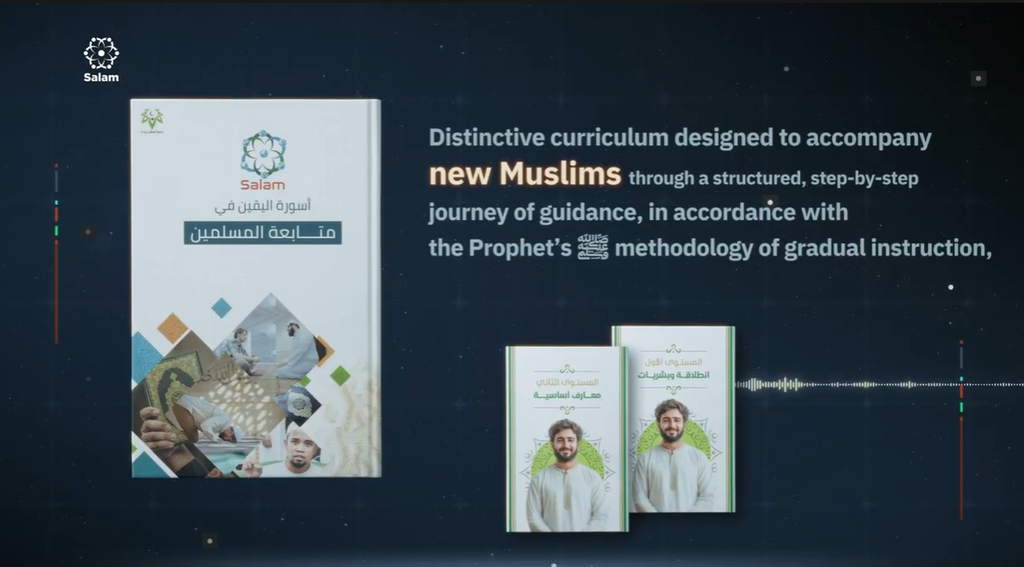
If you have recently accepted Islam, the Salam Center‘s Asawirat Al-Yaqeen (Bracelets of Certainty) program was built specifically for you. It offers:
- A structured four-stage journey from foundational knowledge to advanced understanding
- Lessons on Shahada, prayer, purification, and the six pillars of faith
- Guidance on repentance, the Seerah of the Prophet, and daily Islamic etiquette
- Practical rulings on family life, trade, and interaction with others
- A supportive community walking the same path toward certainty (Yaqeen)
General questions about Islam are always welcome. There is no question too basic and none too difficult to sit with honestly.
Reach out directly to the Salam Center team to start the Asawirat Al-Yaqeen (Bracelets of Certainty) program for FREE.
Summary
Prophet Muhammad’s teachings center on Tawheed, honesty, and mercy extended to every creature Allah made. His character, verified by both companions and Quranic revelation, modeled patience, gentleness, and justice applied without exception.
These teachings remain a living guide, not a historical relic confined to seventh-century Arabia. For anyone genuinely seeking truth, his example offers a coherent, practical, and deeply human path toward Allah.
Frequently Asked Questions
What did Muhammad teach when he preached to the Meccans?
Prophet Muhammad’s core message to the Meccans was Tawheed — the exclusive worship of Allah — alongside warnings against idolatry, kindness to the poor, and honesty in trade. This confronted the polytheism dominant in pre-Islamic Mecca directly.
What are 10 teachings of Prophet Muhammad?
Ten core teachings include Tawheed, the five daily prayers, honesty, good character, kindness to parents, compassion for neighbors, empathy for others, moderation in worship, gentleness toward opponents, and justice applied equally to all people regardless of status.
What did Muhammad teach about neighbors?
Muhammad taught that faith is incomplete if a neighbor is not safe from one’s harm, stating this three times with an oath in Sahih al-Bukhari. This obligation applied to neighbors of every background, not exclusively Muslims.
How is Muhammad’s teaching on character summarized?
Muhammad summarized his teaching on character by stating “the best among you are the best in character” (Sahih al-Bukhari), placing moral conduct above wealth, lineage, or social status as the true measure of a person’s worth.
Curious about Islam?
Journey towards clarity and purpose. Our team is here to support you in your search for truth and spiritual guidance.
Embrace the Truth